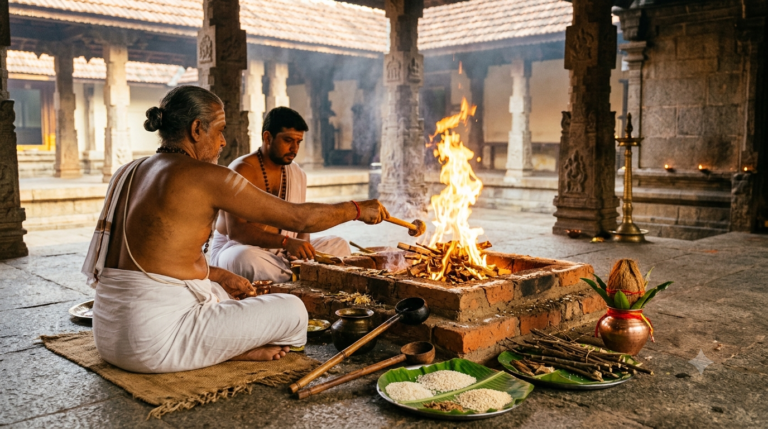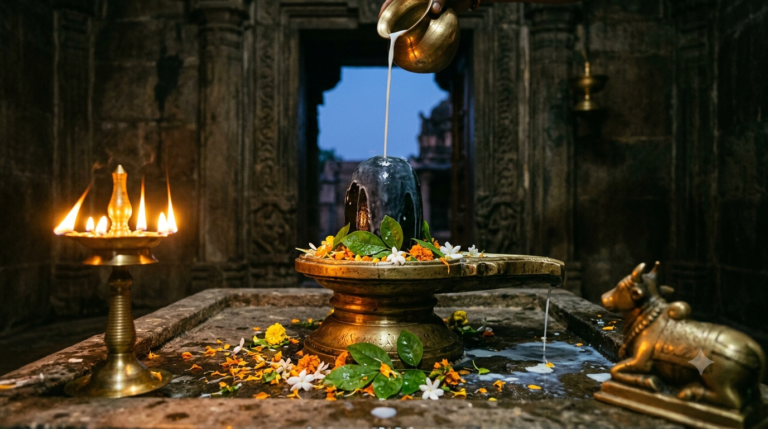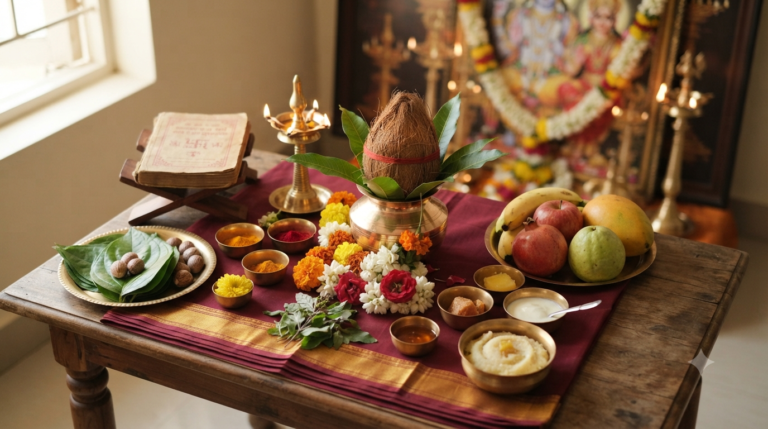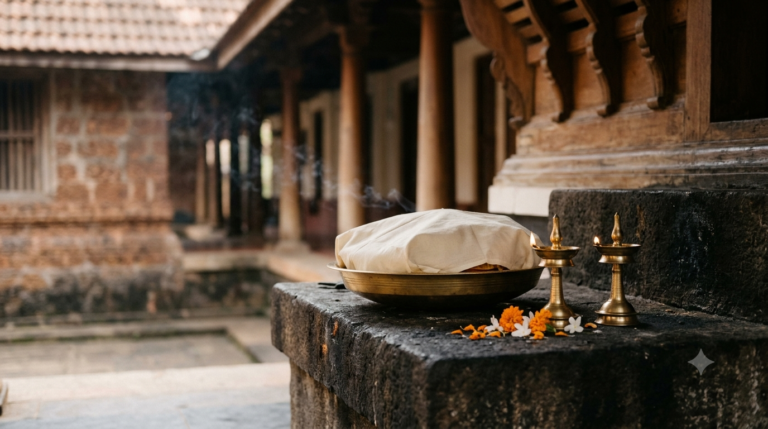
The Kedara Gowri Vratam is one of the most cherished single-day vows in the Shaiva calendar, and in 2026 it falls on Sunday, November 8. Married couples and devotees of Lord Shiva observe it on Deepavali Amavasya to worship Kedareshwara and Goddess Gowri together as Ardhanareeswara. This guide walks you through the real story, the exact date, the puja samagri, and a clean step-by-step vidhanam you can follow at home. Sri Vyasa Pooja is an independent information guide and is not affiliated with any temple or trust, and we take no bookings or payments.
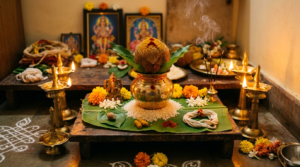
Kedara Gowri Vratam at a Glance
Here are the essentials before you plan the day. Keep this quick list handy while you gather your samagri.
- Deity: Lord Shiva as Kedareshwara, worshipped with Goddess Gowri (Parvati)
- 2026 date: Sunday, November 8, on Deepavali Amavasya
- Other names: Kedareshwara Nomu (Telugu), Deepavali Nombu (Tamil), Kedara Gauri Vrat
- Who observes it: mainly married women and couples, though anyone may perform it
- Duration: traditionally 21 days, but today mostly a single day
- Signature ritual: a 21-knot sacred thread and a kalasham representing Kedareshwara-Gowri
- Best puja time: the evening, during Pradosh Kaal after sunset
What Is Kedara Gowri Vratam?
The Kedara Gowri Vratam is a Shaiva fast and puja dedicated to Lord Shiva in his Kedareshwara form, worshipped alongside Goddess Gowri. Devotees observe it on the new-moon day of Deepavali to seek marital harmony, prosperity, and relief from past sorrows. It honours the union of Shiva and Parvati as Ardhanareeswara.
People in Andhra Pradesh and Telangana call it Kedareshwara Nomu, while Tamil families know it as Deepavali Nombu. In the north the vrat is tied to Kartik Amavasya, so the regional name shifts, yet the deity and the intent stay the same. Because the ritual centres on a couple worshipping together, it carries a strong association with a happy married life.
The Story Behind the Vratam
The vratam grows out of a well-loved Shaiva legend. Bhringi, a devoted sage, once circled Lord Shiva alone in reverence and left out Goddess Parvati. Since he refused to honour her Shakti, Parvati felt slighted and asked Shiva why she stood apart from his worship.
Shiva replied that she was seen as separate because her power sat outside his form. Unhappy with this, Parvati approached Sage Gautama and asked how she could become one with Shiva’s body. He advised her to observe the Kedara vratam with full devotion.
Parvati kept the vow sincerely, and Shiva, pleased by her austerity, granted her the left half of his body. That merged form became Ardhanareeswara, half Shiva and half Shakti. So the vow took the name Kedara Gowri Vratam, after the Gowri who first observed it.
Kedara Gowri Vratam Date and Muhurat
In 2026, the vratam falls on Sunday, November 8, which is Deepavali Amavasya (Ashwina Krishna Amavasya). The puja is best performed in the evening during Pradosh Kaal, the roughly two-hour window just after sunset. Devotees fast through the day and complete the worship at dusk. It shares the evening with Diwali Lakshmi Pooja, so many homes perform both back to back.
Diwali 2026 spreads across two days, so the dates confuse many people. Naraka Chaturdashi and the main Deepavali fall on Saturday, November 7, while the Amavasya that carries this vratam lands on Sunday, November 8. Perform the Kedara Gowri Vratam on the 8th, not the 7th.
The exact Amavasya tithi and Pradosh timing shift by a few minutes across cities, because they depend on your local sunset. Confirm the precise muhurat for your town on a trusted panchang such as Drik Panchang before you begin.
| Year | Date | Day |
|---|---|---|
| 2025 | October 20 | Monday |
| 2026 | November 8 | Sunday |
| 2027 | October 29 (confirm locally) | Friday |
21 Days or Just One Day?
Both are correct, which is why the question comes up so often. The classical vow runs for 21 days and ends on Deepavali Amavasya, while most families today keep it as a single day on the Amavasya itself.
In the long form, devotees begin around the Ashwina Shukla Ashtami and worship daily until the new moon. Sources differ on the exact start tithi, so if you plan the full 21 days, fix your start date with a local priest or panchang. Since modern schedules rarely allow three weeks of daily ritual, the one-day observance has become the norm, and it carries the same devotional weight.
Puja Samagri Checklist
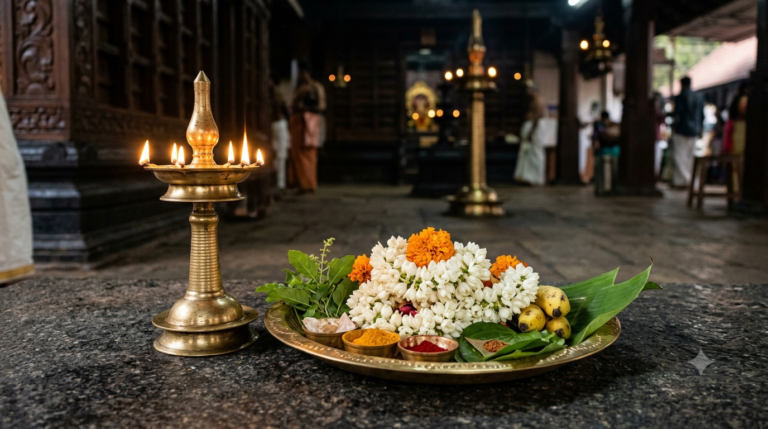
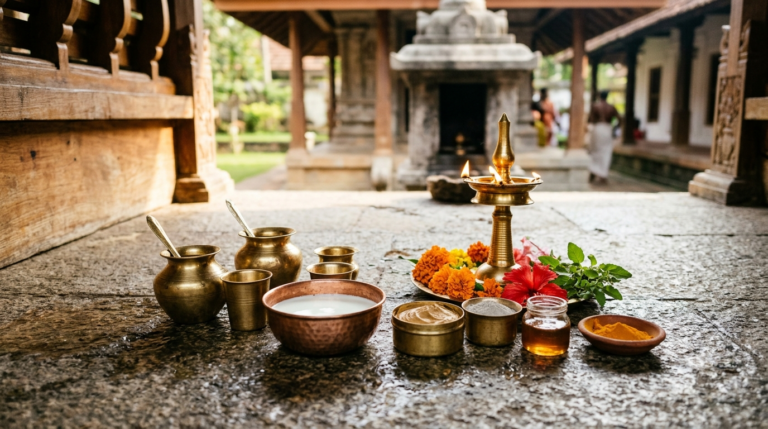
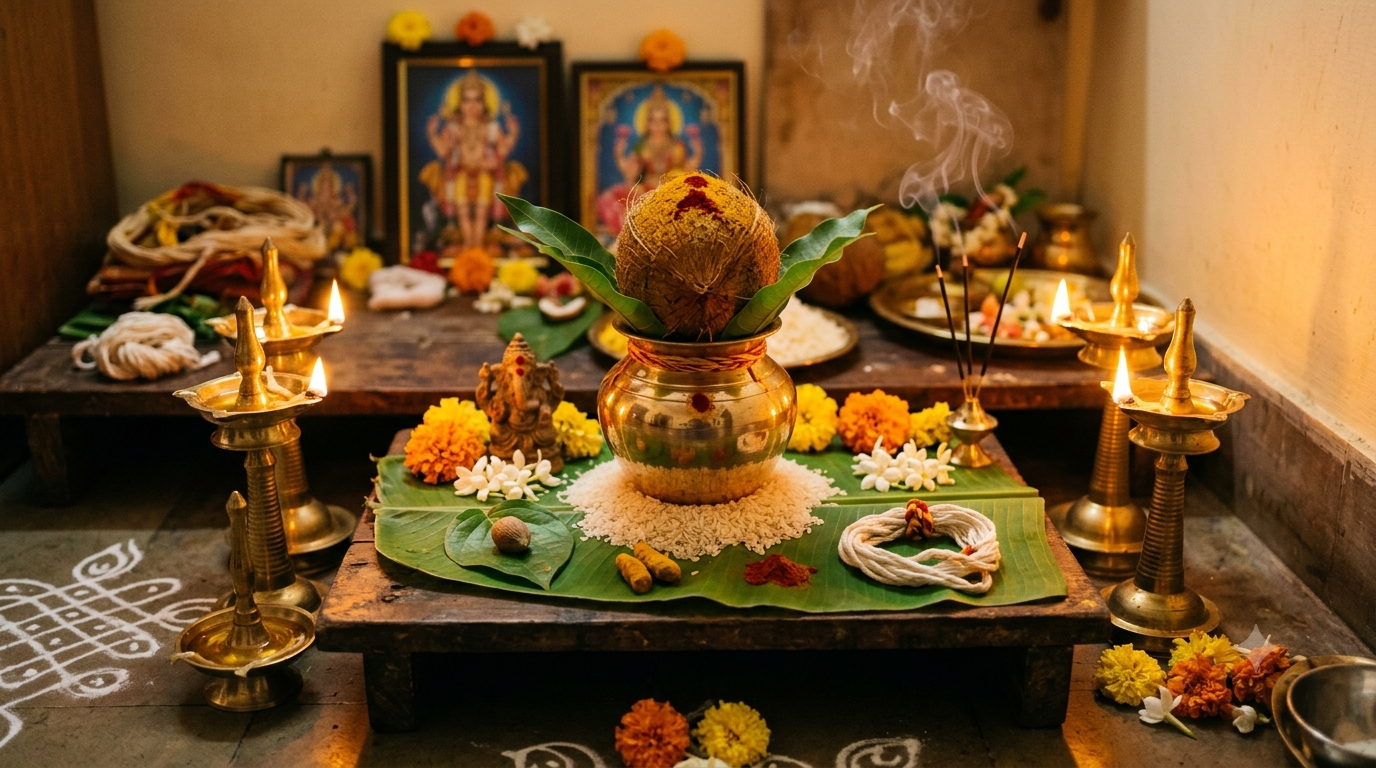
Gather everything a day ahead so the evening stays calm. Most items are common household puja articles, and the one special piece is the 21-knot thread you prepare yourself.
- A metal kalasham (pot) and a clean plate or banana leaf
- Raw rice to spread under the kalasham
- A coconut, plus mango leaves for the pot
- Turmeric, kumkum, sandal paste, and akshata (turmeric rice)
- Cotton thread to make the Kedara Gowri daaram with 21 knots
- Flowers, garlands, and tulasi or bilva leaves
- Incense, camphor, ghee lamps, and a bell
- Fruits, betel leaves and nuts, jaggery, and a naivedyam offering
- A picture or small idol of Shiva and Parvati
Kedara Gowri Vratam Pooja Vidhanam Step by Step
Follow these steps in order on the evening of the vratam. The whole sequence takes about an hour once your samagri is ready.
- Clean the house, bathe, and wear fresh clothes. Draw a kolam and set up the altar in a quiet corner.
- Fill the kalasham three-fourths with water, add a few tulasi leaves, and place mango leaves around the rim.
- Smear the coconut with turmeric and kumkum, then set it on the mango leaves to crown the pot.
- Spread raw rice on the plate and rest the kalasham on it. This kalasham represents Kedareshwara and Gowri.
- Light the lamps, offer sandal, kumkum, and flowers, and begin with a prayer to Lord Ganesha.
- Recite the Kedara Gowri Ashtottaram, the 108 names, while offering flowers with each name.
- Offer the 21 items or garments set aside for the deity, then wave the mangala harati.
- Present the naivedyam of fruits and sweets, and complete the puja with camphor arati.
The next morning, perform a short visarjana puja to conclude the vow respectfully. You may then share the prasadam and donate food or clothes to those in need.
The 21-Knot Sacred Thread
The Kedara Gowri daaram is the heart of this vow. Take cotton thread, twist it into a cord, and tie 21 knots along its length. During the puja, place it near the kalasham so it absorbs the blessings.
After the arati, women tie the thread around the neck, while men tie it on the right wrist. Wear it with devotion until the visarjana. Because the number 21 recurs through the ritual, treat the count carefully as you prepare the thread and the offerings.
Fasting Rules for the Vratam
Devotees usually keep a fast from morning until the evening puja is complete. Some observe a strict nirjala fast, while others take fruits, milk, or a single light meal through the day. Break the fast only after offering naivedyam and receiving prasadam.
Listen to your body before you commit to a strict fast. If you are pregnant, elderly, diabetic, or unwell, choose the fruit-and-milk option or consult your doctor first. A vow kept with a calm, healthy mind honours the tradition better than one that risks your wellbeing. The fast is an act of faith and discipline, not a medical remedy.
Significance and Benefits
In tradition, the Kedara Gowri Vratam is believed to grant marital harmony, family prosperity, and freedom from old sins. Because Parvati herself performed it to unite with Shiva, married women observe it for a long and happy union. Couples often keep the vow together to strengthen their bond.
These outcomes are matters of faith and devotional belief, not guaranteed results. The deeper value many devotees describe is the shared discipline of the day, the fast, the preparation, and the evening worship done side by side. That quiet togetherness is its own reward, whatever else one seeks.
Charity forms a quiet part of the vow as well. On the final day, devotees traditionally give food, clothes, or the set-aside offerings to a priest or to families in need. Since this act of dāna is meant to complete the observance, treat it as part of the ritual rather than an afterthought.
Kedara Gowri Vratam Across South India
The vow travels under different names across the southern states, yet the core ritual stays remarkably consistent. In Andhra Pradesh and Telangana, elders call it Kedareshwara Nomu and often pass the 21-knot thread down through the family. Tamil households know the day as Deepavali Nombu and weave it into the wider Diwali cleaning and worship.
Karnataka families link the day closely with their Gowri traditions. So devotees who keep the Swarna Gowri Vratha earlier in the year recognise the same reverence for the Goddess here. Because Kedareshwara is a form of Shiva, the vow also sits naturally beside other Shiva observances like the Pradosha Vratam, which shares the very same twilight Pradosh Kaal timing. Wherever it is kept, the Kedara Gowri Vratam holds to one idea: a couple worshipping Shiva and Gowri together, as one.
What Devotees Often Get Wrong
A few mix-ups spoil the vow every year, so it helps to know them in advance. These small corrections keep your observance accurate.
- Kedareshwara is not Kedarnath. This vow worships Shiva as Kedareshwara at home and has nothing to do with the Kedarnath yatra in the Himalayas.
- Watch the date. Keep the vratam on the Amavasya, which is November 8 in 2026, and not on the earlier Diwali day.
- Mind the thread placement. Women wear the 21-knot daaram on the neck, and men on the right wrist, so do not swap them.
- Beware fake booking portals. No genuine temple asks you to “book the vratam online” through a private site. You can perform it yourself at home, or approach a temple or a known priest directly.
Before You Begin the Vratam
The Kedara Gowri Vratam rewards preparation more than expense. Fix the date, gather simple samagri a day early, prepare the 21-knot thread, and set aside a quiet evening for the puja. If you cannot manage the full 21 days, the single-day observance on Deepavali Amavasya is completely valid and widely followed. Keep the fast within your health limits, worship with sincerity, and let the shared devotion of the evening be the real fruit of the vow.
Frequently Asked Questions
When is Kedara Gowri Vratam in 2026?
It falls on Sunday, November 8, 2026, on Deepavali Amavasya. Perform the puja in the evening during Pradosh Kaal, after sunset. Confirm the exact tithi timing for your city on a trusted panchang.
Who can perform the Kedara Gowri Vratam?
Anyone may observe it, but it is most popular among married women and couples. Many keep the vow together to seek a harmonious married life. Unmarried devotees and Shiva bhaktas can also perform it with equal devotion.
What is the 21-knot thread for?
The Kedara Gowri daaram is a cotton cord tied with 21 knots and blessed during the puja. Women wear it on the neck and men on the right wrist. It symbolises the vow and is removed after the visarjana.
Can I observe the vratam for only one day?
Yes. While the classical form runs 21 days, most families today keep it as a single day on Deepavali Amavasya. The one-day observance carries the same devotional value and is widely accepted.
Do I need to fast the whole day?
A fast until the evening puja is traditional, but you can adapt it. Fruits, milk, or one light meal are acceptable if a strict fast is hard. Anyone pregnant, elderly, or unwell should consult a doctor first.
Is Kedara Gowri Vratam the same as worshipping Kedarnath?
No. This vow worships Lord Shiva as Kedareshwara at home during Deepavali. It is unrelated to the Kedarnath temple or pilgrimage in Uttarakhand, though both names share the word Kedara.
What do I offer during the puja?
Offer flowers, the 21 items or garments, fruits, and a naivedyam of sweets. Recite the Kedara Gowri Ashtottaram while offering flowers. Complete the worship with mangala harati and camphor arati.