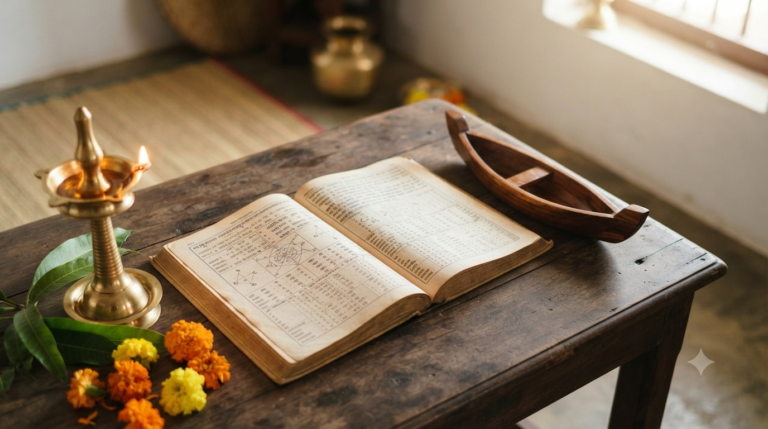
Quick answer: The Pambu Panchangam (“snake almanac”) is a traditional Tamil yearly almanac in the Suddha Vakya tradition, published by Manonmani Vilasam Press in Chennai since 1883. The label Asal No. 28 (“asal” = original) marks the authentic edition and separates it from look-alike copies. A fresh edition is released each year around the Tamil New Year. We do not host or distribute the book or any PDF of it — it is a copyrighted publication. To read the current year’s edition, buy it from the publisher or an authorised seller, and be cautious of fakes that borrow the “asal/original” wording.
Key Information at a Glance
| Common name | Pambu Panchangam (Tamil: snake almanac) |
| Branding | Asal No. 28 (“asal” = original / authentic) |
| Tradition | Suddha Vakya Panchangam (a Tamil almanac system) |
| Publisher | Manonmani Vilasam Press, Chennai (since 1883) |
| Language | Tamil |
| Release | New edition each year, around the Tamil New Year |
| Typical contents | Tithi, nakshatra, yoga, karana, muhurtham, festival dates, rahukalam / yamagandam timings |
| How to get it | Publisher or authorised book sellers (not a free download) |
What is the Pambu Panchangam and the “Asal No. 28” branding?
A panchangam is a traditional Hindu almanac that records the day-by-day astronomical and astrological data of a year. The Pambu Panchangam is one of the best-known Tamil almanacs of this kind. Its annual publication was started in 1883 by Konnur Manicka Mudhaliar, and it has been brought out by the Manonmani Vilasam Press in Chennai ever since. By most accounts it remains the most widely used Tamil almanac among Tamil-speaking communities around the world, printed in very large numbers each year.
The popular name comes from its cover. Pambu means “snake” in Tamil, and the cover carries a prominent snake image. The snake represents the Moon: because of the pull of various planets, the Moon’s apparent path is likened to the winding trail a snake leaves on sand. The design traditionally includes a set of small circles tied to the lunar cycle and the nakshatras (lunar mansions) of Indian astronomy.
The Tamil word asal means “original” or “genuine,” and No. 28 is the edition number long associated with the title. Together, “Asal No. 28” is the publisher’s way of signalling the authentic Pambu Panchangam in the Suddha Vakya tradition. The almanac belongs to the Suddha Vakya school of calculation, which is one of the recognised Tamil almanac systems — worth knowing if your family follows a particular tradition.
What does it contain?
The Pambu Panchangam is a compact reference packed with the daily data that Tamil households use for religious and astrological purposes. For each day of the year you can typically find the five core “limbs” of a panchangam: the tithi (lunar day), nakshatra (star or lunar mansion), yoga, karana, and the weekday. Alongside these it lists the auspicious muhurtham windows used for weddings, housewarmings, journeys and other ceremonies, as well as the inauspicious periods such as rahukalam, yamagandam and gulikai that many people avoid.
It also carries the year’s festival and observance dates — the dates for major Tamil and Hindu festivals, fasting days and temple events — along with planetary positions and other almanac details. This is why it is treated as a practical year-round handbook rather than just a calendar.
How to get the current edition (and beware of fakes)
The Pambu Panchangam is a copyrighted publication. We do not host, sell, or provide a download or PDF of it on this site. A new edition is published every year, usually timed to the Tamil New Year, and each edition covers that Tamil calendar year — so the right way to “stay current” is simply to obtain the latest yearly edition.
To get a genuine copy, buy it from the publisher (Manonmani Vilasam Press, Chennai) or from an established, authorised book seller. Reputable Tamil book retailers and devotional bookshops stock the current edition each year, both in stores and online.
Because the title is famous, copies and look-alikes do circulate. The very fact that the publisher prints “asal” (original) on the cover is a clue: it exists to help buyers tell the authentic edition from imitations. When you buy, check the publisher name, the “Asal No. 28” marking and the correct Tamil year on the cover, and prefer a trusted seller. Free “PDF” files passing around online may be unauthorised, out of date, or simply not the genuine almanac — another reason to buy the real, current edition.
How it is used
In everyday practice, families consult the Pambu Panchangam to plan around auspicious and inauspicious times. Before fixing a wedding date, starting a new venture, performing a housewarming, or beginning an important journey, many people check the day’s tithi and nakshatra and look for a suitable muhurtham while avoiding rahukalam and similar periods. Temple priests and astrologers also use it as a shared reference, which keeps observances consistent across a community. For most users it is a trusted, low-cost annual companion rather than a one-time purchase — you replace it with the new edition each Tamil year.
Frequently Asked Questions
What does “Asal No. 28” mean?
“Asal” is the Tamil word for original or genuine, and “No. 28” is the edition number long linked to the title. Together the publisher uses “Asal No. 28” to mark the authentic Pambu Panchangam in the Suddha Vakya tradition and to distinguish it from imitations.
Why is it called the Pambu (snake) Panchangam?
The cover features a prominent snake image. The snake represents the Moon, whose apparent path through the sky is likened to the winding trail a snake leaves on sand because of the influence of the planets.
Can I download the Pambu Panchangam as a free PDF here?
No. The Pambu Panchangam is a copyrighted publication, and we do not host or distribute it or any PDF of it. To read the current edition, please buy it from the publisher or an authorised book seller.
How often is a new edition released?
A fresh edition is published every year, usually around the Tamil New Year, and each edition covers that Tamil calendar year. To stay current, obtain the latest yearly edition rather than relying on an older copy.