Key Information at a Glance
| Festival | Gowri Ganesha Habba (Swarna Gauri Vrata + Ganesha Chaturthi) |
| Deities | Goddess Gauri / Swarna Gauri (Parvati) and Lord Ganesha |
| When (Gauri Habba) | Bhadrapada month, Shukla Paksha, Tritiya tithi |
| When (Ganesha) | The next day, Bhadrapada Shukla Chaturthi |
| Mainly observed by | Women of Karnataka (and parts of South India) |
| Key custom | Gauri daara (16-knot yellow thread) and bagina offering |
Significance of Gowri Ganesha Habba
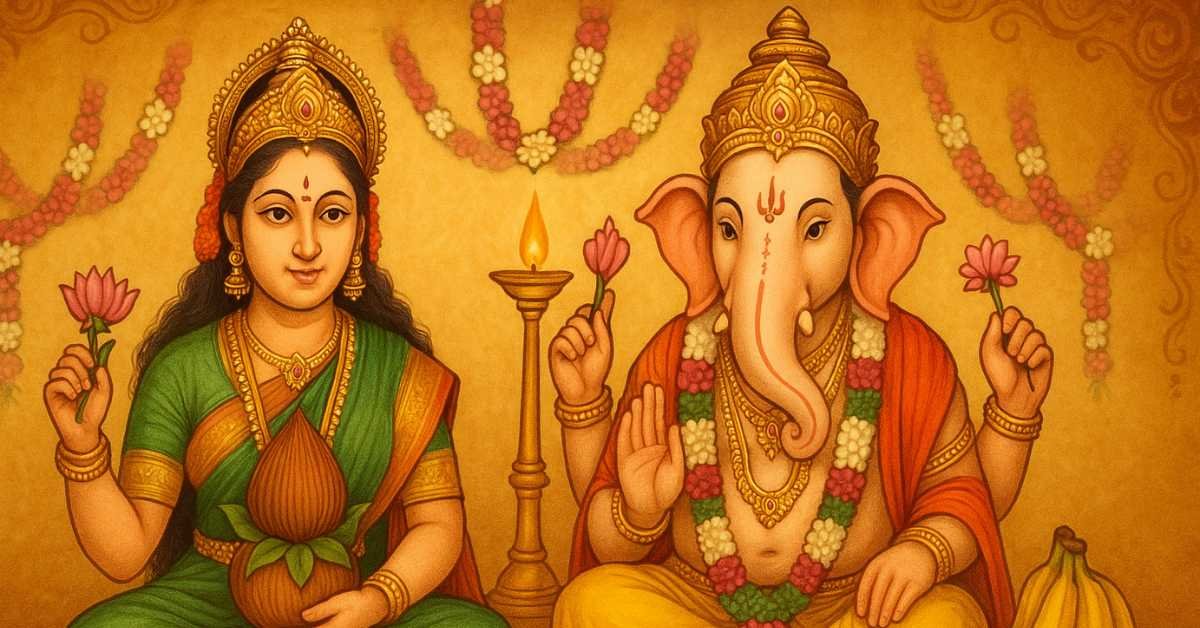
Gauri is a form of Goddess Parvati, the consort of Lord Shiva and the mother of Lord Ganesha. “Swarna” means gold, and “Vrata” means a vow or observance, so Swarna Gauri Vrata is the vow taken in honour of the golden goddess. By tradition, married women observe this vrata to pray for the long life and wellbeing of their husbands and the happiness of their home, while unmarried girls pray for a good marriage.
A widely told belief connects the two days: Gauri is said to visit her parents’ home on earth on Gauri Habba, and the next day her son Ganesha comes to take her back to Mount Kailasa. This is why the two festivals are celebrated together as Gowri Ganesha Habba, with Ganesha Chaturthi following Gauri Habba.
When It Is Observed (and How to Find This Year’s Date)
Gauri Habba is observed on the Tritiya tithi (third lunar day) of the Shukla Paksha (bright fortnight) in the Hindu month of Bhadrapada, which usually falls in August or September. Ganesha Chaturthi follows on the next day, the Chaturthi tithi of the same fortnight.
Because Hindu festivals follow the lunar calendar, the English calendar date shifts every year. To find the correct date for the current year, check a reliable Kannada panchanga (almanac) or a trusted online panchang for “Bhadrapada Shukla Tritiya.” The Gauri puja is generally performed in the morning, so families also look up the local Pratahkala (morning) muhurta for the day. As a fixed rule you can rely on: Gauri Habba is always the day immediately before Ganesha Chaturthi.
Gauri Puja Vidhi (Step by Step)
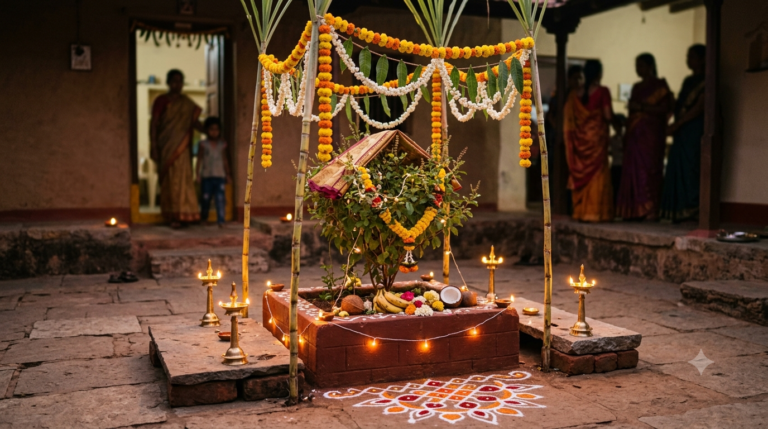
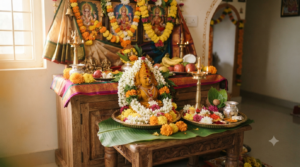
- Wake early, bathe, and clean the puja area. Decorate a small mandapa or wooden plank (mane) with banana stems and mango leaves.
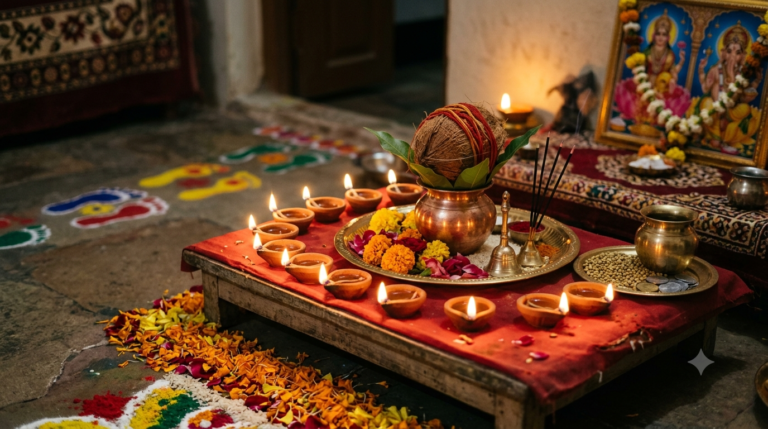
- Prepare the Gauri idol. Traditionally she is shaped from turmeric (arishina) paste or clay, or a small metal Gauri is used. Place her on a plate or vessel filled with rice (akshate).
- Decorate the goddess with a saree or gejje vastra, kumkum, turmeric, flowers, and jewellery.
- Light the lamp (deepa) and incense, and begin the puja with prayer to Lord Ganesha first, as is customary.
- Prepare and worship the gauri daara, a yellow thread coloured with turmeric and tied with 16 knots. After the puja, women tie this sacred thread on their right wrist (often tied for one another).
- Offer the shodashopachara (sixteen forms of service) as your family tradition allows, and recite the Gauri vrata katha (story) if you keep one.
- Offer naivedya such as obbattu/holige, payasa, kosambari, and chitranna, then perform aarti.
Ganesha Puja Vidhi (Step by Step)
- On Chaturthi, bathe and clean the space, then install the clay Ganesha idol on a decorated plank or alongside the Gauri set-up.
- Perform pranapratishtha (inviting the deity into the idol) according to your family practice, then begin the puja.
- Offer the traditional 21 items where customary, including durva grass (garike), red flowers, and akshate.
- Offer naivedya that Ganesha is especially associated with, such as modaka (kadubu), chakkuli, and other festive dishes.
- Recite the Ganesha vrata katha or stotras you know, then perform aarti.
- Perform visarjana (immersion) of both the Gauri and Ganesha idols in water on the same day or after a few days, as your family follows. While sending Gauri off, an udi or bagina of sacred items is offered.
Note: this page describes the steps in general terms. Recite only the mantras and katha that your family or a knowledgeable priest teaches you, as specific verses vary by tradition.
Samagri (Items You Will Need)
- Gauri idol (turmeric paste, clay, or metal) and a clay Ganesha idol
- Plate or vessel with rice (akshate); turmeric (arishina) and kumkum
- Banana stems and mango leaves for the mandapa decoration
- Gauri daara: yellow thread with 16 knots, coloured with turmeric
- Saree or gejje vastra and ornaments for the goddess
- Flowers, durva grass (garike) for Ganesha, betel leaves and nuts (veelya), coconut
- Lamp (deepa), oil or ghee, wicks, incense (agarbatti), and camphor (karpura)
- Bagina items: blouse piece, bangles, comb, mirror, kumkum, turmeric root, jaggery, dry coconut, dry fruits, cereals, and rice
- Naivedya dishes: obbattu/holige, payasa, kosambari, chitranna, and modaka/kadubu
Frequently Asked Questions
Is Gowri Habba the same day as Ganesha Chaturthi?
No. Gowri Habba (Swarna Gauri Vrata) is observed on Bhadrapada Shukla Tritiya, which is the day immediately before Ganesha Chaturthi. The two are celebrated together as one festival, but Gauri is worshipped first and Ganesha the next day.
What is the gauri daara and what is it for?
The gauri daara is a yellow thread coloured with turmeric and tied with 16 knots, representing the blessings of Goddess Gauri. It is worshipped during the puja and then tied on the right wrist of the women observing the vrata.
Who observes the Swarna Gauri Vrata?
It is mainly observed by women in Karnataka and parts of South India. Married women keep the vrata for the wellbeing of their family and husband, and unmarried girls observe it praying for a good marriage.
Can the puja be done at home without a priest?
Yes. Many families perform the Gauri and Ganesha puja at home following the steps above with sincerity and the items they have. If you want the full traditional mantras and procedure, you can learn them from an elder or a priest, as the exact verses differ between families.