Mrityunjaya Homam Thirukadaiyur: Essential Guide To Ritual, Benefits & Process
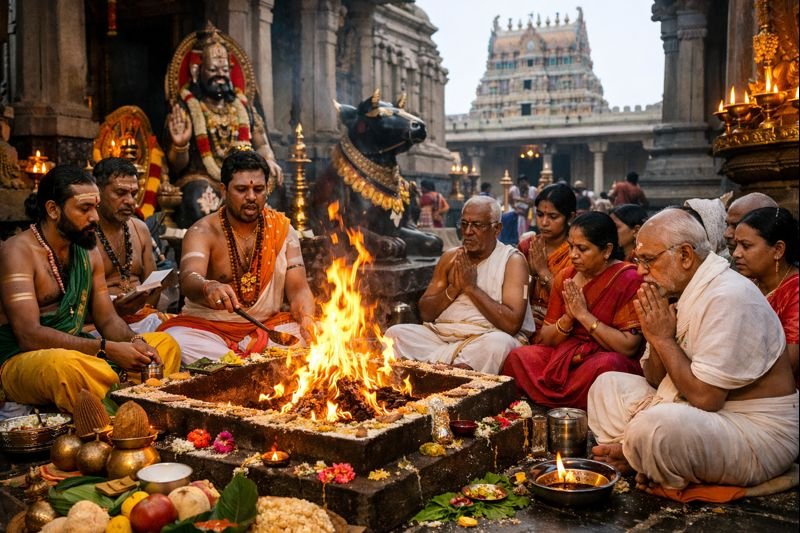
Mrityunjaya Homam Thirukadaiyur is a sacred Vedic fire ritual performed at the renowned Arulmigu Amirtha Kadeswarar Temple in Tamil Nadu, India, dedicated to Lord Shiva as the Conqueror of Death (Mrityunjaya). This ritual is believed to bestow blessings for a long life, protection from sudden danger, and the removal of doshas related to untimely death.
On the other hand, the temple, also known as the Sri Amrithaghateswarar Abhirami Temple, holds deep mythological significance as the site where Lord Shiva saved the young devotee Markandeya from death. Performing Mrityunjaya Homam at this sacred place is thought to yield powerful spiritual benefits, making it a sought-after rite for devotees across India and beyond.
Overview Of Thirukadaiyur And Its Significance
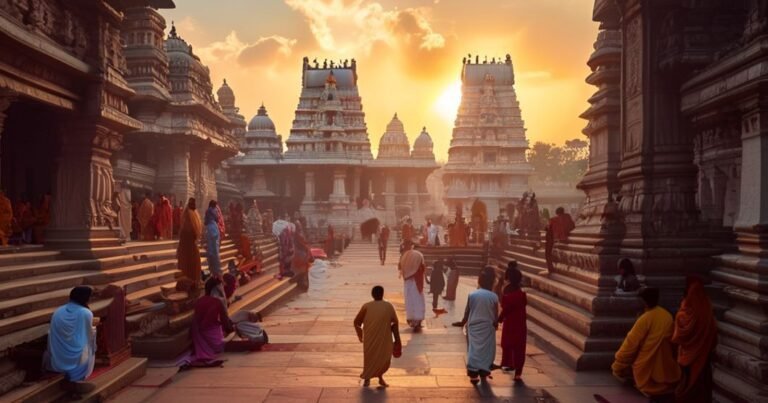
Thirukadaiyur is located in the Nagapattinam district of Tamil Nadu. It is famous for its association with longevity, healing, and divine grace. The temple complex primarily worships Lord Shiva and Goddess Abhirami, with stories that emphasize overcoming fear and death. Understanding Mrityunjaya Homam Thirukadaiyur is essential.
Additionally, legend has it that this is the place where Shiva defeated Yama (the god of death) to protect his devotee Markandeya, granting him eternal life. Devotees believe that rituals here can influence longevity and remove obstacles related to health and lifespan.
What Is Mrityunjaya Homam?
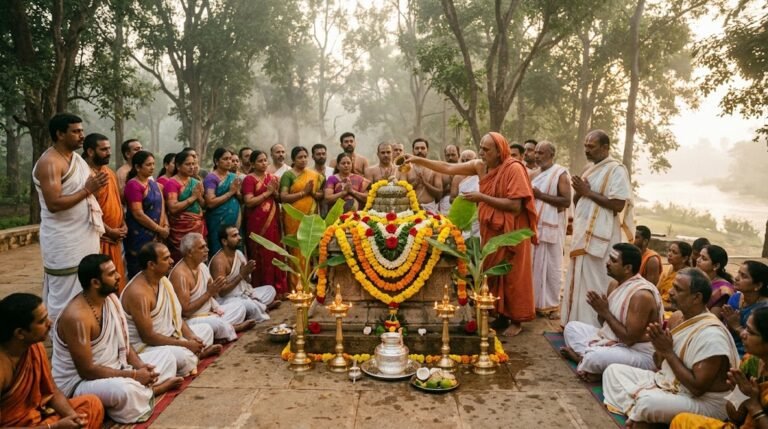
Mrityunjaya Homam is a fire ritual (yajna) centered around chanting the Maha Mrityunjaya Mantra — Om Tryambakam Yajamahe…, a powerful mantra dedicated to Lord Shiva. This homam is intended to invoke divine protection and overcome the fear of death, symbolically gaining “victory over death.”
The word “Mrityu” means death and “Jaya” means victory. In Thirukadaiyur, this ritual holds heightened significance due to the temple’s mythological connection with mortality and divine grace. This relates to Mrityunjaya Homam Thirukadaiyur.
Who Should Perform This Homam?
This ritual can be performed on one’s own behalf or on behalf of someone else, such as:
- Individuals seeking relief from illnesses or accidents
- Families praying for long life and protection
- Newborn babies to alleviate Balarishta dosha (dosha related to early age difficulties)
- People undergoing challenging life phases
My Experience At Thirukadaiyur During Mrityunjaya Homam
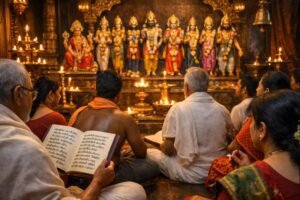
When I visited Thirukadaiyur, the aura of the temple surrounding the Amirtha Kadeswarar Shrine was profound. What surprised me most was how early devotees gathered before dawn, chanting the Maha Mrityunjaya Mantra in unison. Even before the homam began, the energy felt deeply calming and focused.
In contrast, i personally recommend arriving at least an hour before the scheduled ritual time — usually in the early morning — to soak in the temple’s serene atmosphere and offer personal prayers. Many priests are happy to explain the significance of each portion of the homam if you politely ask before the ritual starts. Learn more about Mrityunjaya Homam Thirukadaiyur.
Step-By-Step Mrityunjaya Homam Thirukadaiyur Procedure
The ritual follows a traditional Vedic sequence of steps. Though slight variations may occur depending on temple custom or priestly instructions, the core stages remain consistent:
1. Ganapathi Pooja
The homam begins by invoking Lord Ganesh to remove obstacles and seek blessings for the smooth conduct of the ritual.
2. Maha Sankalpam
The priest takes a sacred vow (sankalpa) specifying the devotee’s intentions, names, and family details. This aligns the ritual with the devotee’s purpose.
3. Punyahavachanam
Purification chants and rites are performed to cleanse the environment and participants spiritually before the fire ceremony.
4. Kalasa Sthapana
Sacred pots (kalasas) filled with holy water are arranged around the fire altar. They represent purity and divine presence.
5. Homam Chants And Offerings
The priests chant Vedic mantras, including the Maha Mrityunjaya Mantra, as clarified in ritual listings from various sources. Offerings such as ghee, herbs, and grains are poured into the sacred fire (agni) to invoke Shiva’s blessings.
6. Poornahuthi (Conclusion)
The final offering marks the completion of the fire ritual. Devotees often feel a palpable sense of release and peace at this moment.
7. Aseervachanam (Blessings)
At the end of the homam, priests offer blessings and sprinkle holy water (theertham) on the participants to seal the ritual spiritually.
Best Days And Auspicious Timing
There is no strict schedule mandating specific dates for Mrityunjaya Homam. However, observant devotees often choose:
- Birth star days related to the devotee or intended recipient of the homam
- Mondays, highly auspicious for Shiva worship
- Maha Shivaratri festival days, when Shiva’s energy is believed to be particularly powerful
Consulting an astrologer familiar with Hindu astrology can help identify the most beneficial date aligned with your birth chart.
Dress Code And Preparation Tips
Observing respectful attire reflects devotion and tradition. According to available guidelines:
| Role | Recommended Attire |
|---|---|
| Male Devotees | White pancha, dhoti/kurta, or pyjama |
| Female Devotees | Saree with blouse, Punjabi dress with dupatta, or churidar |
It is customary to take a head bath before the homam and carry at least two sets of fresh clothes. Devotees often bring a small packet of fruits or coconuts as personal offerings.
Duration And Cost Information
Typically, the Mrityunjaya Homam at Thirukadaiyur lasts about 2 to 2.5 hours. Fees vary with the japa count and offerings included. While there is no universally fixed price published officially online, online booking portals list tiered packages based on ritual components, mantra counts, and special arrangements.
Many devotees reserve their homam at least 7 to 10 days in advance to ensure proper priest arrangements, seating, and accommodation if required.
Benefits Of Performing Mrityunjaya Homam Thirukadaiyur
The spiritual and psychological benefits commonly associated with this homam include:
- Alleviation of fears related to sudden death and accidents
- Improvement in health and recovery from long-standing ailments
- Enhanced mental peace and emotional balance
- Reduction of negative energies affecting personal and family life
- Promotion of long life and overall wellbeing
Devotees often report a deep sense of calm and inner strength after the ritual, attributed to the concentrated chanting of mantras and the powerful spiritual environment of the temple.
Common Mistakes To Avoid When Planning Your Homam
Here are common pitfalls devotees may encounter:
- Last-minute planning: Without advance booking, priests and necessary materials may not be available.
- Ignoring auspicious timing: Conducting the ritual on random dates may dilute the intended benefits.
- Improper attire: Not following the dress code can be seen as disrespectful.
- Distractions during the ritual: Talking or using phones can disrupt the meditative atmosphere.
Frequently Asked Questions (FAQ)
What Is The Maha Mrityunjaya Mantra Used In The Homam?
The central mantra chanted is the Maha Mrityunjaya Mantra — Om Tryambakam Yajamahe Sugandhim… which is believed to protect and bestow life force upon devotees.
Can Anyone Participate In This Homam?
Yes. Individuals of all ages can participate, either personally or on behalf of family members or loved ones. Traditional practices require details like name, birth star, and gotra for accurate sankalpam.
Do I Need To Stay At The Temple Town?
Staying near the temple for at least a day can help you participate fully and receive blessings post-homam, especially if traveling from afar.
Is Mrityunjaya Homam Only For Health Problems?
Though it is powerful for health and longevity, devotees also perform it for general peace, spiritual growth, and to strengthen family harmony and emotional resilience.
Visiting Tips And Best Practices
If you plan to witness or participate in the ritual:
- Arrive early — the temple opens at 6:00 am.
- Carry water and light snacks if you have a long wait.
- Respect temple customs and silence zones during homam.
- Book your homam slot in advance via trusted channels.
Conclusion
Mrityunjaya Homam Thirukadaiyur is a spiritually uplifting ritual rooted in ancient Vedic tradition, offering seekers a path toward peace, protection, and hope. Whether you seek relief from health challenges, longevity, or emotional tranquility, performing this sacred homam at the historic Amirtha Kadeswarar Temple can be a touching and transformative experience. By understanding the rituals, preparations, and traditions outlined above, you can approach the homam with clarity, reverence, and readiness.
+ There are no comments
Add yours