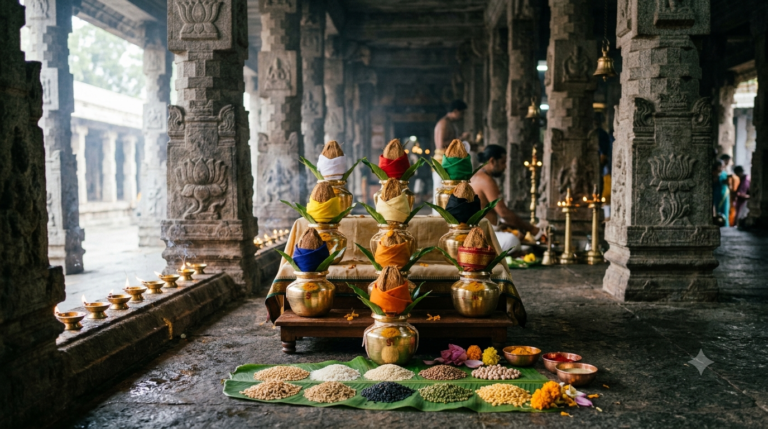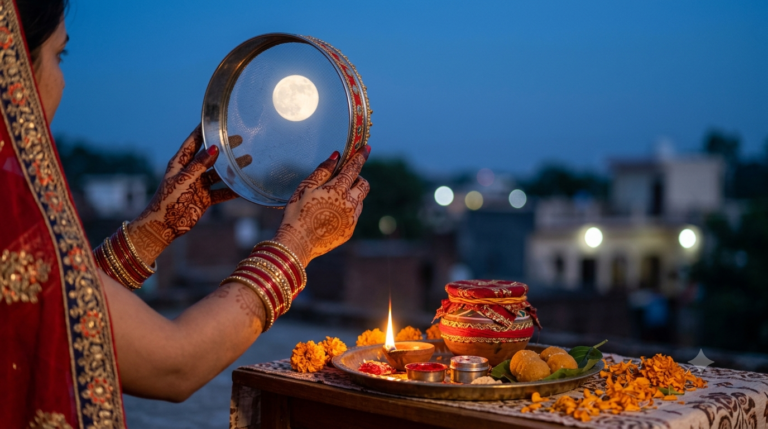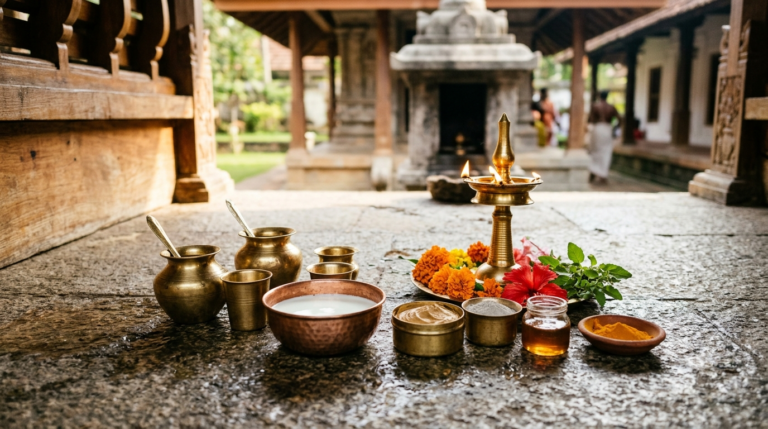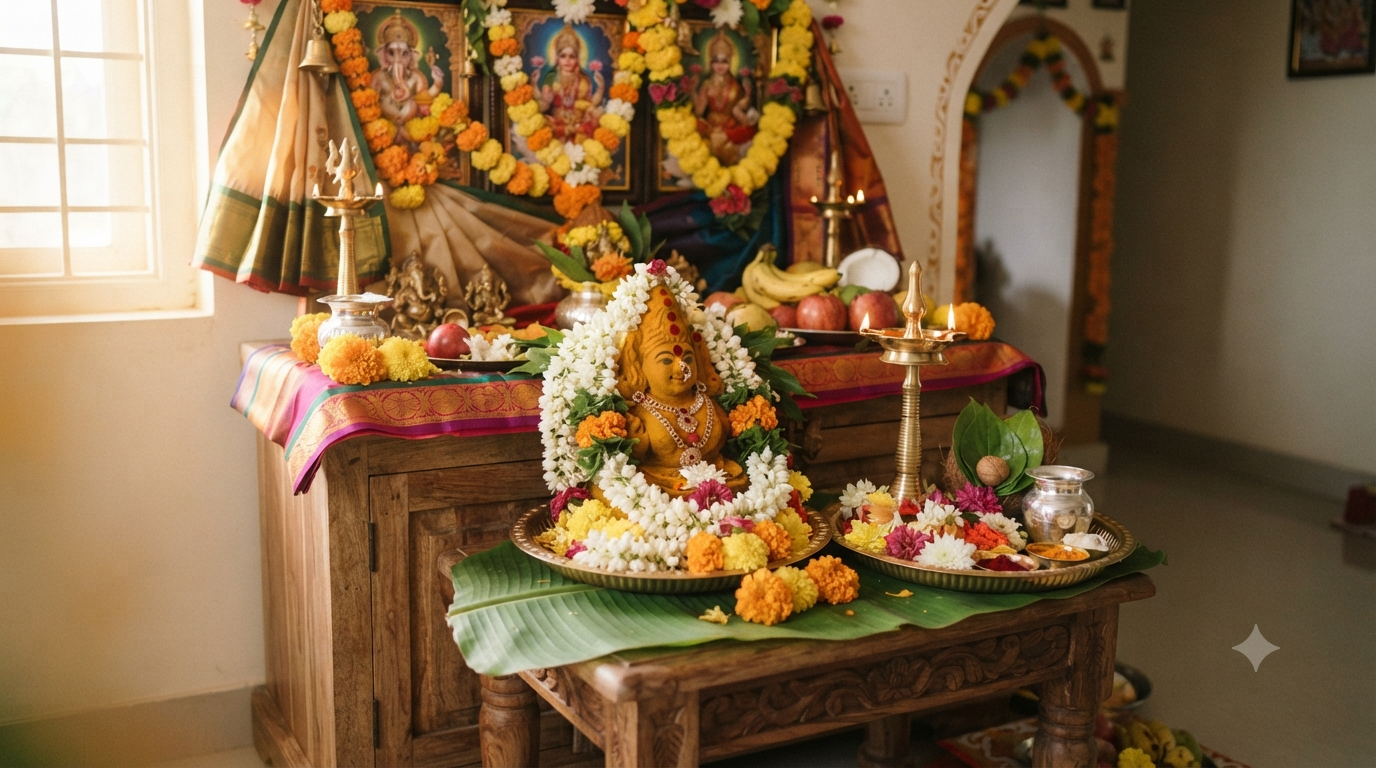
The Bengaluru calendars checked here list 14 September 2026 for Swarna Gowri Vratha 2026. The earlier version of this page gave Sunday, 13 September, but that does not match the Bengaluru sunrise-based panchanga reading checked after the festival. This refreshed page records the corrected date, explains why calendars disagreed, and keeps the ritual background as a historical reference.
2026 status: This event is complete. The date information below is a record of the 2026 observance, not a preparation guide for an upcoming festival.
Independent guide: Sri Vyasa Pooja is an independent Hindu information website. We are not a temple, mutt, panchanga office, or booking service, and we do not accept bookings, donations, or payments.
Swarna Gowri Vratha 2026: Correct Date at a Glance
The Bengaluru calendars checked here list Monday, 14 September 2026 for Swarna Gowri Vratha 2026. Bhadrapada Shukla Tritiya was still running at sunrise that morning, so the pratahkala rule placed Gowri worship on 14 September. Ganesh Chaturthi also fell on 14 September after Chaturthi began later that morning.
| 2026 detail | Corrected reference |
|---|---|
| Festival | Swarna Gowri Vratha / Gowri Habba |
| Bengaluru calendar date | Monday, 14 September 2026 |
| Lunar day | Bhadrapada Shukla Tritiya |
| Festival status | Completed |
| Ganesh Chaturthi, Bengaluru 2026 | Monday, 14 September 2026 |
| Why some pages show 13 September | Different locations, time zones, or date-assignment rules |
The date is supported by the Drik Panchang Bengaluru daily panchanga for 14 September 2026 and the Drishya Ganit Panchang 2026 calendar. Drik links should always be checked with Bengaluru selected, because the same festival page can show a different date for another city.
Why Swarna Gowri Vratha 2026 Was on 14 September in Bengaluru
The key is the tithi at the relevant worship period, not which Gregorian date contained most of Tritiya. In Bengaluru, Shukla Tritiya began on 13 September and continued past sunrise on 14 September. Tradition links Swarna Gowri worship to the pratahkala, so the sunrise-based reading moved the observance to Monday, 14 September.
Swarna Gowri Vratha 2026 is a useful example because Hindu festival dates do not work like fixed civil anniversaries. A tithi can begin after sunrise on one day and end shortly after sunrise on the next. When that happens, the festival rule decides which civil date carries the observance.
The old version of this page treated Sunday as the main day because most of Tritiya fell on 13 September. That was too broad. For a Bengaluru-focused answer, the panchanga rule and local sunrise are more important than the number of clock hours that a tithi occupies on a civil date.
Why did some calendars show Sunday, 13 September?
There were two main reasons. First, some online calendars appear to assign the festival to the civil day containing most of Tritiya instead of applying the local pratahkala rule. Second, location changes the relationship between tithi and sunrise, so an overseas city can legitimately land on a different civil date.
That second point is easy to miss. A calendar calculation intended for another city cannot establish the correct Bengaluru observance. Therefore, check the selected city and year on the source page before relying on its festival date.
Why did Gowri Habba and Ganesh Chaturthi share one date?
In most years, families speak of Gowri Habba as the day before Ganesh Chaturthi. In 2026, however, the tithi transition happened after sunrise on 14 September. That allowed the Gowri vrata to belong to the early morning while Chaturthi governed the later Ganesha worship on the same Gregorian date.
Drik Panchang’s 2026 Bengaluru Ganesh Chaturthi page explicitly lists Monday, 14 September. The site’s Ganesh Chaturthi guide provides further ritual background. The traditional sequence did not disappear; only the civil calendar compressed both observances into one date.
Swarna Gowri Vratha 2026 and Regional Calendar Differences
Swarna Gowri Vratha 2026 shows why festival pages must name a location. A single universal date can mislead readers when sunrise, time zone, and festival rules interact. Karnataka households should use a Karnataka or city-specific panchanga, while families abroad should use calculations for their own location.
| Calendar context | How to read the 2026 date |
|---|---|
| Bengaluru, Karnataka | 14 September in the Bengaluru calendars checked here |
| Another Indian city | Check that city’s calendar; do not infer its date from Bengaluru |
| Overseas locations | Check each city separately; no universal overseas date is stated here |
| Family or sampradaya calendar | Follow the panchanga tradition consistently used by the household |
This does not mean every conflicting date is equally strong for Bengaluru. A page that simply says “13 September for Karnataka” without explaining the local rule should not outrank a city-specific panchanga calculation. For future years, always check the festival for your location instead of carrying forward a date from an older article.
What Swarna Gowri Vratha Means
Swarna Gowri Vratha honours Goddess Gowri, the auspicious form of Parvati. In Karnataka, the festival is commonly called Gowri Habba and forms the opening part of Gowri Ganesha celebrations. Families welcome Gowri into the home with flowers, turmeric, lamps, food offerings, and the exchange of bagina.
The word swarna means golden. In devotional usage, it points to Gowri’s radiant and auspicious form rather than requiring a gold idol. Many households use a turmeric Gowri, a clay image, or a family image that has been part of the observance for years.
Married women traditionally pray for family wellbeing and marital harmony, while unmarried women may also take part according to family custom. These are matters of faith and tradition, not guaranteed outcomes. The observance is better understood as a family vrata built around devotion, hospitality, and continuity between generations.
How the 2026 Vratha Was Traditionally Observed
The ritual order varies between Smarta, Madhwa, Telugu, Kannada, and family traditions. Still, the core Karnataka pattern is recognisable. Families installed Gowri, performed the main worship, tied the sacred thread, offered naivedya, and shared bagina with married women.
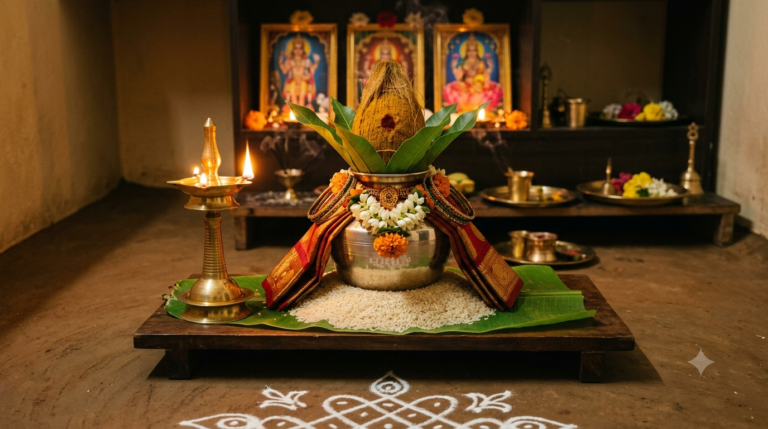
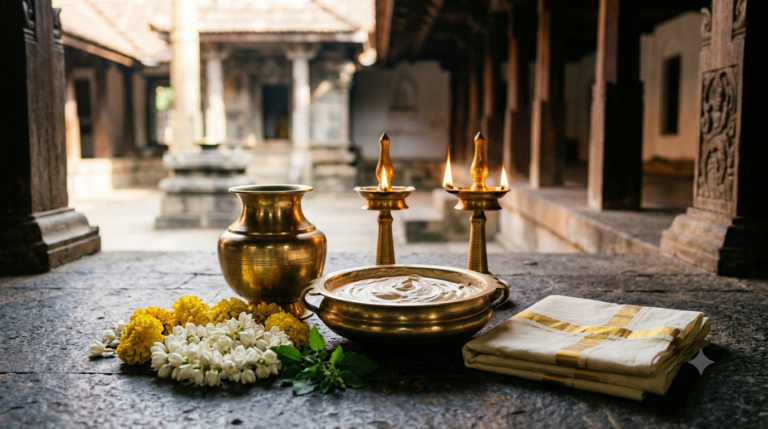
- Gowri sthapana: The household placed a turmeric, clay, metal, or framed form of Gowri on a clean altar or peeta.
- Initial worship: Many families invoked Ganesha first, then made the sankalpa for the vrata.
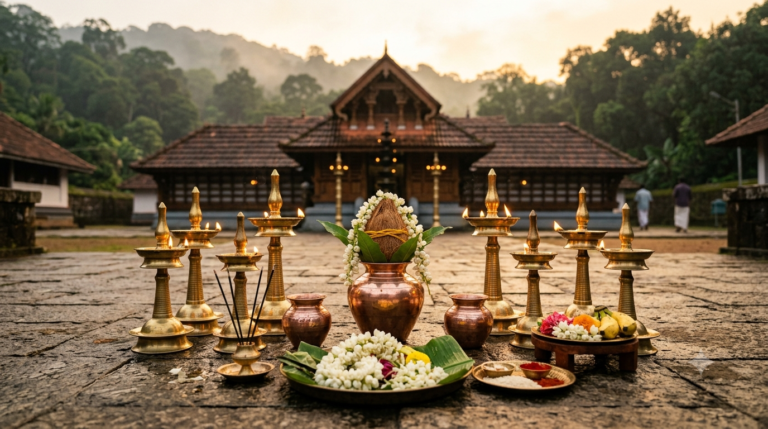
- Shodashopachara: Gowri received the traditional sixteen honours, including water, sandal paste, flowers, lamp, incense, food, and aarati.
- Vratha katha and nama: Families read or recited the story and names of Goddess Gowri according to their tradition.
- Gauri Dara: Women tied the yellow sacred thread associated with the vrata.
- Naivedya: The household offered sweets, cooked dishes, fruit, coconut, and water according to local custom.
- Bagina: Married women exchanged the auspicious offering set known as bagina or morada bagina.
- Farewell: Families kept or immersed the Gowri image according to their custom, often alongside the Ganesha observance.
Readers who want the Kannada text rather than a date explanation can use the site’s separate Swarna Gowri Vratha Kannada vidhana guide. That page serves a different intent: it focuses on the Kannada procedure and reading material, while this page records the corrected 2026 date.
The Gauri Dara and its meaning
The Gauri Dara is a yellow sacred thread used in the vrata, often prepared with sixteen knots. The number sixteen connects with the shodashopachara tradition and with the idea of complete auspicious worship. Exact tying customs differ, so a household should follow its family practice rather than treating one internet version as universal.
The earlier article presented every thread detail as if one rule applied across South India. This refresh keeps the common tradition but removes that overstatement. Ritual details can vary even between neighbouring Kannada families, especially when elders follow different sampradayas.
Bagina, Naivedya, and Karnataka Family Practice
Bagina is one of the most distinctive Karnataka elements of Gowri Habba. It is usually arranged in a mora or winnow and carries auspicious household items. Common examples include turmeric, kumkum, bangles, grains, dal, jaggery, coconut, fruit, and a blouse piece, although the contents vary widely.
Families often offer one set symbolically to Gowri and exchange others with sumangalis. The practice represents sharing, family connection, and blessings rather than a fixed shopping list. For that reason, this refreshed page does not tell readers to buy a set number of baginas or specific products for an event that has already passed.
Naivedya also changes by household. Payasa, holige, kosambari, coconut-based dishes, fruit, and regional sweets are common, but no single menu defines the vrata. The important editorial distinction is simple: ritual examples are useful, while pretending there is one mandatory internet checklist is not.
The 13 September Error: What Was Corrected
The previous version stated that Sunday, 13 September was the correct day for Swarna Gowri Vratha 2026 in Karnataka and described 14 September as a minority alternative. This refresh removes that framing. The Bengaluru calendars checked here list Monday, 14 September, because Tritiya continued through sunrise.
The old Swarna Gowri Vratha 2026 page also said that the “main Gowri puja” ran through a generic morning-to-midday period on Sunday. That wording was not location-specific and is no longer useful after the event. This refresh therefore removes generic clock-time advice and retains only the calendar logic needed to understand why the date was 14 September in Bengaluru.
A third correction concerns Ganesh Chaturthi. The earlier article described Ganesha as arriving on the following civil day. The Bengaluru calendar sources checked here list both Gowri Habba and Ganesh Chaturthi on Monday, 14 September 2026. The sequence remained tied to Tritiya followed by Chaturthi, even though both fell within one civil date.
Fasting and Health: Keep Tradition Proportionate
Some devotees fast during Gowri Vratha, while others eat fruit, milk, or a simple sattvik meal. Family rules vary, and fasting is not a medical treatment. Anyone who is pregnant, nursing, elderly, diabetic, unwell, or taking regular medication should put health needs first.
A doctor or qualified health professional should guide any strict or waterless fast when there is medical risk. Devotional practice should never require someone to ignore symptoms, skip essential medicine, or place themselves in danger. The same principle applies in future festival years.
How to Use This Page After the Festival
Swarna Gowri Vratha 2026 now serves here as a historical reference rather than an upcoming-event checklist. Its main purpose is to settle the Bengaluru date, document why the old answer changed, and show how location affects Hindu festival calendars. That makes it useful when readers compare archived calendars or plan future content.
Do not reuse the 2026 civil date for another year. Swarna Gowri Vratha follows Bhadrapada Shukla Tritiya, so the Gregorian date changes annually and needs a fresh panchanga calculation. For a future observance, check a trusted local panchanga for that specific year and city.
For readers comparing Swarna Gowri Vratha 2026 with the related Telugu practice, the site also has a Gowri Tadiya Vratha Vidhanam. The tithi is related, but the household customs and terminology are not identical across regions.
Frequently Asked Questions
What was the exact Swarna Gowri Vratha 2026 date in Bengaluru?
The Bengaluru calendars checked here list Monday, 14 September 2026 for Swarna Gowri Vratha 2026. Tritiya remained at sunrise, so the pratahkala rule placed the vrata on that date. This refresh corrects the earlier 13 September answer on this page.
Why did some websites list 13 September 2026?
Some pages used a different date-assignment method, while others used calculations for another location. Time zone and sunrise can shift a tithi across civil dates. Therefore, a festival page should always name its city before presenting one date as universal.
Was 13 September wrong everywhere?
The Bengaluru finding does not establish what date applied everywhere else. Local sunrise and festival rules can produce a different civil date, so another city needs its own verified calculation. For Bengaluru, the calendars checked here list 14 September 2026.
Did Swarna Gowri Vratha and Ganesh Chaturthi fall on the same date in 2026?
Yes. The Bengaluru calendar sources checked here list both on Monday, 14 September 2026. Gowri worship belonged to Tritiya at the start of the day, while Ganesh Chaturthi followed after the tithi changed. The ritual sequence stayed intact even though both observances shared one civil date.
What tithi determines Swarna Gowri Vratha?
The vrata belongs to Bhadrapada Shukla Tritiya. However, the civil date depends on how that tithi overlaps the prescribed worship period in the local panchanga. That is why copying a Gregorian date from one city or one year can produce an error.
Was there one correct puja clock time for all of India?
No. A single clock time is not reliable for every city because sunrise and local panchanga calculations vary. Since the 2026 event is complete, this page no longer publishes a generic “morning to midday” window. Future readers should use a city-specific panchanga for the year they are observing.
Is Swarna Gowri Vratha the same as Hartalika Teej?
Both observances connect through Bhadrapada Shukla Tritiya and the worship of Goddess Parvati, but regional customs differ. Karnataka’s Gowri Habba centres on Swarna Gowri worship, Gauri Dara, and bagina. North Indian Hartalika Teej has its own fasting patterns, stories, and ritual details.
What should I check for the next Swarna Gowri Vratha?
Check the new year’s Bhadrapada Shukla Tritiya in a trusted panchanga set to your city. Then follow the calendar tradition used by your family or purohit. Do not carry forward the 2026 date, puja window, or another city’s result into a future year.