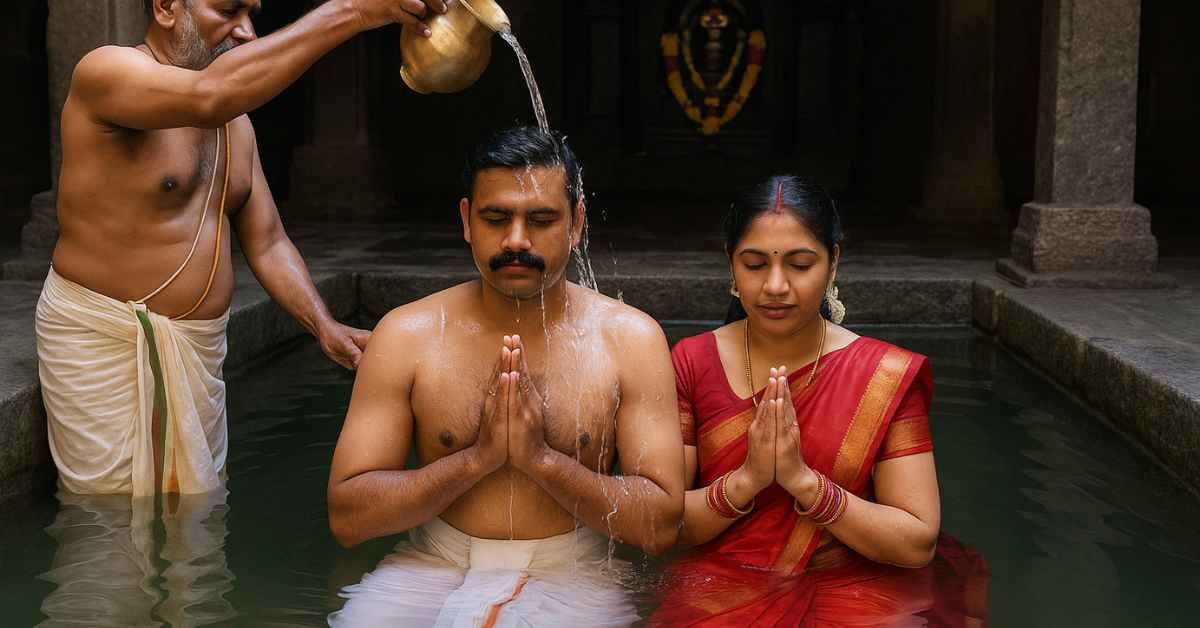
The couple’s Dampathi Pooja at the Rameshwaram Temple is a unique ritual combining worship and a sacred bath (snānam) to invite harmony, peace and prosperity into married life.
Brief Summary
- Explanation of the term Dampathi Pooja (couple-worship ritual)
- Historical significance of Rameshwaram Temple as a sacred site
- Step-by-step procedure for the ritual: worship + sacred bath
- Important tips for couples preparing for this pooja
- Frequently asked questions and clarifications
The Dampathi Pooja at the sacred Rameshwaram Temple (also known as the Ramalingeswara Swamy Temple) is a deeply meaningful ritual designed for married couples seeking divine blessings for harmony, prosperity and spiritual cleansing. To understand and participate in it properly, we will explore its background, steps, and practical tips.
What is the Dampathi Pooja?
The term “Dampathi” means a married couple, and “Pooja” refers to the act of worship or offering in the Hindu tradition. At Rameshwaram Temple this ritual specifically focuses on the couple as a unit—seeking the blessings of Lord Shiva and Goddess Parvati for their relationship and joint life. According to temple-guide sources, this is said to be “one of the most popular and important poojas performed” at Rameshwaram for couples.
What makes this ritual distinct is that it involves two parts:
- Formal worship of the deities in the temple.
- A sacred bath (snānam) afterwards in the temple’s water body.
This bath is believed to cleanse karmic influences and bring peace and prosperity.
Historical & Spiritual Context of the Temple
Rameshwaram Temple, located in Tamil Nadu, is dedicated to Lord Shiva, and its significance is amplified by ancient lore: as per the Ramayana tradition, Lord Rama installed and worshipped the sacred Jyotirlinga here.
Because of this heritage, rituals performed here carry extra weight for devotees. The Dampathi Pooja takes advantage of the temple’s powerful spiritual atmosphere, offering couples a chance for ritual rejuvenation and bonding.
Step-by-Step: Procedure of the Pooja and Snānam
Here’s a detailed walkthrough of how the Dampathi-Pooja and the subsequent sacred bath is conducted:
Pre-Pooja Purification
- The couple first takes a holy dip in the sea or another nearby water body to purify themselves before entering the temple.
- They then visit the temple and offer their prayers to Lord Shiva and Goddess Parvati.
The Worship (Pooja) Inside the Temple
- The priest seats the couple in front of the idols of the deities.
- Offerings are made: flowers, fruits, etc. Mantras are recited invoking the divine blessings for the couple.
- The idea is to symbolically commit the relationship to divinity, honouring the bond and seeking spiritual support.
The Sacred Bath (Snānam)
- After the worship, the couple is taken to the temple’s sacred tank or water body (in this article referred to as Agni Theertham) for the ceremonial bath.
- First they assume the Anjali Mudra (hands joined in prayer) and salute the deities.
- The priest pours holy water over the couple’s heads while chanting mantras. They then immerse themselves fully in the water, reciting additional prayers.
- After emerging, the couple is provided fresh dry clothes to wear, and they offer prayers once more.
Why Couples Choose This Ritual
Many couples opt for the Dampathi Pooja for reasons such as:
- Seeking blessings for a harmonious married life.
- Addressing astrological “doshas” or obstacles in the relationship. The article mentions that this ritual is considered “a really good option” to remedy such issues.
- Renewing their commitment in a sacred setting and strengthening their spiritual bond.
- Experiencing an unusual ritual that combines both worship and immersion, which is relatively rare and unique in many temple contexts.
Practical Tips for Couples Planning the Ritual
- Dress modestly and appropriately: As you will enter the temple sanctum and perform the bath, wear comfortable, clean clothes and pack a change of clothes.
- Arrive early: Because this type of special pooja is offered for couples and has limited slots, arrival ahead of time helps avoid delays.
- Contact the temple priest or administration: Confirm timing, fees (if any), items required for offering, and any special rules.
- Follow the hygiene protocols: Since the ritual involves immersion in water, ensure you are physically fit, and carry essentials like a towel, dry clothes, and footwear.
- Carry offering items: Flowers, fruits, and other items per temple norms.
- Respect the ritual sequence: First worship, then bath, then fresh clothes + further prayers. Deviating may reduce the intended effect in tradition.
- Mental preparation: Approach this with devotion and an open heart. The ritual is not just symbolic but spiritually oriented — the benefit depends on sincere participation.
FAQs
Q1. Is this pooja only for married couples?
Yes — the term Dampathi means a couple (husband and wife), and the ritual is designed with that in mind.
Q2. Can unmarried persons or single individuals participate?
According to sources, this specific ritual is intended for married couples. Unmarried individuals should enquire at the temple for alternative offerings.
Q3. Is the bath strictly inside a temple tank or can it be in the sea?
The article indicates the couple first dips in the sea or nearby water body for purification, then uses the temple’s sacred tank for the formal snānam.
Q4. What sort of changes can one expect after doing this pooja?
Traditionally, this ritual is believed to bring greater harmony in married life, reduce relationship obstacles, and invite peace and prosperity. While spiritual results are subjective, the symbolism and setting are strong.
Q5. Are there any special dates or times when this pooja is more auspicious?
The referenced article does not list specific dates or timing details. Couples should check with the temple administration for auspicious muhurats or any special schedule set aside for couple’s worship.
Key Takeaways
- The focus keyword Dampathi Pooja has been integrated throughout this article.
- This ritual is unique to the Rameshwaram Temple and combines worship + sacred bath — making it a powerful offering for married couples.
- Preparation and sincere participation are as important as the ceremony itself.
- While outcomes are not guaranteed in material terms, the ritual offers symbolic and spiritual value that many couples find meaningful.
Author: Vijaya Durga Pemmasani
References & Helpful Links
Related Articles


+ There are no comments
Add yours