Sri Jyothirbheemeshwara Vratam Pooja Vidhanam Telugu PDF Download: Essential Rituals & Traditions
Sri Jyothirbheemeshwara Vratam Pooja Vidhanam Telugu PDF Download is a highly sought-after resource for devotees who want to follow the traditional steps of Jyothirbheemeshwara Vrata or Bheemana Amavasya puja, especially during Ashada Amavasya. This vratam is observed with devotion by married and unmarried women for marital bliss, long life of husbands and wellbeing of brothers, and spiritual merit. According to Hindu traditions, this vratham is performed on the no-moon day in the month of Ashada (June-July) every year. For authoritative details about Hindu calendar observances, you can refer to Bhimana Amavasya on Wikipedia.
What Is Sri Jyothirbheemeshwara Vrata?
Sri Jyothirbheemeshwara Vrata, also called **Bheemana Amavasya** or **Pathi Sanjivini Vrata**, is a Hindu vrata observed on the new moon day of the **Ashada month** (usually in July-August). This vratha is dedicated to Lord Shiva (as Jyothirbheemeshwara) and Goddess Parvati. Married women traditionally observe it for the long life and wellbeing of their husband and family, while unmarried girls observe it praying for a good life partner.
In traditional belief, for the first nine years after marriage, married women perform this vratam every Ashada Amavasya and in the ninth year a pair of lamps (deepa) is presented to a brother or a Brahmin as a gesture of dana (charity). Understanding Sri Jyothir Bheemeshwara Vrata is essential.
Understanding the Significance of the Vrata
The underlying spiritual aim of the vratam is to seek divine blessings for prosperity, marital unity, and the wellbeing of male family members. The vratam is rooted in ancient Hindu practices of worshipping divine forms like Shiva and Parvati on auspicious tithis to gain dharmic benefits. Women performing this vrat are believed to receive spiritual strength and life blessings for their husbands and family.
Additionally, legend has it that this vrata was once observed by a devoted girl during a dire situation, impressing Shiva and Parvati, who appeared and granted boons. Such stories highlight unwavering devotion rather than ritualistic strictness as the central message.
When To Perform This Vrata?
This vrata is observed on **Ashada Amavasya**, the new-moon day in the Ashada month of the Hindu calendar. For example, *in 2025, it falls on July 24*. This relates to Sri Jyothir Bheemeshwara Vrata.
The timing depends on the regional lunar calendar; devotees should consult a traditional panchangam or temple calendar for exact tithi and muhurtham. It’s best to start preparations one day before Ashada Amavasya morning. This ensures that preparations are complete before Brahma Muhurta or sunrise.
Requirements & Preparations Before the Puja
Before you begin the puja vidhanam, it’s helpful to prepare all items in advance:
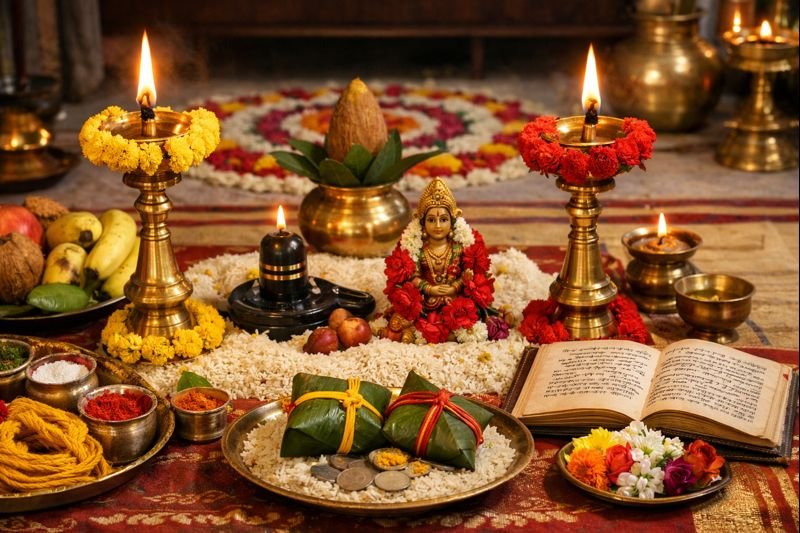
| Item | Purpose |
|---|---|
| Pair of lamps (deepa) or clay kalikamba lamps | Represent Shiva & Parvati |
| Rice / grains | Base for placing items |
| Betel leaves, betel nuts | Offerings |
| Turmeric, kumkuma | Tilak & decoration |
| Thread with 9 knots | Tying as sacred vow |
| Wrapped coins / Bandara (kadubu) | Ritual breaking by boys |
| Flowers, fruits, bananas | Naivedya offerings |
According to traditional guidance, fasting or abstaining from fried foods is observed by devotees on this day until after the puja. Male members of the family break the kadubu as part of a ritual celebrating wealth and blessings. Learn more about Sri Jyothir Bheemeshwara Vrata.
Step-By-Step Pooja Vidhanam
1. Cleanliness & Setup
Clean your home and especially the puja area. Draw *rangavalli* (kolam) outside the main entrance and puja area. Place a decorated pedestal with rice. Arrange all items neatly. Face the puja setup towards the East for auspiciousness.
2. Placement of Divine Symbols
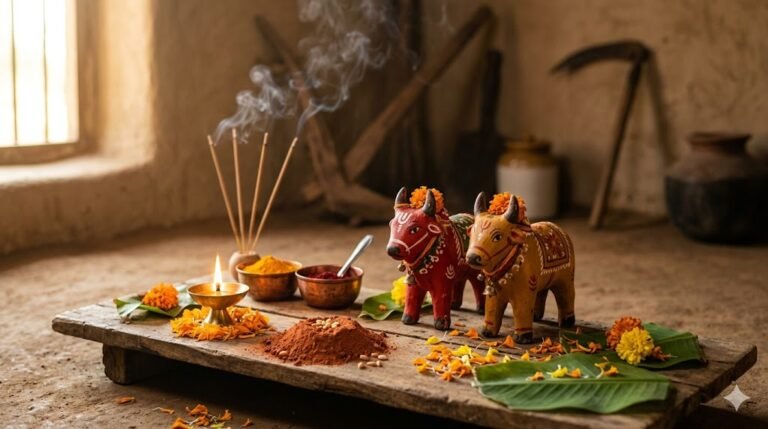
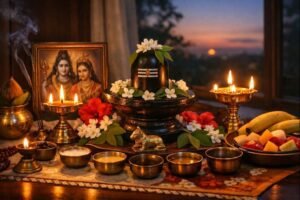
Place the pair of lamps or clay kalikamba lamps on the rice. These symbolize Lord Shiva and Goddess Parvati. If available, you may also place a small Shiva/Lingam and Goddess Parvati idol. Put betel leaves and nuts next, and apply turmeric and kumkuma as offerings.
3. Light the Lamps
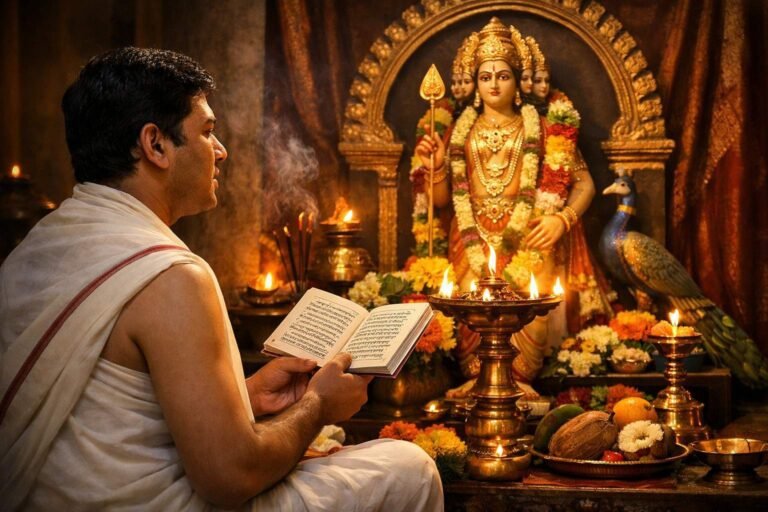
Light both lamps before invoking the deities. While lighting, recite prayers or simple *Om Namah Shivaya* to invoke Shiva’s presence. Focus your mind on devotion rather than mechanical procedures. This relates to sri jyothir bheemeshwara vrata.
4. Offer Arghya and Naivedya
Offer arghya (water and devotional offerings) to the deities, followed by fruits, bananas, and flowers. Traditional *kadubu* or stuffed wafers with hidden coins are placed and later broken by young boys, symbolizing release of blessings, prosperity and well-being.
5. Sacred Thread Ritual
Tie a turmeric thread with nine knots as a sacred vow on your wrist or keep it near the lamps. Each knot stands for a vow made for family well-being and spiritual commitment. While tying, mentally affirm your intentions – peace, health, longevity, and prosperity.
6. Closing the Puja
After offering all items, perform a short prayer for the health and long life of your husband, brothers, and family members. Perform a *deepa arati* with camphor and conclude with *namaskars*. Take blessings from elders present and distribute sweets and fruits to family members. This relates to sri jyothir bheemeshwara vrata.
Tips And Best Practices For The Vrata
- Start early on Ashada Amavasya morning so you can complete the puja before noon.
- Keep water and prasadam ready to break your fast after puja. Many families use fruits and milk-based foods post puja.
- Reciting simple Shiva stotras, such as *Om Namah Shivaya*, with full devotion helps deepen your connection during the vratham.
- If you cannot prepare clay lamps, you may use silver or brass diya as symbolic substitutes.
- Explain the significance of each ritual to younger family members so tradition continues respectfully.
Common Mistakes To Avoid
- Waiting until late in the day to start the puja can make you rush steps. Start early for proper observance.
- Skipping the initial house cleaning reduces spiritual focus. Cleanliness symbolizes purification of the heart and surroundings.
- Focusing on the quantity of items rather than on the devotion during prayers can dilute the puja’s spiritual benefits.
- Not consulting a reliable panchangam or calendar can make you observe the vratam on an incorrect tithi. Always verify the proper Ashada Amavasya date for your region.
Where To Get The Telugu PDF
For devotees specifically looking for the pooja vidhanam in *Telugu PDF*, there are online resource repositories like Jyothir Bhimeshwara Vratha PDF, where traditional vrata descriptions have been uploaded for free download.
However, always cross-verify with your family priest or local temple for traditional version and mantras before performing the puja based on any online document. This ensures authenticity and correct pronunciation of mantras.
Frequently Asked Questions (FAQ)
Who Should Observe This Vrata?
Women and girls observe this vratam — married women for the wellbeing and long life of their husbands and families, and unmarried girls for health, prosperity and a suitable husband in future life. This relates to sri jyothir bheemeshwara vrata.
Can Men Observe This Vrata?
Traditionally, this vrata is observed by women, but men can participate in prayers and rituals as a sign of family unity.
Do I Need To Fast for the Entire Day?
It is customary to fast or abstain from specific types of foods until the puja is completed. After offering naivedya, you may break your fast with fruits, milk, and prasadam.
Is a Temple Visit Necessary?
A temple visit is helpful for spiritual upliftment but not mandatory. Many families perform this vrata at home with complete rituals and prayers. This relates to sri jyothir bheemeshwara vrata.
Also, when I visited my ancestral home during Ashada Amavasya, the entire family gathered in the puja room early in the morning. What surprised me was how the younger children were taught the meaning of each step – not just the actions. That personal observation helped me feel the true spirit of Jyothirbheemeshwara Vrata beyond rituals.
I personally recommend preparing a checklist a day before the vratam. It reduces stress on the main day and makes the puja smooth and peaceful. Family participation enhances the experience and brings everyone together spiritually.
+ There are no comments
Add yours