Key Information at a Glance
| Detail | Information |
| Deity | Lord Shiva (Vadakkunnathan), worshipped as a lingam covered by a mound of ghee |
| Location | Thekkinkadu Maidan, heart of Thrissur city, Kerala |
| Managed by | Cochin Devaswom Board |
| Darshan timings | Indicatively morning approx. 3:00 AM – 10:30 AM and evening approx. 4:00 PM – 8:30 PM (confirm at temple) |
| Dress code | Traditional Kerala attire; men remove shirts and wear a mundu/dhoti, women wear saree or salwar kameez |
| Vazhipadu booking | At the temple counter in person; recognised by UNESCO Asia Pacific Award (2015) |
About the Temple
Sri Vadakkunnathan Temple is one of the oldest Shiva temples in Kerala and stands at the centre of Thrissur on the green expanse of Thekkinkadu Maidan. According to tradition, it was founded by Parashurama and is counted among the 108 ancient Shiva shrines of the region. The main deity is Lord Shiva, worshipped here as a lingam that, over centuries of daily ritual ablutions, has come to be covered by a tall mound of ghee — a feature unique to this temple.
The temple is built in classical Kerala style, with four gopurams, a koothambalam (performance hall), and a spacious walled complex. In 2015 it received the UNESCO Asia Pacific Award for cultural heritage conservation, recognising the care taken to preserve its architecture and murals. It is managed by the Cochin Devaswom Board.
Vazhipadu (Offerings and Sevas)
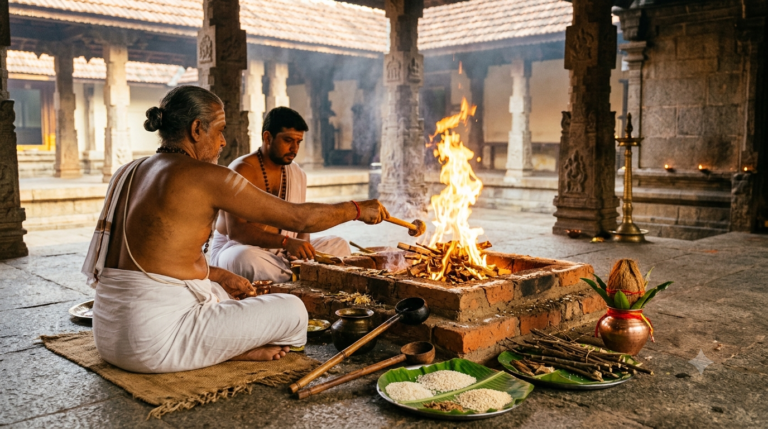
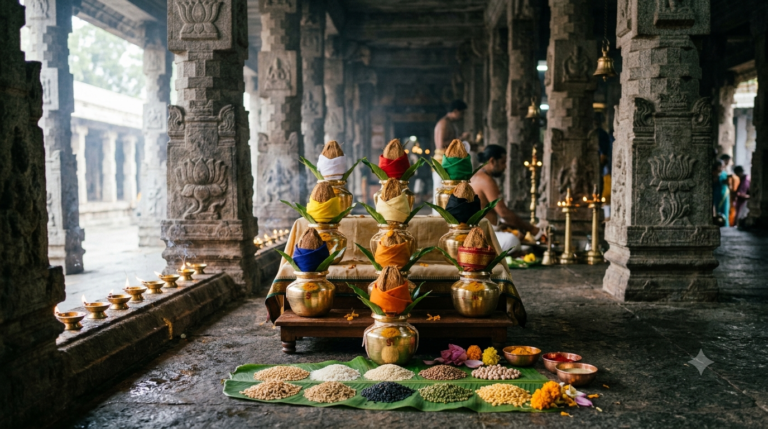
Vazhipadu are the offerings and rituals devotees make to seek blessings, fulfil a vow, or express gratitude. At Vadakkunnathan, these range from simple daily offerings to homams (fire rituals) and abhishekams. Common offerings devotees may request include:
- Pushpanjali — floral offering with chanting
- Ganapathy Homam — fire ritual to Lord Ganesha
- Mrityunjaya Homam — ritual associated with health and longevity
- Neyyabhishekam — ghee abhishekam to the deity
- Appam and Ottayappam — rice-cake prasadam offerings
- Annadhanam — offering of meals to devotees
At traditional Kerala temples such as this one, vazhipadu is generally booked at the temple counter on the day of your visit rather than online. Rates for each offering are modest and are set by the Cochin Devaswom Board; for example, a simple Pushpanjali may cost only a few rupees (around ₹10–₹15) while a homam costs more. Because offering rates and availability change, please confirm the current list and prices at the temple counter.
Darshan Timings, Dress Code and Entry Rules
The temple typically opens very early for morning darshan and reopens in the evening, with a long midday closure as is common in Kerala temples. Indicative timings are morning around 3:00 AM to 10:30 AM and evening around 4:00 PM to 8:30 PM. Timings change on festival days and special occasions. Confirm the exact darshan hours at the temple before planning your visit.
A strict traditional dress code is observed. Men are required to remove their shirts and wear a mundu or dhoti covering from waist to ankle. Women wear a saree, salwar kameez, or other modest, full-length traditional attire. Shorts, sleeveless tops, short skirts, and similar Western wear are not permitted inside. Shops near the temple sell or rent mundus and sarees if you arrive unprepared.
As with many traditional temples in Kerala, entry to the inner premises is generally restricted to Hindu devotees. Visitors of other faiths can admire the architecture from outside the temple walls. If you are unsure about entry, please check with temple staff on arrival.
Thrissur Pooram and Festivals
The maidan encircling Vadakkunnathan Temple is the main venue of Thrissur Pooram, one of Kerala’s most spectacular temple festivals, held in the Malayalam month of Medam (around April or May). It is famous for its caparisoned elephants, percussion ensembles, and a dazzling fireworks display that draws huge crowds.
Maha Shivaratri is the temple’s principal celebration, when about one lakh oil lamps are lit across the grounds. Aanayoottu, the ceremonial feeding of elephants, is another well-known annual event. Festival dates follow the traditional calendar and shift each year, so confirm the schedule at the temple.
Location and How to Reach
The temple sits right in the centre of Thrissur, so it is easy to reach from anywhere in the city. The nearest railway station is Thrissur Railway Station, a short ride away, and the city is well connected by KSRTC and private buses across Kerala. The nearest airport is Cochin International Airport (Nedumbassery), roughly 55–60 km to the south. Auto-rickshaws and taxis are widely available within Thrissur to reach the temple grounds.
Frequently Asked Questions
Can I book vazhipadu at Vadakkunnathan Temple online?
At this traditional Kerala temple, vazhipadu is usually booked in person at the temple counter run by the Cochin Devaswom Board, not online. Sri Vyasa Pooja is an information guide and does not book vazhipadu or take payments. Please confirm the current offerings and rates at the temple.
What is the dress code at Vadakkunnathan Temple?
The temple follows a strict traditional dress code. Men remove their shirts and wear a mundu or dhoti, while women wear a saree, salwar kameez, or other modest full-length attire. Shorts and sleeveless or Western clothing are not allowed inside.
Are non-Hindus allowed to enter the temple?
Like many traditional temples in Kerala, entry to the inner premises is generally restricted to Hindu devotees. Visitors of other faiths are welcome to view the temple architecture from outside the walls.
When is Thrissur Pooram held at the temple?
Thrissur Pooram is held on the grounds around the temple in the Malayalam month of Medam, usually in April or May. Exact dates follow the traditional calendar and change each year, so confirm the schedule at the temple.