The history of Japali Theertham Tirumala begins deep inside the Seshachalam forest, where a sage’s long penance and a wandering god turned a quiet pond into one of the hill’s most sacred corners. Most guides rush past this spot, yet it carries some of the oldest legends tied to Lord Hanuman and Lord Rama. If you want the real story, not the copied one, you are in the right place. This guide walks you through the myths, the shrine, the trek, and what to expect on the ground.
Sri Vyasa Pooja is an independent pilgrimage guide. We are not affiliated with, endorsed by, or the official website of Tirumala Tirupati Devasthanams (TTD). We take no bookings, donations, or payments, so please use the official TTD portal for darshan, accommodation, and seva arrangements.
History of Japali Theertham Tirumala at a Glance
- Deity: Lord Anjaneya (Hanuman)
- Where: Tirumala hills, on the route toward Papavinasanam, inside the Seshachalam forest
- Distance: roughly 4 to 7 km from the main Sri Venkateswara temple by road, then about a 1 km forest walk
- Timings: daylight hours only, commonly cited as around 6 AM to 6 PM (confirm locally)
- Entry fee: free
- Sacred pond: the Japali Teertham, where devotees take a holy dip
What Is the History of Japali Theertham Tirumala?
The history of Japali Theertham Tirumala traces back to the age of the Ramayana. Devotees believe Lord Rama, Sita and Lakshmana stayed near this spot during their forest exile. Later, a sage named Jabali meditated here until Lord Hanuman appeared before him. That vision gave the place its name and its lasting sacred status.
Because two great legends meet here, the site feels older and deeper than its small shrine suggests. Pilgrims come not for grand architecture but for the story woven into the trees and the water.
The Legend of Sage Jabali
Sage Jabali chose this remote pocket of Tirumala for deep meditation because it stayed calm and undisturbed. He performed penance here for a long time, focused entirely on Lord Hanuman. According to tradition, Hanuman finally revealed himself at this very spot, so pilgrims began calling it Jabali or Japali Hanuman Kshetra.
Since the sage’s devotion anchored the legend, the shrine still carries his name today. Local belief also ties the surrounding hill, Anjanadri, to Hanuman’s birthplace, which deepens the spot’s link to the deity. Because of that bond, many devotees pause to chant the Hanuman Chalisa here before walking down to the pond.
Where Rama, Sita and Lakshmana Stayed
Another strand of the story reaches further back, to the Ramayana’s forest years. When Rama, Lakshmana and Sita wandered through the wilderness during their exile, Hanuman travelled with them. Tradition says they paused to rest at this quiet place. A small pond nearby, called Rama Kund, is remembered as their source of drinking water.
Interestingly, nobody has traced where the pond’s water actually comes from. That unsolved detail has only added to the aura around the site over the centuries.
One older legend rarely appears on other pages, yet it explains why the pond earned its cleansing reputation. A fallen Brahmin named Durachara was ruined by his own sins and haunted by a goblin. He is said to have stumbled into the Japali waters and instantly regained his purity. Sage Jabali then met him and explained the greatness of the theertham.
Whether or not you read it literally, the tale captures the central belief here: this water restores what a person has lost. That message still draws pilgrims down the forest path.
What Does the Name “Japali” Mean?
The name “Japali” has two common explanations, and both fit the setting. Most accounts link it to Sage Jabali, whose penance made the spot famous. A second reading connects it to “japam,” the word for meditative chanting, since the forest silence here suits quiet prayer.
Either way, the meaning points to stillness and devotion. That is exactly what visitors still seek when they step off the road and into the trees. Both readings have survived for generations, passed down by local priests and pilgrim families alike.
History of Japali Theertham Tirumala: The Anjaneya Temple
Within the history of Japali Theertham Tirumala, the small Anjaneya shrine sits at the heart of the site. Lord Hanuman is the main deity, and the temple stands beside the sacred pond in a clearing ringed by dense forest. Some local accounts date the present structure to around the 15th century. Firm records are scarce, though, so treat that age as tradition, not proven fact.
The shrine stays deliberately simple. There are no towering gopurams or long queues here. That plainness is part of its charm for devotees who want a slower, quieter darshan. Even so, the forest setting alone rewards the effort of reaching it, and few visitors leave disappointed.
Where Japali Theertham Is and How to Reach It
Japali Theertham sits in the Tirumala hills, on the road that leads toward Papavinasanam, inside the Seshachalam forest range. You will see distances quoted anywhere from 3 to 7 km from the main temple, and that gap confuses many visitors. The difference comes down to where you measure from and whether the forest walk is counted.
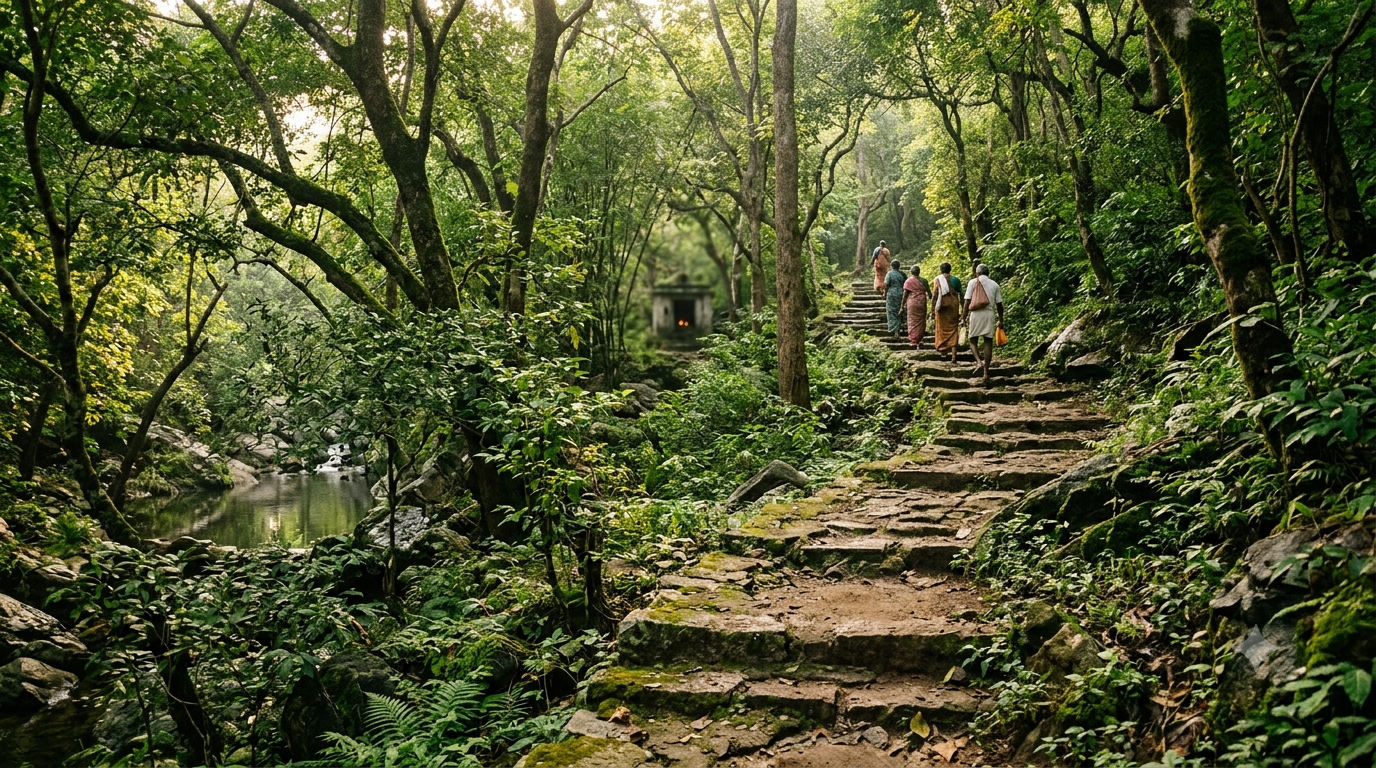
In practice, a bus or vehicle drops you at the Japali entrance after a short ride. From there, you walk roughly one kilometre through the woods to reach the shrine and the pond. So the higher “7 km” figure usually folds in that final stretch on foot.
Reaching Japali is easy once you plan the last leg. APSRTC runs its “Travel as you like” bus service between Tirumala and Papavinasanam, and it stops right at the Japali entrance. Buses leave roughly every 30 minutes through the day, so you rarely wait long.
| Option | What to Know |
|---|---|
| APSRTC bus | “Travel as you like” service, Tirumala to Papavinasanam, about every 30 minutes, roughly 5:00 AM to 7:45 PM; get off at the Japali entrance |
| Private vehicle or taxi | Drive to the Japali entrance point; parking is available near the trailhead |
| Forest walk | About 1 km on foot, roughly 150 steps, 15 to 30 minutes depending on pace |
After the drop-off, simply follow the marked forest path. TTD has built steps and basic drinking-water points along the way, so the walk stays manageable. Because parts of the route lack shade, an early start beats the midday heat. You can check current schedules on the APSRTC service before you travel.
Japali Theertham Timings and Entry Fee
Japali Theertham is free to enter, and it stays open through daylight hours only. Published timings vary by source. Some list 6 AM to 6 PM, while others stretch to 7 PM or use split slots. Since it sits deep in the forest, the safest plan is to arrive and leave well before dusk.
Because timings can shift with the season and festival days, confirm the current hours locally before you set out. On special occasions the shrine sometimes opens for longer to handle extra crowds.
Poojas and Rituals at Japali Theertham
The main ritual here is simple. Pilgrims take a holy dip in the Japali pond, since tradition holds that its waters wash away sins. Many devotees also come for Rahu-Ketu and Kala Sarpa Dosha remedies, which are linked to this Hanuman site. Arrange any such pooja through the temple staff on-site or the official TTD portal, never through third-party agents.
Several annual “Theertha Mukkoti” days are associated with the spot, including Tumburu Phalguna Pournami and Ramakrishna Pushya Pournami. These dates follow the lunar calendar, so they shift each year. Check the official TTD calendar closer to the day rather than relying on last year’s date. On these Mukkoti days extra devotees gather early, so the quiet forest path grows briefly busy before calm returns.
Is Japali Theertham the Most Visited Spot in Tirumala?
No, and this is worth correcting. Despite a claim repeated across many websites, Japali Theertham is not the second-most-visited place in Tirumala. Guides who know the hills describe it as one of the least crowded, most peaceful spots. The forest trek simply keeps visitor numbers low.
So if you have read that everyone visits Japali right after the main temple, adjust your expectations. You are far more likely to find calm and open space here than a rush of people. For many regular pilgrims who study the history of Japali Theertham Tirumala, that quiet is exactly the point.
Health and Safety Tips for the Trek
The walk to Japali is short but real, so a little care helps. Carry water, wear proper footwear, and start early while the air is still cool. Because the path runs through a reserved forest, stay on the marked route and avoid straying into the trees, where wildlife lives. During the monsoon the steps turn slippery, so firm footwear and unhurried footing matter.
Elderly pilgrims, pregnant visitors, and anyone with heart or knee trouble should judge the steps honestly before setting off. If you feel unsure, rest often and turn back when needed. Treat any ritual dip as a matter of faith and tradition, not as a medical cure or a substitute for treatment.
Why the History of Japali Theertham Tirumala Still Matters
The history of Japali Theertham Tirumala survives because it links three powerful threads in one small clearing: Rama’s exile, a sage’s devotion, and Hanuman’s grace. For many pilgrims, that layered story turns a simple forest pond into a place of real meaning. It also offers a rare, quiet escape from the busy queues around the main shrine.
Anyone drawn to this spot soon learns that it rewards the pilgrim who slows down. Reach it by the Papavinasanam bus or a short drive. Walk the forest kilometre with care, and give yourself time to sit quietly by the pond. For darshan, seva, and rooms at the main temple, always use the official TTD portal, and verify current timings before you travel.
Nearby, you can pair the visit with other sacred stops on the same route. Read our guide to Tirumala to Papavinasanam bus timings to plan the trip. You can also see the full Tirumala 108 theerthams list and visiting dates for the wider pilgrimage.
History of Japali Theertham Tirumala: Frequently Asked Questions
What is the history of Japali Theertham Tirumala?
The history of Japali Theertham Tirumala combines two legends. Devotees believe Rama, Sita and Lakshmana stayed nearby during their exile, and that Sage Jabali later did penance here until Lord Hanuman appeared. The sage’s name gave the spot its identity as a Hanuman kshetra.
Why is it called Japali Theertham?
The name most likely comes from Sage Jabali, whose penance made the place famous. Some also link it to “japam,” meaning meditative chanting, which suits the quiet forest setting. Both meanings point to devotion and stillness. The nearby hill of Anjanadri, revered by many as Hanuman’s birthplace, only strengthens that link.
How far is Japali Theertham from the main Tirumala temple?
It lies roughly 4 to 7 km from the main Sri Venkateswara temple, on the road toward Papavinasanam. A bus or vehicle drops you at the entrance, and from there you walk about one kilometre through the forest to reach the shrine and pond. If you skip the bus, a taxi can drop you closer to the trailhead, though the forest walk still remains.
What are the Japali Theertham timings?
The site is open during daylight hours only. Sources commonly list around 6 AM to 6 PM, though some vary, so confirm locally before your visit. Because it sits deep in the forest, plan to arrive and leave well before dark. Entry is free for all devotees.
Which pooja is performed at Japali Theertham?
Devotees mainly take a holy dip in the pond, and many also seek Rahu-Ketu and Kala Sarpa Dosha remedies here. It also suits elderly pilgrims who can manage the short one-kilometre walk. Arrange any ritual through the on-site temple staff or official TTD channels rather than private agents. The holy dip itself stays the simplest and most common observance here.