The importance of Ugadi Pachadi is easy to state and much harder to live. One spoon holds six tastes, and each stands for something the coming year will hand you. Millions of Telugu and Kannada families eat it before anything else on New Year morning.
Most guides stop after listing the ingredients. This one goes further, because the useful part is what those tastes actually teach. You will also find the verse elders recite, the copied error in the popular “six emotions” list, and what to do when neem flowers are nowhere to be found.
Sri Vyasa Pooja is an independent guide to Hindu festivals and traditions. We are not affiliated with any temple or trust, and we take no bookings, donations or payments. Confirm the Ugadi date and muhurtam in a current panchangam or with your family priest, since regional almanacs differ slightly.
Ugadi Pachadi at a Glance
- What it is: a raw, uncooked mixture eaten first on Ugadi morning.
- The six tastes: sweet, sour, salty, pungent, bitter and astringent — the shadruchulu.
- Core ingredients: jaggery, tamarind, salt, pepper or chilli, neem flowers and raw mango.
- Why it matters: it asks you to accept every kind of experience before the year even starts.
- When to eat it: after the oil bath and the naivedyam offering, on an empty stomach.
- Next Ugadi: Wednesday, 7 April 2027, opening Plavanga nama samvatsara.
What Is the Importance of Ugadi Pachadi?
The importance of Ugadi Pachadi lies in one deliberate act: tasting joy and difficulty together, in the same mouthful, on the first morning of the year. Six flavours stand for the mix of experiences a year delivers. Eating them at once trains acceptance instead of preference.
No other Indian New Year custom states its philosophy so plainly through food. Because the lesson arrives as taste rather than a lecture, children remember it long after they forget the recipe.
The Six Tastes and What Each One Teaches
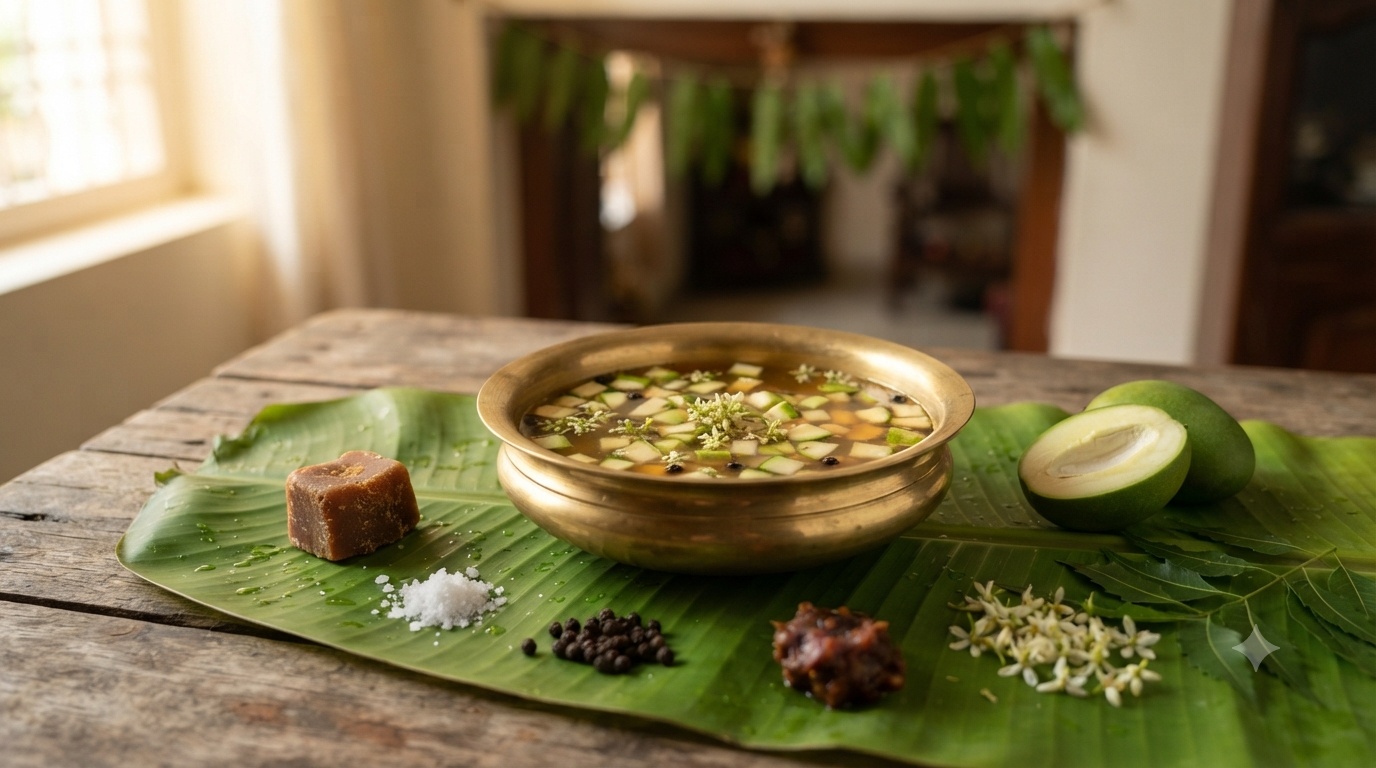
Each ingredient carries a fixed role, so families rarely swap the six. Quantities vary a great deal between homes, yet the six tastes themselves stay constant.
| Taste | Ingredient | What it stands for |
|---|---|---|
| Sweet | Jaggery | Happiness and good fortune |
| Bitter | Neem flowers | Sorrow and hard lessons |
| Sour | Tamarind | Unpleasant turns you must accept |
| Salty | Salt | Zest and interest in daily life |
| Pungent | Pepper or chilli | Anger and moments that sting |
| Astringent | Raw green mango | Surprises and fresh challenges |
Notice that the bitter share is tiny while the sweet share is generous. That proportion is itself part of the teaching, because a year is rarely bitter throughout. Elders in Telugu homes often make this point aloud while serving.
Why the Popular “Six Emotions” Lists Contradict Each Other
Search this topic and you will meet two rival lists. One maps the tastes to happiness, sadness, anger, fear, disgust and surprise. Another maps salt to zest and raw mango to a new challenge, with no mention of fear at all.
The first list mirrors the six basic emotions used in modern psychology, and it has spread widely online. Still, the older Telugu framing talks about situations rather than emotions — the things that happen to you, not only what you feel. Treat any single list as one interpretation, since no scripture fixes the mapping.
Shadruchulu: The Ayurvedic Logic Behind the Importance of Ugadi Pachadi
The six tastes are not a poetic invention. Ayurveda classifies all food into six rasas: madhura (sweet), amla (sour), lavana (salty), katu (pungent), tikta (bitter) and kashaya (astringent). Ugadi Pachadi simply puts all six on one spoon.
That completeness is the whole point. A balanced meal in classical Indian dietetics touches every rasa, so the dish doubles as a seasonal reset at the turn of spring. Because Ugadi falls as the weather shifts, the ingredients are also exactly what the season offers.
Why Pepper, Not Chilli, Is the Older Spice
Many modern recipes reach for green chilli or chilli powder. Chillies, though, only arrived in India with Portuguese traders in the sixteenth century, so they cannot be the original pungent element. Black pepper, or miriyalu, held that role for far longer.
Either works, and neither is wrong today. If you want the older version, use freshly ground pepper instead of chilli powder.
The Shloka Recited Before the First Spoonful
Many families, especially in Karnataka, say a short verse before eating. The commonly recited line runs: Shatayur vajra dehaya, sarva sampatkaraya cha, sarvarishta vinashaya, nimbakam dala bhakshanam.
It asks for a hundred years of life, a body strong as a diamond, prosperity, and the removal of misfortune — offered while eating the neem. The verse is traditionally tied to the neem-and-jaggery custom, so Karnataka households recite it over bevu bella as well.
Importance of Ugadi Pachadi for Children and First-Timers
Children usually resist the bitterness, and that reaction is precisely the teaching moment. Give a small quantity, name each taste as they meet it, and explain what it stands for. The importance of Ugadi Pachadi lands far better as a short conversation than as a rule.
First-time cooks worry about proportions more than they need to. Start with generous jaggery and tamarind water, then add the bitter and pungent parts a pinch at a time until you can detect each taste.
Ugadi Pachadi and Bevu Bella: What Karnataka Does Differently
People often assume the two dishes are identical. They are not. Bevu bella pairs just two things — bevu (neem) and bella (jaggery) — so it carries two tastes rather than six.
Both express the same idea of bittersweet acceptance. Andhra and Telangana homes generally build the full six-taste pachadi, while many Kannada homes keep the simpler pair alongside a festive meal of holige and obbattu.
What the Importance of Ugadi Pachadi Does Not Mean
Plenty of pages claim the dish purifies blood, boosts immunity or prevents summer illness. Those are traditional beliefs about the ingredients, not proven medical outcomes, and the quantity eaten is symbolic anyway. A single spoon of anything treats nothing.
Keep the practical cautions in mind. Neem is taken only in a token amount, so anyone who is pregnant, on medication, or planning to consume neem in larger quantities should ask a doctor first. Jaggery is still sugar, so diabetic family members should keep the portion small.
What to Do When You Cannot Get Neem Flowers
Fresh neem flowers sell out quickly, and they are hard to find outside South India altogether. Fortunately the ritual does not collapse without them, since the bitterness matters more than the exact source.
- Dried neem flowers — sun-dried and stored in an airtight jar, they keep for months and work fine.
- A few tender neem leaves — bitterer than the flowers, so use a very small amount.
- Lightly roasted fenugreek seeds — a widely used household substitute when no neem is available.
- No raw mango? Dry mango powder (amchur) supplies the astringent note.
If you genuinely cannot manage the bitter element, say so aloud while serving rather than skipping it silently. The importance of Ugadi Pachadi rests on acknowledging that taste, not on sourcing one specific flower.
When Is the Next Ugadi?
Ugadi falls on Chaitra Shukla Pratipada, the first day after the new moon in Chaitra. The next Ugadi is Wednesday, 7 April 2027, which begins Plavanga nama samvatsara, the forty-first year of the sixty-year cycle. In 2026 the festival fell on 19 March, so the gap between the two years is nearly three weeks.
That swing is why “Ugadi is always in April” keeps misleading people. Cross-check any year on Drik Panchang before you plan travel or leave. One or two holiday-listing sites still show 8 April 2027, although the panchangam sources agree on the 7th.
What Experienced Kitchens Get Right
These habits come from households that make the dish every year, not from a recipe card.
- Mix it fresh on the morning itself, because jaggery draws water out of the mango within an hour.
- Buy neem flowers and raw mango a day early, since local markets run out before dawn on Ugadi.
- Strain the jaggery water before mixing, as unrefined blocks often carry grit.
- Chop the mango very fine, so every spoon actually contains all six tastes.
- Serve it after the naivedyam offering and before the festive meal, while the stomach is still empty.
For the wider ritual sequence, our Ugadi celebration procedure walks through the oil bath, the torana and the puja in order. The significance of Ugadi festival guide covers the history, the samvatsara cycle and why the date moves.
Before You Take the First Spoon
Strip away the recipe and one idea remains: the year will not be sweet all the way through, and it was never meant to be. Taste all six, in one mouthful, without picking favourites. Confirm your date in a current panchangam, prepare the mixture fresh that morning, and say the verse if your family keeps it. Then listen to the Panchanga Sravanam and start the year properly.
Frequently Asked Questions
What is the real importance of Ugadi Pachadi?
The importance of Ugadi Pachadi is that it teaches acceptance of every experience through taste rather than instruction. Six flavours in one spoon stand for the joy, sorrow, anger, zest, surprise and difficulty of the year ahead. Eating them together means accepting them together.
What are the six tastes in Ugadi Pachadi?
Sweet from jaggery, bitter from neem flowers, sour from tamarind, salty from salt, pungent from pepper or chilli, and astringent from raw green mango. These are the shadruchulu, the six rasas of Ayurveda. Together they cover the full range of taste.
Why do we eat neem on Ugadi?
Neem supplies the bitter taste that stands for hardship, so leaving it out breaks the whole symbolism. Families take only a token quantity, usually the flowers rather than the leaves. Any broader health benefit is tradition, not medical advice.
Can I make Ugadi Pachadi without neem flowers?
Yes. Dried neem flowers, a few tender neem leaves, or lightly roasted fenugreek seeds all provide the bitter note. Keep the amount small, because the bitterness is meant to be noticeable rather than overwhelming.
When should Ugadi Pachadi be eaten?
Eat it on Ugadi morning after the oil bath and after offering it as naivedyam, before any other food. Most families take it on an empty stomach. It is then shared with neighbours and relatives.
Is Ugadi Pachadi the same as bevu bella?
No. Bevu bella is the Karnataka custom of eating neem with jaggery, so it carries only two tastes. Ugadi Pachadi builds the full six. Both express the same bittersweet idea.
Does Ugadi Pachadi have health benefits?
Its ingredients are seasonal and traditionally considered cooling and digestive, though the quantity eaten is symbolic. Treat any medicinal claim as belief rather than treatment. Anyone pregnant, diabetic, or on medication should consult a doctor before consuming neem or jaggery in larger amounts.
When is the next Ugadi?
The next Ugadi falls on Wednesday, 7 April 2027, opening Plavanga nama samvatsara. The date shifts every year because it follows the lunar calendar. Always confirm in a current panchangam, since regional almanacs can differ.