Quick answer: The Shukra (Venus) parihara pooja at Sri Agniswarar Temple, Kanjanur — the Shukra Navagraha sthalam near Kumbakonam, Tamil Nadu — is a remedial worship for those affected by Shukra dosha or an unfavourable Shukra dasha. Devotees visit on Fridays, take a holy dip, perform a Shukra archana or abhishekam, and offer white items such as white cloth, white lotus and white field beans (mochai). You arrange and pay for the pooja directly at the temple counter. Sri Vyasa Pooja is an information guide — we do not book poojas or take payments.
Key Information at a Glance
| Temple | Sri Agniswarar Temple, Kanjanur (Sukran / Shukra Navagraha sthalam) |
| Planet (graha) | Shukra (Venus) |
| Presiding deity | Lord Shiva as Agniswarar; Shukra is worshipped within His form |
| Location | Kanjanur village, about 18 km north-east of Kumbakonam, Tamil Nadu |
| Best day | Friday (Velli), the day of Shukra |
| Common offerings | White cloth, white lotus, white field beans (mochai) |
| Indicative timings | Roughly 6:30 AM–12:30 PM and 4:00 PM–8:30 PM (confirm at temple) |
About Shukra Parihara at Kanjanur
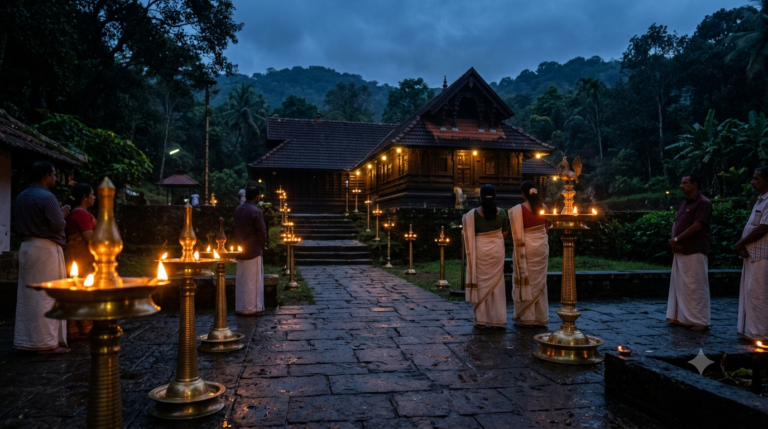
Kanjanur is one of the nine Navagraha temples of Tamil Nadu and is the dedicated sthalam for Shukra, the planet Venus. A distinctive feature of this temple is that there is no separate large shrine for Shukra in the usual sense — the presiding deity is Lord Shiva, worshipped here as Agniswarar, and Shukra is believed to reside within His form. This is why prayers to Shukra at Kanjanur are offered through worship of Agniswarar.
In Hindu astrology, Venus governs marriage, relationships, comfort, wealth and the finer pleasures of life. People typically come to Kanjanur when Shukra is weak or afflicted in their birth chart, when they are passing through a difficult Shukra dasha or bhukti, or when they face recurring obstacles in marriage, married life or finances that an astrologer has linked to Venus. The remedial worship performed here is called the Shukra parihara pooja — “parihara” meaning a remedy or pacification.
It is worth being honest about expectations: a parihara pooja is an act of faith and devotion, not a guaranteed fix. Many devotees combine the temple visit with the guidance of their own family priest or astrologer. For the daily ritual schedule that the temple follows, see our Kanjanur Sukran Temple daily pooja timings list.
How to Perform or Book the Pooja Officially (and Indicative Cost)
The most reliable way to arrange a Shukra parihara pooja is in person at the temple. On arrival, go to the temple ticket or archana counter and ask for a Shukra archana or abhishekam. The staff and temple priests (bhattar) will tell you which sevas are available that day, the current ticket amounts and how to participate. A typical visit involves a holy dip or sprinkling of theertham, the archana or abhishekam in your name and gothra, and circumambulating the inner prakaram with a quiet, prayerful mind.
Temple-run sevas at Navagraha sthalams are usually modestly priced. The figures below are indicative ranges only to help you plan — actual amounts change over time and differ by seva. Always confirm the current rate at the temple counter before paying.
| Seva | Indicative cost |
| Shukra archana (in your name & gothra) | From around ₹50 (confirm at temple) |
| Abhishekam participation | Indicative ₹100–₹500+ depending on seva (confirm at temple) |
| Special / sankalpa poojas | Varies — ask the bhattar (confirm at temple) |
Please note: these amounts are not official quotes. Sri Vyasa Pooja does not collect payments or take bookings. For exact, current costs and to arrange any official or online seva, deal only with the temple administration directly at the counter.
Best Day and What to Offer
Friday (Velli) is the day of Shukra and the most auspicious time to worship Him, so Fridays at Kanjanur tend to be the busiest. Many devotees prefer the evening pooja on a Friday for Venus-related remedies. If you cannot come on a Friday, worship on any day is still meaningful; Friday simply carries special significance for this graha.
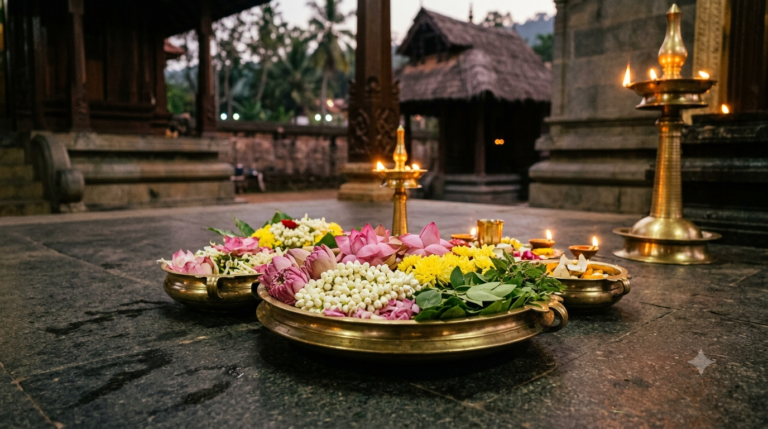
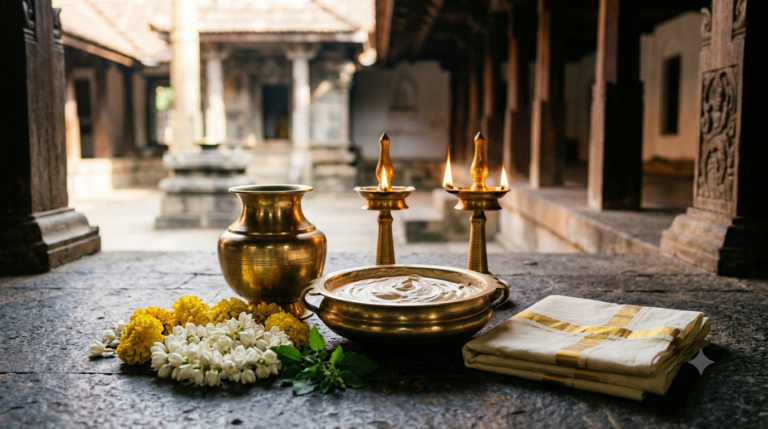
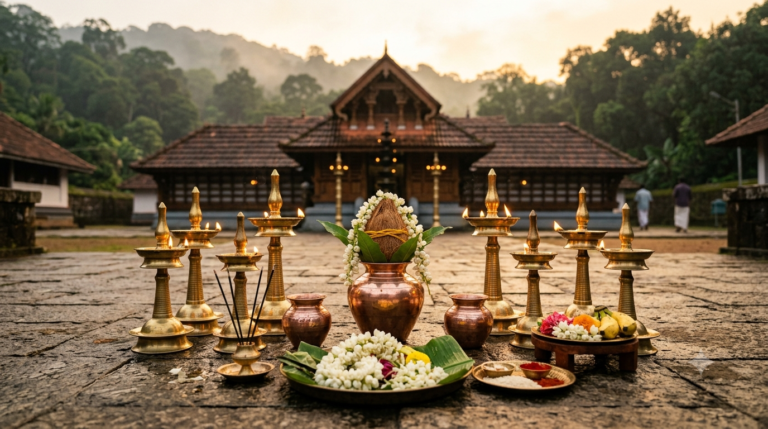
White is the colour associated with Venus, so the customary offerings are white items. Common offerings include:
- White cloth (vastram)
- White lotus or other white flowers
- White field beans, known as mochai kottai
- Lighting a ghee lamp as part of the prayer
You can buy most of these from shops near the temple. Keep your offering simple and sincere — the tradition values devotion over quantity.
How to Reach Kanjanur
Kanjanur is a small village about 18 km north-east of Kumbakonam, which is the most convenient base town with hotels, transport and connections. The temple sits very close to Suriyanar Kovil (the Sun Navagraha temple), so most pilgrims visit the two back-to-back on the same trip.
- By road: Taxis, auto-rickshaws and local buses run from Kumbakonam towards Suriyanar Kovil and Kanjanur.
- By rail: Kumbakonam and Mayiladuthurai are the main railway hubs in the region; complete the last stretch by road.
- By air: Tiruchirappalli (Trichy) is the nearest major airport, after which you continue by road or rail.
Distances and connections can change, so check current bus and train timings before you travel, and confirm the day’s pooja schedule once you reach the temple.
Frequently Asked Questions
What is the Shukra parihara pooja at Kanjanur?
It is a remedial worship for the planet Shukra (Venus) performed at Sri Agniswarar Temple, Kanjanur, the Shukra Navagraha sthalam. It usually involves a Shukra archana or abhishekam and offering white items, and is done by people affected by Shukra dosha or a difficult Shukra dasha.
Can I book the pooja online through this website?
No. Sri Vyasa Pooja is an information guide only. We do not book poojas or take payments. To arrange any seva, deal directly with the temple administration at the counter.
What should I offer for Shukra at Kanjanur?
White items are traditional: white cloth, white lotus or other white flowers, and white field beans (mochai). Lighting a ghee lamp is also common. You can buy these from shops near the temple.
Which day is best for the Shukra pooja?
Friday is the day of Shukra and considered most auspicious, with many devotees preferring the Friday evening pooja. Worship on other days is still meaningful, but Fridays carry special significance for Venus.