The Nageshwar Jyotirlinga temple near Dwarka opens at 6 AM, closes for a long midday break, and reopens in the evening. Many travel blogs miss that detail. This sacred shrine in Gujarat ranks among the twelve Jyotirlingas of Lord Shiva. Pilgrims travel here for one rare privilege: you can touch the lingam with your own hands. So this guide hands you verified timings, the real history, abhishekam costs, and the exact way to reach it.
Nageshwar Jyotirlinga at a Glance
Short on time? Here are the Nageshwar Jyotirlinga temple essentials before we go deeper.
- Location: Near Dwarka, Devbhumi Dwarka district, Gujarat, on the Dwarka–Bet Dwarka road.
- Distance: About 17 km from Dwarka city, roughly a 25–30 minute drive.
- Darshan timings: 6:00 AM to 12:30 PM, then 5:00 PM to 9:30 PM. Closed midday.
- Entry: General darshan is free, while abhishekam tickets are bought at the counter.
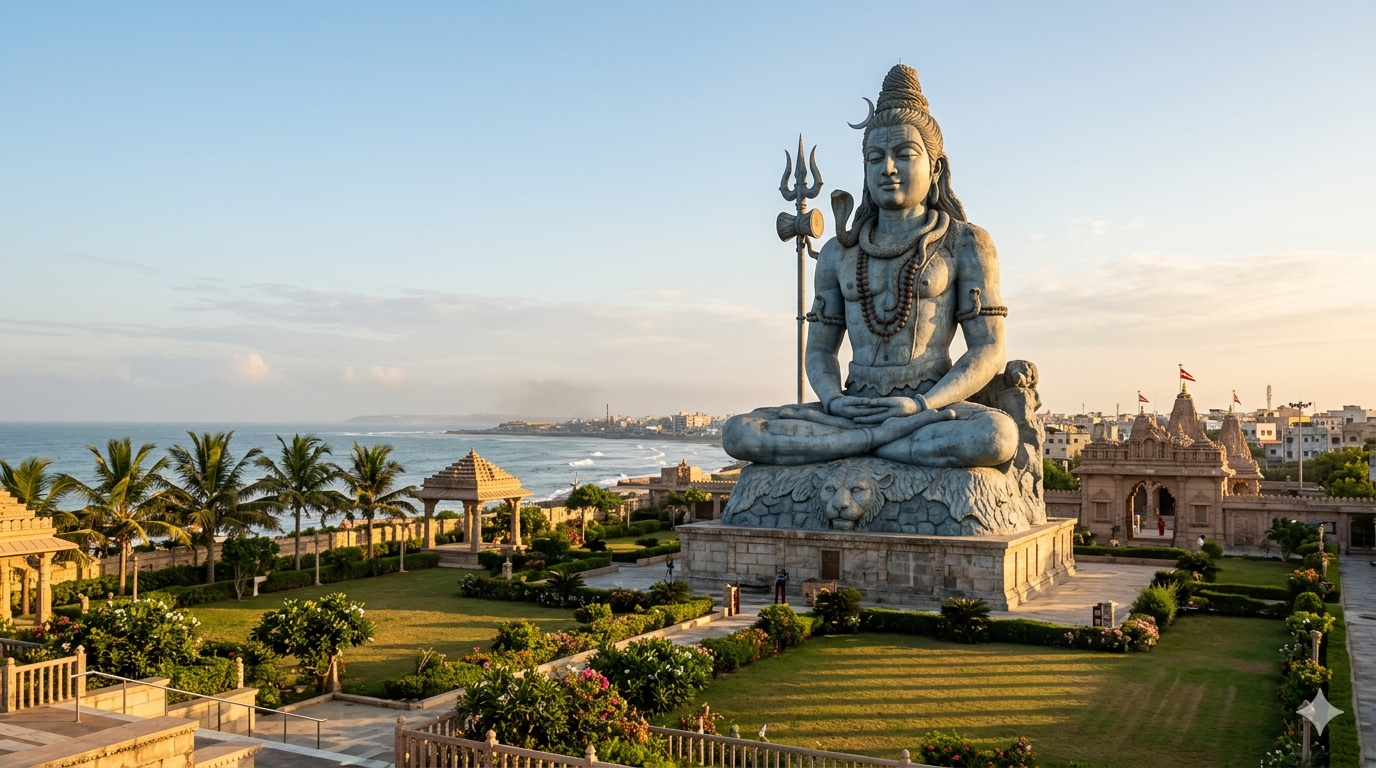
- Main attraction: A roughly 80-foot (about 25-metre) seated Shiva statue.
- Best time: October to March, when the weather stays cool.
- Nearest railhead: Dwarka Railway Station, about 15–18 km away.
Nageshwar Jyotirlinga Temple Darshan Timings
The Nageshwar Jyotirlinga temple stays open from 6:00 AM to 12:30 PM in the morning, then again from 5:00 PM to 9:30 PM in the evening. Between 12:30 PM and 5:00 PM the temple closes for a rest break. So plan your visit for the morning or the evening, never the early afternoon.
Here is a common myth worth correcting. Several websites claim the shrine stays open “all day from 5 AM to 9 PM.” That is simply wrong. Because of the midday closure, a pilgrim who arrives at 2 PM will find the doors shut. Always work around that gap.
| Session | Timings |
|---|---|
| Morning Darshan | 6:00 AM – 12:30 PM |
| Midday Break (closed) | 12:30 PM – 5:00 PM |
| Evening Darshan | 5:00 PM – 9:30 PM |
| Evening Sandhya Aarti | Around 7:00 PM |
| Mahashivratri | Early morning to late night (continuous) |
During Mahashivratri, the temple often runs continuous darshan from before dawn until late at night. The afternoon break is dropped on that day. Crowds also swell through the holy month of Shravan, so expect longer queues then.
Aarti Timings at the Temple
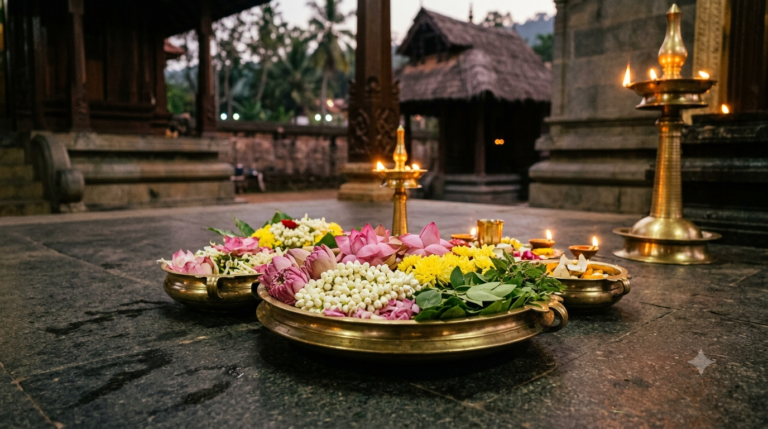
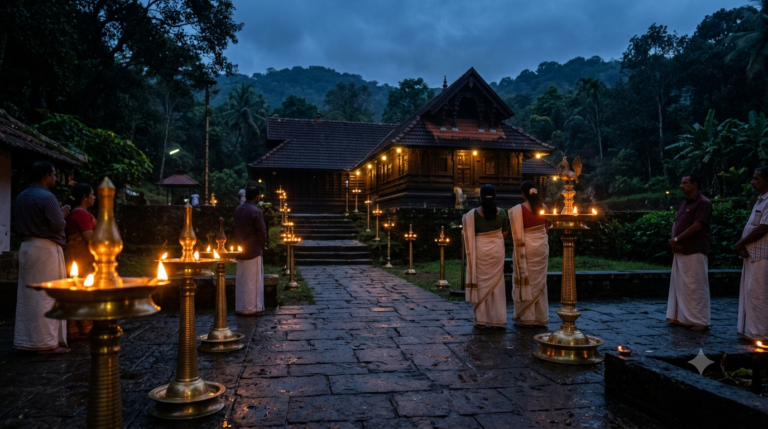
Aarti happens twice a day, once in the morning and once in the evening. In the morning, devotees pour milk over the lingam as part of the abhishekam. The evening Sandhya Aarti is usually held around 7 PM, though the exact minute can shift, so reach a little early. Witnessing the aarti is the most moving part of any visit.
Abhishekam and Sparsha Darshan Costs
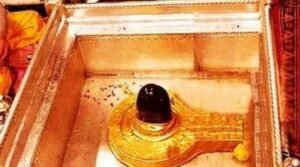
This is where Nageshwar stands apart. At many Jyotirlingas, touching the lingam is restricted. Here, devotees may personally perform abhishekam and touch the Shiva lingam during the morning session. That hands-on worship is rare, so it draws devotees from across India.
General darshan costs nothing. To perform abhishekam, you buy a ticket at the counter near the sanctum, since online booking is not available for this ritual. The worship materials, or puja samagri, cost around ₹200. Abhishekam packages generally range from about ₹100 to ₹750, depending on the ritual you choose. Confirm the current rate at the counter, because seva charges change from time to time.
One practical note matters here. Men must remove their shirt and vest during the abhishekam, while women may wear traditional dress. Also, the touch ritual is paused on major days such as Mahashivratri and Kartik Purnima, when crowds are simply too large.
History of the Nageshwar Jyotirlinga Temple
The history of the Nageshwar Jyotirlinga temple reaches back to the Shiva Purana. The name “Nageshwar” means “Lord of the Nagas,” or lord of serpents. Devotees believe a prayer here protects them from all poisons, including snake venom. That belief is tradition, held with deep faith across generations.
The Legend of Daruka and Supriya
According to the Shiva Purana, a demon named Daruka terrorised the forest of Darukavana. He imprisoned many people, including a devout Shiva worshipper named Supriya. Even in captivity, Supriya kept chanting “Om Namah Shivaya” and urged the other prisoners to join in.
Moved by her devotion, Lord Shiva appeared and destroyed the demon. After the battle, he chose to remain at the spot as a self-manifested, or swayambhu, Jyotirlinga. The lingam came to be known as Nageshwar, and this shrine is counted as the tenth of the twelve Jyotirlingas.
The Giant Shiva Statue and Gulshan Kumar
The towering Shiva statue is the first thing you notice. It shows the Lord seated in meditation and stands roughly 80 feet, about 25 metres, tall. Some blogs wrongly inflate this to 125 feet, yet the widely accepted figure is around 80 feet. The statue faces south, which is unusual, while the temple itself faces east.
The modern structure has a recent story too. The late Gulshan Kumar, founder of the T-Series music label, funded the present temple and statue during the 1990s. After his death in 1997, his family and charitable trust completed the work. Meanwhile, the ancient swayambhu lingam still sits in an underground sanctum below the newer hall. For another temple famous for a colossal Shiva, see Murudeshwar’s towering Shiva statue on the Karnataka coast.
Which Nageshwar Is the Real Jyotirlinga?
Here is something most guides skip. Three temples claim to be the true Nageshwar Jyotirlinga. They are this one near Dwarka in Gujarat, Aundha Nagnath in Maharashtra, and Jageshwar in Uttarakhand. The dispute exists because the scriptures place the shrine in a forest called Darukavana, without a precise map.
So which should you visit? Popular faith and most pilgrimage circuits count the Gujarat temple near Dwarka among the classic twelve. Therefore, if you are completing the twelve-Jyotirlinga yatra, this is the one usually included. Some pilgrims who want full certainty visit all three over the years.
How to Reach Nageshwar Jyotirlinga Temple
The Nageshwar Jyotirlinga temple sits about 17 km from Dwarka city, on the road toward Bet Dwarka. You can reach it easily by road, rail, or air. Here is each option in plain detail.
By Train
Dwarka Railway Station is the nearest railhead, roughly 15–18 km away. Dwarka connects well with Ahmedabad, Rajkot, and Jamnagar by rail. From the station, autos and taxis run to the temple in about 25–30 minutes. You can check live train options on the IRCTC portal.
By Air
The nearest airports are Jamnagar, about 130 km away, and Porbandar, about 100 km away. Rajkot, the bigger hub, lies farther out. From any of these, you can hire a cab or take a bus to Dwarka, then continue to the temple.
By Road
Direct buses run to the temple from Ahmedabad and Jamnagar. Within Dwarka, local buses, autos, and taxis reach Nageshwar quickly. The new Sudarshan Setu bridge to Bet Dwarka has also made the wider Dwarka circuit smoother. So a self-drive trip works well here. For wider trip planning, the Gujarat Tourism site lists routes and stays.
Best Time to Visit Nageshwar
The best time to visit the Nageshwar Jyotirlinga temple is October to March. During these months, coastal Gujarat stays cool and comfortable for darshan and walking. Summers turn hot and humid near the Arabian Sea, so they are harder going.
For atmosphere, Mahashivratri and Shravan are unmatched. The temple buzzes with devotion then, although crowds are heavy. If you prefer a calm visit, choose a weekday morning outside festival season. The shrine often feels peaceful and far less crowded than Somnath or Dwarkadhish.
Dress Code and Temple Rules
Modest, traditional clothing is expected, as at any major shrine. Men often wear a dhoti for the abhishekam, and the temple may provide one if you ask. Women usually wear a saree or salwar suit.
Photography is generally allowed around the giant statue and gardens. Inside the sanctum, though, photography is usually restricted, so follow the staff’s instructions. Also carry your phone and valuables carefully during busy hours. For a Kerala parallel with strict entry customs, the Vadakkunnathan Shiva temple in Thrissur offers an interesting contrast.
Nearby Places to Visit in One Day
Nageshwar fits neatly into a Dwarka day trip. Because the temple closes midday, smart pilgrims pair a morning darshan with nearby sights, then return for the evening aarti if time allows. Here is a simple plan.
- Dwarkadhish Temple (Jagat Mandir): The famous Krishna temple, about 17 km away.
- Rukmini Devi Temple: Dedicated to Krishna’s queen, a short drive from Dwarka.
- Bet Dwarka: An island reached via Okha, now easier thanks to the Sudarshan Setu.
- Shivrajpur Beach: A Blue Flag certified beach with clean sands.
- Gomti Ghat and Sudama Setu: Riverfront steps and a scenic footbridge.
Devotees seeking relief from snake-related doshas often combine Nageshwar with serpent worship elsewhere. The Sarpa Dosha parihara pooja at Kukke Subramanya is a popular choice for that intention.
Tips From a Real Visit
A few hard-won pointers can save you time and stress.
- Skip the afternoon. Arrive by 11 AM or after 5 PM, since the doors close from 12:30 to 5.
- Carry cash. The counter takes cash for seva and samagri, while mobile signal can be patchy.
- Do the abhishekam. Touching the lingam yourself is rare, so it is worth the small fee.
- Go early on festival days. During Mahashivratri, queues form before dawn.
- Use the footwear stand. Leave shoes at the stall properly, because mix-ups are common in crowds.
Before You Go
The Nageshwar Jyotirlinga temple rewards those who plan around its rhythm. Verify the timings, respect the midday break, and try the abhishekam for a hands-on darshan few Jyotirlingas allow. Then pair it with Dwarkadhish and Bet Dwarka for a complete day. With a little planning, this calm coastal shrine becomes one of the most personal stops on any Jyotirlinga journey.
Frequently Asked Questions
What are the Nageshwar Jyotirlinga temple timings?
The temple is open from 6:00 AM to 12:30 PM and from 5:00 PM to 9:30 PM. It stays closed between 12:30 PM and 5:00 PM for a midday break. Timings extend during Mahashivratri.
Can I touch the Shiva lingam at Nageshwar?
Yes, devotees can personally touch the lingam and perform abhishekam during the morning session. This makes Nageshwar one of the few Jyotirlingas allowing direct touch. Men must remove their shirt during the ritual.
How far is Nageshwar from Dwarka?
Nageshwar is about 17 km from Dwarka city, roughly a 25–30 minute drive. Buses, autos, and taxis run regularly. Dwarka Railway Station is the nearest railhead.
Is there an entry fee?
General darshan is free. You only pay for optional seva like abhishekam, which you book at the counter on arrival. The puja samagri costs around ₹200.
How tall is the Shiva statue at Nageshwar?
The seated Shiva statue stands roughly 80 feet, about 25 metres, tall. Claims of 125 feet are inaccurate. The statue faces south and is visible from far away.
Which is the real Nageshwar Jyotirlinga?
Three temples claim the title, in Gujarat, Maharashtra, and Uttarakhand. Popular tradition and most pilgrimage circuits count the Gujarat temple near Dwarka among the twelve Jyotirlingas.
What is the best time to visit the Nageshwar Jyotirlinga temple?
October to March is ideal, since the coastal weather stays cool then. Weekday mornings are quietest. Mahashivratri and Shravan are spiritually vibrant but very crowded.