Narayana Bali Pooja Srirangapatna Essential Informational Guide
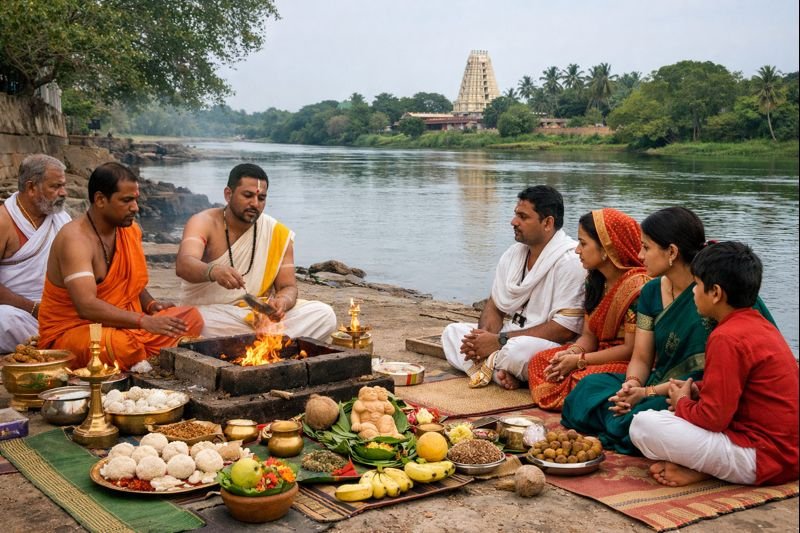
Narayana Bali Pooja Srirangapatna is a sacred Vedic ritual performed in the historic town of Srirangapatna (in Karnataka, India), often referred to locally as a Moksha Kshetra along the river Kaveri. This ritual is believed to liberate souls that met unnatural deaths and to help relieve Pitru Dosha (ancestral afflictions) that may affect the prosperity, health, or harmony of the family’s present generation.
What Is Narayana Bali Pooja Srirangapatna?
Narayana Bali Pooja Srirangapatna is a Hindu ritual rooted in Vedic scriptures, especially referenced in texts such as the Garuda Purana for life-cycle rites after death. This puja is performed to pacify and liberate unsettled souls who experienced unnatural deaths due to accidents, disease, suicide, violence, or other abrupt ends. The name ‘Narayana Bali’ reflects the invocation of Lord Vishnu (Narayana) followed by Bali — ceremonial offerings structured to “release” or “liberate” the soul.
Moreover, srirangapatna itself is a pilgrimage town with deep religious significance for Vaishnavites due to the presence of the ancient Sri Ranganathaswamy Temple, one of the five Pancharanga Kshetrams and a major site for Pind Daan and ancestral rites on the sacred Kaveri river banks. Understanding Narayana Bali Pooja Srirangapatna is essential.
Why Perform This Puja?
The principal belief behind Narayana Bali Pooja is that the souls of those who died suddenly or unnaturally may linger in this world with unfulfilled desires, potentially affecting their descendants with what is traditionally referred to as Pitru Dosha. Many devotees perform this ritual to gain relief from such doshas, improve overall peace in the household, remove obstacles in relationships or career, support fertility, or secure physical and mental well-being.
Where Narayana Bali Pooja Is Performed
Srirangapatna, located in Mandya district of Karnataka, India, is a distinguished place for performing Narayana Bali Pooja, particularly along the banks of the river Kaveri, close to the Paschima Vaahini (the western backwater of the river). Devotees commonly perform this ritual near the confluence points and sacred spots where rituals for ancestors are traditionally carried out.
Step-By-Step Ritual Process
Below is a practical breakdown of the Narayana Bali Pooja ritual as commonly observed in Srirangapatna: This relates to Narayana Bali Pooja Srirangapatna.
1. Preliminary Preparations
Devotees should begin with Sankalpa (a vow or intention) at home or the riverbank. Wearing traditional clothing (e.g., dhoti and kurta for men; saree or salwar kameez for women) is customary for purity and respect during the ritual.
2. Kalasha Aradhana
This initial phase invokes the deities Brahma, Vishnu, Shiva, Yamraj and the preta (departed spirits). A Kalasha (sacred pot) is sanctified with water, mantras, and sacred items to represent the divine presence.
3. Main Narayana Bali Ritual
The priest conducts the main rites using mantras and offerings, which include symbolic representations of a human form made from wheat flour. This form, through ritual, is believed to be “occupied” by the unsettled soul and prepared for its journey to the spiritual area. Learn more about Narayana Bali Pooja Srirangapatna.
4. Homa and Offerings
A fire ceremony (homa) follows, in which ghee, grains, and offerings are offered while chanting Vedic mantras. This is intended to purify the atmosphere and assist the soul’s liberation.
5. Pind Pradanam
Near the sacred riverbank, rice balls (pindas) and water offerings (tarpana) are made to honor ancestors and complete the ritual, connecting the physical act with cosmic cycles.
6. Ritual Conclusion
The ceremony typically ends with a sacred bath in the river Kaveri and darshan (reverential viewing) of local deities, often including Lord Ranganatha. This symbolizes purification and completion of the rite.
Duration and Best Days for the Puja
Narayana Bali Pooja often takes between 4–6 hours to complete, depending on the specific rites included and whether it is a two- or three-day affair. Advanced booking, typically 7–10 days or more, is recommended to ensure necessary arrangements.
Furthermore, pitru Paksha (the fortnight dedicated to ancestors), Amavasya (new moon), Poornima (full moon), Dwadashi and certain nakshatra (constellation) days are traditionally recommended for this ritual.
Cost & Planning
| Service Component | Approx. Cost (INR) |
|---|---|
| Basic Narayana Bali Pooja | ₹7,500–₹10,500 |
| Pinda Pradanam & Tila Tarpanam | ₹2,000 |
| Pitru Shanti Pooja | ₹4,999 |
The above costs are approximate and may vary with offerings, priest fees, homas (fire rituals), and other services. Consult the puja centre or priest for exact quotes and inclusions.
What I Observed During My Visit
When I visited Srirangapatna for Narayana Bali Pooja, I was struck by the focus on tradition and the community’s commitment to precise rituals. Devotees brought offerings with deep reverence, and families shared stories of generational challenges before performing the rites. The serene riverbank by Kaveri reinforced the impression that ceremonies here are both spiritually rigorous and emotionally healing. I personally recommend arriving early, so you have time for darshan and contemplation before the ceremony begins.
Tips And Best Practices
- Book your puja date early — temples and priests can fill up well in advance during auspicious times.
- Dress in traditional and comfortable clothing to maintain purity and ease during long rituals.
- Bring all personal offerings and essentials — clarify what the priest will provide.
- Respect local temple customs and timings — some rites may require river access at specific hours.
Common Mistakes To Avoid
- Arriving late on the day of the ritual — this can disrupt the sequence of rites.
- Not confirming the exact list of offerings (samagri) before the ceremony.
- Attempting to perform the ritual without an experienced priest — precision of mantras and rites affects outcomes.
- Ignoring auspicious tithis or muhurat — some dates improve the perceived efficacy of the ritual.
Frequently Asked Questions
What Is Pitru Dosha?
Pitru Dosha refers to ancestral afflictions believed to arise when funeral rites or ancestral rites were incomplete or ignored, potentially affecting descendants with life obstacles. Narayana Bali Pooja is often recommended to alleviate these afflictions.
Who Should Perform Narayana Bali Pooja?
The ritual is generally performed by family members for ancestral peace, particularly when there have been untimely deaths, career hurdles, family disputes, or unexplained life obstacles.
Can I Perform This Puja If the Person Is Already Deceased?
Yes — Narayana Bali Pooja can be performed in memory of a deceased individual to assist in the soul’s liberation and reduce Pitru Dosha impacts.
Do I Need to Stay Overnight?
Some versions extend over multiple days and may require overnight arrangements, particularly if combined with additional rites.
Therefore, while Narayana Bali Pooja Srirangapatna may appear complex at first glance, careful planning and guidance from a qualified priest make the experience spiritually meaningful and deeply reflective. Patience and an open mind paired with traditional observances create a powerful ritual experience at one of South India’s sacred river pilgrimage sites.


+ There are no comments
Add yours