The Palani temple pooja list has not changed in generations, yet the rules for attending it just did. From 1 September 2026, devotees may no longer carry mobile phones inside major Tamil Nadu temples, so the Palani hill shrine is affected too. This guide sets out all six daily poojas, the abhishekam sequence behind them, what each ticket actually costs, as well as how to book through the official Hindu Religious and Charitable Endowments (HR&CE) portal.
Sri Vyasa Pooja is an independent information guide. Nor are we affiliated with, endorsed by, or the official website of the Arulmigu Dhandayuthapani Swamy Temple or the HR&CE Department. We do not book sevas, sell tickets, or accept payments. Instead, every booking link below goes to the temple’s own official portal.
Palani Temple Pooja List at a Glance
Here is the whole thing in brief, as well as the practical details that decide how your visit actually goes.
- Temple: Arulmigu Dhandayuthapani Swamy Temple, Palani hill, Dindigul district, Tamil Nadu
- Deity: Lord Murugan, worshipped here as Dhandayuthapani, the renunciate holding a staff
- Managed by: Tamil Nadu Hindu Religious and Charitable Endowments (HR&CE) Department
- Daily poojas: six, each with its own alankaram
- Famous prasadam: Palani Panchamirtham, GI-tagged in 2019
- Hilltop access: the stone steps, the winch, or the rope car
- Official portal: palanimurugan.hrce.tn.gov.in
- New from 1 September 2026: mobile phones banned inside; deposit counters charge ₹5 per phone
The New Mobile Phone Rule Every Pilgrim Must Know
The HR&CE Department has ordered a complete ban on mobile phones inside all major Tamil Nadu temples from 1 September 2026. Temples must also run secure deposit counters near entrances or footwear stands. A standard fee of ₹5 per device applies, and the state’s Integrated Temple Management System issues the receipt.
Palani already enforced a phone restriction after earlier court directions, so the hill shrine is not starting from scratch. What is new is that the rule is now statewide, standardised and strictly enforced. Likewise, photography, videography, selfies and social-media reels inside the premises are all covered.
In practice, this changes how you plan the climb. So deposit your phone at the counter near the steps, the winch station or the rope car base before you climb. Since you cannot photograph your ticket screen inside, carry a printed e-ticket for any paid seva. The Palani temple pooja list itself is unaffected, because only what you carry has changed.
The Palani Temple Pooja List: Six Daily Poojas
The Palani temple pooja list runs to six kala poojas performed for the main deity through the day. Each one follows the same three-part shape: abhishekam, an offering of food, and finally alankaram, the fresh decoration of the Lord. Because the alankaram changes every time, many devotees plan their visit around one particular form.
Yet the day opens before the poojas do. Viswaroopa darshan, the first sight of the deity, is generally given at around 5:40 a.m., and it is short. Arrive early, since the queue for it forms well before the doors open.
| Pooja | Typical time | What happens |
|---|---|---|
| Viswaroopa darshan | Around 5:40 a.m. | First darshan of the day, before the poojas begin |
| Vila pooja | Early morning | The day’s first service after the temple opens |
| Sirukala santhi | Mid-morning | Second service, abhishekam and alankaram |
| Kala santhi | Around 9:00 a.m. | One of the most attended morning poojas |
| Uchikalam | Around midday | Midday service |
| Sayaraksha | Evening | Evening service, often with Raja alankaram |
| Raakkalam | Night | Closing service before the shrine is shut |
Treat these clock times as a rough guide rather than a fixed schedule. Timings shift on Krittika days, on Tuesdays, and across the whole of Margazhi, so confirm the day’s board on arrival.
Why published Palani temple pooja list timings disagree
Search for Palani timings and you will find opening times ranging from 5:00 a.m. to 7:00 a.m., and pooja counts of six, seven or eight. Generally that spread comes from copying, rather than from any change at the temple. Some pages count Viswaroopa darshan and the palliarai ceremony as separate poojas, which inflates six to eight.
The temple itself, however, describes six kala poojas. The safest approach is simple: use this schedule to plan, then confirm the exact minute at the temple notice board or on the official portal.
Where Abhishekam Fits in the Palani Temple Pooja List
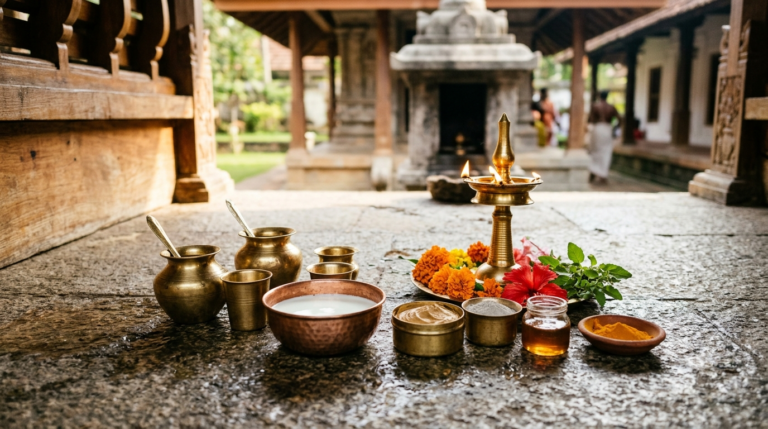
Abhishekam is the ceremonial bathing of the idol, and it sits at the centre of every one of the six services. Priests pour milk, panchamirtham, sandal paste and other offerings over the deity while the shrine is closed to the queue. Afterwards the doors reopen for darshan of the freshly decorated Lord.
The idol here is unusual. Indeed, tradition describes it as navapashanam, a compound of nine substances linked to the siddhar Bhogar. Devotees believe the abhishekam materials absorb its properties, which is exactly why the prasadam that comes off the idol is so prized.
A milk abhishekam offering has long been among the cheapest paid items at the temple, with figures around ₹25 widely quoted. Larger sponsored offerings, called kattalai, cost significantly more. Confirm both at the counter, because these rates are revised without much publicity.
Palani Panchamirtham: The GI-Tagged Prasadam
Palani Panchamirtham is a semi-solid sweet collected after abhishekam and distributed as prasadam. In fact, every service on the Palani temple pooja list produces a fresh batch of it. It combines small Viruppachi bananas, jaggery or kandasari sugar, cow ghee, honey and cardamom, with dates and sugar candy added in a fixed proportion. Notably, no water goes into it at all, which is why it keeps for weeks without refrigeration.
In 2019-20 it became the first temple prasadam in India to receive a Geographical Indication tag from the Geographical Indications Registry. That tag therefore protects the name and the recipe’s link to Palani town.
The panchamirtham mistake pilgrims keep making
Here is the correction that matters most. The GI tag applies to panchamirtham produced in the Palani region, not only to the tins sold by the Devasthanam counter. Plenty of shops in the town and online therefore sell GI-labelled panchamirtham that never touched the idol.
If you specifically want temple prasadam, buy it from the Devasthanam counter and nowhere else. The Devasthanam prices it by measure and revises that rate from time to time, so ask at the counter rather than trusting a figure you read online.
Palani Temple Pooja List Costs: What Is Free and What Is Paid
General darshan at Palani is free, and it always has been. Nothing on the Palani temple pooja list requires a paid ticket, so nobody needs to pay to see the deity. Instead, paid tickets buy you a shorter queue, a specific ritual, or a sponsored offering in your name.
| Item | What you get | Indicative cost |
|---|---|---|
| General darshan | Standard queue, all six poojas viewable | Free |
| Special darshan | Shorter queue access | Commonly quoted near ₹100; higher on festival days |
| Viswaroopa darshan | Pre-dawn first darshan | Commonly quoted near ₹100 |
| Milk abhishekam | Abhishekam offering for the deity | Around ₹25 |
| Golden chariot procession | Evening procession with limited slots | Figures online vary wildly; confirm on the portal |
| Mobile phone deposit | Secure storage while you are inside | ₹5 per phone |
| Panchamirtham | GI-tagged prasadam, sold by measure | Ask at the Devasthanam counter |
One figure deserves a warning. Published golden chariot prices range from about ₹2,000 to ₹10,000 across popular guide sites, which is far too wide a spread to be a rounding error. Do not budget from any of them; check the current rate on the official portal instead.
How to Book from the Palani Temple Pooja List
The temple issues paid darshan and seva tickets through the HR&CE system. Notably, only a few items on the Palani temple pooja list carry a ticket at all. Booking runs on the temple’s own portal, so no third party is allowed to sell these tickets. The process is short.
- Open the official portal at palanimurugan.hrce.tn.gov.in.
- Go to the online services or ticket booking section.
- Register or sign in with your mobile number or email address.
- Choose the darshan or seva type, then pick your date and slot.
- Enter every devotee’s name and government ID details exactly as on the ID.
- Pay through the secure gateway and download the e-ticket.
- Print it, because you cannot show it on a phone inside the temple.
Also carry the same ID you booked with. Groups must report together, and tickets generally cannot be postponed or cancelled once issued.
What to do if the slot you want is gone
Online slots are not guaranteed. They sell out first for weekends, Krittika days, Thai Poosam, Panguni Uthiram and Skanda Sashti. If your date shows nothing available, work through these fallbacks in order.
- Try the counter on the day. A share of special darshan and abhishekam tickets is still issued at the temple counters.
- Shift your slot, not your date. Early-morning slots vanish first, while midday slots often survive.
- Take free darshan instead. The general queue moves reasonably outside festival peaks, so it costs nothing to try.
- Move to a weekday. A Wednesday or Thursday visit outside Krittika will beat any ticket you could have bought for a Sunday.
If the quota for a major festival day is exhausted, there is no back door. Plan for the next available date rather than paying anyone who claims otherwise.
Reaching the Hilltop: Steps, Winch and Rope Car
The shrine sits on top of the hill, so every pilgrim faces the same choice. Three routes exist, and each suits a different kind of visitor.
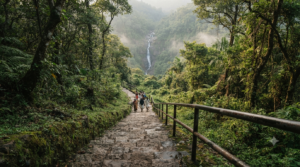
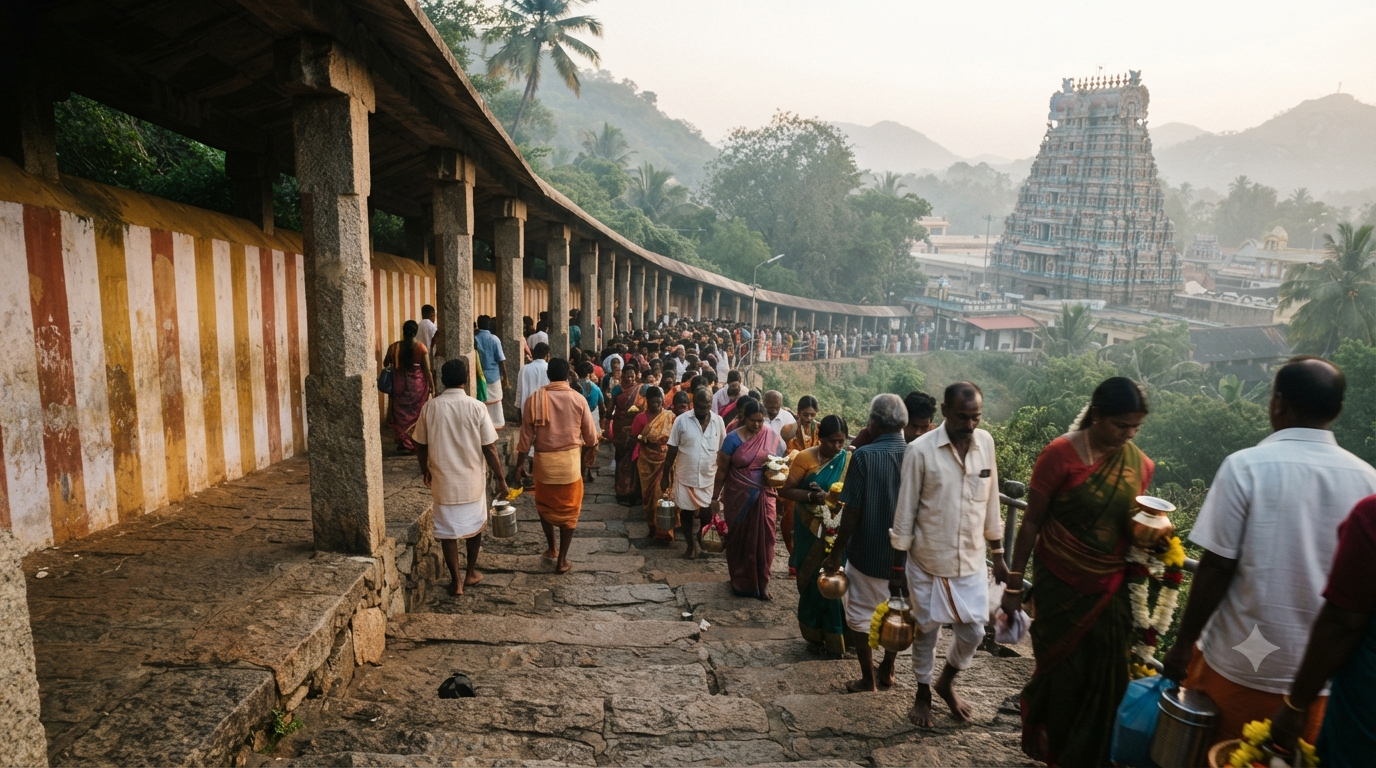
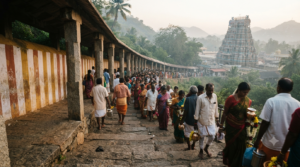
The stone steps are the traditional climb, taken barefoot by many devotees. The winch, meanwhile, is a rope-drawn rail car that carries passengers up in a few minutes, so it is the usual choice for elderly pilgrims. Finally, the rope car covers a short span in roughly three minutes and offers the best view.
Winch tickets have long been the cheapest option, with ordinary fares quoted around ₹10 to ₹20 and special fares higher. Rope car single trips are commonly quoted near ₹15, with special trips costing more. Because both services are fare-revised from time to time, confirm at the base station on the day. Our page on Palani rope car timings and booking covers that service in more detail.
Do not build your plan around booking the rope car online. Availability has come and gone over the years, so treat spot tickets at the base station as your default.
How many steps does Palani hill actually have?
You will see 693, 689 and 690 quoted with equal confidence. The figure repeated most often is 693, though counts differ depending on where the first step is measured from. Nobody at the temple issues an official number, so treat any exact figure as a rough one.
What matters more is the climb itself. It takes most reasonably fit adults roughly twenty to thirty minutes at a steady pace, with rest points along the way.
Health and Safety on the Climb
The steps are a genuine physical effort, especially between 10 a.m. and 4 p.m. when the stone gets hot underfoot. Carry water and start early if you intend to walk up.
Elderly pilgrims, pregnant women, and anyone with a heart, knee or breathing condition should take the winch or rope car rather than the steps. If you plan to fast before darshan and you have diabetes or take regular medication, speak to your doctor first. Devotional practice and medical care are not alternatives to each other.
The navapashanam idol is deeply revered, and many devotees believe the prasadam carries healing properties. That belief belongs to tradition. It is not a substitute for treatment, and no temple offering should replace prescribed medicine.
Dress Code and What You Cannot Carry
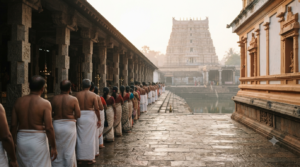
The temple expects traditional dress, and staff enforce it strictly for paid ticket holders. Men usually wear a dhoti or trousers with a shirt. Women, likewise, wear a saree, half-saree or churidar.
Leave leather items, footwear and now mobile phones outside. Similarly, temple staff turn away cameras and recording devices. Since phone deposit counters sit at the steps, the winch and the rope car stations, plan a couple of extra minutes for that queue.
Best Time to Follow the Palani Temple Pooja List
If you want to follow the whole sequence from Vila pooja onwards, a weekday morning is the only realistic choice. Weekday mornings are the calmest, and the hour immediately after opening is calmer still. Tuesdays and Krittika star days draw heavy local crowds, while weekends fill the queue from mid-morning onwards.
The big festivals follow the Tamil calendar rather than fixed English dates. Thai Poosam falls in the Tamil month of Thai, Panguni Uthiram in Panguni, and Vaikasi Visakam in Vaikasi. Skanda Sashti and Aani Annabishekam draw large gatherings too. Because these dates move each year and vary by panchangam, confirm them on the temple’s official festival calendar before booking travel.
Palani Temple Pooja List Tips Most Guides Miss
A few practical things rarely reach the official notice board.
- Print everything. Since phones stay outside, a paper e-ticket and a written note of your slot time save real trouble.
- Pick the alankaram, not just the pooja. Sayaraksha with Raja alankaram is the most popular evening form, so the queue thickens noticeably before it.
- Buy panchamirtham on the way down. Carrying tins up the hill is pointless, and the Devasthanam counter is easier to reach afterwards.
- Book the winch for the ascent only. Many pilgrims ride up and walk down, since that is far kinder on the knees.
- Ignore anyone offering a shortcut. Regardless of what they promise near the base, no agent can move you up the official queue.
- Combine the trip. Thiruavinankudi at the hill base is part of the traditional visit, and it is also far quieter than the hilltop.
Before You Go
Palani rewards a little planning. Free darshan covers the entire Palani temple pooja list, so a paid ticket is a convenience rather than a requirement. Decide which alankaram you want to see, pick a weekday morning, and confirm the timings on the official portal the night before.
Then account for the new phone rule and print your ticket. If you are visiting other Murugan shrines on the same trip, our guides to Tiruttani temple darshan timings and Thiruchendur abhishekam booking follow the same format. For departmental notices across Tamil Nadu, the HR&CE Department portal is the primary source.
Frequently Asked Questions
How many poojas are on the Palani temple pooja list?
The temple performs six kala poojas daily for the main deity: Vila pooja, Sirukala santhi, Kala santhi, Uchikalam, Sayaraksha and Raakkalam. Viswaroopa darshan at around 5:40 a.m. precedes them but is a darshan rather than a pooja. Some websites count it separately and report seven or eight.
Can I attend the poojas without paying?
Yes. General darshan is free, and free-queue pilgrims can view every pooja on the Palani temple pooja list. Paid tickets only shorten the queue or sponsor a specific offering in your name.
Are mobile phones allowed at Palani temple?
No. From 1 September 2026 the HR&CE Department bans mobile phones inside all major Tamil Nadu temples, including Palani. Meanwhile, deposit counters near the steps, winch and rope car stations hold your phone for ₹5. Photography and video recording inside are also banned.
What is the famous prasadam at Palani temple?
Palani Panchamirtham, a semi-solid sweet of Viruppachi banana, jaggery, cow ghee, honey, cardamom, dates and sugar candy. It received a Geographical Indication tag in 2019-20 as the first temple prasadam in India to do so. No water is added, so it keeps for weeks.
How do I book an abhishekam or special darshan at Palani?
Book on the official portal at palanimurugan.hrce.tn.gov.in, or at the temple ticket counters. You will also need a valid government ID for every person in the booking. Sri Vyasa Pooja does not book sevas or take payments.
How many steps lead to the Palani hill temple?
The figure most commonly quoted is 693, although 689 and 690 also appear in print. Counts differ depending on where measurement starts, so the temple publishes no official total. Pilgrims who prefer not to climb can use the winch or the rope car.
What are the Palani temple timings?
The shrine generally opens in the early morning, around 5:45 a.m., and closes by about 9:00 p.m. Hours usually extend on major festival days, when the temple opens well before dawn. Confirm the current schedule on the official portal before you travel.
Is online booking guaranteed for festival days?
No. Slots for Thai Poosam, Panguni Uthiram, Skanda Sashti and Krittika days are quota-limited and sell out early. If nothing is available, still try the temple counter on the day, or shift to free darshan. No agent can secure a slot after the quota closes.