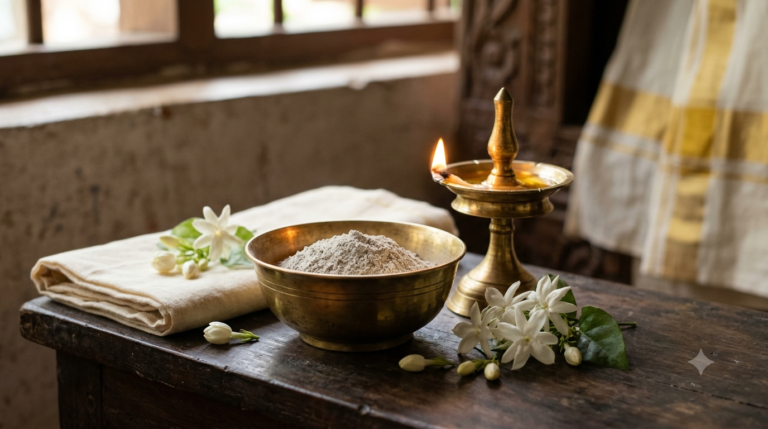
Sabarimala poojicha mani appears in the Travancore Devaswom Board’s published offering list in two forms: a small bell and a large bell. That distinction is official. Yet the list does not establish the current amount to pay, what either bell looks like, or how a devotee can obtain one today.

Independent guide: Sri Vyasa Pooja is not the official Sabarimala Temple or Travancore Devaswom Board website. We are not affiliated with either body and accept no bookings, donations, payments or personal details. Use the official channels linked here for all enquiries.
Sabarimala poojicha mani at a glance
- Item: Poojicha Mani, a bell named in Sabarimala’s official vazhipadu schedule.
- Two listed variants: Small (ചെറുത്) and large (വലുത്).
- Authority: Travancore Devaswom Board (TDB).
- Published source: TDB’s schedule effective from 10 April 2022.
- Current price: Not confirmed; check the amount directly with the Board.
- Material and measurements: Not specified in the reviewed official entries.
- Collection or delivery: No item-specific procedure verified from the reviewed TDB pages.
- Next step: Confirm the variant and current terms through TDB before making a payment or journey.
An official schedule entry confirms that the Board listed an item. It does not, on its own, guarantee present availability, online ordering or any handover method.
What is Sabarimala poojicha mani?
Sabarimala poojicha mani refers to a bell named in the temple’s official offering schedule. In Malayalam, mani means bell, while poojicha indicates an association with worship. However, the short tariff entry does not describe the exact rites performed for the bell or promise a particular blessing procedure.
People seeking a devotional keepsake may also recognise the term from Sabarimala offering lists. Still, it would be wrong to turn the name into a detailed product specification. The Board also does not identify a metal, design, sound, weight or maker on the two lines reviewed.
For this reason, the most useful evidence is the Travancore Devaswom Board’s Sabarimala vazhipadu schedule. It records each size as a distinct entry, rather than describing a single bell with optional packaging.
Small and large Sabarimala poojicha mani: what differs?
The Board publishes two entries, one for a small poojicha mani and another for a large poojicha mani. They have separate item numbers in the dated TDB schedule. Yet the published names do not supply measurements, photographs, metal composition or a confirmed difference in ritual treatment.
| Board-listed variant | Malayalam wording | What remains to confirm |
|---|---|---|
| Small bell | പൂജിച്ച മണി (ചെറുത്) | Dimensions, material, availability and handover |
| Large bell | പൂജിച്ച മണി (വലുത്) | Dimensions, material, availability and handover |
In TDB’s schedule, the small bell is item 28 and the large bell is item 29. Those are two separate lines in the Board’s own Malayalam list. The entries confirm their names, but not current stock or fulfilment terms.
For a gift or home worship, asking only for “a Sabarimala bell” may therefore be too vague. Specify the small or large entry. Then ask what those terms actually mean in the authorised supply today.
Why the dated Board listing is not a current price quote
The Travancore Devaswom Board displays a Sabarimala vazhipadu schedule effective from 10 April 2022. It identifies the two bell variants, but its publication date does not establish the amount payable today. This guide therefore does not reproduce historical bell prices as if they were confirmed current rates.
A reader should confirm the current price for the exact small or large variant through TDB. Ask whether any additional charge applies and whether the item is presently available. That matters because a published tariff alone does not answer those operational questions.
When an official contact or authorised payment channel supplies a current figure, use that information for the enquiry. If the amount is unclear, seek clarification before paying. Avoid treating private sellers’ advertisements as an official tariff.
Does poojicha mani mean a consecrated bell?
The phrase suggests a bell associated with worship, so devotees may describe it as a pooja-blessed or consecrated bell. However, the reviewed TDB list does not document an item-specific consecration ceremony, who performs it or when it occurs. That distinction matters if the exact ritual is important to your purchase.
Ask the Board how it currently defines “poojicha” for these entries. You can also ask whether the item comes with any official description or acknowledgement. Do not assume a priest performs a separate ceremony for every order, since the tariff does not say that.
Religious meaning is personal and rooted in tradition, although interpretations differ. It should not become a promise of guaranteed health, wealth or other measurable outcomes. The safest description is the one the official list supports: two separately named poojicha mani entries.
Can you choose the bell’s material or exact size?
The published entries do not verify brass, bronze, copper, silver or any other specific material for Sabarimala poojicha mani. Nor do they state height, diameter, weight, handle shape or tone. “Small” and “large” are the only size descriptions that these two lines establish.
This is a common place for an unrelated marketplace photograph to mislead. A generic pooja bell may look familiar, yet its design cannot verify the Board’s actual item. The same problem applies to seller claims about engraving, polish or a special alloy.
If dimensions or metal matter, ask the official Sabarimala office whether it can confirm them. For gifting, also ask whether the two variants differ in anything beyond size. Likewise, no customisation or selection facility has been verified from the Board listing.
How to enquire about Sabarimala poojicha mani
Start with the Board’s own list and use its exact item names during your enquiry. This avoids confusing the small and large bells with a separate pooja service. It also keeps the discussion focused on the present price, availability and authorised handover.
- Open TDB’s official Sabarimala offering schedule and locate entries 28 and 29.
- Note the Malayalam descriptions: പൂജിച്ച മണി (ചെറുത്) and പൂജിച്ച മണി (വലുത്).
- Check the Board’s Sabarimala information pages for any more recent instruction about the item.
- Use the official TDB contact directory to reach the appropriate Sabarimala office if the public pages do not answer your question.
- Ask whether both variants are presently available, and confirm the amount payable for the one you want.
- Ask whether the Board offers an authorised online route or requires an in-person enquiry. Do not assume either method exists for this item.
- If the Board confirms collection, ask where, when and with what receipt or proof. Complete any transaction only through the channel it identifies.
For example, a precise question helps: “Does TDB currently provide the small or large poojicha mani at Sabarimala? Please confirm the price, material and approved collection method.”
The official website also links to a general online pooja service. However, that link does not establish a working online product page for either bell. Look for the exact item before drawing conclusions about online availability.
Can Sabarimala poojicha mani be ordered online?
No live online ordering option for either bell has been verified from the public Board listings reviewed here. TDB provides a general online pooja link, but that is not evidence that either poojicha mani variant appears in its current catalogue. Check the exact entry on the authorised service.
Do not rely on social-media messages promising instant orders, home delivery or special handling. A page using temple photographs is not necessarily a Board service. Instead, reach any payment route from TDB’s own website and confirm that the description matches the requested size.
If the option does not appear online, ask TDB whether another approved enquiry route exists. An absent button neither proves that the bells are permanently withdrawn nor guarantees a physical counter will supply them.
Where are the bells collected, and is delivery available?
No specific collection counter, pickup window or delivery service for Sabarimala poojicha mani could be verified from the reviewed official pages. The reviewed Board schedule names both sizes, but it does not explain fulfilment terms. Therefore, avoid assuming that payment leads to immediate collection or postal delivery.
Ask whether you must attend the temple in person and whether another person can collect an item. Those are questions, not established permissions. You should also confirm any receipt requirement and whether collection depends on the temple’s opening period.
For a distant devotee, a confirmed delivery method matters as much as price. Do not provide an address or transfer funds to an unfamiliar seller merely because they claim to ship a consecrated bell. Instead, get an answer from the authorised Board channel first.
Is a poojicha mani purchase linked to darshan?
The bell entries do not state that they include Sabarimala darshan or priority entry. TDB’s schedule identifies them as separate items, while the official Kerala Sabarimala portal links pilgrims to its Virtual-Q service. Keep entry arrangements and bell enquiries separate unless the authority expressly says otherwise.
A receipt for a bell should not be treated as a queue pass. Likewise, a confirmed darshan plan cannot establish that a bell will be available to collect. Check both processes with their official providers before building a tight travel schedule.
If the journey includes the uphill pilgrimage, plan for the physical demand. Carry water and essential medicines as permitted. Anyone with health concerns should seek suitable medical advice before a strenuous climb.
What if your preferred poojicha mani is unavailable?
A name on a Board schedule is not a stock guarantee. The small or large bell might be absent from a live service, or the office might not confirm fulfilment for your visit. In that situation, ask TDB whether the other listed size or another authorised date is possible.
First, verify that you have searched for the exact small or large entry. Next, ask the Sabarimala office whether any Board-approved alternative exists. If neither variant is available, there is no verified third-party workaround that this guide can recommend.
Do not assume a bell sold elsewhere carries the same official status. Even an identical-looking item would require its own evidence of origin and worship. It may be better to complete your pilgrimage without promising a souvenir than to pay an unverified intermediary.
How does poojicha mani differ from other Sabarimala offerings?
Poojicha mani names a bell, while vibhuti prasadam refers to sacred ash and Sarkara Payasam names a sweet food offering. TDB lists all three separately. Consequently, a price or distribution rule for one item should not be copied to another.
Our Sabarimala vibhuti prasadam guide explains why a named sacred-ash entry does not by itself verify packet size or collection. The same verification principle applies to bells, although the items have different purposes.
The Sabarimala Sarkara Payasam guide covers a distinct food offering and its own official enquiry questions. Its quantity, ingredients and handling should never serve as assumptions about a physical bell.
One useful question covers all three: “What exactly does this official listing entitle the devotee to receive?” Ask it for each item by name, rather than treating the full offering list as a uniform shopping catalogue.
Mistakes to avoid before paying for a bell
- Confusing sizes: The Board lists small and large variants separately. Ask for the exact name.
- Assuming a listed rate is today’s charge: Confirm the current amount directly with TDB before paying.
- Assuming brass or another metal: The reviewed official entries do not identify a material.
- Believing every bell has the same ritual treatment: The public list does not describe the ceremony.
- Promising home delivery: No bell-specific shipping channel has been verified.
- Copying a prasadam collection rule: Vibhuti and payasam are different entries with their own questions.
- Mixing an offering with entry permission: A bell enquiry does not replace official darshan planning.
Keep a copy of the official item name when you contact the Board. It is more reliable than a forwarded image or an informal translation that leaves out the size.
Before you decide
Sabarimala poojicha mani has two distinct entries in TDB’s published schedule: small and large. That much can be confirmed without guessing. Current prices, physical specifications and fulfilment terms require an up-to-date answer from the Board.
Use the official listing to identify the right item, then contact TDB before paying or planning collection. A cautious enquiry protects both your money and the devotional purpose of the purchase.
Frequently asked questions
Is Sabarimala poojicha mani officially listed?
Yes. The Travancore Devaswom Board’s Sabarimala schedule lists small and large poojicha mani separately. That official Board list establishes the two names. However, it does not confirm today’s availability or collection arrangements.
What is the difference between Poojicha Mani Small and Big?
The TDB schedule distinguishes them by small and large labels. The reviewed entries do not provide verified dimensions, metal content or photographs. Ask TDB for the practical differences before selecting one.
What is the current Sabarimala poojicha mani price?
The current payable amount for either bell has not been verified. TDB publishes a dated schedule, but this guide does not use historical prices as a live quote. Confirm the rate, availability and any applicable charges directly with the Board.
Are the bells made of brass?
The reviewed TDB entries do not state the material. Therefore, brass, bronze or any other metal would be an assumption. Ask the Board if material or finish is important to your intended use.
Does TDB consecrate every poojicha mani separately?
The list uses the term poojicha mani, but it does not explain a bell-specific consecration procedure. Ask TDB what worship or blessing the term covers in its present arrangements. Do not rely on a seller’s unsupported ritual claims.
Can I buy Sabarimala poojicha mani online?
Neither small nor large bell has a verified live online purchase route in the reviewed public listings. TDB links to a general online pooja service, but that does not prove these specific items appear there. Check the authorised channel or contact the Board.
Does the Board send poojicha mani by courier?
No bell-specific postal or courier facility has been confirmed from the reviewed official pages. Ask TDB whether any delivery method exists and what terms apply. Do not assume that a private shipping advertisement represents the Board.
Where do I collect the bell at Sabarimala?
No exact poojicha mani pickup counter or window has been verified. If TDB confirms collection, ask it for the location, permitted time and receipt requirements. Avoid planning a same-day handover based only on the schedule entry.
Does buying a poojicha mani give special darshan?
The bell entries do not promise special darshan or Virtual-Q access. Follow the official Sabarimala entry process separately. Buying or enquiring about a bell should not change your assumptions about queue eligibility.
What if the small or large bell is unavailable?
Ask the Board whether the other variant or another authorised date is possible. If TDB cannot confirm either option, do not pay an intermediary claiming private access. Keep your darshan arrangements separate from the bell enquiry.