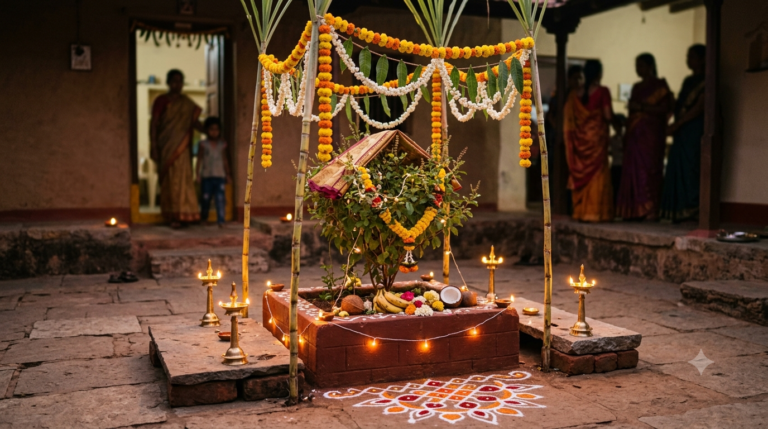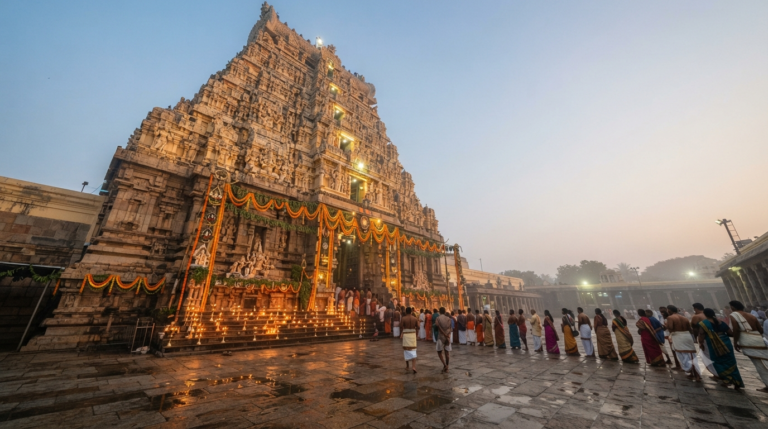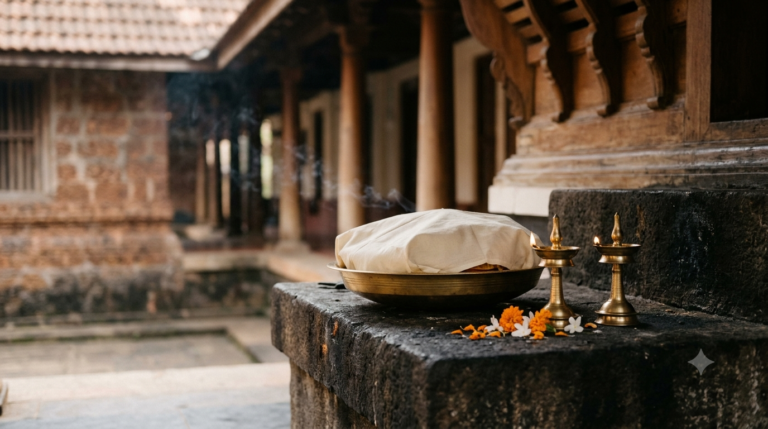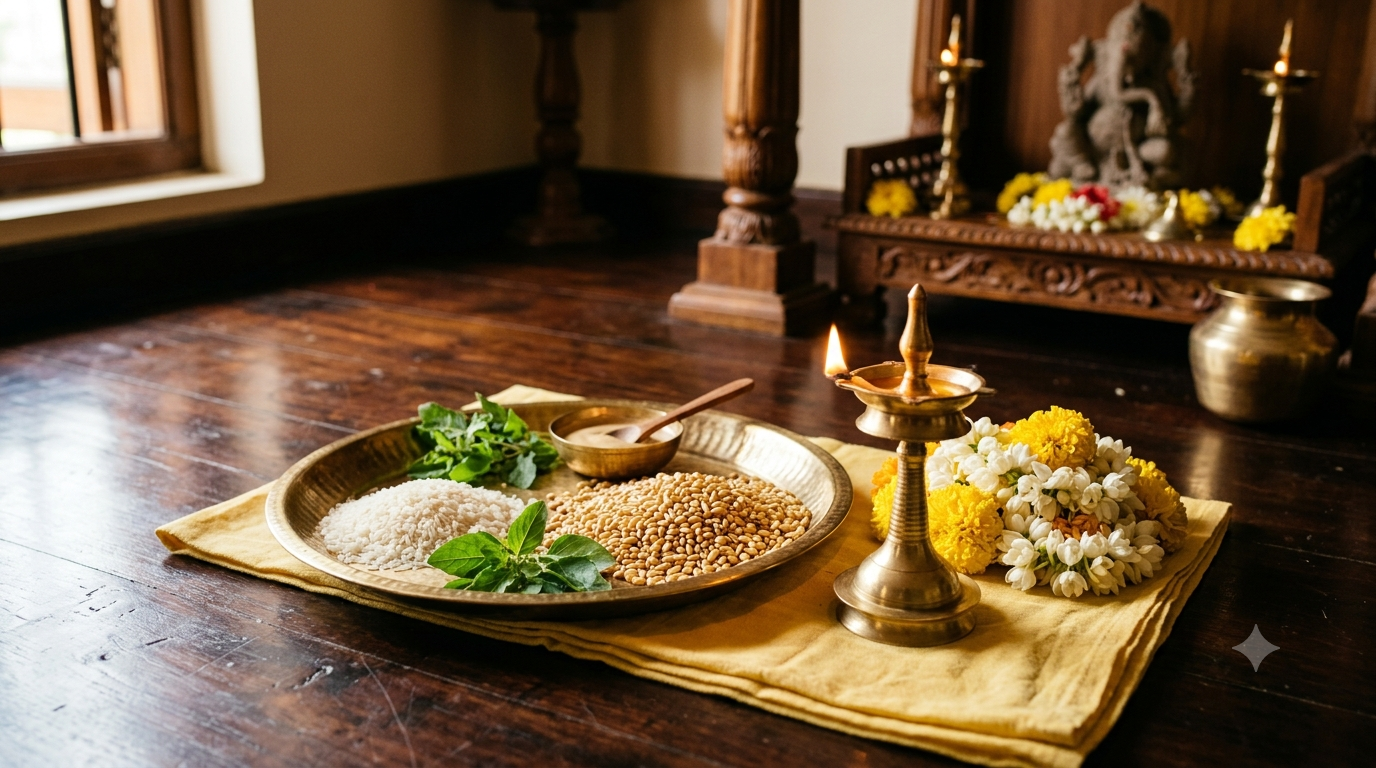
The Significance Of Akshaya Tritiya rests on one Sanskrit word: akshaya, meaning that which never diminishes. Because of that single idea, tradition treats this lunar day as a rare window when good actions carry forward without loss. Most pages online reduce it to a gold-buying date. That framing is recent, and it quietly buries the legends, the temple rituals and the charity practices that gave the day its authority in the first place.
Sri Vyasa Pooja is an independent devotional guide. We are not affiliated with, endorsed by, or the official website of any temple, mutt or devasthanam. We do not book sevas, sell darshan tickets or collect donations on any temple’s behalf. For reservations and official announcements, always use the temple’s own portal.
Significance Of Akshaya Tritiya at a Glance
- Meaning: akshaya means never diminishing, while tritiya means the third lunar day.
- When it falls: Shukla Paksha Tritiya of Vaishakha month, so the date lands in April or May.
- Main deities: Lakshminarayana, the joint form of Vishnu with Lakshmi, along with Parashurama and Kubera.
- Also observed by: Jain communities, who mark the end of Rishabhanatha’s year-long fast.
- Core practice: daan, japa and tarpana. Gold buying is a later custom, not the scriptural centre.
- Next occurrence: Saturday, 8 May 2027, though local panchangams can shift this by a day.
What Does the Word Akshaya Tritiya Actually Mean?
Akshaya Tritiya translates as the third lunar day that never diminishes. The belief attached to it is specific: merit earned through charity, chanting or worship on this tithi is said to remain undiminished rather than fade. Tritiya fixes the date to the third day of the waxing moon in Vaishakha.
That grammar matters, because it shapes how the Significance Of Akshaya Tritiya works in practice. Devotees are not asked to acquire something. They are asked to give, chant or begin, since those actions are the ones tradition says compound.
The Significance Of Akshaya Tritiya in Hindu Tradition
Vedic astrology places this tithi among the abujha or self-proven muhurats. These are days considered pure enough that no separate auspicious hour needs calculating before starting something new. Ugadi and Vijayadashami sit in the same small group. Much of the Significance Of Akshaya Tritiya flows from that classification.
Because of that status, families historically chose the day for weddings, housewarmings, first ploughing and the opening of a shop. The logic is consistent throughout: a beginning made on an undiminishing day is believed to hold.
The One Timing Detail Most Guides Skip
Here is the nuance that gets flattened almost everywhere. Although the day needs no muhurat, the Tritiya tithi itself still has a start and end time. In 2026, for example, the tithi began at 10:49 AM on 19 April and closed at 7:27 AM the next morning, according to Drik Panchang calculations widely reported that week.
So an activity performed at 7 AM on the festival morning technically falls before the tithi opens. Most families treat the whole sunrise-to-sunrise day as auspicious anyway. Still, if you are timing something significant, check the tithi window in your own panchangam rather than assuming the full calendar day qualifies.
Why Regional Calendars Sometimes Differ by a Day
In 2026 most of India observed the festival on Sunday, 19 April. Odisha’s temple calendar, however, marked it on Monday, 20 April, when the Puri rituals were performed. Neither is an error.
Regional almanacs resolve the tithi differently depending on sunrise reference and local tradition. Therefore, when the date matters for a wedding or a griha pravesham, follow the panchangam your family or purohit actually uses.
Legends Behind the Significance Of Akshaya Tritiya
Several narratives converge on this tithi, and together they explain why it carries such weight. The Britannica entry on the festival lists Indra’s redemption, the descent of the Ganga, Parashurama’s birth, the start of Treta Yuga and Kubera’s appointment as heaven’s treasurer among them.
Who Really Gave the Akshaya Patra?
This is the most repeated error online, so it is worth stating plainly. Krishna did not gift the Akshaya Patra to Draupadi. Yudhishthira received the vessel from Surya after penance during the Pandavas’ forest exile.
Krishna’s role comes later in the story. When sage Durvasa arrived after Draupadi had eaten and the vessel had gone quiet for the day, she prayed for help. Krishna ate a single grain clinging to the pot and declared himself satisfied, which satisfied the sages too. The distinction is small, yet it separates a sourced retelling from a copied one.
Parashurama Jayanti and the Treta Yuga
Tradition places the birth of Parashurama, the sixth avatar of Vishnu, on this tithi. Many Brahmin communities observe Parashurama Jayanti on the same day for that reason. Occasionally the two observances separate by a day, depending on when the Tritiya tithi actually begins.
The same day is also named as the start of Treta Yuga in Hindu cosmology. That is why some almanacs list it as a Yugadi tithi, a day on which an age itself began.
Kubera, Sudama and the Wealth Association
Two further stories anchor the prosperity theme. Kubera is said to have worshipped Lakshmi on this day and received charge of divine treasure. Separately, the Bhagavata tradition places Sudama’s visit to Krishna here, when a handful of parched rice was answered with abundance.
Read together, both stories reward giving rather than acquiring. Sudama arrived with an offering, not a request. That reading sits closer to the day’s meaning than any jewellery advertisement does.
The Jain Significance Of Akshaya Tritiya
The Jain Significance Of Akshaya Tritiya runs on a separate and older track. The day commemorates Rishabhanatha, the first Tirthankara, breaking a year-long fast when a king offered him sugarcane juice. Because of that event, the fast is known as Varshi Tapa, and devotees break it with sugarcane juice to this day.
Śvetāmbara practitioners undertake an extended alternate-day fast that partially replicates it. The parana, or ceremonial breaking of the fast, is the emotional centre of the occasion in Jain communities.
Charity or Gold? What the Tradition Actually Emphasises
Buying gold is the loudest modern association with the Significance Of Akshaya Tritiya. Yet it is not the scriptural core. Classical guidance for the day centres on daan, japa, homa with barley and unbroken rice, and tarpana for ancestors. Drik Panchang’s own festival note frames the benefit around japa, yajna, pitra-tarpan and dana rather than purchases.
None of this makes buying gold wrong. It simply means a household that cannot afford jewellery has lost nothing. Barley, silver, a clay pot, or a meal given to someone who needs it all carry the traditional intent.
Treat any promise of guaranteed returns from a festival purchase as marketing, not tradition. Gold prices move for market reasons alone. Faith practices belong in one column of your thinking, and financial decisions belong in another. We are not financial advisers, and nothing here is investment advice.
Temples Where the Significance Of Akshaya Tritiya Comes Alive
The day is not only a home ritual. Several major shrines organise their entire year around it, which is where the festival becomes visible on the ground.
Simhachalam Chandanotsavam, Andhra Pradesh
At Sri Varaha Lakshmi Narasimha Swamy temple in Simhachalam, the sandalwood paste covering the deity is removed on this day. Devotees then see the original form, called Nijarupa Darshanam, for a short window once a year. Crowds are enormous, so plan travel and darshan well before the date. Our detailed Chandanotsavam travel guide covers timings and access.
Gangotri and Yamunotri, Uttarakhand
The Char Dham Yatra season opens on this tithi. In 2026 the Gangotri portals opened at 12:15 PM and Yamunotri at 12:35 PM, as reported by DD News. Kedarnath and Badrinath follow within days.
Opening times are fixed afresh each year by the temple committees, usually announced around Ugadi. Never book Himalayan travel against last year’s figures.
Puri, Odisha
Two major Jagannath traditions begin on this day. Ratha Katha Anukula Puja formally starts chariot construction for the Rath Yatra, and the 21-day Chandan Yatra also commences, as DD News reported in 2026. Farmers across the state perform Akhi Muthi Anukula, the ceremonial first sowing.
How Different Regions Observe the Day
The Significance Of Akshaya Tritiya looks different depending on where you keep it. This table sets the main regional patterns side by side.
| Region | What the day centres on | Signature practice |
|---|---|---|
| Andhra Pradesh | Rare darshan of the deity’s true form | Chandanotsavam at Simhachalam |
| Uttarakhand | Opening of the pilgrimage season | Gangotri and Yamunotri portals open |
| Odisha | Jagannath rituals and farming | Chariot work and Akhi Muthi Anukula |
| North and West India | Lakshmi and Kubera worship | Gold, silver or barley purchase |
| Jain communities | End of Rishabhanatha’s fast | Varshi Tapa parana with sugarcane juice |
Akshaya Tritiya Pooja Procedure at Home
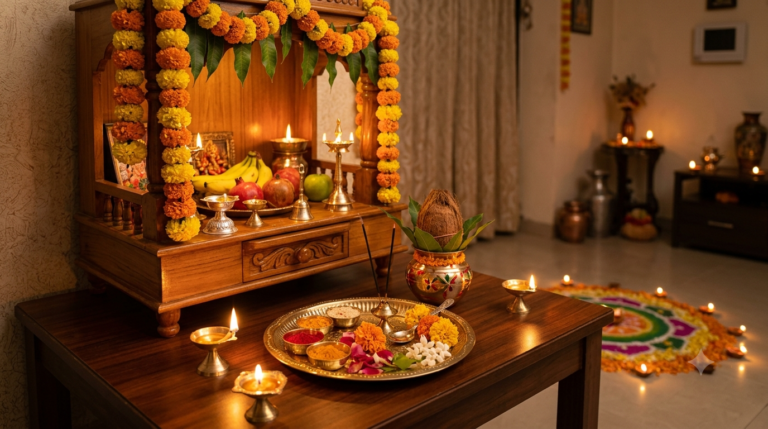
A home puja on this day stays simple. Since the tithi itself is auspicious, elaborate arrangements are optional rather than required.
- Bathe early and clean the puja space before you begin.
- Spread a fresh cloth and place images or idols of Vishnu and Lakshmi together.
- Light a ghee lamp and incense, then take sankalpa with water and a few grains of rice.
- Offer water, then sandalwood paste, flowers and tulsi leaves to Vishnu.
- Chant the Vishnu Sahasranama or a Lakshmi stotra, whichever your family follows.
- Offer naivedyam, then distribute a share of it as prasadam.
- Complete the day with daan, because charity is the practice the tithi is actually named for.
Simple Samagri Checklist
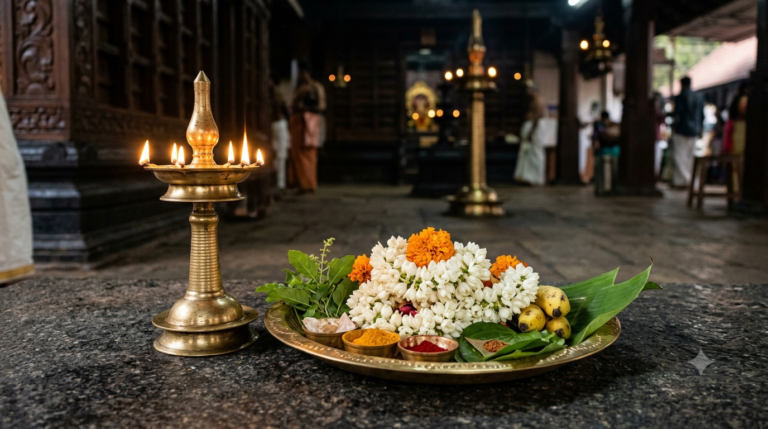
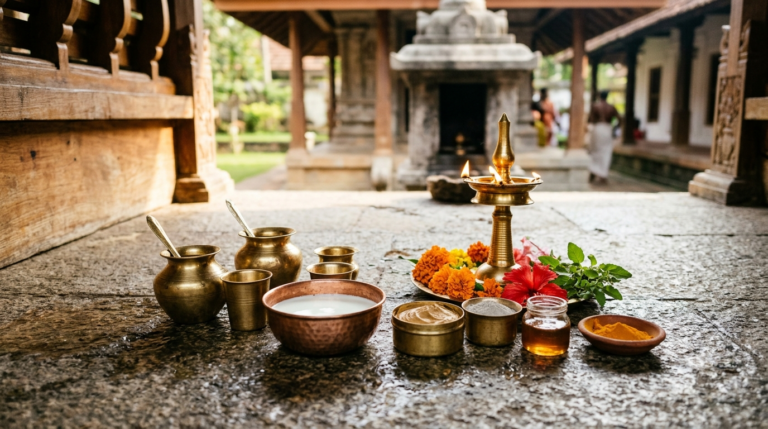
Keep it to what you can gather locally: a ghee lamp, incense, sandalwood paste, yellow or white flowers, tulsi leaves, unbroken rice, barley if available, fruit, jaggery and a clean cloth. Barley carries particular weight on this tithi, since homa with yava is a traditional recommendation.
If You Plan to Fast
Many devotees keep a day-long fast for Vishnu. Vaishakha falls in peak summer across most of India, so heat is a genuine factor. Keep water intake up unless your tradition prohibits it, and break the fast gently.
Anyone who is pregnant, elderly, diabetic or on regular medication should speak to a doctor before attempting a strict or waterless fast. A partial phalahar fast carries the same devotional intent without the risk. Ritual observance is a matter of faith and tradition, and it is never a substitute for medical treatment.
What Most Akshaya Tritiya Guides Get Wrong
Four errors circulate so widely that they now read as fact. Correcting them is the fastest way to understand the day properly.
- The Akshaya Patra attribution. Surya gave it to Yudhishthira. Krishna’s grain-of-rice episode came afterwards.
- “No muhurat needed” taken too far. The day is abujha, yet the Tritiya tithi still opens and closes at a specific hour.
- Treating gold as compulsory. Classical guidance names daan, japa and tarpana first, so a purchase is optional.
- Assuming one national date. Odisha observed a day later than most states in 2026, which is normal rather than a mistake.
When the Day Falls Next
The Significance Of Akshaya Tritiya stays constant, though the date moves each year with the lunar calendar. In 2026 it fell on Sunday, 19 April. The next observance is Saturday, 8 May 2027, on Vaishakha Shukla Tritiya.
Treat that as an India-baseline date. Tithi start and end times vary by city, so confirm the exact window on Drik Panchang or in your family panchangam before fixing anything important. If you are comparing auspicious days, our guide to the significance of Ugadi festival covers another of the self-proven muhurats.
Before You Observe the Day
The Significance Of Akshaya Tritiya is easier to hold onto once you stop treating it as a shopping date. It is a tithi built around the idea that certain actions do not decay, and tradition names those actions clearly: give, chant, remember your ancestors, begin something honest. A gold coin is welcome if you can afford one, though it was never the point.
If you want a practical plan, do one thing from each column. Perform a short Vishnu-Lakshmi puja at home, give something to someone who needs it, and begin one task you have been postponing. For a related Lakshmi observance later in the year, see our Diwali Lakshmi Pooja guide. The Britannica entry on Akshaya Tritiya is a reliable starting point for the wider mythology.
Frequently Asked Questions
What is the real Significance Of Akshaya Tritiya?
Akshaya means undiminishing, so the day is understood as one on which merit from charity, chanting and worship does not fade. Tradition also marks it as the start of Treta Yuga and the birth of Parashurama. Prosperity customs grew around that core idea later.
Which god is worshipped on Akshaya Tritiya?
Lakshminarayana is the primary focus, meaning Vishnu worshipped together with Lakshmi. Many households also honour Kubera, the treasurer of the gods. Communities observing Parashurama Jayanti worship Parashurama on the same tithi.
Is it compulsory to buy gold on Akshaya Tritiya?
No. Buying gold is a widespread custom rather than a scriptural requirement. Classical practice emphasises daan, japa, homa and tarpana. Barley, silver or a simple act of charity carries the same traditional intent if gold is beyond your budget.
Does Akshaya Tritiya need a muhurat?
The day is classed as an abujha or self-proven muhurat, so no separate auspicious hour is calculated. However, the Tritiya tithi still has a defined start and end. Check your panchangam if you are timing a wedding, registration or griha pravesham precisely.
Why does the date change every year?
The festival follows the Hindu lunar calendar and falls on Vaishakha Shukla Tritiya. Since lunar months do not align with Gregorian ones, the date shifts between late April and mid-May each year.
Can Akshaya Tritiya puja be done at home?
Yes, and most families do exactly that. A clean space, a lamp, images of Vishnu and Lakshmi, sandalwood, tulsi and a short stotra are enough. Temple worship is welcome, though it has never been a requirement for the day.
What is the connection with Simhachalam?
Chandanotsavam at Simhachalam falls on this tithi. The sandalwood covering the Varaha Narasimha Swamy idol is removed, letting devotees see the deity’s original form for a limited window once a year. Crowds are heavy, so plan travel early.
Is Akshaya Tritiya a public holiday in India?
It is not a national gazetted holiday, although some states and institutions observe it locally. Banks, offices and jewellers generally remain open. Check your state’s holiday list if you are planning around it.