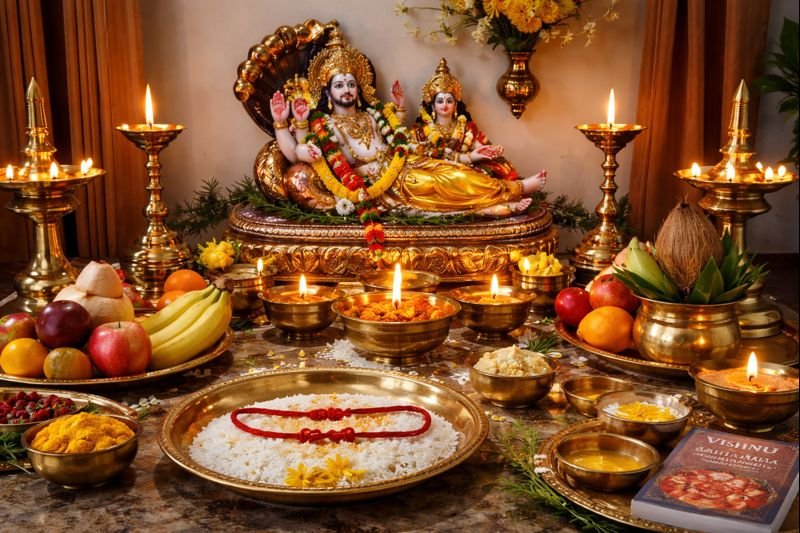
Significance Sri Anantha Padmanabha Vratham & Pooja: Essential Spiritual Insights
Significance Sri Anantha Padmanabha rituals — especially the Vratham and Pooja — are deeply rooted in devotion to Lord Vishnu in His eternal form as Anantha Padmanabha. This sacred practice is more than ceremony; it’s a holistically transformative spiritual discipline that thousands of devotees follow to invite peace, prosperity, and divine protection into their lives.
Also, before we begin, for historical and contextual clarity, it helps to understand the central deity associated with this practice. The Padmanabhaswamy Temple in Thiruvananthapuram is one of the 108 Divya Desams dedicated to Lord Vishnu and is world-famous not only for its grandeur but for the unique Anantha (reclining serpent) form of Vishnu worshipped there.
Understanding Who Sri Anantha Padmanabha Is
The name “Anantha Padmanabha” refers to Lord Vishnu in His infinite, all-pervasive form lying on the cosmic serpent Anantha (Adi-Sesha). “Anantha” literally means “endless”, indicating the eternal aspect of divinity without beginning or end. “Padmanabha” means “the one who has the lotus (padma) springing from His navel (nabha)”, and the lotus symbolizes creation arising from the divine source. Understanding Significance Sri Anantha Padmanabha is essential.
This form represents cosmic balance and the maintenance aspect of the universe — Vishnu sustaining all life through His eternal power. Devotees performing Vrathams and Poojas in His honor seek connection to these divine functions: protection, stability, and spiritual awakening.
The Cultural Context of Sri Anantha Padmanabha Vratham
Sri Anantha Padmanabha Vratham (or Anantha Vrata) is traditionally observed on the fourteenth day of the bright half (Shukla Paksha) of the lunar month of Bhadrapada — a day called Ananta Chaturdashi. On this day, devotees honor Lord Anantha through specific rituals intended to bind themselves spiritually to the infinite energy of Vishnu.
In contrast, the Vratham is a form of a “kamya vrata” — a vow taken with a specific purpose, such as marital harmony, family prosperity, recovery of lost wealth, or overcoming life’s obstacles. This relates to Significance Sri Anantha Padmanabha.
Step-By-Step Sri Anantha Padmanabha Vratham Ceremony
The following steps outline a traditional Vratham and Pooja process. Exact procedures can vary by region and family custom, so consult a learned priest for personalized guidance.
1. Preparatory Cleansing
Begin with an early morning bath and wear clean, traditional attire. Purify your mind and body through prayer and meditation before starting the Vratham rituals.
2. Sacred Space and Altar Setup
Create a puja area facing east or north. Place an image or idol of Lord Anantha Padmanabha. Decorate with fresh flowers, tulsi leaves, incense, and oil lamps. Learn more about Significance Sri Anantha Padmanabha.
3. Ananta Sutra (Sacred Thread)
A key feature of this Vratham is tying the Ananta Sutra (a sacred thread) on the wrist. Typically this thread has 14 knots, symbolizing virtues and spiritual commitments. Men wear it on the right hand; women on the left.
4. Invocation (Dhyana and Sankalpa)
Recite a formal Sankalpa (vow) stating intention for performing the Vratham. Meditate on the eternal form of Lord Anantha Padmanabha and seek His blessings.
5. Offerings and Shodasa Upachara
Perform a systematic offering called Shodasa Upachara — 16 traditional offerings including flowers, water, food, and incense. These offerings honor Vishnu through classical ritual formats.
6. Prayer Recitations
Recite Vishnu Sahasranama (1000 names of Vishnu) or specific Anantha Padmanabha hymns. Chanting these mantras with devotion enhances the spiritual efficacy of the Vratham.
7. Concluding Aarti and Prasad Distribution
Light the lamp and perform Aarti. Distribute Prasad (blessed food) among family members. This completes the ceremony with shared blessings.
Best Practices For Performing the Ritual
Adhering to certain practices deepens the spiritual experience and aligns the devotee with the purpose of the Vratham:
- Perform the Vratham with a clear intention (Sankalpa) stated aloud.
- Observe cleanliness and purity of mind — avoid distractions during the ritual.
- Choose a quiet, dedicated area of your home for the puja space.
- If undertaking the Vratham over multiple days, maintain consistency in timing.
- Offer simple vegetarian food as Prasad to reinforce spiritual discipline.
What the Vratham Symbolizes
The Ananta Padmanabha Vratham is not merely about ritualistic actions; it symbolically represents:
- Eternal Protection: Seeking divine shield from difficulties in life.
- Unity of Existence: Recognizing the unity of all life through Vishnu’s infinite nature.
- Commitment to Righteousness: Reaffirming dharmic living.
- Harmony and Prosperity: Invoking stability in relationships and household wellbeing.
Common Mistakes To Avoid
While the Vratham is spiritually rewarding, common pitfalls dilute its impact:
- Skipping the Intention Statement: The Sankalpa or vow sets your spiritual focus — don’t overlook it.
- Impatience: Rituals performed hurriedly may not yield intended spiritual depth.
- Distraction During Mantras: Maintain respectful silence and concentration.
- Incorrect Thread Knots: Count the knots correctly (usually 14) and tie strongly but comfortably.
- Skipping Traditional Offerings: Shodasa Upachara requires specific items; substitute only with guidance.
Personal Reflections: When I Visited Padmanabhaswamy Temple
When I visited the Padmanabhaswamy Temple, Kerala, what surprised me most was the serene focus of devotees — even amidst history and grandeur. The ritual protocol is strict: only Hindus may enter, and traditional attire is a must, highlighting how devotion and discipline coexist at this ancient shrine.
I personally recommend experiencing the Vratham with a local priest, even virtually, if you cannot visit. The guidance ensures that every aspect — from Sankalpa to Prasad — resonates with heartfelt devotion rather than rote performance.
Frequently Asked Questions (FAQs)
Is Sri Anantha Padmanabha Vratham only for specific devotees?
No. While many perform it for marriage harmony, prosperity, or overcoming hardships, any sincere devotee can observe the Vratham with a devoted heart.
Can this Vratham be done at home?
Yes. Vratham is traditionally performed at home with a simple altar and the necessary puja items. Seek a local priest’s guidance to ensure correct procedure.
Does the Vratham involve fasting?
Some devotees observe a partial fast or restrict meals until the ceremony concludes. This personal discipline enhances spiritual immersion.
How many years should the Vratham be observed?
Certain traditions recommend the Vratham year after year for 14 years, symbolized by the 14 knots on the sacred thread, but this varies by region and family custom.
What benefits do devotees receive?
Devotees believe that sincere observance fosters peace, protection, recovery from losses, stronger family bonds, and spiritual upliftment.
Conclusion: The Timeless Value Of Sri Anantha Padmanabha Practices
The Significance Sri Anantha Padmanabha Vratham & Pooja lies not just in its rituals but in its alignment with eternal spiritual principles. The act of connection — through thread, mantra, offerings, and devotion — creates a bridge between everyday life and divine grace.
For devotees seeking deeper peace, spiritual protection, and inner harmony, this tradition offers rich, time-tested meaning rooted in devotion to Lord Vishnu’s infinite form. Whether pursued at home or through visits to sacred temples, the Vratham invites each seeker to engage with the eternal in a personally meaningful way.


+ There are no comments
Add yours