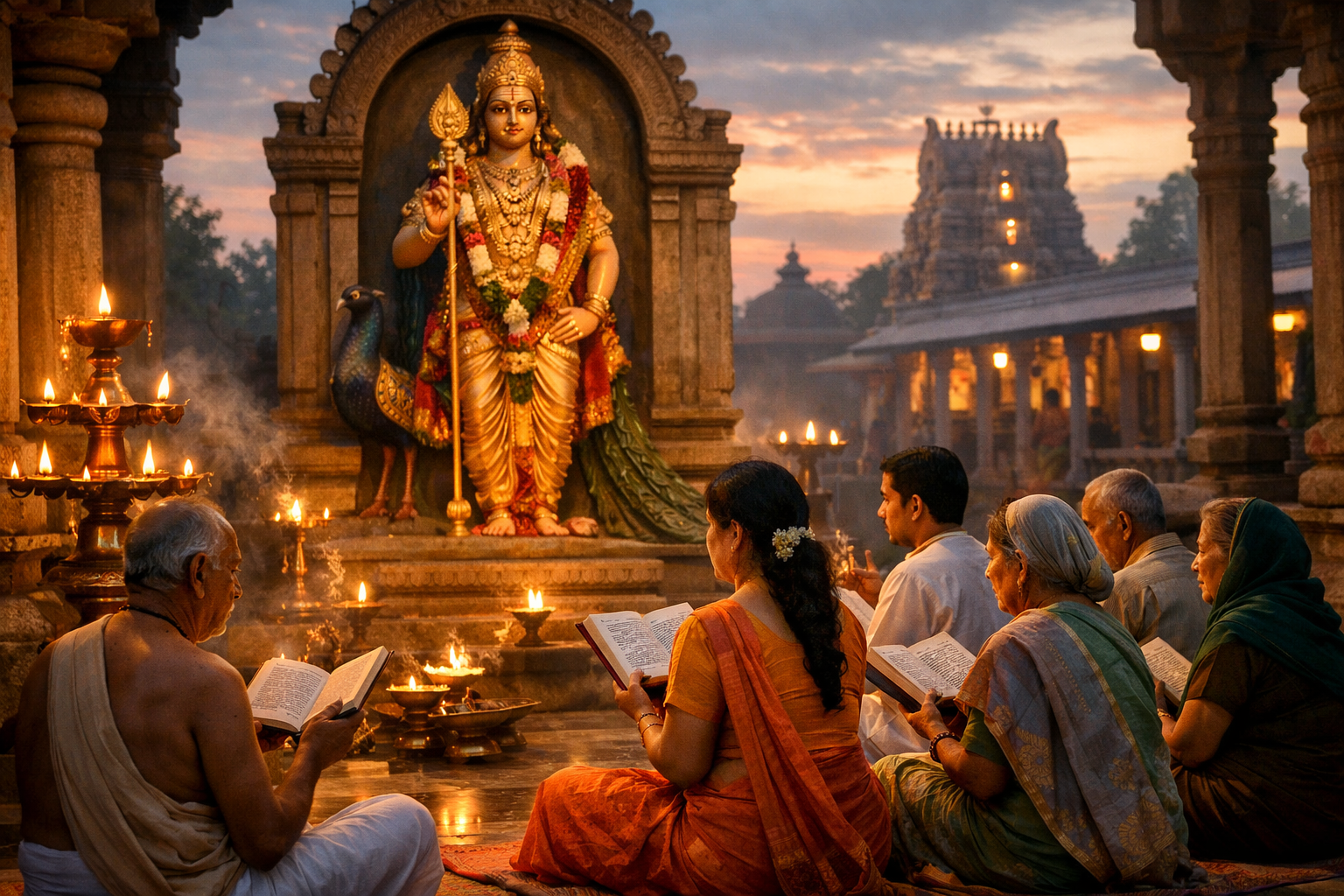
Sri Subrahmanya Mangala Ashtakam In Telugu Devotional Guide
Sri Subrahmanya Mangala Ashtakam in Telugu is a powerful hymn dedicated to Lord Subrahmanya (also known as Kartikeya, Skanda or Murugan), composed in eight auspicious verses that seek divine blessings for protection, success and spiritual well-being. This sacred chant praises the many divine attributes of Lord Subrahmanya and is a beloved devotional prayer among Telugu devotees.
What Is Sri Subrahmanya Mangala Ashtakam?
The “Sri Subrahmanya Mangala Ashtakam” is a traditional Sanskrit hymn preserved and chanted widely in Telugu devotional circles. In Sanskrit, “Mangala” means auspicious and “Ashtakam” means a composition of eight verses. In this hymn, the devotee invokes Lord Subrahmanya’s grace through vivid depictions of his divine form, qualities and blessings.
This stotra is part of classical devotional literature that praises Lord Subrahmanya’s courage, compassion, leadership in celestial battles, removal of obstacles, and embodiment of auspiciousness.
Origins And Tradition Of The Hymn
The precise historical authorship of the Sri Subrahmanya Mangala Ashtakam isn’t definitively documented in dharma shastras, but it is widely included in collections of Subrahmanya stotras and chanted in temples and homes.
Furthermore, lord Subrahmanya, son of Shiva and Parvati and brother of Lord Ganesha, is revered across India and especially in South India. Temples like those in Tiruchendur, Palani, and Subrahmanya in Karnataka attract millions of devotees. For details on Subrahmanya’s cultural presence, see the general deity page on Wikipedia – Kartikeya.
Complete Telugu Text Of The Sri Subrahmanya Mangala Ashtakam
The following verses are traditionally recited by devotees in Telugu script (original Sanskrit with Telugu pronunciation):
| Verse Number | Telugu Verse |
|---|---|
| 1 | శివయోస్తనుజాయాస్తు శ్రితమందారశాఖినే … |
| 2 | భక్తాభీష్టప్రదాయాస్తు భవరోగవినాశినే … |
| 3 | శూరపద్మాదిదైతేయతమిస్రకులభానవే … |
| 4 | వల్లీవదనరాజీవ మధుపాయ మహాత్మనే … |
| 5 | కందర్పకోటిలావణ్యనిధయే కామదాయినే … |
| 6 | ముక్తాహారలసత్కంఠరాజయే ముక్తిదాయినే … |
| 7 | కనకాంబరసంశోభికటయే కలిహారిణే … |
| 8 | శరకాననజాతాయ శూరాయ శుభదాయినే … |
| 9 | మంగళాష్టకమేతద్యే మహాసేనస్య మానవాః … |
These verses are believed to contain blessings for health, protection from danger, fulfilment of desires, removal of obstacles, and prosperity.
Meaning And Spiritual Insights
Each verse of the Sri Subrahmanya Mangala Ashtakam invokes a specific divine attribute of Lord Subrahmanya. For example:
- He is praised as the destroyer of illnesses and protector of devotees.
- His courage in defeating demons is celebrated.
- He is described as the beloved son of Shiva and Parvati and the commander of celestial armies.
The repetitive chanting of the term “Mangalam” at the end of each couplet symbolizes the wish for auspiciousness and well-being.
How To Chant Sri Subrahmanya Mangala Ashtakam
Chanting this hymn with proper pronunciation and devotion is considered highly beneficial. Here’s a step-by-step approach:
1. Prepare Your Space
Choose a clean and quiet area in your home or temple. Sit facing east or north, traditionally considered auspicious directions in Hindu worship. Light a diya (lamp) and incense as part of your setup.
2. Calming Breath And Focus
Before chanting, take a few deep breaths to centre your mind. Focus your thoughts on Lord Subrahmanya’s image or idol. This helps deepen concentration and devotion.
3. Recite The Hymn
Begin chanting slowly, paying attention to each word. You can chant aloud or silently. Repeat all eight verses followed by the concluding shloka that speaks of the benefits and invocation for blessings.
4. Closing Prayers
After completing the chant, offer a silent prayer of gratitude. Some devotees ring a bell lightly or play a traditional instrument like a manjira (hand cymbals) to conclude.
Best Times To Chant And Ritual Tips
While the Sri Subrahmanya Mangala Ashtakam can be chanted at any time of day, many devotees prefer early morning or evening during Brahma Muhurta (just before sunrise) to improve spiritual focus.
Therefore, chanting the hymn during Subrahmanya Sashti, an annual festival devoted to Lord Subrahmanya, is believed to amplify its benefits. On this day, devotees traditionally perform additional rituals and special prayers. For example, in Subrahmanya Sashti 2025, the festival began on November 25 and concluded on November 26, with special puja practices recommended.
Common Mistakes To Avoid While Chanting
- Reciting Without Understanding: Merely repeating the sounds without focusing on meaning can reduce the devotional impact. Take time to reflect on each verse’s meaning.
- Incorrect Pronunciation: Sanskrit words require careful articulation. Mispronunciations may change meanings, so it’s good to learn from a teacher or audio sources.
- Chanting Hastily: Reciting quickly to complete a quota isn’t recommended. A slow, mindful pace brings better spiritual harmony.
Personal Reflections On Chanting The Hymn
When I visited the Subrahmanya temple in Karnataka, I noticed how devotees of all ages chant this hymn with a sense of peace and devotion. What surprised me most was the serene atmosphere during group chanting sessions — even first-time visitors paused to join. I personally recommend learning the Telugu verses first, then aligning them with meanings to deepen the spiritual experience.
Who Should Chant Sri Subrahmanya Mangala Ashtakam?
This hymn suits anyone seeking inner strength, relief from difficulties, and auspicious beginnings, especially devotees of Lord Subrahmanya and students, warriors, and travelers. Its regular chanting is thought to foster confidence and spiritual protection.
Frequently Asked Questions
What Is The Purpose Of Sri Subrahmanya Mangala Ashtakam?
The purpose is to honour Lord Subrahmanya and invoke his blessings for protection, fulfilment of desires and overall well-being. The word “Mangala” means auspicious, reflecting the hymn’s intent to bring auspicious outcomes.
Can I Chant This Hymn Daily?
Yes, many devotees chant it daily as part of their morning pooja. Consistency, sincerity, and devotion improve its spiritual benefits.
Do I Need A Priest To Chant It?
No. While a priest’s guidance can help with correct pronunciation and rituals, anyone with devotion can chant it. Beginners may benefit from following a recorded audio along with texts.
Are There Specific Benefits Mentioned?
Traditional belief holds that chanting this hymn reduces mental distress, brings courage, protects from dangers, and enhances prosperity. Devotees also chant it during special occasions and festivals for added spiritual upliftment.


+ There are no comments
Add yours