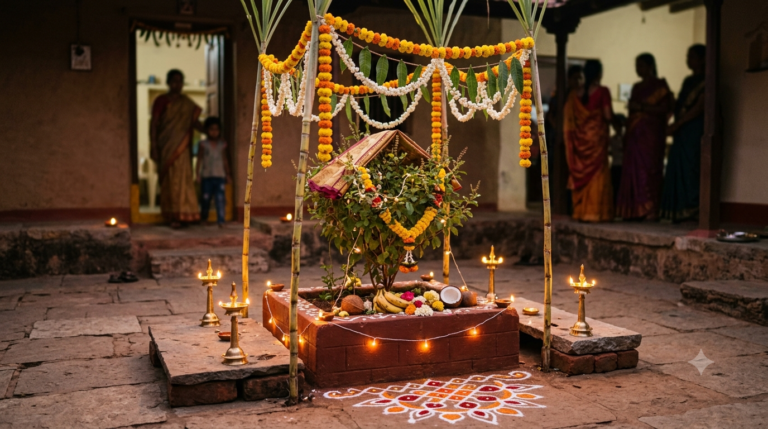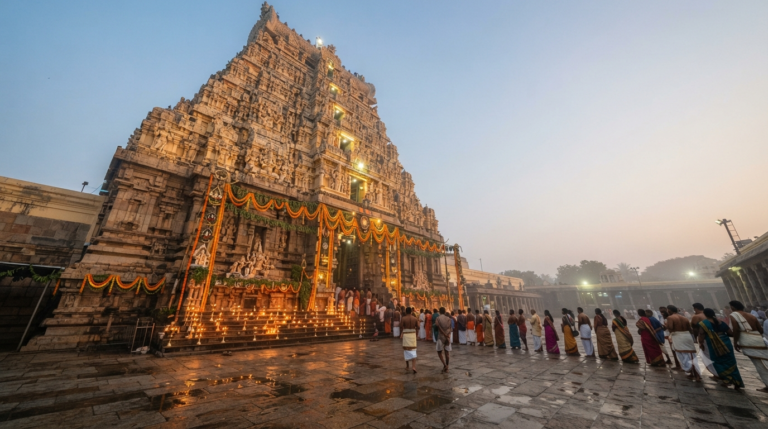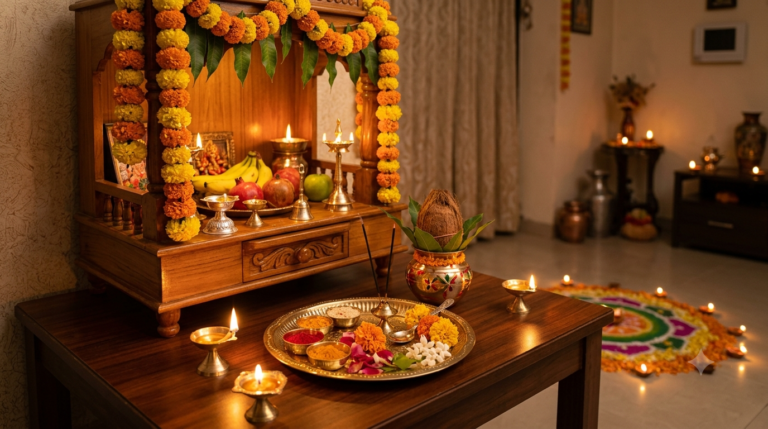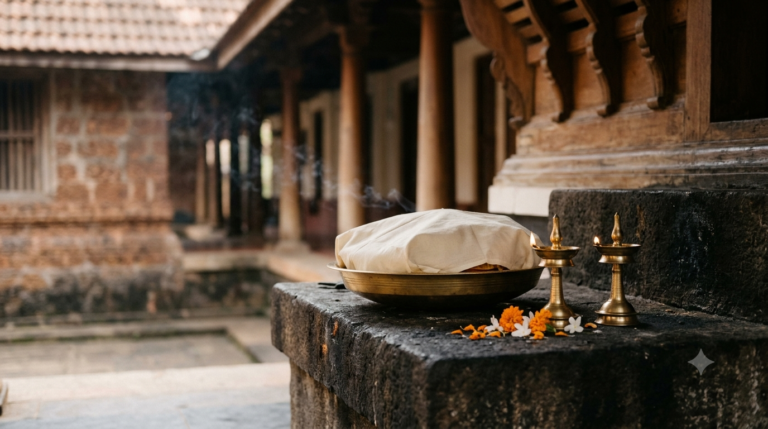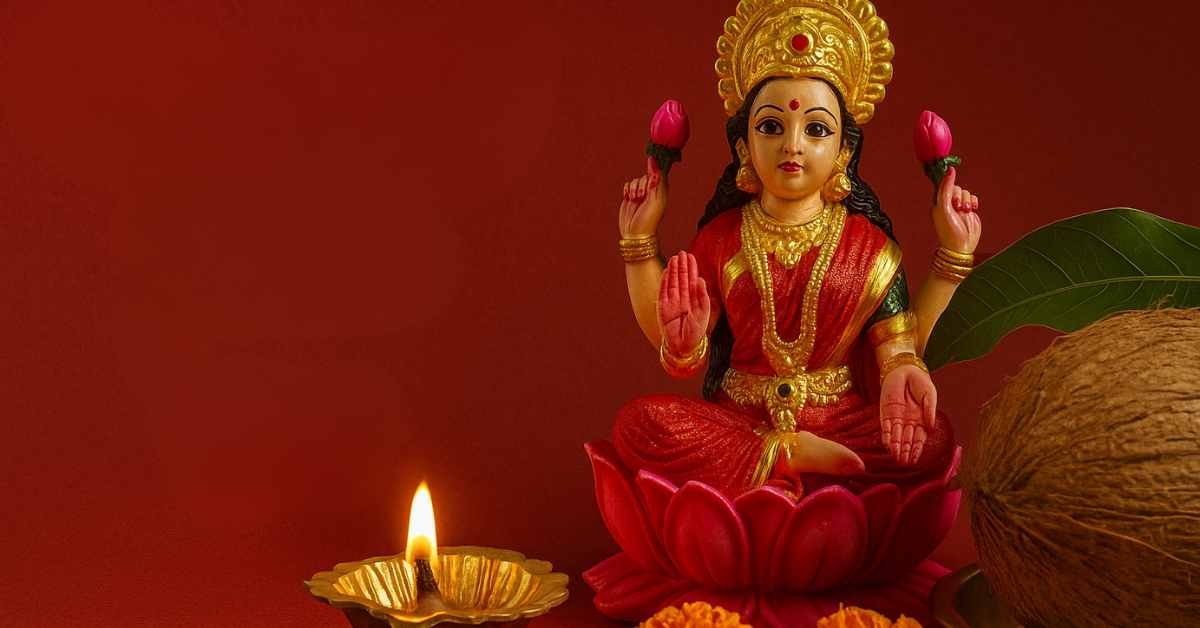
Quick answer: Deepavali Lakshmi Pooja is performed on the new-moon (Amavasya) night of the Kartika month, after sunset during the Pradosha Kaala (the roughly two-hour window once it gets dark). In Karnataka, families clean and decorate the home, draw rangoli, light rows of lamps (deepa), and worship Goddess Lakshmi together with Lord Ganesha using the sixteen-step Shodashopachara method. The exact evening and timing change every year, so check a current Panchanga for your town.
Key Information at a Glance
| Festival | Deepavali Lakshmi Pooja (also called Lakshmi-Ganesha Pooja) |
| When | Kartika Amavasya (new-moon night), after sunset |
| Best time | Pradosha Kaala — about two hours after sunset |
| Deities worshipped | Goddess Lakshmi, worshipped along with Lord Ganesha |
| Method | Shodashopachara (sixteen ritual steps) |
| Common customs | Lamps (deepa), rangoli, flowers, sweets, family aarati |
| How to fix the date | Refer to a current Panchanga for your city’s sunset and Amavasya tithi |
Significance of Lakshmi Pooja on Deepavali
Lakshmi Pooja is the central ritual of the multi-day Deepavali festival. Goddess Lakshmi (Lakshmi Devi) is honoured as the source of wealth, prosperity, and well-being — not only money, but also health, knowledge, and a settled, contented home. The new-moon night is the darkest night of the lunar month, and the tradition of lighting many lamps expresses the festival’s core idea: the triumph of light over darkness and of good over difficulty.
It is widely believed that Lakshmi visits homes that are clean, tidy, and brightly lit. For this reason the pooja is as much about preparing and welcoming the home as it is about the ritual itself. In Karnataka, families typically worship Lakshmi together with Ganesha, since Ganesha is invoked first in almost every Hindu ceremony to remove obstacles before the main worship begins.
When Lakshmi Pooja Is Observed
Deepavali Lakshmi Pooja falls on the Amavasya (new-moon) of the Kartika month, which usually lands in October or November. Because the Hindu calendar follows the moon, the exact date shifts each year and does not match a fixed English-calendar date.
The pooja is done in the evening, during the Pradosha Kaala — the period that begins after sunset and lasts for roughly two hours. The correct day is the one on which the Amavasya tithi is present during this evening window. Since the tithi can begin or end at different clock times across two days, communities settle the day by which evening carries the Amavasya at Pradosha.
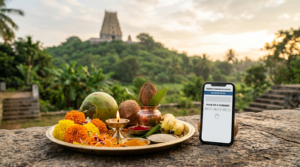
To find the right date and timing for your own town, check a reliable current-year Panchanga (Hindu almanac). Look for the Lakshmi Pooja muhurta and your local sunset time, since the Pradosha window depends on when the sun sets where you live. When in doubt, a local priest or temple can confirm the timing for your region.
Pooja Vidhana — Step by Step
The full ritual follows the sixteen-step Shodashopachara method. Described in general terms, the sequence is:
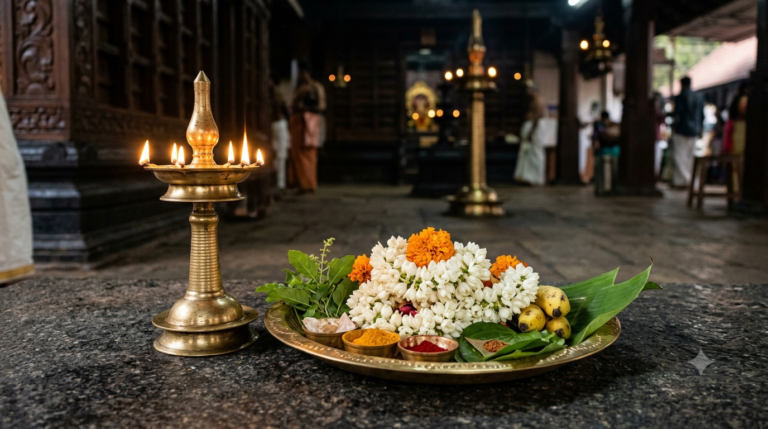
- Clean the entire home, especially the entrance and the pooja space, and decorate with rangoli, flowers, and lamps.
- Bathe and wear clean or new clothes before beginning.
- Set up the altar: spread a clean red or yellow cloth and place the images or idols of Lakshmi and Ganesha facing the worshippers.
- Place a kalasha (water pot) and light the main lamp; light incense (agarbatti or dhoopa).
- Begin with a short prayer to Ganesha to remove obstacles.
- Invoke Goddess Lakshmi (avahana) and offer a seat (asana) on the altar.
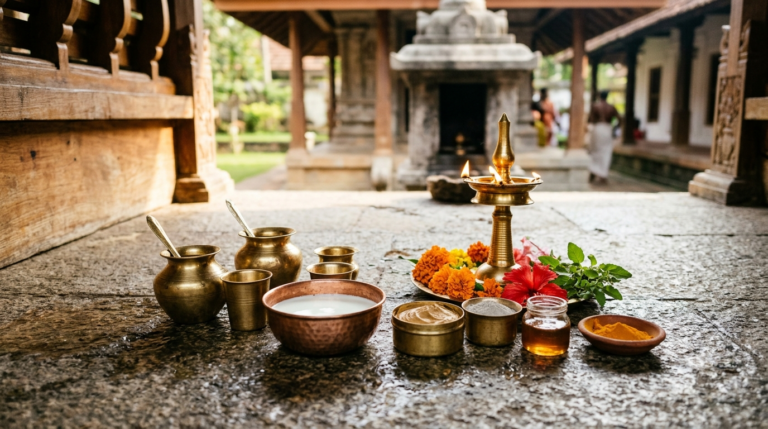
- Offer water for washing, then bathe the idol symbolically (abhisheka) where the tradition allows.
- Offer clothing or sacred thread, sandalwood paste, kumkuma, and turmeric (haldi).
- Offer flowers, especially lotus and other fresh blooms, along with akshata (rice grains).
- Offer fruits, sweets, and a prepared naivedya (food offering).
- Show the lamp and incense to the deities and offer coins or new account books, as many families do.
- Perform the aarati together, singing devotional songs as a family.
- Recite the names or stotra of Lakshmi if known; otherwise offer prayers with devotion.
- Conclude with pradakshina (circumambulation) and namaskara.
- Distribute the prasada to everyone present.
- Light lamps throughout the house, keeping at least one burning through the night.
If you do not know specific Sanskrit mantras, performing each step with a sincere prayer in your own words is widely accepted. The intention and cleanliness matter most.
Samagri — Items You Will Need
- Idols or images of Goddess Lakshmi and Lord Ganesha
- A clean red or yellow cloth for the altar
- Oil or ghee lamps (deepa) with wicks, plus extra lamps for the home
- A kalasha (water pot), with coconut and mango leaves if you keep that custom
- Incense sticks (agarbatti) or dhoopa, and a small bell
- Kumkuma, turmeric (haldi), sandalwood paste, and akshata (uncooked rice mixed with a little turmeric)
- Fresh flowers, especially lotus, and flower garlands
- Fruits, sweets, and a naivedya offering
- Betel leaves, betel nuts, and coins
- Camphor for the aarati and matchsticks or a lighter
- Rangoli powder for the floor design at the entrance
Customs vary from family to family. Many households also worship account books or business ledgers, place silver coins before the goddess, and keep the front door open to symbolically welcome Lakshmi into the home.
Frequently Asked Questions
On which day is Deepavali Lakshmi Pooja performed?
It is performed on the Amavasya (new-moon) night of the Kartika month, in the evening during the Pradosha Kaala. The exact date changes each year, so check a current Panchanga for your town.
What is the best time to do Lakshmi Pooja?
The most common time is the Pradosha Kaala, which starts after sunset and lasts roughly two hours. Because it depends on your local sunset, the exact clock time differs by location and year.
Can I perform the pooja if I do not know the mantras?
Yes. You can follow the step-by-step procedure and offer prayers in your own words with devotion. Sincerity, cleanliness, and a properly lit, decorated space are considered the most important part of welcoming Lakshmi.
Why is Ganesha worshipped along with Lakshmi?
Ganesha is traditionally invoked first in Hindu ceremonies to remove obstacles before the main worship. On Deepavali, families worship Ganesha alongside Lakshmi so that the pooja proceeds smoothly and prosperity is welcomed without hindrance.