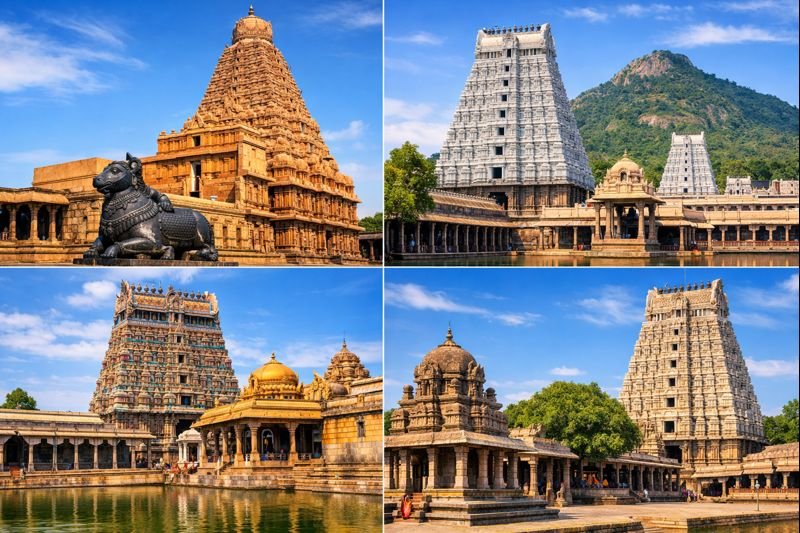
Famous Tamil Nadu Shiva Temples: Essential Guide To Sacred Sites
Famous Tamil Nadu Shiva Temples are among India’s most revered spiritual sites, drawing millions of devotees and travelers to the state each year. Tamil Nadu is often called the Land of Shiva, home to over 260 Shiva temples with ancient roots in Saivism, rich Dravidian architecture, and deep cultural traditions that span more than a millennium.
Introduction To Famous Tamil Nadu Shiva Temples
Tamil Nadu’s Shiva temples combine history, spirituality, artistry, and pilgrimage tradition in ways rarely seen elsewhere. I personally visited several of these temples, and what surprised me most was how each site felt like stepping back in time — from towering gopurams (gateway towers) to centuries-old rituals that continue uninterrupted. This guide provides detailed information, travel tips, and practical advice to plan your visits. For official information, visit Incredible India.
In contrast, throughout this article you will find precise details about the most iconic Shiva temples, how to prepare for your visit, best practices, and answers to frequently asked questions. Understanding Famous Tamil Nadu Shiva is essential.
Why Tamil Nadu Has So Many Important Shiva Temples
The prominence of Shiva worship in Tamil Nadu stems from ancient Tamil devotional poetry known as Thevaram, composed by the Nayanmar saints between the 7th and 9th centuries CE. Temples praised in these sacred hymns are called Paadal Petra Sthalams — and there are 276 such sites across Tamil Nadu.
In addition to these, several temples are part of the Pancha Bhoota Sthalams — representing the five elements — and other iconic categories like the Pancha Sabhai (five cosmic dance halls of Shiva).
Top Famous Shiva Temples In Tamil Nadu
Brihadeeswarar Temple – Thanjavur
The Brihadeeswarar Temple in Thanjavur is one of India’s most magnificent Shiva temples. Built by Rajaraja Chola I in the 11th century, it is a UNESCO World Heritage Site and a symbol of Chola architectural brilliance. This relates to Famous Tamil Nadu Shiva.
What amazed me here was the sheer scale — the central vimana (tower) rises about 66 meters, and the massive Shiva lingam inside is surrounded by elegant stone carvings reflecting celestial motifs. This temple also hosts complex bronze sculptures and elaborate reliefs that narrate Saivite stories.
Also, Best Time To Visit: Early morning (around 6:30–8:30am) for quieter darshan (viewing of the deity).
Arunachaleswarar Temple – Tiruvannamalai
The Arunachaleswarar Temple in Tiruvannamalai is a Pancha Bhoota Sthalam representing fire (Agni). Here Shiva is worshiped as Arunachaleswarar, and the temple complex sprawls across a vast area at the base of sacred Arunachala Hill. Learn more about Famous Tamil Nadu Shiva.
Moreover, i walked the famous “Girivalam” path (a 14-kilometer barefoot circumambulation) under the full moon — a powerful spiritual experience that many devotees undertake particularly during the Karthigai Deepam festival. The temple’s peaceful corridors and massive gopuram towers make it a must-see.
Also, Travel Tip: Wear comfortable shoes for the Girivalam walk and carry water, especially if visiting during warmer months.
Thillai Nataraja Temple – Chidambaram
The Thillai Nataraja Temple in Chidambaram is unique because Shiva is worshiped here primarily as Nataraja (Lord of Dance) in his cosmic Ananda Tandava pose.
Unlike many shrines focused on the lingam, here the emphasis is on Shiva’s dancing form. What stood out to me were the temple halls dedicated to music, dance, and the arts — reflecting how classical Indian performing arts are intertwined with spirituality.
Visiting Tip: Check temple timings before planning your visit since the temple has specific puja (ritual) schedules that change based on the lunar calendar.
Ekambareswarar Temple – Kanchipuram
The Ekambareswarar Temple is another Pancha Bhoota Sthalam, representing the earth. Built by the Pallavas and later expanded by Cholas and Vijayanagar rulers, this temple’s complex covers roughly 25 acres and features one of the tallest gopurams in South India.
Therefore, during my walk through the thousand-pillared hall, I noticed inscriptions and sculptures that span centuries of South Indian history. This temple is also famous for its Panguni Uthiram festival celebrated over 13 days.
Jambukeswarar Temple – Thiruvanaikaval
The Jambukeswarar Temple near Tiruchirapalli is one of the most ancient Shiva temples, with origins dating back about 1,800 years according to scholars.
However, dedicated to Lord Shiva as Jambukeswarar, the temple lies on Srirangam Island and features corridors, ponds, and subtle water channels believed to bring natural cooling — a unique architectural feature. I personally found the inner sanctum’s atmosphere incredibly serene during the early morning rituals.
Vanchinadha Swamy Temple – Srivanchiyam
The Vanchinadha Swamy Temple is a revered Shiva temple in Tiruvarur district. Shiva is worshiped as Vanchinadha Swamy, and the temple is classified as a Paadal Petra Sthalam due to its mention in Thevaram hymns.
When I visited during the festival season, the atmosphere was filled with devotional chanting and vibrant processions around the temple tank — a classic Tamil temple experience that’s both spiritual and communal.
Sivagurunathaswamy Temple – Kumbakonam
The Sivagurunathaswamy Temple in Aduthurai (near Kumbakonam) is treasured for its historical and devotional significance.
The temple’s beautiful Dravidian architecture and frequent rituals — including abhishekam (sacred bath ceremony) and deepa aradanai (lamp waving) — make it a spiritually fulfilling place to visit. It’s less crowded than some bigger sites, allowing deeper personal reflection.
Thyagaraja Temple – Tiruvarur
The Thyagaraja Temple in Tiruvarur is another important Paadal Petra Sthalam. Shiva is worshiped as Thyagarajaswami, and the temple has strong associations with art and culture.
Devotees also worship Goddess Neelotpalambika here, making this site significant for both Shaivism and Shaktism practitioners. The temple’s chariot festival draws thousands of visitors each year.
Practical Tips For Visiting Shiva Temples
Planning Your Route
Start with temples located near major cities like Chennai (e.g., Kapaleeshwarar Temple) and then move to historic regions such as Thanjavur, Kanchipuram, Tiruvannamalai, and Chidambaram. Many sites are on established pilgrimage circuits that can be covered over several days.
Daily Ritual Timings
Most temples conduct multiple daily rituals called pujas, often beginning around 5:30am and continuing until late evening. If you want to participate or witness these ceremonies, check local temple schedules in advance.
Dress Code And Etiquette
Traditional and modest clothing is recommended. Many temples require visitors to remove footwear and cover shoulders and knees. Always show respect during prayers and avoid loud conversations inside the temple precincts.
Photography Rules
Many temples prohibit photography inside sanctum sanctorums. Always ask temple staff or check signs before taking photos. Some outer areas and temple tanks may allow photographs.
Peak Seasons And Festivals
Festivals like Mahashivratri, Panguni Uthiram, and local temple anniversaries are vibrant times to visit but can also be crowded. If you seek quieter visits, plan for off-peak months like January–February (excluding Mahashivratri) or September–October.
Common Mistakes To Avoid
Not Checking Timings Ahead
Many temples close between midday hours. Arriving without checking opening and puja times can mean missing key rituals.
Ignoring Local Customs
Different temples may have specific customs for darshan lines, offerings, or prasadam (blessed food). Observing and following these shows respect and avoids confusion.
Underestimating Travel Distances
Tamil Nadu’s temples are widespread. Plan for travel time, especially when going from one city to another (e.g., Chennai to Thanjavur is ~340 km). Pre-book transportation or guides when possible.
FAQ About Famous Tamil Nadu Shiva Temples
How Many Famous Shiva Temples Are There In Tamil Nadu?
There are more than 260 Shiva temples across Tamil Nadu, including 276 Paadal Petra Sthalams — sites sung in ancient Tamil Saivite hymns.
Which Is The Most Famous Shiva Temple In Tamil Nadu?
While “most famous” is subjective, the Brihadeeswarar Temple (Thanjavur) and the Chidambaram Nataraja Temple are among the most iconic, drawing international visitors for their architecture and spiritual significance.
Are These Temples Open To All Visitors?
Yes. Most famous Shiva temples are open to all visitors regardless of faith, though non-Hindus may have specific restrictions inside sanctum areas in some temples. Always check local guidelines.
Is There An Entry Fee?
Many temples do not charge an entry fee, though there may be charges for special pujas, guided tours, or photography permits. Fees vary by temple.
What’s The Best Time Of Year To Visit?
October to March offers milder weather and pleasant travel conditions. Festivals like Mahashivratri bring great spiritual energy but also large crowds.
From towering gopurams and sacred rituals to quiet temple tanks and ancient stone carvings, the famous Tamil Nadu Shiva temples are living testaments to centuries of devotion, art, and culture. I personally recommend planning at least a week to explore these holy sites deeply — it’s an experience that stays with you far beyond the trip itself.


+ There are no comments
Add yours