Key Information at a Glance
| Detail | Information |
| Festival | Gowri Tadiya / Gowri Tritiya (Swarna Gowri Vratha); known as Hartalika Teej in North India |
| Deity worshipped | Goddess Gowri (Parvati), mother of Lord Ganesha |
| Tithi | Tritiya (third day) of Shukla Paksha in Bhadrapada month |
| When in the calendar | One day before Vinayaka Chavithi (Ganesh Chaturthi) |
| Who observes it | Married women (for marital harmony) and unmarried girls (for a good life partner) |
| Common offering | 16 kudumulu (steamed rice-flour dumplings) and a 16-strand Gowri daaram thread |
Significance of Gowri Tadiya
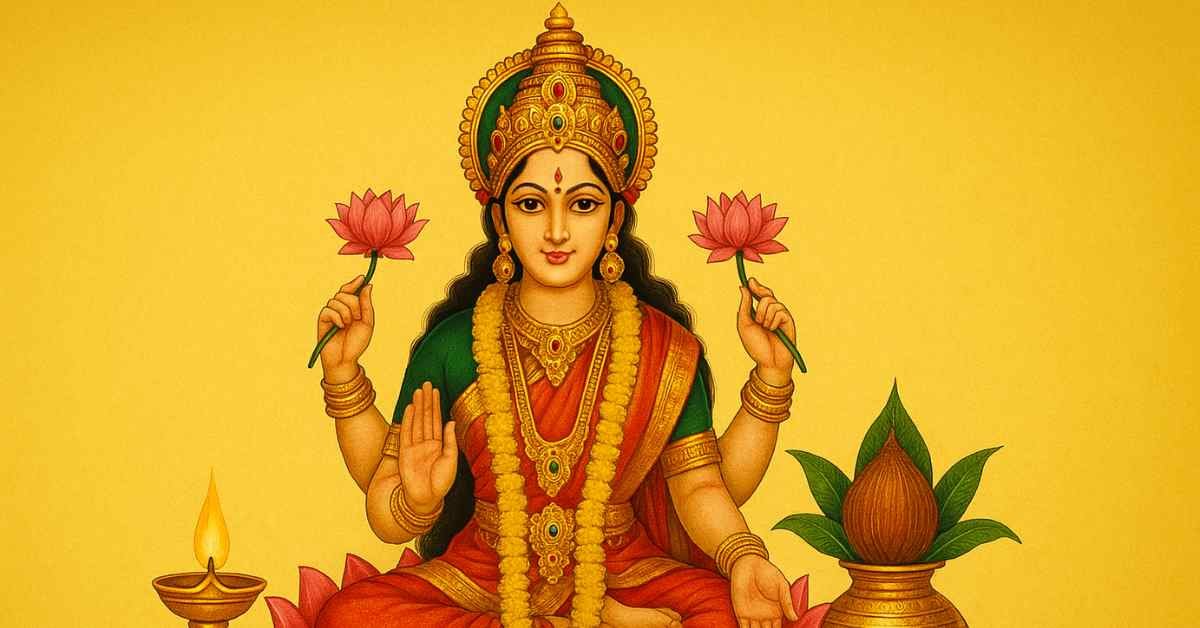
Gowri Tadiya honours Goddess Gowri, another name for Parvati and the mother of Lord Ganesha. According to tradition, Gowri visits her parents’ home on this Tritiya, and her son Ganesha arrives the next day, on Vinayaka Chavithi, to escort her back to Mount Kailasa. This is why the two festivals fall on consecutive days and are observed together in many Telugu households.
Married women observe the vratha for a long, harmonious married life and the well-being of their family, while unmarried girls pray for a suitable husband. The same vow is rooted in the story of Parvati’s penance to win Lord Shiva, which is also why the North Indian form of the observance is called Hartalika Teej.
When It Is Observed
Gowri Tadiya always falls on the Tritiya of Shukla Paksha (the waxing-moon phase) in the Telugu month of Bhadrapada, which usually corresponds to August or September. Because Hindu festivals follow the lunar calendar, the English calendar date shifts each year, so there is no single fixed date.
To find this year’s date and timing, the simplest method is to look up Vinayaka Chavithi in a reliable Telugu panchangam and observe Gowri Tadiya on the day before it. The puja is generally performed in the morning during the Tritiya tithi; consult a current-year panchangam or your family priest for the exact muhurtham in your region, since tithi start and end times vary by location.
Puja Vidhanam Step by Step
The observance is simple and home-based. A common sequence followed in Telugu households is:
- Take an early bath, clean the puja area, and wear fresh clothes.
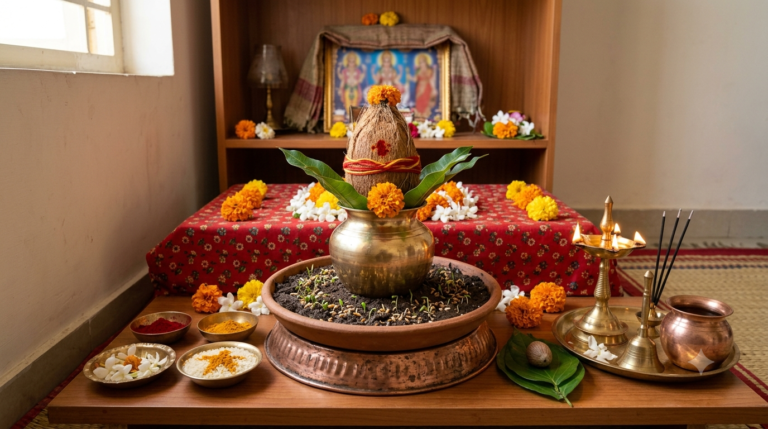
- Prepare the Gowri idol. Many families shape a small image of the Goddess from turmeric (often called Arishina Gauri or Jala Gauri); a clay or metal idol may also be used.
- Place the Gowri on a clean plate or pedestal over rice or fresh leaves, and invoke the Goddess.
- Offer abhishekam with water, and bathe the idol gently before drying and decorating it.
- Adorn Gowri with turmeric, kumkuma, flowers, and new cloth or bangles.
- Offer flowers, fruits, and the naivedyam. The traditional offering is 16 kudumulu (steamed rice-flour dumplings).
- Light the lamp and incense, and perform aarti while reciting the vratha katha or prayers to the Goddess.
- Tie the Gowri daaram, a thread of 16 strands smeared with turmeric, on the right wrist. This is also called Gowri kankanam.
- Distribute the prasadam, and where customary, give a bagina (gift package) to married women.
If you wish to chant specific shlokas or the full vratha kalpam, use a printed Telugu vratha book or follow a priest, so that the verses are recited correctly.
Samagri (Items You Will Need)
- Turmeric (pasupu) for the Gowri idol and for the daaram
- Kumkuma (vermilion)
- A clean plate or pedestal, and rice or fresh leaves to seat the idol
- Flowers and tulasi or other fresh leaves
- Cotton thread for the 16-strand Gowri daaram
- Lamp, ghee or oil, wicks, and incense (agarbatti or sambrani)
- Camphor for aarti
- 16 kudumulu (steamed rice-flour dumplings) as naivedyam
- Fruits and other sweets
- New cloth, bangles, and a comb or small mirror for decorating the Goddess
- Coconut, betel leaves, and betel nuts
- Items for the bagina if you plan to gift one: turmeric, kumkuma, bangles, black beads, a comb, a coconut, fruits, and grains
Vratha Katha and Observance Customs
The story behind the vratha is that of Goddess Parvati, who performed severe penance to win Lord Shiva as her husband. On the Tritiya of Bhadrapada Shukla Paksha she worshipped a Shiva linga she had shaped from sand, and Shiva, moved by her devotion, accepted her. Women observe Gowri Tadiya in memory of this devotion, praying for the same marital blessing.
Customs vary by family and region. In Andhra and Telangana the kudumula offering and the Gowri daaram are central; in Karnataka the day is widely called Gowri Habba or Swarna Gowri Vratha; and the strict day-long fast is more associated with the Hartalika Teej form of the observance in the north. Follow the practice your family has always kept, and where in doubt, ask an elder or your priest.
Frequently Asked Questions
When is Gowri Tadiya observed?
Gowri Tadiya is observed on the Tritiya of Shukla Paksha in the Bhadrapada month, which is the day before Vinayaka Chavithi. The English date changes every year, so check it in a current-year Telugu panchangam.
Is Gowri Tadiya the same as Hartalika Teej?
Yes, they are the same observance on the same tithi, dedicated to Goddess Gowri or Parvati. It is called Gowri Tadiya or Swarna Gowri Vratha in the Telugu and Kannada regions and Hartalika Teej in North India, with some differences in customs.
Why are 16 kudumulu offered?
Kudumulu are steamed rice-flour dumplings, and 16 of them are offered to Goddess Gowri as the traditional naivedyam in the Telugu observance. The number 16 also appears in the Gowri daaram, which is tied with 16 strands.
Who can observe the Gowri Tadiya vratha?
Married women observe it for marital harmony and family well-being, and unmarried girls observe it praying for a good life partner. Anyone may participate; follow the customs your family keeps and consult an elder or priest if unsure.