If you have looked up the Varadaraja Perumal Temple timings and seen “6:00 AM,” you have likely copied a common error. That wrong hour travels across dozens of sites. The official Tamil Nadu HR&CE portal for this temple lists a 7:30 AM general darshan opening, not 6:00 AM. That ninety-minute gap catches out many early-rising pilgrims, who reach the gopuram before sunrise only to wait.
So before you build your plan around an unreliable hour, here is the corrected, source-verified schedule. Below you will find the real Varadaraja Perumal Temple timings. You also get the seva windows, festival shifts, and crowd patterns that decide how your visit actually goes.
Varadaraja Perumal Temple timings at a glance
The temple opens for morning darshan at 7:30 AM and closes the morning session at 12:30 PM. Evening darshan runs from 3:30 PM to 8:00 PM. After that, the closing rituals continue until about 8:30 PM. Entry and general darshan stay free for everyone, every day.
- Morning darshan: 7:30 AM – 12:30 PM
- Afternoon break: 12:30 PM – 3:30 PM (sanctum closed)
- Evening darshan: 3:30 PM – 8:00 PM
- Paid seva windows: 11:00 AM – 12:00 PM and 3:30 PM – 5:00 PM
- Entry fee: Free for all devotees
- Location: Vishnu Kanchi, Kanchipuram, Tamil Nadu
Official Varadaraja Perumal Temple timings, open and close
The Varadaraja Perumal Temple timings follow a split-day pattern common to South Indian shrines. The sanctum opens at 7:30 AM, shuts at 12:30 PM for midday rituals, and reopens at 3:30 PM until 8:00 PM. The Hindu Religious and Charitable Endowments (HR&CE) Department manages the temple as Arulmigu Devarajaswamy Temple. It publishes these exact hours on its official portal.
| Session | Timing | Notes |
|---|---|---|
| Morning darshan | 7:30 AM – 12:30 PM | Free entry; lighter crowd before 9 AM |
| Midday break | 12:30 PM – 3:30 PM | Sanctum closed to public |
| Evening darshan | 3:30 PM – 8:00 PM | Free entry; busier after 6 PM |
| Closing rituals | 8:00 PM – 8:30 PM | Public darshan winds down |
Morning Varadaraja Perumal Temple timings
Because the morning session starts at 7:30 AM, the calmest darshan usually falls between 7:30 and 9:00 AM. The early-morning Suprabhatham and Viswaroopa rituals happen around dawn, yet general public darshan begins only after 7:30. So if you arrive at 6:00 AM expecting open doors, you will simply wait outside.
Evening Varadaraja Perumal Temple timings
The evening session reopens at 3:30 PM, although foot traffic stays thin until about 5 PM. After that, families and local devotees stream in, so queues lengthen toward closing. The gates shut at 8:00 PM. The final rituals then run until roughly 8:30 PM, when staff seal the sanctum for the night.
Why so many sites get the Varadaraja Perumal Temple timings wrong
Most travel pages list the Varadaraja Perumal Temple timings as “6:00 AM to 8:30 PM.” That figure mixes up two different things. The 6 AM hour reflects the priests’ early ritual schedule, not the moment the public is admitted. Because one aggregator copied another over the years, the wrong opening time spread widely. The HR&CE portal, by contrast, clearly states 7:30 AM for general darshan.
Other sites also disagree on the closing hour, quoting 8:00 PM, 8:30 PM, or even 9:30 PM. The verified position is straightforward. Darshan ends at 8:00 PM, and the remaining half hour covers closing rituals rather than open access. When two sources clash, the temple’s own HR&CE page should win, since it reflects current administration decisions.
Varadaraja Perumal Temple timings for free darshan and sevas
General darshan at the temple costs nothing, so you need no ticket to see Lord Varadaraja. If you want a named ritual performed in your name, you buy a seva ticket at the counter inside the complex. These paid sevas run during two fixed windows, 11:00 AM to 12:00 PM and 3:30 PM to 5:00 PM.
Popular paid offerings include Sahasranamam archana, Ashtothram, and Deepa Aradhana, where the priest recites the deity’s names and offers lamp worship. Thirumanjanam, the ceremonial bathing of the deity, is the most cherished seva, and it follows a deity-wise daily schedule. Because rates change with administration revisions, confirm the current ticket cost at the counter rather than trusting an old blog figure.
Seva windows at a glance
- Sahasranamam archana: recitation of the Lord’s 1,000 names
- Ashtothram: 108-name archana, shorter and quicker
- Deepa Aradhana: lamp worship before the sanctum
- Thirumanjanam: ritual abhishekam, performed deity-wise daily
You generally cannot book these sevas online, so plan to pay in person. Carry small denominations, because counters move faster when devotees hand over exact change.
Best time to visit for a calm darshan
For the smoothest experience, target a weekday morning between 7:30 and 9:00 AM, when queues are short and the prakaram corridors stay quiet. Tuesdays and Wednesdays draw the lightest crowds, while weekends and full-moon evenings get packed. The cooler months from October to February make the open-courtyard walk far more comfortable.
Avoid the midday break entirely, since the sanctum stays shut from 12:30 to 3:30 PM. If your schedule only allows an afternoon visit, arrive right at 3:30 PM, before the evening surge. During Brahmotsavam and Vaikunta Ekadasi, though, the Varadaraja Perumal Temple timings draw heavy footfall regardless of the hour you pick.
Festival-day Varadaraja Perumal Temple timings
On major festival days, the Varadaraja Perumal Temple timings extend well beyond the usual schedule, often with additional darshan sessions. The temple’s HR&CE notice clearly states that darshan hours shift during festival periods. So checking the temple’s announcements before a festival visit saves you from arriving at a closed gate or an unexpected queue diversion.
Brahmotsavam and Garuda Sevai
The grand annual Brahmotsavam falls in the Tamil month of Vaikasi, around May to June, and runs for ten days. Its highlight is the Garuda Sevai, when priests carry the deity on the Garuda mount before lakhs of devotees. Because crowds peak on this day, plan for multi-hour waits and limited movement inside the corridors.
Athi Varadar, once in 40 years
The temple’s most famous event is the Athi Varadar darshan, held only once every 40 years. The original fig-wood idol rests submerged in the Anantha Saras tank, and priests raise it for public viewing across 48 days. It last appeared in 2019 and drew record crowds, so the next one falls around 2059.
What to see inside the temple complex
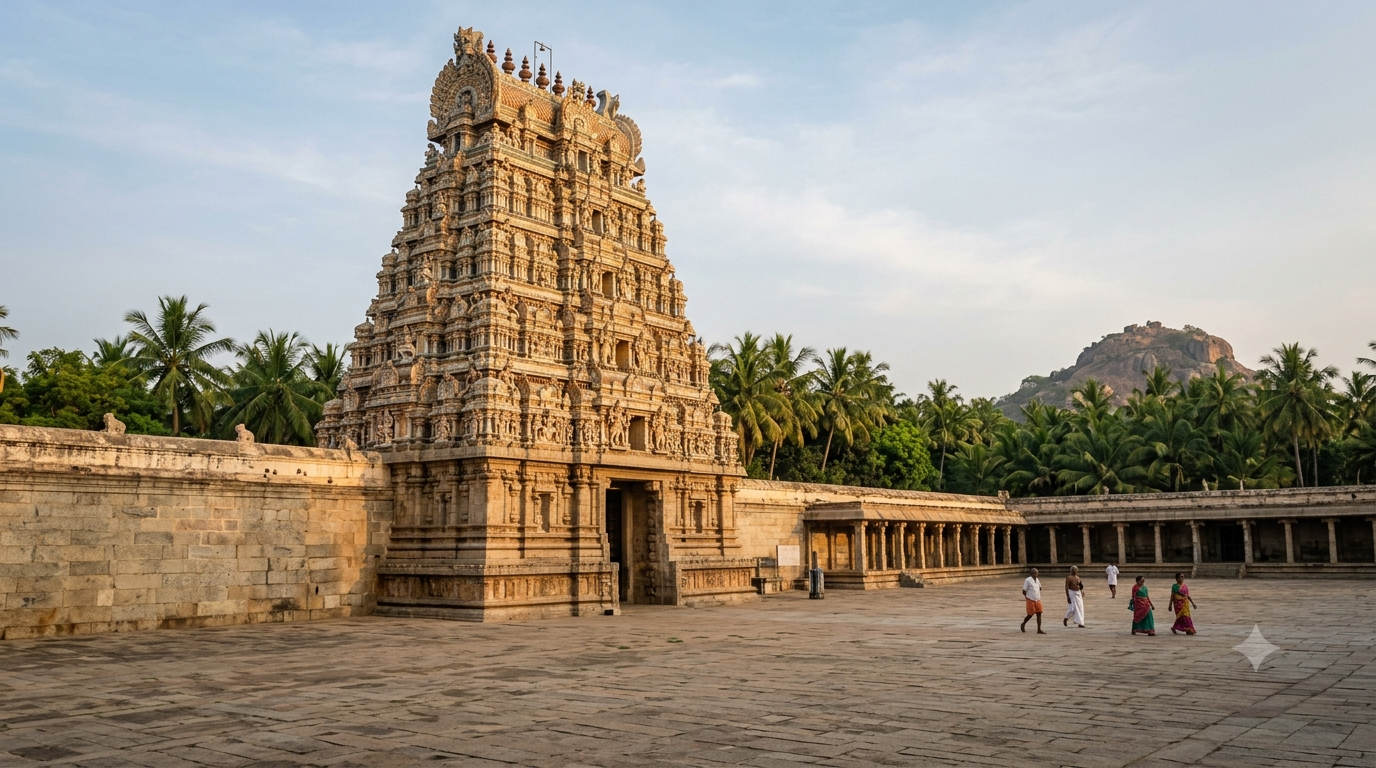
The Varadaraja Perumal Temple spreads across roughly 23 acres, with 32 shrines, 19 vimanams, and 389 pillared halls. The main shrine of Lord Varadaraja crowns the small Hastagiri hillock, which a flight of 24 steps reaches. The deity stands facing west, holding the conch and discus, in a form devotees call the boon-giving king.
By custom, devotees visit Goddess Perundevi Thayar’s shrine first, before they approach the main sanctum. The famous golden and silver lizards on the ceiling draw long lines, since devotees believe touching them absolves past sins. The 100-pillar Kalyana Mandapam, with its single-stone carved chains, ranks among the finest Vijayanagara-era sculpture in India.
How to reach the temple
Kanchipuram sits about 75 km from Chennai and connects easily by road, rail, and air. The Kanchipuram Railway Station lies roughly 5 km from the temple, with autos and taxis available for the last stretch. The nearest airport is Chennai International Airport, around 75 km away, a 1.5 to 2-hour drive depending on traffic.
Frequent buses run from Chennai, Vellore, Tirupati, and Bengaluru to the Kanchipuram bus stand. From there, the temple is a short auto ride away in the Vishnu Kanchi area. Because parking near the temple is limited, arriving early also helps you find a spot without circling.
Dress code and temple rules
The temple follows a traditional dress code, so wear modest, respectful clothing for entry. Men generally wear a dhoti or trousers with a shirt, while women wear a saree or salwar kameez. The temple asks pilgrims to skip shorts, T-shirts, and torn jeans, since these can draw objections at the entrance.
The inner sanctum restricts photography, although the outer corridors usually allow pictures. Leave your footwear at the designated stands before you enter. Non-Hindus may explore the outer complex, but the innermost shrine typically does not admit them.
What first-time visitors usually get wrong
Beyond the wrong 6 AM opening, several avoidable mistakes trip up first-timers at this temple. A little local knowledge turns a rushed stop into a calm, complete darshan.
- Skipping Thayar first: tradition asks you to see Perundevi Thayar before the main shrine, so plan your route accordingly.
- Arriving during the break: the sanctum stays shut from 12:30 to 3:30 PM, which surprises many afternoon visitors.
- Rushing the mandapam: the 100-pillar hall deserves time, because its single-stone chains are easy to miss in a hurry.
- Trusting old ticket prices: seva rates change, so verify at the counter instead of relying on a dated post.
Planning around nearby Kanchipuram temples
Since Kanchipuram is called the city of a thousand temples, you can pair this visit with several nearby shrines in a single day. The Kanchi Kamakshi Temple timings work well for a morning stop before heading to Vishnu Kanchi. The ancient Pallava-era Kailasanathar Temple timings suit a quieter mid-morning slot, while the Ulagalantha Perumal Temple rounds out a Divya Desam circuit.
If you intend to perform any paid ritual elsewhere in town, the Kamakshi Devi seva ticket process is worth reviewing in advance. Grouping temples by area, Shiva Kanchi versus Vishnu Kanchi, cuts travel fatigue and keeps your darshan schedule realistic. For official confirmation of any temple, the Tamil Nadu HR&CE department portal is the most reliable reference.
Before you go
The single most useful takeaway is simple. Trust the 7:30 AM opening from the official source, not the 6 AM figure floating around the web. Aim for a weekday morning, see Perundevi Thayar before the main shrine, and keep festival-day shifts in mind. General darshan stays free, so check the temple’s official HR&CE page for any festival changes before you travel.
Frequently asked questions
What are the current Varadaraja Perumal Temple timings?
The temple opens at 7:30 AM and closes the morning session at 12:30 PM. Evening darshan runs from 3:30 PM to 8:00 PM, with closing rituals until about 8:30 PM. These hours come from the official HR&CE portal and can shift on festival days.
Do the Varadaraja Perumal Temple timings include a midday break?
Yes, the sanctum closes from 12:30 PM to 3:30 PM for midday rituals and maintenance. The temple offers no public darshan during this window. So plan your visit for either the morning or the evening session.
Is entry to Varadaraja Perumal Temple free?
General darshan is free for all devotees, every day of the week. You only pay if you book a named seva such as Sahasranamam archana or Thirumanjanam. You buy those tickets at the counter inside the complex.
When does Athi Varadar darshan happen?
Athi Varadar darshan occurs only once every 40 years, when priests raise the fig-wood idol from the temple tank. It last took place in 2019 for 48 days. Following that cycle, the next appearance falls around 2059.
Which is the best time to visit for fewer crowds?
A weekday morning between 7:30 and 9:00 AM offers the calmest darshan. Tuesdays and Wednesdays are quietest, while weekends and full-moon days are busiest. The cooler months from October to February are most comfortable for the open-courtyard walk.
What is the dress code at the temple?
Traditional, modest attire is expected for entry. Men wear a dhoti or trousers with a shirt, and women wear a saree or salwar kameez. Avoid shorts, T-shirts, and torn jeans to prevent any issue at the gate.
How far is the temple from Chennai?
Kanchipuram is about 75 km from Chennai, roughly a 1.5 to 2-hour drive. The nearest railway station is about 5 km from the temple. Frequent buses and trains connect Kanchipuram with Chennai and other major cities.
Do I need to book darshan online?
No, general darshan needs no online booking, and it stays free during regular hours. You also book most paid sevas in person at the temple counter. This temple generally does not offer online seva booking.