Your Kashi Vishwanath darshan booking begins and ends at one place online, and getting that single fact right saves you money and stress. General darshan of Baba Vishwanath is completely free, so you do not need any ticket to stand in the regular queue. Paid tickets exist only for faster Sugam Darshan, the aartis, and special poojas.
The Shri Kashi Vishwanath Temple Trust (SKVT) sets every official rate. The current Sugam Darshan fee is ₹300 per person, not the ₹250 figure that many travel blogs still repeat.
Kashi Vishwanath Darshan Booking at a Glance
- General darshan: free for everyone, no ticket needed.
- Sugam (VIP) Darshan: ₹300 per person, fast-track queue.
- Mangla Aarti: ₹500; Sapt Rishi, Bhog and Shringar Aarti ₹300 each.
- Only official portal: shrikashivishwanath.org — ignore look-alike sites.
- Temple hours: open 2:30 AM to 11:00 PM, every day of the year.
- Darshan pauses during each aarti, so check slot timing before you pay.
Is Kashi Vishwanath Darshan Booking Actually Required?
No, a Kashi Vishwanath darshan booking is not required for ordinary darshan, because general entry stays free for all devotees. You simply join the queue, clear security, and walk to the sanctum. Booking only matters when you want a faster route or a ritual seat.
So who really needs a ticket? Senior citizens, families with small children, and short-trip pilgrims usually buy Sugam Darshan to skip long waits. If you want to attend an aarti from the inner hall, or perform a Rudrabhishek, then you must book that specific service in advance. For a quiet weekday morning, free darshan is often enough.
Kashi Vishwanath Darshan Booking Fees and Ticket Types
The Kashi Vishwanath darshan booking fees are fixed by the Temple Trust and listed on its portal. Sugam Darshan costs ₹300 per person, while the four daily aartis range from ₹300 to ₹500. Special poojas like Rudrabhishek start at ₹450 and rise with the number of priests involved. Because these are official rates, you should never pay an agent a premium for the same ticket.
| Service | Official Fee (₹) | Notes |
|---|---|---|
| General Darshan | Free | No ticket needed |
| Sugam (VIP) Darshan | 300 / person | Fast-track queue |
| Mangla Aarti | 500 | 3:00–4:00 AM, ticket only |
| Sapt Rishi Aarti | 300 | Evening, 7:00 PM |
| Bhog / Shringar Aarti | 300 | Midday and night |
| Rudrabhishek (1 priest) | 450 | Daily morning pooja |
| Rudrabhishek (5 priests) | 1,380 | Larger ritual |
| Akhand Deep | 700 | Lamp offering |
Rates can change, so confirm the latest figure on the official website before you pay. Still, the ₹300 Sugam rate has held steady through 2026, which makes the common ₹250 claim outdated rather than a discount.
How to Complete Kashi Vishwanath Darshan Booking Online
Completing your Kashi Vishwanath darshan booking online takes about five minutes once you have an account. The whole flow runs through the Temple Trust portal, and you can finish it from any phone or computer. Follow these steps carefully so your slot is confirmed before you travel.
- Open the official portal at shrikashivishwanath.org in your browser.
- Click Online Services, then choose Ticket Booking.
- Pick the service you want, such as Sugam Darshan or an aarti, on the pooja list page.
- Register with your mobile number and email, then verify the OTP. Existing users simply log in.
- Select the date and an available time slot, and add each devotee’s details exactly as on their ID.
- Pay by UPI, card, or net banking, then download and save the e-ticket.
Carry both a printed copy and the digital ticket, since staff may scan either one at entry. Because slots for Mondays and festival days fill fast, book as early as the window allows.
App, Foreigner Booking and the Ask Nandi Helper
Prefer your phone? The Trust runs official apps on both the Google Play Store and the Apple App Store, and they handle the same bookings. Foreign nationals follow a separate process listed under the portal’s Foreigner Ticket Booking page. In January 2026, the Trust also launched an AI chatbot called “Ask Nandi” that answers slot and crowd questions 24/7 on the website.
Darshan and Aarti Timings You Must Plan Around
Kashi Vishwanath Temple opens at 2:30 AM and closes near 11:00 PM, every single day. Between those hours the temple follows a strict ritual cycle, and darshan stops completely during each aarti. Knowing this avoids the classic mistake of arriving mid-ritual and finding the queue frozen.
| Ritual / Slot | Time |
|---|---|
| Temple opens | 2:30 AM |
| Mangla Aarti | 3:00–4:00 AM |
| General darshan (morning) | 4:00–11:00 AM |
| Mid-day Bhog Aarti | 11:15 AM–12:20 PM |
| General darshan (afternoon) | 12:20–7:00 PM |
| Sapt Rishi Aarti | 7:00–8:15 PM |
| Shringar / Night Bhog Aarti | 9:00–10:15 PM |
| Shayan Aarti, then close | 10:30–11:00 PM |
If your Sugam slot sits at 11:00 AM, remember the Bhog Aarti starts at 11:15 AM, so you may run out of time. Book slots between 7:00–10:30 AM or 1:00–6:00 PM for the widest buffer.
When Does Mangla Aarti Booking Open?
General Mangla Aarti booking opens every day at 11:00 AM for the next 30 days, while Tatkal Mangla Aarti opens at 11:00 AM for the next day only. This corrects another myth: many sites claim a flat “15 days in advance” window, yet the portal clearly shows 30 days for general tickets. General entry uses Gate No. 1, whereas Tatkal entry uses Gate 4B.
Sugam Darshan or Free Darshan: Which Should You Pick?
Choose free general darshan when you visit on a calm weekday morning, since queues then often clear within an hour. Pick paid Sugam Darshan when you travel on a Monday, during Shravan month, or near Maha Shivratri, because crowds can stretch a free queue to three or more hours. The ₹300 fee buys time and comfort, though it grants no extra spiritual merit.
Older pilgrims, parents with toddlers, and anyone on a tight train schedule gain the most from Sugam Darshan. Solo travellers with a free day usually do fine in the regular line. In short, weigh your dates and stamina, then decide whether speed is worth ₹300.
Best Time to Plan Your Kashi Vishwanath Darshan Booking
The calmest window for a Kashi Vishwanath darshan booking falls on weekday mornings between 6:00 and 8:00 AM, outside Monday. Crowd pressure has not yet built, the morning poojas are underway, and even the free queue moves quickly. Winter months from October to March bring pleasant weather and steadier footfall, which suits first-time pilgrims.
Avoid Mondays if you dislike crowds, since Monday is the most sacred day for Lord Shiva and the lanes fill early. The Shravan month, roughly July to August, sees the year’s biggest rush, so a paid slot becomes almost essential then. Maha Shivratri turns the whole Dham into a sea of devotees, and many book their tickets four to six weeks ahead for that day.
Paid Poojas You Can Add to Your Visit
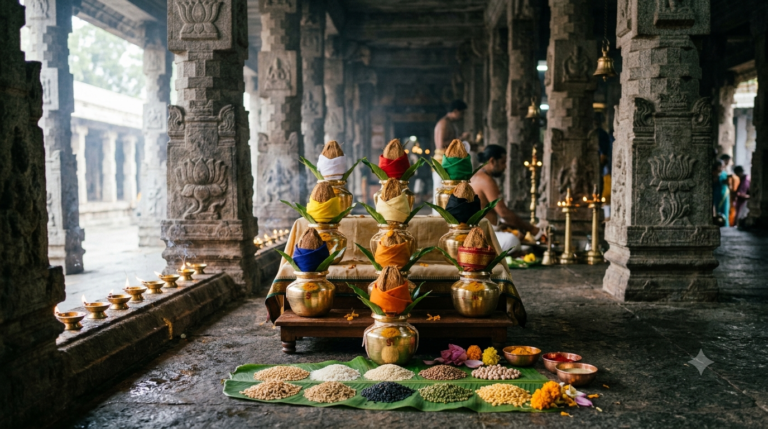
Beyond darshan and aarti, the portal lists several poojas you can sponsor in your family’s name. Rudrabhishek with one priest costs ₹450, while a five-priest version costs ₹1,380, and a video-conference option lets you watch from home. Devotees also book Akhand Deep lamp offerings at ₹700 and milk abhishek from ₹230.
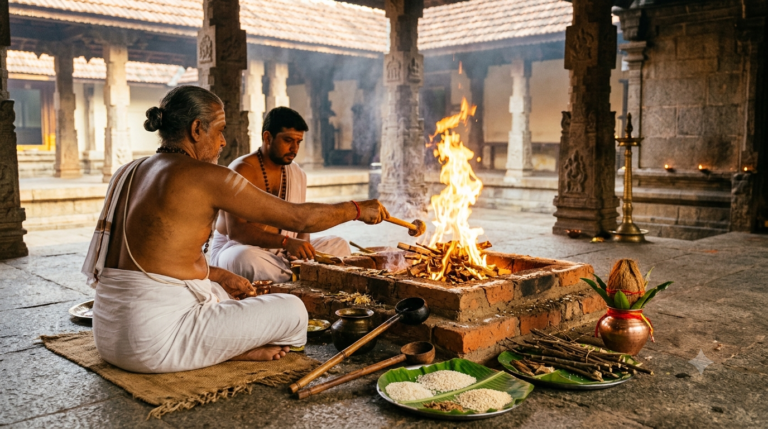
These rituals need separate time and a separate booking, so most first-time visitors keep things simple with Sugam Darshan alone. If a Rudrabhishek matters to you, reserve it well ahead, because daily priest slots are limited. The priest’s contact number usually reaches you after payment, which helps you coordinate the Sankalpa.
Fake Portals and Overpriced Agents to Avoid
Several “official-looking” websites and agents charge inflated rates for the same free or low-cost services, so caution protects both your wallet and your data. The genuine portal is shrikashivishwanath.org, run by the Shri Kashi Vishwanath Temple Trust. Treat any other domain that mimics this name with suspicion.
Watch for three repeated errors online. First, the Sugam Darshan fee is ₹300, not ₹250. Second, general darshan is free, so no site should ask you to “buy entry.”
Third, the Trust never sells darshan through random WhatsApp agents. When a price or claim looks off, cross-check it on the official website before paying anything.
What First-Time Pilgrims Often Get Wrong
First-time visitors often underestimate the security rules at the Dham, which slows everyone down. Mobile phones, cameras, smartwatches, power banks, and leather items are not allowed inside, although free lockers sit near the gates. Plan for that deposit step so you reach the sanctum calmly.
- Arrive 20–30 minutes before your slot, because ID checks take time.
- Wear modest, simple clothing; for special pooja, men wear dhoti and women wear saree.
- Carry small cash notes for Vishwanath Gali stalls, since many shops avoid cards.
- Pair your trip with the free 6:30 PM Ganga Aarti at nearby Dashashwamedh Ghat.
- Use the free Live Darshan stream on the portal if you cannot travel in person.
How to Reach Kashi Vishwanath Temple
The temple sits in Vishwanath Gali on the western bank of the Ganga, deep inside old Varanasi. Varanasi Junction railway station lies about 5 km away, so an auto or taxi reaches the corridor gates in roughly 15–20 minutes. Lal Bahadur Shastri Airport at Babatpur is around 25 km from the temple.
The present structure dates to 1780, when Maharani Ahilyabai Holkar of Indore rebuilt it. More recently, the Kashi Vishwanath Dham Corridor opened in December 2021 and now links the shrine directly to the river ghats. Because lanes are narrow, drivers usually drop you near the corridor entry rather than at the temple door.
Before You Go: Key Points to Remember
Keep three things straight and your visit stays smooth. General darshan is free, Sugam Darshan costs ₹300, and every paid ticket comes only from shrikashivishwanath.org.
Book early for Mondays and festival days, plan your slot around the aarti breaks, and deposit your phone before you join the queue. With that, you can focus on the moment rather than the logistics. For paid rituals, the Kashi Vishwanath Rudrabhishek booking guide walks through the pooja flow in detail.
Kashi Vishwanath Darshan Booking FAQ
Is general darshan at Kashi Vishwanath free?
Yes, general darshan is completely free for all devotees, and no online ticket is needed. You only pay if you choose Sugam Darshan, an aarti seat, or a special pooja. The free queue can be long on busy days, so plan your timing well.
How much is the Sugam Darshan ticket?
Sugam Darshan costs ₹300 per person, as listed on the official Temple Trust portal. This fee buys a faster, less crowded queue but does not change the darshan itself. Ignore third-party sites that still quote ₹250.
Where is the only official booking website?
The single official portal is shrikashivishwanath.org, operated by the Shri Kashi Vishwanath Temple Trust. Every Sugam, aarti, and pooja ticket comes from there. Avoid agents or look-alike domains that may overcharge you.
When can I book Mangla Aarti tickets?
General Mangla Aarti booking opens daily at 11:00 AM for the next 30 days. Tatkal tickets open at 11:00 AM for the following day only. Festival and Monday slots fill within minutes, so log in early.
Can foreigners book darshan online?
Yes, foreign nationals can book through the portal’s separate Foreigner Ticket Booking process. The steps differ slightly from the Indian flow, mainly around ID details. Check the dedicated page on the official website before you travel.
Does the temple offer live online darshan?
Yes, the Trust streams a free Live Darshan of the sanctum on its website for devotees worldwide. There is no charge, and the feed runs daily. It is a good option when you cannot reach Varanasi in person.
Which days are busiest at Kashi Vishwanath?
Mondays, the Shravan month, and Maha Shivratri draw the heaviest crowds by far. On those dates, free queues can cross three hours, so Sugam Darshan saves real time. Early weekday mornings remain the calmest window.
For a comparison of crowd patterns at another Jyotirlinga, see our Ujjain Mahakal darshan and Bhasma Aarti booking guide, and check Sparsh Darshan timings if you want a closer touch darshan. You can also verify any service on the Varanasi tourism portal.