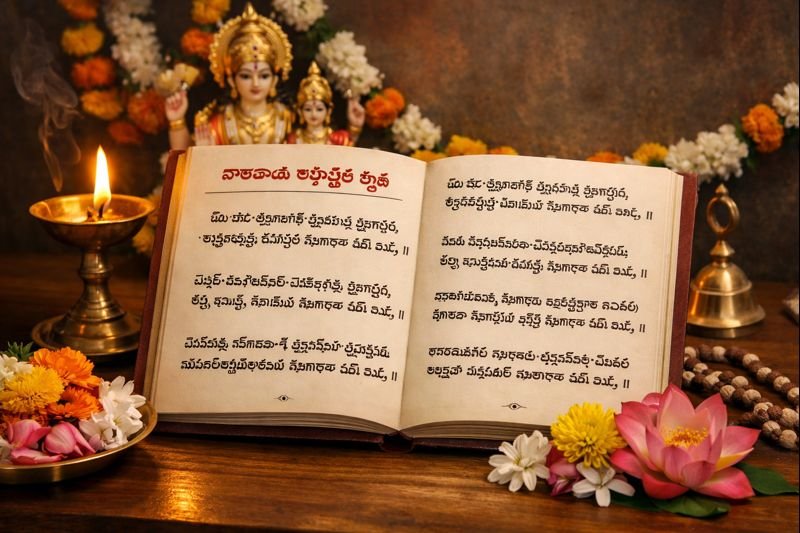
Narayana Ashtakshari Stuti Telugu: Essential Devotional Hymn
Narayana Ashtakshari Stuti Telugu is a timeless devotional hymn (stuti) dedicated to Lord Narayana, an incarnation of Lord Vishnu in Hindu belief. This sacred hymn, traditionally recited in Telugu, draws spiritual seekers into deep devotion and reverence. Its verses invoke the divine name and attributes of Narayana with profound faith and reverence, helping devotees centre their minds and hearts on the supreme cosmic being.
What Is Narayana Ashtakshari Stuti?
The phrase “Ashtakshari” literally means “eight letters.” In many Vaishnava traditions, the eight-syllabled mantra “Om Namo Narayanaya” is considered especially powerful, and the Ashtakshari Stuti celebrates this mantra and expands on the sacred name of Narayana through poetic verses.
Therefore, this stuti praises the divine nature of Narayana and expresses surrender to Him. While rooted in Sanskrit devotional tradition, the Telugu format makes the devotional experience accessible to Telugu-speaking practitioners. Understanding Narayana Ashtakshari Stuti Telugu is essential.
Origin And Cultural Importance
The Narayana Ashtakshari Stuti is often found in collections of Vishnu stotras. According to devotional sources, this hymn appears in traditional stotra compilations such as “Sri Vishnu Stotranidhi,” which contains many classical verses used for daily worship and recitation.
Lord Narayana — synonymous with Lord Vishnu — is revered as the preserver of the universe in Hindu cosmology. His praise through stotra, or hymns, is a central devotional practice in Vaishnavism. Devotees chant these hymns to seek protection, peace of mind, and spiritual upliftment.
In contrast, there is also the famous TTD Official Website (Tirumala Tirupati Devasthanams), where rituals invoking Narayana and Vishnu take place daily, illustrating the continued tradition of devotional worship revolving around Vishnu and His forms. This relates to Narayana Ashtakshari Stuti Telugu.
Full Narayana Ashtakshari Stuti In Telugu (With Transliteration)
The following verses represent the commonly recited form of the stuti in Telugu script:
Narayana Ashtakshari Stuti
ఓం నమః ప్రణవార్థార్థ స్థూలసూక్ష్మ క్షరాక్షర
వ్యక్తావ్యక్త కళాతీత ఓంకారాయ నమో నమః ॥ 1 ॥
నమో దేవాదిదేవాయ దేహసంచారహేతవే
దైత్యసంఘవినాశాయ నకారాయ నమో నమః ॥ 2 ॥
మోహనం విశ్వరూపం చ శిష్టాచారసుపోషితం
మోహవిధ్వంసకం వందే మోకారాయ నమో నమః ॥ 3 ॥
నారాయణాయ నవ్యాయ నరసింహాయ నామినే
నాదాయ నాదినే తుభ్యం నాకారాయ నమో నమః ॥ 4 ॥
రామచంద్రం రఘుపతిం పిత్రాజ్ఞాపరిపాలకమ్… Learn more about Narayana Ashtakshari Stuti Telugu.
Therefore, (Note: This text is taken from traditional Telugu script sources of the stuti.)
Meaning And Interpretation Of Key Verses
Invocation And Praise
The opening verses invoke the sacred primal sounds — including Om — acknowledging both manifest and unmanifest forms of the divine. It sets the stage for deep reverence and meditation.
Reference To Divine Qualities
The stuti then references Narayana’s role as protector of dharma, destroyer of demons, and controller of cosmic order. These lines improve the mantra beyond sound into spiritual significance.
Association With Other Divine Names
Some verses connect Narayana with other aspects of divinity, including forms like Narsimha and Rama, illustrating the unity of divine incarnations in Vaishnava theology.
Benefits Of Reciting Narayana Ashtakshari Stuti
Devotees believe that reciting this stuti regularly leads to several spiritual and emotional benefits:
- Strengthens devotion and focus during meditation.
- Encourages inner peace and calm in daily life.
- Helps in surrendering ego and aligning with divine will.
- Invokes blessings for protection and well-being.
Many spiritual practitioners include this stuti in daily prayers, especially during Vishnu or Narayana worship sessions.
Step-By-Step Guide To Chanting
1. Choose A Quiet Place
Select a calm, clean space for chanting. Ideally, sit facing east or north. Remove distractions like mobile phones and external noise. Silence helps deepen focus on the divine name.
2. Set A Clear Intention
Before chanting, set an intention. This might be peace of mind, spiritual growth, or devotion to Narayana. Clear intention aligns the mind with the act of recitation.
3. Begin With Deep Breaths
Take three slow deep breaths to calm the mind. Let each breath settle your thoughts before starting the chant.
4. Recite Slowly And With Meaning
Speak each verse aloud, paying attention to pronunciation and meaning. You can recite once or repeat multiple times depending on your personal practice.
If new to Sanskrit-Telugu combinations, feel free to read transliterations slowly until comfort with the original script builds.
5. Conclude With Gratitude
After completing your selected number of repetitions, sit quietly for a few moments and express gratitude. This reinforces the spiritual benefits of the practice.
Tips And Best Practices
- Consistency Matters: Chanting daily — even a small number of times — often deepens spiritual experience.
- Use A Dedicated Space: Keeping a small altar or devotional picture reinforces discipline.
- Practice With Meaning: Don’t rush through the verses; focusing on meaning increases impact.
- Combine With Meditation: After chanting, spend a few minutes in silent meditation to absorb the effect.
Common Mistakes To Avoid
- Reciting mechanically without understanding meaning.
- Getting distracted by environment or multitasking.
- Using incorrect pronunciation or skipping verses.
- Skipping gratitude or reflection at the end.
Frequently Asked Questions
What makes this stuti special?
Its connection to the sacred eight-syllable mantra and its profound praise of Narayana’s divine attributes give it deep devotional significance.
Can beginners chant it?
Yes. While some verses are in classical poetic style, beginners can start with slow recitation and gradually build confidence.
How many times should it be chanted?
Some devotees chant 108 times, while others include it once or twice in daily prayers. Choose a number that fits your spiritual routine.
Is there a specific time to chant?
Early morning, silent evening, or during daily worship are common times, but chanting can be done anytime with full attention.
Conclusion
Narayana Ashtakshari Stuti Telugu is more than a hymn; it’s a devotional practice that nurtures faith, serenity, and spiritual awareness. Whether you’re new to devotional chanting or a seasoned practitioner, thoughtful recitation deepens your connection to Lord Narayana.








+ There are no comments
Add yours