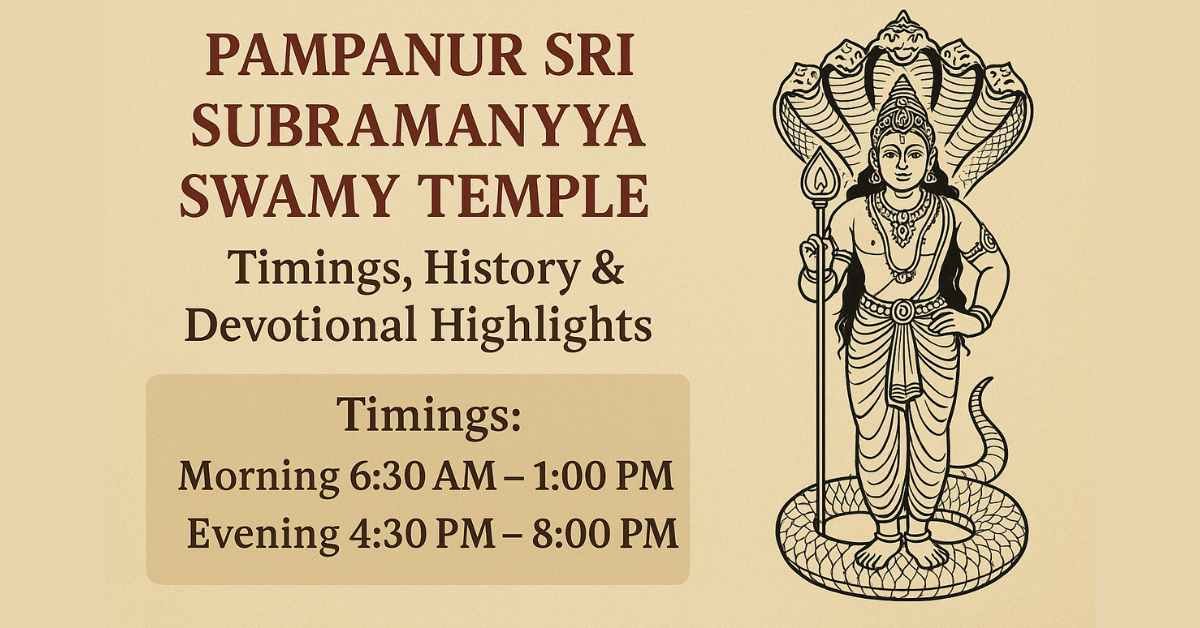
Quick answer: The Sri Subramanyeswara Swamy Temple at Pampanur (Pampanuru), in Atmakur Mandal of Anantapur district, Andhra Pradesh, is dedicated to Lord Subramanya (Kartikeya/Murugan), worshipped here in a unique seven-hooded serpent form. Darshan is generally available daily from around 6:30 AM to 1:00 PM and again from 4:30 PM to 8:00 PM. The temple is best known as a centre for Naga Dosha and Kala Sarpa Dosha remedies, with Tuesdays and Sundays drawing the largest crowds. As timings and seva details can change, please confirm directly at the temple before you travel.
Key Information at a Glance
| Temple | Sri Subramanyeswara Swamy Temple, Pampanur |
| Main deity | Lord Subramanya (Kartikeya / Murugan), in seven-hooded serpent form |
| Location | Pampanur (Pampanuru) village, Atmakur Mandal, Anantapur district, Andhra Pradesh |
| Distance | About 20 km from Anantapur city |
| Darshan timings | Approx. 6:30 AM–1:00 PM and 4:30 PM–8:00 PM (confirm at temple) |
| Best known for | Naga Dosha, Kala Sarpa Dosha and Kuja Dosha remedies |
| Busiest days | Tuesdays and Sundays |
About the Temple
The Sri Subramanyeswara Swamy Temple stands in the quiet village of Pampanur, in Atmakur Mandal of Anantapur district, in the Rayalaseema region of Andhra Pradesh. It is roughly 20 km from Anantapur city, set in a rural landscape that makes the visit feel more like a pilgrimage than a city stop.
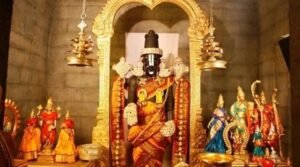
What sets this temple apart is the form of its presiding deity. Lord Subramanya — the son of Lord Shiva, also known as Kartikeya or Murugan — is enshrined here in an unusual seven-hooded serpent (Naga) form. Local accounts describe the main idol as carved from a single stone, layering several sacred forms together so that devotees see Subramanya closely tied to Naga (serpent) worship. Because of this, the temple is widely regarded across Rayalaseema as a place to seek relief from serpent-related afflictions.
The temple is described in popular tradition as ancient, with its origins linked to the Vijayanagara era. It received fresh attention and renovation in more recent decades, and the broader complex today is associated with regular daily worship and dosha-nivarana (affliction-removing) rituals. Details of its early history vary between sources, so treat them as devotional tradition rather than fixed historical record.
Darshan Timings & Poojas
The temple generally follows a split-day schedule, opening in the morning, closing through the midday hours, and reopening in the evening. The most commonly listed timings are below.
| Morning darshan | Approx. 6:30 AM – 1:00 PM |
| Midday break | Approx. 1:00 PM – 4:30 PM |
| Evening darshan | Approx. 4:30 PM – 8:00 PM |
| Open on | All days, including weekends and festival days |
The most prominent observances here are linked to Naga and Sarpa dosha. A widely followed practice is performing 108 pradakshinams (circumambulations) on 9 or 11 consecutive Tuesdays, often accompanied by special abhishekams such as Ksheerabhishekam (milk offering). Devotees also undertake serpent-related rituals like Naga Pratishta, Sarpa Samskara and Ashlesha Bali under the guidance of the temple priests. The exact poojas offered, their costs, ticketing and booking arrangements differ by day and season, so please confirm the current seva list and any advance-booking rules directly with the temple before planning a ritual visit.
Significance & Festivals
Pampanur is best known among devotees as a remedy centre for serpent-related and planetary afflictions. The temple is associated with relief from Naga Dosha, Kala Sarpa Dosha, Rahu-Ketu Dosha and Kuja Dosha, which is why families travelling from across Andhra Pradesh and neighbouring states often choose it for dosha-nivarana rituals. Tuesdays and Sundays are considered especially auspicious for Subramanya worship and tend to be the busiest days.
Festival observances follow the Hindu lunar calendar. Local sources mention special events such as serpent abhishekams during Shravana Masam, a lamp festival (Koti Deepotsavam) during Kartika Masam, and a celestial wedding (Valli-Devasena Kalyanam) in the Magha month. Shashti days, sacred to Lord Subramanya, are also significant. Because festival dates shift each year and programmes are finalised locally, check the temple’s current calendar before timing your visit around a festival.
How to Reach
Anantapur is the main gateway for reaching Pampanur. From Anantapur city, the temple lies about 20 km away in Atmakur Mandal, reachable by road in well under an hour.
- By road: Direct buses and shared autos run from Anantapur towards Pampanuru. Taxis and private cabs from Anantapur are the most flexible option, especially if you are travelling as a family for a ritual.
- By bus from afar: Anantapur is well connected by APSRTC and interstate buses; for example, regular services link Tirupati and other towns to Anantapur, from where you continue to Pampanur.
- By train: Anantapur railway station is the most convenient railhead, with onward road travel to the temple.
- By air: There is no airport at Anantapur itself; travellers typically fly into a larger regional airport and continue by road or rail. Confirm the most current routing locally, as connections change.
Frequently Asked Questions
What are the darshan timings at Pampanur Subramanya Swamy Temple?
The temple is generally open for darshan from about 6:30 AM to 1:00 PM in the morning and again from about 4:30 PM to 8:00 PM in the evening, on all days. Timings can change on festival days, so please confirm at the temple before visiting.
Which deity is worshipped at Pampanur temple?
The presiding deity is Lord Subramanya, also known as Kartikeya or Murugan, the son of Lord Shiva. At Pampanur he is worshipped in a distinctive seven-hooded serpent form, which closely connects the temple with Naga (serpent) worship.
Why do people visit Pampanur temple for Sarpa Dosha?
The temple is widely regarded as a remedy centre for serpent and planetary afflictions such as Naga Dosha and Kala Sarpa Dosha. A common practice is performing 108 pradakshinams on 9 or 11 consecutive Tuesdays, along with special abhishekams. Confirm the exact rituals and any booking details with the temple.
How do I reach Pampanur Subramanya Swamy Temple?
The temple is about 20 km from Anantapur city in Atmakur Mandal. You can reach it by direct bus, shared auto or taxi from Anantapur, which is the nearest major town with rail and bus connections.