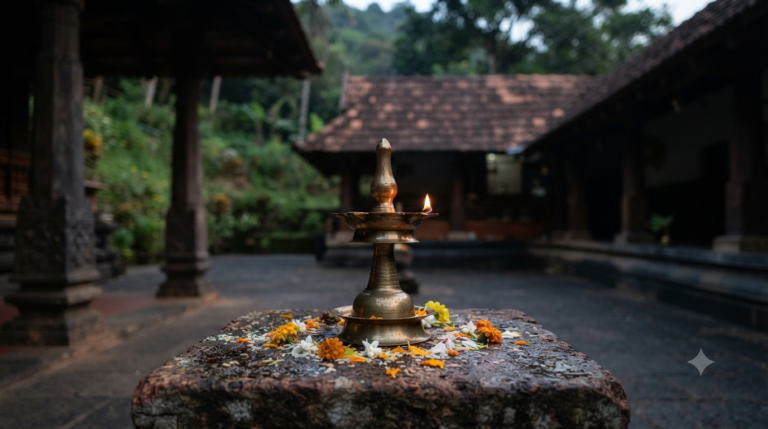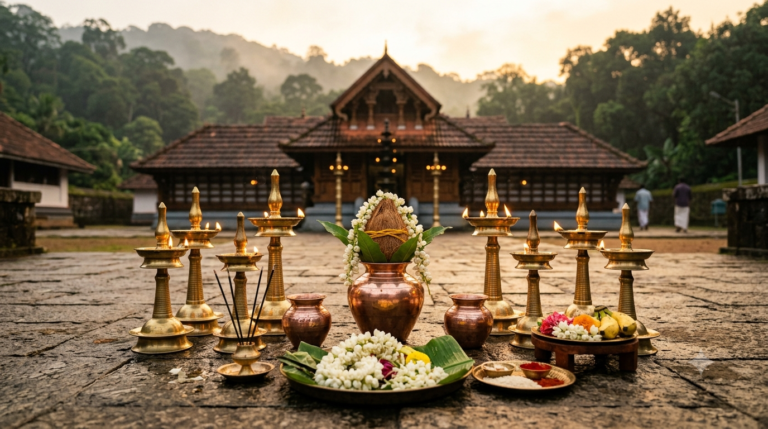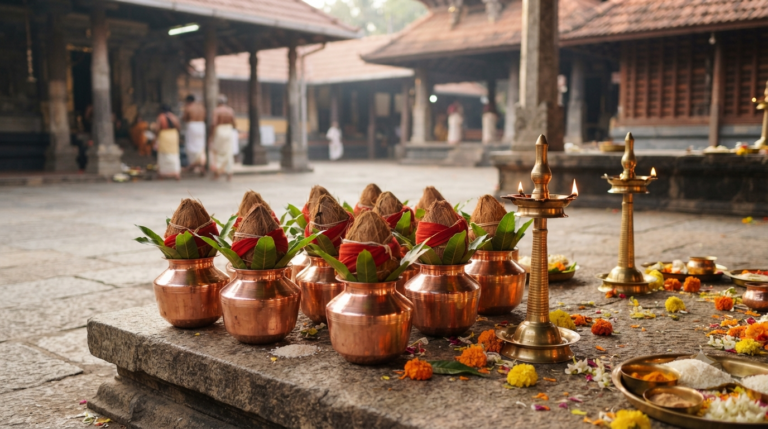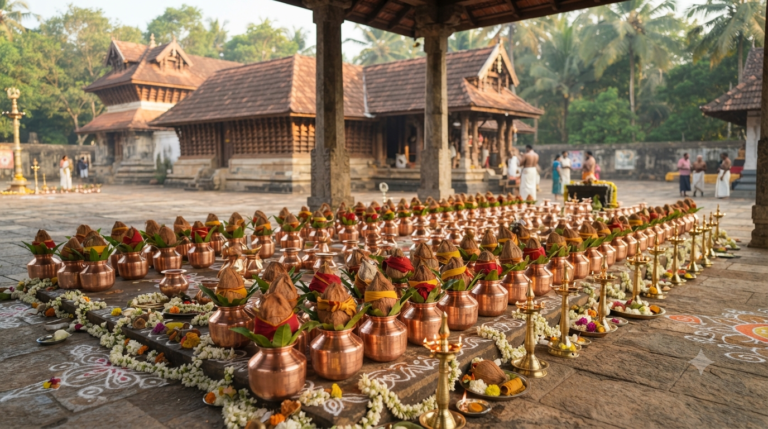
Sabarimala Laksharchana is a collective recitation of Lord Ayyappa’s divine name, followed by a distinctive temple ceremony. It is not the same as a Sahasranamarchana request, so a darshan pass cannot substitute for it. If you are considering this offering, the first task is to understand the ritual. The next is to confirm the current arrangements directly with the Travancore Devaswom Board.
Independent guide: Sri Vyasa Pooja is not affiliated with Sabarimala temple or the Travancore Devaswom Board. We do not accept bookings, donations, payments or personal details. Instead, use the official Board website for authorised information and services.
Sabarimala Laksharchana at a glance
- Meaning: Laksha means one lakh, or 100,000; archana refers to worship through divine-name recitation.
- Distinctive feature: Kerala Tourism describes Sabarimala Laksharchana as collective mantra recitation led through the temple’s priestly tradition.
- Priests: The Tantri conducts the observance with the Melshanti and other priests at Sannidhanam.
- Ritual sequence: A Brahmakalasam proceeds to the sanctum for abhishekam before Ucha Pooja.
- Current fee and dates: Not independently confirmed; ask the Board before making plans.
- Attendance and access: Present participation rights, special darshan and companion limits remain unconfirmed.
What is Sabarimala Laksharchana?
Sabarimala Laksharchana is a special form of worship in which priests collectively repeat Lord Ayyappa’s name in mantra form. The word laksha points to one lakh repetitions, while archana denotes worship through names. Unlike a smaller individual archana, the emphasis falls on organised recitation and the related temple rites.
The Kerala Tourism description of special poojas also explains the collective nature of the chanting. It also identifies the Tantri, Melshanti and accompanying priests as those who conduct the ceremony. In this context, the Tantri is the temple’s chief ritual authority, while the Melshanti is the chief priest.
Lord Ayyappa is also revered as Sri Dharma Sastha. Devotees understand this recitation as an act of worship and reverence, rather than a paid guarantee of blessings. However, its religious meaning should not become a promise of material results or a substitute for medical care.
How does the Sabarimala Laksharchana ritual unfold?
The official tourism account identifies three important elements: collective mantra recitation, priest-led Laksharchana at Sannidhanam and a Brahmakalasam procession. The vessel then reaches the sanctum for abhishekam before the midday Ucha Pooja. This describes the sequence but does not provide a fixed public reporting schedule.
The collective chanting and its meaning
The number in Laksharchana describes the scale of the name-recitation tradition. Therefore, it does not mean each visitor must personally chant 100,000 times. Kerala Tourism uses the word “collectively”, making the group character of the worship central to its definition.
That distinction also matters for families enquiring about Sabarimala Laksharchana. Sponsoring an offering does not necessarily mean joining the priests’ recitation. Nor does the published description specify how devotees count the mantras or which precise text the officiating priests use during worship.
Those details belong to the temple’s established practice, so general internet instructions may not apply. If they matter to your visit, ask the Board for the appropriate ritual guidance rather than relying on instructions for a home puja.
Why the Brahmakalasam matters
Kerala Tourism says the Brahmakalasam associated with Laksharchana goes in procession to the sanctum. The priests then use it for abhishekam, a ceremonial offering at the deity, before Ucha Pooja. Thus, the observance involves more than chanting alone.
A kalasam is a sacred ritual vessel. However, the mention of one in this ceremony does not turn Laksharchana into Sahasrakalasam. Instead, that is a separate named offering with its own arrangements. Our Sabarimala Sahasrakalasam guide explains the distinction.
The tourism account does not provide a dependable visitor start time for Sabarimala Laksharchana. Therefore, do not use the phrase “before Ucha Pooja” to calculate when sponsors should report. Ask the temple office for a specific date and instructions before travelling.
Sabarimala Laksharchana vs Sahasranamarchana and other offerings
Sabarimala Laksharchana differs from ordinary name-based archanas in scale and ceremonial form. Sahasranamarchana follows the thousand-name tradition, while Ashtothararchana generally concerns 108 names. Sahasrakalasam differs again because it centres on a larger kalasam ceremony rather than the count of names.
| Offering | Main distinction | Practical point |
|---|---|---|
| Laksharchana | Collective lakh-scale name recitation with a Brahmakalasam rite | Confirm dates, fee and attendance separately |
| Sahasranamarchana | Archana associated with a thousand divine names | Do not assume the larger ceremony is included |
| Ashtothararchana | Archana associated with 108 names | Use its exact name in the enquiry |
| Sahasrakalasam | Distinct sacred-vessel ceremony | Ritual materials and terms need separate confirmation |
The Travancore Devaswom Board offering list records these as separate services. For the smaller thousand-name ritual, see our Sabarimala Ayyappa Sahasranamarchana guide. The Ayyappa Ashtottara Shatanamavali guide explains the 108-name tradition in more detail.
These distinctions are especially useful when asking a relative to enquire on your behalf. Similar Sanskrit names can lead to questions about the wrong service. Therefore, a quotation or receipt for one offering must not be treated as confirmation of another.
What is the Sabarimala Laksharchana fee?
The current payable fee for Sabarimala Laksharchana remains unconfirmed in this guide. The Travancore Devaswom Board has a published rate schedule effective 10 April 2022. It lists ₹12,500 for Laksharchana, although that document does not confirm today’s payable amount. That is a documented historical tariff, not a verified price for a new enquiry.
Some older Sabarimala information pages have displayed a different figure. Because an older rate page is not a live payment quote, copying its amount as today’s charge can mislead devotees. Check for a newer Board order and obtain the present amount through the official service or office.
Also ask whether the quoted charge covers everything the Board requires. For example, do not assume a receipt for Sabarimala Laksharchana includes materials, a private ceremony or access for relatives. Since only the authorised terms can settle those questions, request them before payment.
Can devotees attend Sabarimala Laksharchana or receive special darshan?
Current participation rights for Sabarimala Laksharchana are not confirmed here. The Board’s 2022 tariff line mentioned special darshan for four people. However, that historical wording does not establish a present entitlement, a family quota or permission to witness the priests’ ritual inside a restricted area.
It helps to separate three different ideas. A person may sponsor an offering, may receive permission to watch part of it, or may receive a specific darshan arrangement. These are not automatically the same thing, so ask about each separately.
- Sponsorship: Ask whether the temple accepts a request for your intended date.
- Witnessing: Ask whether sponsors can observe the ceremony and from which area.
- Entry: Ask if the current terms include any special darshan and how many people they cover.
- Proof: Request the conditions in the official acknowledgement before planning around them.
Do not infer a companion limit from an old document. Similarly, a claimed Sabarimala Laksharchana booking should not become a promise that children, elderly family members or friends can bypass normal entry rules.
When are Laksharchana dates available?
No current Laksharchana calendar or guaranteed appointment dates have been independently confirmed for this guide. The temple does not remain open for ordinary pilgrim visits on every day of the year. Even during an opening period, a particular ritual may follow a separate schedule or require advance approval.
Check the Travancore Devaswom Board website for temple notices and calendar information. Then ask whether Sabarimala Laksharchana can be arranged on the day you intend to visit. Thus, an opening date is not proof of ritual availability.
If you are planning travel from another state, obtain the official response before making a non-refundable booking. Also confirm whether you need to report at a specific office, on the day itself or in advance.
How to make an official Sabarimala Laksharchana enquiry
Begin with the Travancore Devaswom Board, the authority responsible for Sabarimala’s temple administration. Its website also publishes the offering list and links to its online pooja service. The Board also maintains an official contact page that identifies the Sabarimala Executive Office.
- Confirm the name. Locate Laksharchana on the Board’s published vazhipadu list, rather than selecting Sahasranamarchana by mistake.
- Check the official route. Follow the Board’s own link to Online TDB, if relevant. However, a general pooja-service link does not prove that Laksharchana currently has a live booking option.
- Ask the Sabarimala office. Use the official TDB contact directory to find the Executive Office or another authorised channel.
- Request the actual terms. Also confirm the current fee, possible dates, material requirements, reporting instructions and participation rights.
- Verify the acknowledgement. Follow only the booking and payment method the Board confirms. Keep any official reference, receipt and instructions.
For a Sabarimala Laksharchana request, sending money to an agent before receiving the temple’s conditions is an avoidable risk. Likewise, do not share identity details or payment information with a page that merely copies the Board’s logo.
Questions to ask before you commit
A short, complete enquiry can prevent confusion later. Mention Laksharchana by name when you give the visit dates you are considering. Then ask for the present procedure in writing if the office can provide it.
- Is Laksharchana currently available, and which dates can the Board confirm?
- What is the total official charge, and how must it be paid?
- Does the temple require any ritual articles from the sponsor?
- May the sponsor watch the chanting or the Brahmakalasam procession?
- Does the current arrangement give anyone special darshan or separate entry?
- Where should the sponsor report, and what acknowledgement is issued?
- What happens if the date changes or the offering cannot proceed?
Is Sabarimala Laksharchana booking available online?
Live online booking for Sabarimala Laksharchana has not been confirmed through the public sources reviewed. The Board links to Online TDB as a general pooja service, but that does not establish an active Laksharchana date picker or a valid checkout for this exact offering.
If the named offering does not appear, do not assume the website is broken or that a private agent has a hidden quota. Instead, contact the Board using its own directory. Ask whether an official counter, an office enquiry or a different authorised method applies.
Availability is not guaranteed because a rate list alone does not reserve a ceremony. A quoted fee establishes neither a reservation nor acceptance of a specific date. Treat Sabarimala Laksharchana as arranged only after the appropriate temple authority confirms it.
Why Virtual-Q and the ritual enquiry must stay separate
The Travancore Devaswom Board states that Virtual-Q booking is mandatory for pilgrims visiting Sabarimala. That registration concerns darshan queue arrangements, while the ritual requires a separate enquiry. A Sabarimala Laksharchana enquiry concerns a particular ritual and does not, by itself, replace the applicable pilgrim entry procedure.
Plan the two matters independently unless the Board gives you explicit written instructions otherwise. A Virtual-Q confirmation cannot establish that the priests will conduct Laksharchana for you. Equally, an old tariff note about special darshan cannot establish a present exception to entry rules.
When travelling with family, verify each person’s entry obligations through the official Board channels. Do not buy a ritual from a reseller who offers to bundle it with an unverified queue exemption.
What if Sabarimala Laksharchana cannot be arranged?
A request for Sabarimala Laksharchana is not a guaranteed reservation. The chosen day may be unavailable, the official service may not show the offering or the Board may require a different procedure. Consequently, there is no confirmed private workaround and no verified universal walk-in option.
- Ask for another official date. If your schedule is flexible, request the next date the Board can actually confirm.
- Clarify the authorised procedure. If the online option is absent, ask the Executive Office whether another official enquiry route exists.
- Consider a separate offering. If Laksharchana is unavailable, ask the temple about other offerings without assuming their rites or fees are equivalent.
- Keep ordinary darshan plans separate. If no ritual can be confirmed, use the applicable official Virtual-Q process for your pilgrimage.
Above all, do not rely on a screenshot or a verbal promise as proof of an allocated ritual slot. Then follow the Board’s written directions and retain any official acknowledgement.
Common misunderstandings about this offering
One frequent mistake is reading “one lakh” as an obligation for each paying devotee to perform 100,000 recitations. The published description instead stresses collective worship. Another is treating Laksharchana as a synonym for Sahasranamarchana because both involve divine names.
A third error concerns the Brahmakalasam. Its presence in Sabarimala Laksharchana does not make the ceremony Sahasrakalasam. The Board lists both offerings separately, so they need separate enquiries.
Finally, some pilgrims mistake old prices and special-darshan language for today’s rules. The dated tariff is useful background, but only the Board can confirm present fees, dates and entry conditions. For the hill pilgrimage itself, carry water and essential medication, and prepare for walking and crowds. Seek medical advice before strenuous travel if you have health concerns.
Before planning your visit
Sabarimala Laksharchana is meaningful because it combines collective Ayyappa-name recitation with a distinctive Brahmakalasam rite. Kerala Tourism explains the worship, while the Travancore Devaswom Board provides the official administrative route. Neither a historical price nor an online search result can confirm an appointment, so obtain an authorised response.
Use the exact offering name, ask the Board about the current terms and keep darshan arrangements separate. That approach protects both the devotional purpose of the ceremony and your travel plans.
Frequently asked questions
What does Laksharchana mean at Sabarimala?
It means collective worship through the repeated chanting of Lord Ayyappa’s name on a lakh-scale tradition. Kerala Tourism describes a priest-led observance and a Brahmakalasam rite. Therefore, it does not mean each individual pilgrim must personally complete one lakh repetitions.
Is Sabarimala Laksharchana the same as Sahasranamarchana?
No. Laksharchana refers to collective lakh-scale recitation with additional ritual elements. Sahasranamarchana refers to worship associated with a thousand divine names. The Board records them as separate offerings, so confirm the exact name before an enquiry or payment.
What is the current Sabarimala Laksharchana price?
The current payable amount remains unconfirmed. A Board schedule effective 10 April 2022 lists ₹12,500, but that is a historical published rate. Ask the Board for its present charge and any applicable conditions before paying through an authorised service.
On which days does Sabarimala Laksharchana take place?
A current date-wise schedule has not been confirmed for this guide. Temple opening dates and Laksharchana availability are separate questions. Ask the Sabarimala Executive Office whether your intended day is eligible before making travel plans.
Can devotees participate in the chanting?
Present rights to chant alongside priests or witness the ceremony remain unconfirmed. Kerala Tourism describes the Tantri and other priests conducting it. Also ask the Board whether sponsors may observe any part of the ritual and where they may stand.
Does Laksharchana include special darshan for family members?
No present entitlement can be confirmed from the published material. A 2022 Board tariff mentioned special darshan for four people, but that wording is historical. Ask the office about current access and companion rules, then follow its written conditions.
Can I use Virtual-Q to book Laksharchana?
No. Virtual-Q concerns the darshan queue, not the purchase of a specific ritual offering. For Laksharchana, check the Board’s pooja information and authorised enquiry route. Meanwhile, follow current Virtual-Q requirements separately for temple entry.
What should I do if Laksharchana is unavailable online?
Use the Board’s official contact page to ask whether the offering has another authorised route. A missing online option does not prove an agent can arrange it. If the Board cannot confirm a date, treat the offering as unbooked.