Dhana Lakshmi Pooja is the worship of Goddess Lakshmi in her wealth-giving form, and Telugu families across Andhra Pradesh and Telangana perform it on the evening of Deepavali to invite prosperity for the year ahead. In 2026, that evening falls on Sunday, 8 November. This guide explains what the ritual means, why it matters, how to do it at home, and the exact 2026 dates, so you can plan without hunting through ten different pages. It also clears up a mix-up that trips up many devotees every single year.
SriVyasapooja.in is an independent devotional guide. We are not a temple, a trust, or an official government body, and we do not accept bookings, donations, or payments. For city-specific muhurat timings, always confirm with a trusted panchangam or your family priest.
Dhana Lakshmi Pooja at a Glance
- What it is: worship of Dhana Lakshmi, the form of Goddess Lakshmi who grants wealth and financial stability.
- Main day in 2026: Deepavali / Lakshmi Puja on Sunday, 8 November 2026.
- Also observed on: Dhanteras and Fridays, which many families treat as auspicious for this worship.
- Deities honoured: Dhana Lakshmi, usually alongside Lord Ganesha and Kubera.
- Telugu name: in Andhra Pradesh, people often call the Diwali evening Lakshmi puja Dhana Lakshmi Pooja or Lakshmi Kubera Pooja.
What Is Dhana Lakshmi Pooja?
Dhana Lakshmi Pooja is a devotional ritual dedicated to Dhana Lakshmi, the aspect of Goddess Lakshmi who governs money, gold, and material abundance. Because “dhana” simply means wealth, devotees perform this puja to seek financial stability and freedom from money-related worry. They invoke the Goddess, chant her mantras, and worship her as the shastras prescribe.
Dhana Lakshmi is one of the eight forms known as Ashta Lakshmi. The other seven are Adi Lakshmi, Dhanya Lakshmi, Gaja Lakshmi, Santana Lakshmi, Veera Lakshmi, Vijaya Lakshmi, and Vidya Lakshmi. Each form blesses a different kind of prosperity, while Dhana Lakshmi specifically looks after monetary wealth. You can read more about the goddess in the Lakshmi Puja tradition observed across India.
How Dhana Lakshmi Is Depicted
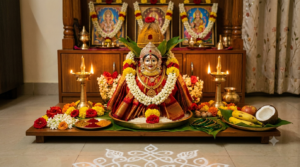
In traditional images, Dhana Lakshmi appears as a six-armed goddess draped in a red saree and rich ornaments. She holds a conch (shankha), a discus (chakra), a pot (kalasha), and an Amrita Kumbha, the vessel of the nectar of life. Her remaining hands carry a bow-and-arrow and a lotus, while one palm rests in Abhaya mudra with gold coins streaming from it. Those coins signal a free, unbroken flow of riches.
The Significance of Dhana Lakshmi Pooja
The significance of Dhana Lakshmi Pooja lies in what wealth means in the Hindu tradition. The scriptures treat money not as an end in itself, but as a resource that supports dharma, family, and service. So devotees worship Dhana Lakshmi to earn through honest means and to use that wealth well.
According to the Puranas, Goddess Lakshmi arose from the Ksheera Sagara, the ocean of milk, when the gods and demons churned it during the Samudra Manthana. Because Deepavali marks that appearance, devotees treat the festival evening as an especially powerful time to worship her. Many believe she visits clean, well-lit homes on this night and blesses them with fortune.
There is also a well-known story about Kubera, the king of the Yakshas. After a long penance, he asked Goddess Lakshmi to reside in his treasury forever. She granted the boon and made him the guardian of wealth. That is why devotees worship Kubera alongside Dhana Lakshmi during Deepavali.
When Is Dhana Lakshmi Pooja in 2026?
In 2026, Dhana Lakshmi Pooja on Deepavali falls on Sunday, 8 November, when families observe Lakshmi Puja on Kartik Amavasya. The wider five-day festival begins with Dhanteras on Friday, 6 November and closes with Bhai Dooj on Tuesday, 10 November. Since the dates follow the lunar calendar, they shift every year, which is exactly why old “date” pages go stale. Deepavali itself falls within Kartika Masam, the holiest month for lamp worship.
Deepavali 2026 Five-Day Calendar
| Day | Festival | Date (2026) |
|---|---|---|
| Day 1 | Dhanteras (Dhantrayodashi) | Friday, 6 November |
| Day 2 | Naraka Chaturdashi (Choti Diwali) | Saturday, 7 November |
| Day 3 | Deepavali / Lakshmi Puja | Sunday, 8 November |
| Day 4 | Govardhan Puja / Bali Padyami | Monday, 9 November |
| Day 5 | Bhai Dooj (Yama Dwitiya) | Tuesday, 10 November |
Lakshmi Puja Muhurat for 2026
Devotees perform the puja during Pradosh Kaal, the twilight window that opens shortly after sunset on Amavasya. As per Drik Panchang, the Lakshmi Puja muhurat for New Delhi runs from about 05:54 PM to 07:50 PM on 8 November 2026. However, this timing changes from place to place, because sunset shifts with longitude.
South Indian cities see sunset at a slightly different time, so a Hyderabad, Vijayawada, Chennai, or Bengaluru devotee should check the muhurat for their own city. The simplest way is to open a reliable panchangam, select your city, and note the local Pradosh Kaal window. When in doubt, your family purohit can confirm the right slot.
Dhana Lakshmi Pooja vs Dhanteras: Clearing the Confusion
Here is the mix-up that catches devotees every year. Many people assume Dhana Lakshmi Pooja and Dhanteras fall on the same day, yet these are two distinct observances. Dhanteras, on 6 November 2026, is the day for buying gold, silver, and utensils, and for honouring Kubera and Dhanvantari.
The main Dhana Lakshmi Pooja on Deepavali, by contrast, happens on Amavasya evening, 8 November 2026. In North India people often group both together, while Telugu households centre the wealth worship on the Deepavali night itself. Knowing this difference helps you pick the correct evening and avoid worshipping on the wrong date.
How to Perform Dhana Lakshmi Pooja at Home
You do not need an elaborate setup to worship Dhana Lakshmi with devotion. A clean space, a lamp, and a sincere mind matter more than expensive materials. Follow these steps for a simple, traditional puja.
- Clean the house thoroughly and take a head bath before the puja, since a spotless home is said to welcome the Goddess.
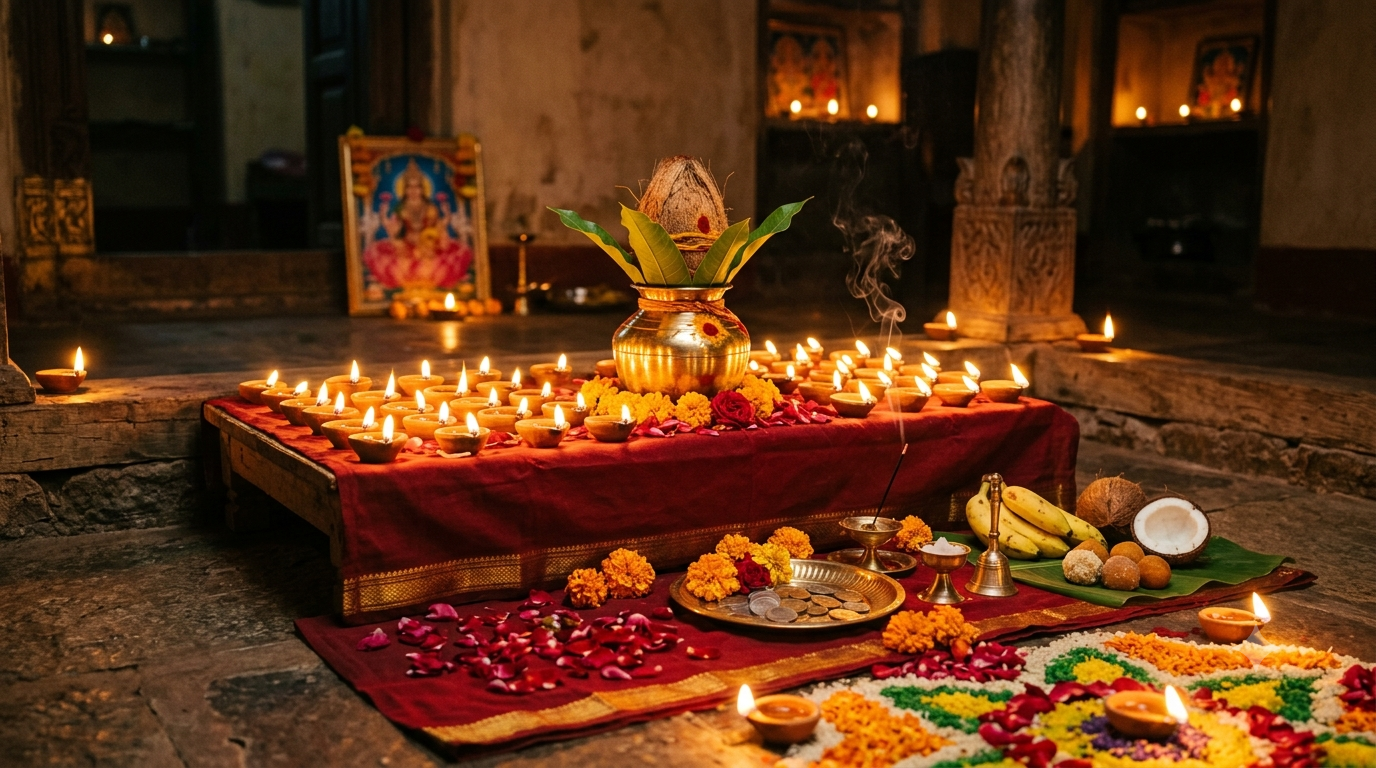
- Place a red cloth on a raised platform. Draw a lotus or rangoli of rice grains in the centre.
- Set a kalasha filled with water, a coin, a betel nut, and mango leaves, then place a coconut on top.
- Position idols or pictures of Ganesha and Dhana Lakshmi, with Ganesha on the right and the Goddess in the centre.
- Light the deepa and incense. Apply turmeric and kumkum to the deities and to the kalasha.
- Take a sankalpa, a short vow stating why you perform the puja and for whose wellbeing.
- Worship Lord Ganesha first, then invoke Dhana Lakshmi with the Lakshmi Ashtottara Shatanamavali or Sri Suktam.
- Offer flowers, fruits, and naivedyam. Finish the worship with aarti and distribute prasadam.
Puja Samagri You Will Need
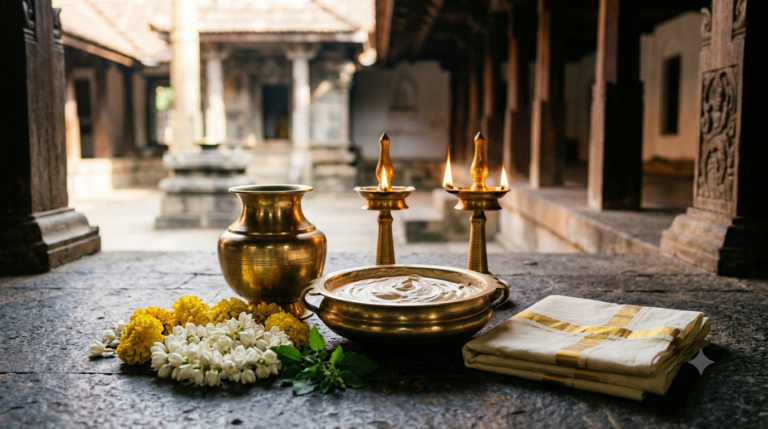
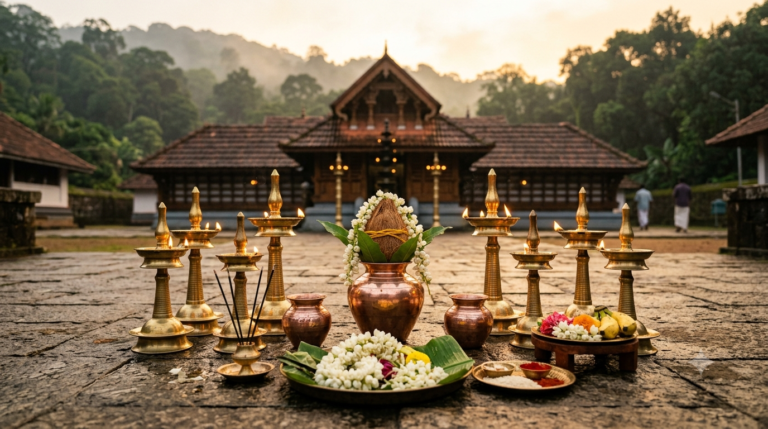
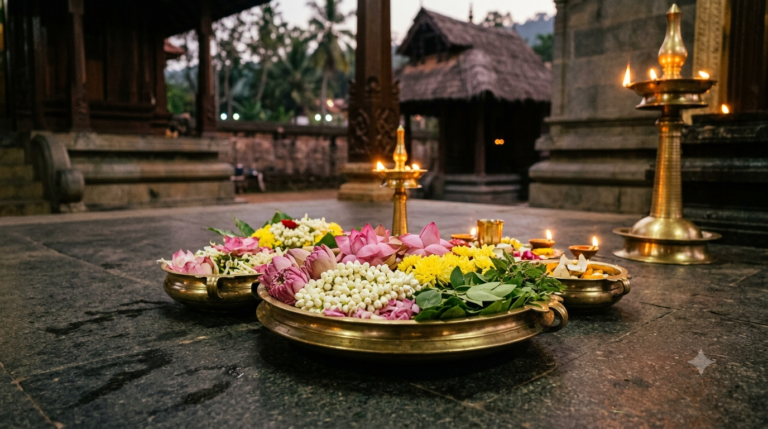
Keep the materials ready a day earlier, so the evening stays calm. A typical list includes a Lakshmi idol or photo, a kalasha, coins, turmeric, kumkum, rice, flowers, mango leaves, a coconut, oil lamps, incense, camphor, and sweets for naivedyam. Many families also keep account books or a symbolic gold item near the Goddess as a mark of the year’s earnings. Prepare a little extra prasadam, since sharing it with neighbours carries the festival’s spirit of goodwill.
Benefits Devotees Associate with Dhana Lakshmi Pooja
In devotional belief, Dhana Lakshmi Pooja attracts wealth, clears financial obstacles, and steadies the flow of income. Worshippers also seek self-confidence, freedom from debt-related stress, and success in business or career. These remain traditional faith-based aspirations, not guaranteed financial outcomes.
It helps to hold the right intention. The scriptures caution that Lakshmi does not stay long with those who chase wealth through unfair means or out of pure greed. Therefore the puja works best alongside honest effort, gratitude, and generosity toward those in need.
Please note: this article offers devotional guidance, not financial advice. For decisions about money, savings, or investments, consult a qualified financial professional.
Insider Tips Most Guides Miss
A few small habits make the puja smoother and more meaningful. These come from what experienced households actually do on Deepavali night.
- Verify the muhurat for your city, not Delhi. Sunset differs, so copying a North Indian timing can push you outside Pradosh Kaal.
- Do the wealth puja on Amavasya evening, not Dhanteras, if you follow the Telugu tradition. Many families get this wrong.
- Keep the main door and windows open during the puja, as a symbolic welcome for the Goddess.
- Ignore “guaranteed result” pooja adverts. No one can promise wealth for a fee, and such claims are a clear red flag.
- Light a clean lamp with pure ghee or oil. Tradition treats a steady, unbroken flame as highly auspicious.
Common Myths About the Deepavali Date
Because Deepavali shifts every year, plenty of outdated information floats around online. Old blog posts still show the 2021 date of 4 November, which misleads readers who plan for the current year. For 2026, the correct main day is 8 November, so always cross-check the year before you trust any date.
Another myth claims Lakshmi Puja must happen at one fixed clock time nationwide. In reality, the muhurat depends on local sunset and the Amavasya tithi, so it genuinely varies by city. Trusting a single “all-India time” can lead you to worship at the wrong moment.
Before You Begin
Dhana Lakshmi Pooja rewards devotion, cleanliness, and honest intention far more than grand arrangements. For 2026, mark Sunday, 8 November for the Deepavali Lakshmi worship, and confirm the muhurat for your own city. Keep the ritual simple, involve the family, and treat the wealth you seek as a means to live and give well.
Done with a clean heart, a well-planned Dhana Lakshmi Pooja turns Deepavali night into a quiet, hopeful start to the year. That spirit, more than any expensive samagri, is what the tradition truly values.
Frequently Asked Questions
What is Dhana Lakshmi Pooja?
Dhana Lakshmi Pooja is the worship of Dhana Lakshmi, the form of Goddess Lakshmi who grants wealth and financial stability. Devotees perform it to seek prosperity, clear money worries, and invite abundance. Most families do it on Deepavali evening, and also on Dhanteras and Fridays.
When is Dhana Lakshmi Pooja in 2026?
The main Dhana Lakshmi Pooja on Deepavali falls on Sunday, 8 November 2026, during the Lakshmi Puja on Kartik Amavasya. Dhanteras, another day linked to wealth worship, falls on Friday, 6 November 2026. Confirm the exact muhurat for your city on a trusted panchangam.
Is Dhana Lakshmi Pooja the same as Dhanteras?
No, they differ. Dhanteras is a separate day for buying metals and honouring Kubera and Dhanvantari. The main Dhana Lakshmi Pooja on Deepavali happens on Amavasya evening, two days after Dhanteras in 2026.
Can I do Dhana Lakshmi Pooja at home?
Yes, you can perform it at home with a simple setup. Clean the space, light a lamp, arrange a kalasha, and worship Ganesha and Dhana Lakshmi with flowers, kumkum, and naivedyam. Sincere devotion matters more than elaborate materials.
What time should I perform Lakshmi Puja on Deepavali 2026?
Perform it during Pradosh Kaal, the twilight window after sunset on 8 November 2026. As per Drik Panchang, the New Delhi window is roughly 05:54 PM to 07:50 PM, though your city may differ by several minutes. Check your local panchangam for the precise slot.
Which deities do people worship in Dhana Lakshmi Pooja?
Dhana Lakshmi is the main deity, worshipped for wealth and prosperity. Devotees honour Lord Ganesha first to remove obstacles, and many include Kubera, the guardian of wealth. In many Telugu homes this combined worship carries the name Lakshmi Kubera Pooja.
What are the benefits of Dhana Lakshmi Pooja?
In devotional belief, the puja attracts wealth, removes financial obstacles, and brings confidence and stability. These stay faith-based aspirations rather than guaranteed results. The tradition pairs the worship with honest effort, gratitude, and charity.
Why does the Deepavali date change every year?
Deepavali follows the Hindu lunar calendar and always falls on Kartik Amavasya, the new moon night. Since the lunar and Gregorian calendars differ, the date shifts each year, landing between mid-October and mid-November. In 2026 it falls on 8 November.