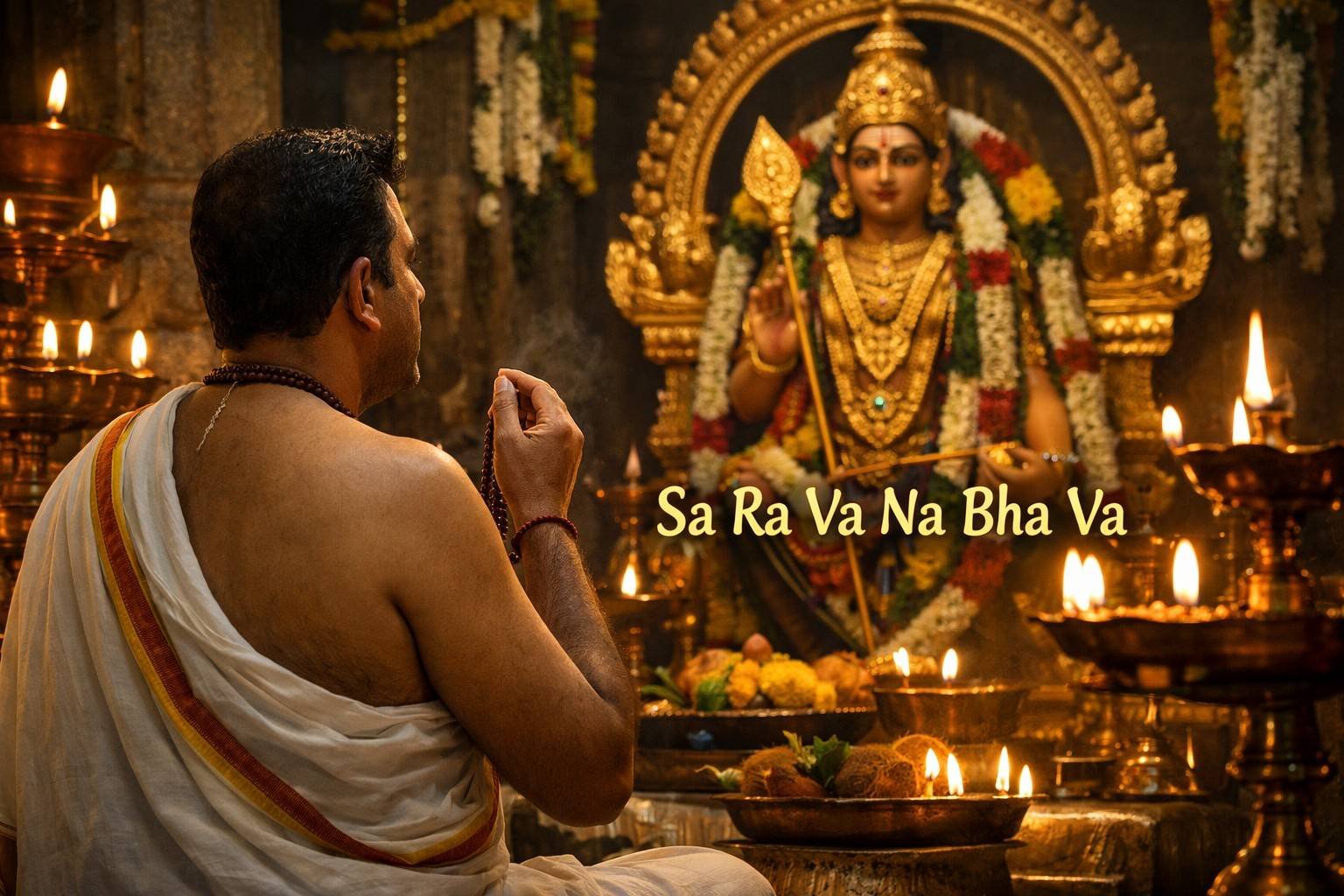
Sri Saravanabhava Mantrakshara Shatkam In Telugu – Meaning, Benefits, And Chanting Method
Sri Saravanabhava Mantrakshara Shatkam is a powerful six-syllable hymn dedicated to Lord Subrahmanya, also known as Lord Murugan or Kartikeya. The mantra “Sa-Ra-Va-Na-Bha-Va” represents the divine six faces of the deity and carries deep spiritual significance in Shaivite and Skanda traditions. This sacred shatkam is recited widely in Andhra Pradesh, Tamil Nadu, and Karnataka, especially during Skanda Sashti and Subrahmanya Shashti.
The name “Saravanabhava” refers to the divine birth of Lord Murugan from the Saravana Poigai (a sacred reed-filled lake). You can read about Lord Murugan’s mythology and symbolism on Wikipedia – Murugan. The six-syllable mantra is central to his worship and is often considered equivalent to the “Shadakshari Mantra” of Subrahmanya.
What Is Sri Saravanabhava Mantrakshara Shatkam?
Sri Saravanabhava Mantrakshara Shatkam is a devotional hymn built around the six sacred syllables:
Sa – Ra – Va – Na – Bha – Va
Therefore, each syllable corresponds to one face of Lord Subrahmanya and represents divine attributes such as wisdom, courage, purity, strength, compassion, and victory over negativity.
Meaning Of “Mantrakshara Shatkam”
Mantra – Sacred sound vibration
Akshara – Syllable
Shatkam – Group of six
So, Mantrakshara Shatkam means “A Hymn Based On Six Sacred Syllables.” The mantra itself is regarded as extremely potent in tantric and Vedic traditions.
Sri Saravanabhava Mantrakshara Shatkam In Telugu (Text)
Below is the commonly recited Telugu version:
Moreover, స ర వ ణ భ వ శరణం శరణం శణ్ముఖా
స ర వ ణ భ వ శరణం శరణం సుబ్రహ్మణ్యా
స ర వ ణ భ వ శరణం శరణం స్కందా
స ర వ ణ భ వ శరణం శరణం గుహా
స ర వ ణ భ వ శరణం శరణం కార్తికేయా
స ర వ ణ భ వ శరణం శరణం మురుగా
On the other hand, different temples and traditions may have slight variations in wording. The core six-syllable mantra remains unchanged.
Spiritual Significance Of The Six Syllables
Sa – Divine Energy
Represents the primordial sound and divine spark that initiated creation.
Ra – Fire Element
Symbolizes transformation and purification. It is connected to Agni.
Va – Sustenance
Indicates protection and nurturing aspects of the deity.
Na – Knowledge
Represents higher wisdom and removal of ignorance.
Bha – Radiance
Denotes brilliance, spiritual illumination, and victory.
Va – Liberation
The final syllable symbolizes moksha and spiritual freedom.
Moreover, according to traditional Shaivite belief systems documented in Skanda Purana references, Lord Subrahmanya embodies divine knowledge and warrior strength. You can explore more scriptural context at Wikipedia – Skanda Purana.
Benefits Of Chanting Sri Saravanabhava Mantrakshara Shatkam
Devotees believe chanting this mantra regularly brings tangible spiritual and psychological benefits.
1. Removes Obstacles
The mantra is considered highly effective for removing hurdles in career, marriage, and education.
2. Boosts Confidence
Lord Subrahmanya is a warrior deity. Regular chanting increases inner strength.
3. Protection From Negative Energies
Many families chant this during difficult astrological periods like Rahu or Ketu dosha.
4. Enhances Concentration
Students often chant before exams for clarity and focus.
5. Supports Spiritual Growth
It helps calm the mind and deepen meditation practices.
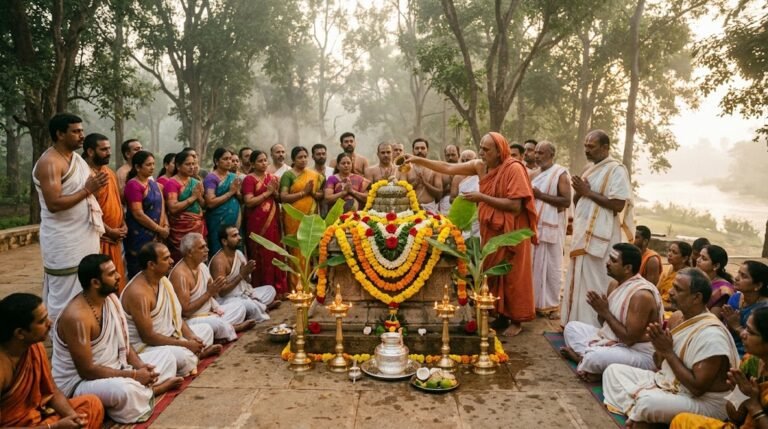
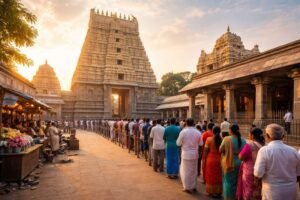
In contrast, when I visited a Subrahmanya temple in Tirupati district, I observed devotees chanting “Saravanabhava” continuously during Skanda Sashti. What surprised me was the rhythmic power of group chanting. The vibration was intense. You could feel it.
Step-By-Step Method To Chant Sri Saravanabhava Mantrakshara Shatkam
Here’s a structured method I personally recommend:
Step 1: Choose The Right Time
Early morning (4:30 AM to 6:00 AM) or evening during sunset is ideal.
Step 2: Face East Or North
This direction is traditionally considered auspicious.
Step 3: Light A Lamp
Use a ghee lamp or sesame oil lamp before beginning.
Step 4: Chant 108 Times
Use a Rudraksha or Tulsi mala for counting.
Step 5: Maintain Focus
Pronounce each syllable clearly: Sa-Ra-Va-Na-Bha-Va.
Step 6: Offer Prayer
End with a short prayer seeking guidance and protection.
Therefore, consistency matters more than duration. Even 11 repetitions daily can create discipline.
Best Days To Chant
| Day | Significance |
|---|---|
| Tuesday | Associated With Mars And Courage |
| Thursday | Spiritual Growth And Wisdom |
| Skanda Sashti | Special Festival For Lord Murugan |
| Subrahmanya Shashti | Monthly Observance |
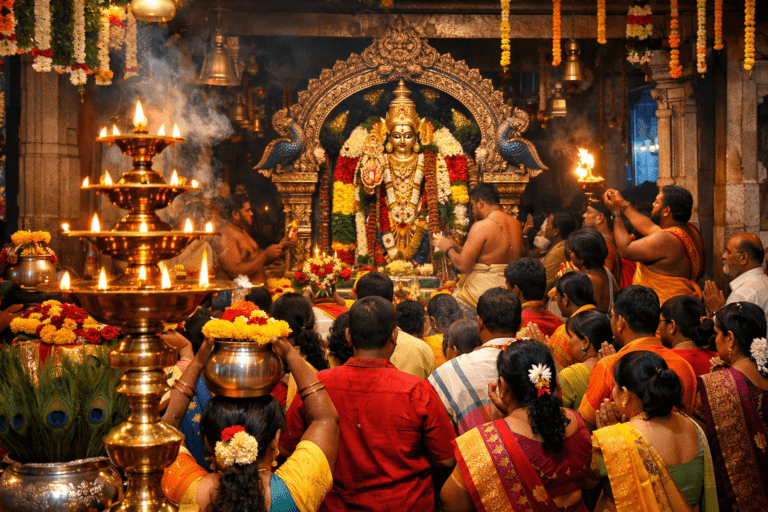
During Skanda Sashti, temples in Tamil Nadu and Andhra Pradesh conduct elaborate abhishekams and special poojas.
Common Mistakes To Avoid
Incorrect Pronunciation
Do not rush through the syllables. Each sound carries vibrational importance.
Mechanical Chanting
Chanting without attention reduces spiritual impact.
Skipping Regularity
Irregular practice weakens discipline.
Expecting Instant Results
Spiritual practices require patience.
Here’s what most people get wrong. They treat it like a quick remedy. It’s a devotional practice, not a shortcut.
How It Differs From Other Subrahmanya Mantras
There are several popular mantras dedicated to Lord Subrahmanya:
- Om Saravanabhavaya Namah
- Subrahmanya Ashtakam
- Kanda Sashti Kavacham
Sri Saravanabhava Mantrakshara Shatkam focuses purely on the six-syllable energy pattern. It is simpler and ideal for beginners.
Personal Observations From Temple Visits
When I visited a Murugan temple during a Tuesday evening pooja, I noticed families teaching children to chant slowly and clearly. The priest emphasized correct articulation.
What surprised me was how many young professionals attended weekly chanting sessions. Many shared that it helped reduce anxiety and improve focus at work.
I personally recommend starting with 11 repetitions daily and gradually increasing to 108. That progression builds consistency without pressure.
Who Can Chant Sri Saravanabhava Mantrakshara Shatkam?
Anyone. There are no strict restrictions. Traditionally:
- Students chant for knowledge.
- Business professionals chant for stability.
- Families chant for protection.
- Spiritual seekers chant for liberation.
No caste or regional barriers apply. Devotion is the only requirement.
Frequently Asked Questions
1. How Many Times Should I Chant Daily?
11, 27, or 108 times are common counts. Beginners can start with 11.
2. Can Women Chant During All Times?
Yes. There are no scriptural prohibitions for chanting this mantra.
3. Is Initiation Required?
Formal initiation is not mandatory for simple chanting. Advanced tantric practices may require guidance.
4. Can I Play Audio Instead Of Chanting?
Listening helps. Chanting yourself creates stronger vibration.
5. Is This Different From “Om Saravanabhavaya Namah”?
Yes. That is a longer mantra format. The Shatkam focuses specifically on six syllables.
6. What Language Should I Use?
You can chant in Sanskrit or Telugu. Pronunciation clarity matters more than language.
7. Does It Help With Rahu-Ketu Dosha?
Many astrologers recommend Subrahmanya worship for Rahu-Ketu afflictions.
8. What Is The Ideal Age To Start?
Children above 5 years can begin simple chanting.
Final Thoughts
Sri Saravanabhava Mantrakshara Shatkam is not just a chant. It is a disciplined spiritual practice rooted in ancient Shaivite tradition. The six syllables hold symbolic depth connected to divine knowledge and courage.
Start small. Stay consistent. Focus on pronunciation. Over time, you will notice subtle internal changes—calmness, confidence, and clarity.
Devotion transforms repetition into meditation.
+ There are no comments
Add yours