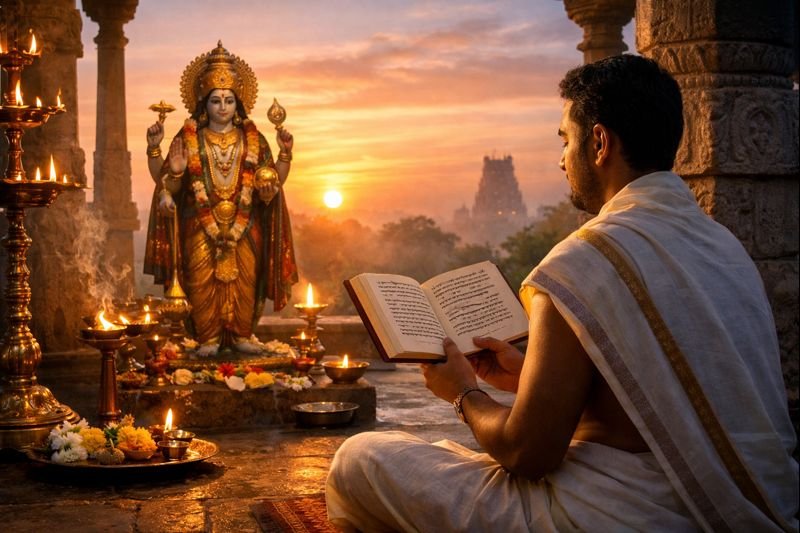
Sri Vishnu Stavaraja Storam: Essential Guide To The Sacred Prayer
Sri Vishnu Stavaraja Storam is a revered Sanskrit hymn composed in praise of Lord Vishnu, found in the Kalki Purana, one of the later Puranic scriptures of Hinduism. This devotional prayer vividly describes the divine form of Vishnu using rich poetic imagery, making it both a spiritual and literary treasure.
What Is Sri Vishnu Stavaraja Storam?
Sri Vishnu Stavaraja Storam is a type of stotra — a lyrical Sanskrit hymn — specifically composed to praise the qualities and appearance of Lord Vishnu. In this hymn, each verse (shloka) richly depicts parts of the Lord’s divine form using metaphor and devotional poetry.
In the Sanskrit tradition, a “stotra” is a literary genre of praise that evolved from ancient Vedic hymns, intended for melodious chanting and devotional use. These hymns serve to deepen the devotee’s connection to the deity through poetic remembrance and reverence.
Historical Context And Source
The source of the Sri Vishnu Stavaraja Storam is the Kalki Purana, a Hindu Purana text that narrates the life and times of Kalki, the prophesied tenth and final avatar of Vishnu. Within this text, the devotional hymn appears as a descriptive prayer praising Vishnu’s divine form.
Unlike other well-known Vishnu hymns such as the Dvadasha Stotra composed by Madhvacharya or Stotra Ratna by Yamunacharya, the Sri Vishnu StavarajaStorom primarily focuses on visual and poetic depiction rather than philosophical exposition.
Structure And Themes Of The Storam
The hymn is composed of a series of verses, each vividly illustrating an aspect of Vishnu’s divine body, garments, ornaments, or celestial presence. Devotees recite or chant these verses as part of their spiritual practice, especially during Vishnu puja or during Vaishnava festivals.
| Aspect | Description |
|---|---|
| Clothing | The Lord is depicted wearing golden garments and silk (pītāmbarā). |
| Ornaments | Description includes jewels like Kaustubha and garlands. |
| Posture | Verses mention Vishnu’s stance with arms holding symbols like the conch and discus. |
| Metaphors | The hymn uses imagery from nature and gemstones to describe the Lord’s features. |
Importance In Devotional Practice
Sri Vishnu Stavaraja Storam is traditionally chanted by devotees seeking greater connection with Lord Vishnu. Chanting a stotra like this is believed to foster mental peace, focus in meditation, and deeper devotion. Many practitioners observe that the rhythm and lyrical beauty of the hymn envelop the mind in reverence and gratitude.
When I visited a temple dedicated to Vishnu in South India, I experienced firsthand how silently chanting these verses fostered a calm, contemplative state. The temple priest encouraged devotees to reflect on the meaning of each line rather than merely reciting by rote, which I personally recommend for deeper spiritual engagement.
How To Chant Sri Vishnu Stavaraja Storam
Chanting Sri Vishnu Stavaraja Storam can be both a devotional and meditative practice. Follow these steps for an effective spiritual session:
1. Choose A Quiet Space
Select a peaceful location where you will not be disturbed. Many choose a home altar or a meditation corner.
2. Decide On A Time
Early morning or evening are traditional times for mantra and stotra chanting, as these periods are considered conducive to spiritual activities.
3. Set An Intention
Before beginning, take a few moments to set a clear intention — such as devotion, peace of mind, or spiritual growth — to focus your mind.
4. Begin With Respect
Light a lamp or incense if you like and offer salutations to Lord Vishnu. In Hindu practice, beginning any prayer with reverence helps center the mind.
5. Recite Slowly
Focus on articulating each verse with care. If you are new to Sanskrit, use an accurate transliteration guide to help pronounce the verses correctly.
6. Reflect On Meaning
After chanting, take a moment to reflect on the meaning of the verses. Understanding the words enhances the devotional experience.
Tips For The Best Practice
- Create a daily routine — consistency deepens the spiritual impact.
- Use a printed or digital copy of the stanza text (from a trusted source, such as a temple publication).
- Maintain a calm, undistracted environment — silence helps deepen immersion.
- If chanting aloud feels intimidating, whispering or inner recitation also works.
Common Mistakes To Avoid
- Reciting without understanding — aim to grasp the meaning as you chant.
- Choosing noisy surroundings — external disturbances dilute concentration.
- Skipping warm-up chants — traditional practice often suggests beginning with a few simple mantras before complex stotras.
- Using incorrect text — always refer to reliable Sanskrit sources or temple publications.
Frequently Asked Questions (FAQ)
What Does “Stavaraja” Mean?
“Stavaraja” literally refers to a royal hymn of praise — a majestic stotra extolling the deity’s grandeur and virtues. In this context, it glorifies Vishnu’s divine form and attributes.
How Many Verses Are There In The Sri Vishnu Stavaraja Storom?
The Sri Vishnu Stavaraja Storom generally consists of 20 verses in classical Sanskrit, each richly describing a part of Vishnu’s form.
Is It Necessary To Know Sanskrit To Chant?
No. Many devotees chant using transliterations or recite with the help of transliteration guides, while gradually learning meanings to enrich their devotion.
Can This Storam Be Recited Daily?
Yes. Daily recitation is a traditional spiritual practice among Vaishnavas and is believed to bring peace and focus.
Are There Audio Or Recorded Versions Available?
Yes. Many devotional music platforms and YouTube channels provide sung or chanted renditions of the hymn, helping beginners with pronunciation and rhythm.
Additionally, in summary, Sri Vishnu Stavaraja Storam stands as a beautiful devotional hymn that transcends mere words. Its poetic imagery, when understood and chanted with devotion, can transform ordinary moments into spiritual reflections. I encourage you to explore the verses with respect, patience, and an open heart — the experience can be deeply enriching.


+ There are no comments
Add yours