Story Behind Narasimha Avataram: Essential Insights Into The Fourth Vishnu Incarnation
Story Behind Narasimha Avataram is one of the most revered and dramatic tales in Hindu mythology. This narrative explains why Lord Vishnu took the form of Narasimha, a half-man half-lion incarnation, to protect the devout and uphold righteousness, while overcoming seemingly impossible divine conditions. The legend embodies supreme devotion, divine justice, and cosmic balance. According to authoritative sources, Narasimha is the fourth of the ten principal avatars (Dashavatara) of Lord Vishnu, appearing to protect his beloved devotee Prahlada and destroy the demon king Hiranyakashipu.
Historical And Scriptural Context Of Narasimha Avataram
The tale of Narasimha Avataram is predominantly found in the Bhagavata Purana, an ancient Sanskrit text that details prime divine incarnations and cosmic events. In the sequence of Vishnu’s avatars, Narasimha follows his previous form as the boar-incarnation (Varaha). The core theme of this avatar is the protection of devout devotees and the restoration of dharma (righteousness) when evil rises unchecked.
Legend Of Hiranyakashipu And Prahlada
The narrative begins with the demon king Hiranyakashipu, the elder brother of the demon Hiranyaksha who was slain by Vishnu in his Varaha form. Seeking revenge and absolute power, Hiranyakashipu performed intense penance to please Brahma, the Creator deity. Pleased by his austerities, Brahma granted him a boon that placed him beyond the reach of death from typical means—no human or animal, inside or outside the home, during day or night, on earth or in the sky, by weapon or hand could kill him. ‘Victorious’ with his boon, Hiranyakashipu declared himself supreme and began to torment devotees of Lord Vishnu and all righteous beings. Understanding Story Behind Narasimha Avataram is essential.
Prahlada, the young son of Hiranyakashipu, was an ardent devotee of Lord Vishnu from an early age. Despite brutal punishments by his father, including venomous serpents and falling from great heights, Prahlada’s devotion never faltered. At one key moment, Hiranyakashipu challenged Prahlada, asking if Lord Vishnu was present in a nearby palace pillar. On his declaration that the Lord was everywhere, Narasimha emerged from the pillar in a terrifying form—the unique man-lion incarnation of Vishnu.
Why Vishnu Took The Form Of Narasimha
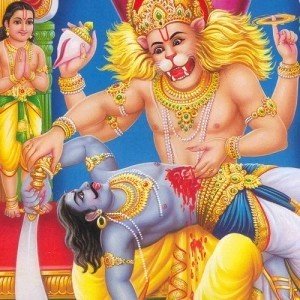
Hiranyakashipu’s boon seemed to make him invulnerable by ordinary logic. No human, no animal, no weapon could defeat him. Vishnu responded by manifesting as Narasimha—a being neither fully human nor animal—to bypass each condition of the boon.
Therefore, at twilight (neither day nor night) he appeared at the threshold of the courtyard (neither indoors nor outdoors). Placing the demon on his lap (neither in the sky nor on the earth), Narasimha used his razor-sharp claws (neither animate nor inanimate) to rip apart and ultimately vanquish Hiranyakashipu. This relates to Story Behind Narasimha Avataram.
Symbolism And Meaning Of The Narasimha Story
The Narasimha Avataram is rich with symbolism. It represents the relentless protection that the divine grants to sincere devotion and the eventual downfall of arrogance, ego, and tyranny—no matter how powerful. Narasimha’s emergence from the pillar also symbolizes God’s omnipresence; divine intervention happens where devotion burns bright, even if hidden from the world.
Observing Narasimha In Temples And Traditions
Across India, several temples are dedicated to Lord Narasimha. Some of the most significant include:
| Temple | Location | Notable Feature |
|---|---|---|
| Lakshmi Narasimha Temple | Dharmapuri, Telangana | Houses three forms of Narasimha including Ugra and Saumya |
| Yogananda Lakshmi Narasimha Swamy Temple | Mattampally, Telangana | One of the historic Pancha Narasimha Shrines |
| Lakshmi Narasimhar Temple | Narasinghapuram, Tamil Nadu | Reflects Dravidian architectural heritage |
These temples are centers of pilgrimage, embodying the legacy of devotion and protection associated with the Narasimha Avatar. Learn more about Story Behind Narasimha Avataram.
Personal Reflections And Observations
When I visited the Lakshmi Narasimha Temple at Dharmapuri, the serene atmosphere struck me immediately. The icons of Narasimha in peaceful and fierce forms reminded me how divinity balances strength and compassion. I personally recommend spending time in meditation before the idol of Saumya Narasimha to feel a calmness that’s difficult to describe but unmistakable in presence.
What surprised me was the sheer diversity in the portrayal of Narasimha—from furious protector to compassionate shepherd of devotees—across different temples. These varied depictions reflect layered meanings in the myth and each temple’s localized tradition.
Step-By-Step Ritual Practices For Narasimha Worship
1. Preparation
Before worship, cleanse your hands and feet. Place a clean cloth or mat for prayer. Prepare offerings—fresh flowers, fruits, and sandalwood paste are traditional. Light a lamp facing the idol or image of Narasimha. This relates to story behind narasimha avataram.
2. Invocation (Avahana)
Invoke Lord Narasimha by chanting traditional mantras like the Narasimha Kavacham or simple prayers recognizing his protective form. Sit facing east or north for best practice.
3. Offerings (Naivedya)
Offer fruits, sweets, and incense. Water mixed with sandalwood paste can be offered as symbolic purification. If possible, include Tulsi leaves, which are traditionally dear to Vishnu.
4. Meditation And Reflection
After offering, sit quietly for 5–10 minutes to meditate on Narasimha’s divine qualities: courage, divine justice, and protection of the devoted. Breathe slowly and focus on the essence of unwavering faith. This relates to story behind narasimha avataram.
5. Closing (Visarjana)
Conclude by offering gratitude. Wave your hand over the offerings and distribute them among family or community as prasad. A final chant like “Om Namo Narasimhaaye” seals your ritual.
Common Mistakes To Avoid During Worship
- Avoid approaching the altar in haste without preparation; calm focus enhances devotion.
- Do not skip cleansing rituals—even simple washing of hands and feet shows respect.
- Never use offerings that are stale or forgotten from previous rituals; always offer fresh items.
- Avoid distractions such as mobile devices or unrelated conversations during prayer.
Frequently Asked Questions
Why Did Vishnu Choose A Half-Man, Half-Lion Form?
The unique form of Narasimha allowed Vishnu to bypass the conditions of Brahma’s boon to Hiranyakashipu—being neither fully human nor animal—thus allowing divine justice to prevail.
Who Was Prahlada And Why Is He Important?
Prahlada was the son of Hiranyakashipu and a staunch devotee of Vishnu. His unshakable faith, even under extreme persecution, exemplifies true devotion that ultimately invoked divine protection. This relates to story behind narasimha avataram.
Can Narasimha Be Worshipped At Home?
Yes. Worshiping Narasimha at home with sincerity and traditional offerings can bring courage, protection, and spiritual strength into one’s life.
What Festivals Celebrate Narasimha Avatar?
Festivals like Narasimha Jayanti commemorate his appearance each year. Devotees fast and chant prayers dedicated to his divine form during this period.
Is Narasimha Worshipped Outside India?
Yes—especially among Vaishnava communities worldwide, Narasimha is revered for his role as protector and preserver of righteousness. This relates to story behind narasimha avataram.


+ There are no comments
Add yours