Quick answer: Tirumala’s Seshachalam hills are said to hold a vast number of sacred water bodies (theerthams), of which a group of 108 are traditionally counted as especially holy. Most are deep in protected forest and are not open to the public year-round. The Tirumala Tirupati Devasthanams (TTD) opens the path to each one for just a few hours on a single auspicious day called Theertha Mukkoti, usually announced for January to April. Always confirm exact dates and entry rules with TTD before planning a trek.
Key Information at a Glance
| What “theertham” means | A sacred water body — spring, waterfall, or pool — believed to be spiritually purifying |
| Traditional count | 108 holy theerthams highlighted; tradition speaks of crores across the Seshachalam ranges |
| Most famous (Mukti Prada group) | Swami Pushkarini, Papavinasanam, Akasaganga, Gogarbham, Tumburu, Kumaradhara, Ramakrishna |
| Theertha Mukkoti | The one auspicious day each year a theertham’s path is opened for pilgrims |
| Typical season | January to April (dates set yearly by TTD, weather and forest clearance permitting) |
| Main trek starting point | Papavinasanam Dam, Tirumala |
| Access | Restricted; forest treks on designated days only — confirm with TTD |
About the 108 Theerthams of Tirumala
A theertham is a sacred water source — a spring, a seasonal waterfall, or a pool — that pilgrims believe carries spiritual merit. Hindu tradition describes the forested Seshachalam ranges around Tirumala as home to an enormous number of such theerthams, often counted in crores. Within this, a special set of 108 theerthams is singled out as particularly holy, which is why you will often see the phrase “108 theerthams of Tirumala.”
Traditional texts group the theerthams by the spiritual benefit they are said to grant. One commonly cited classification lists roughly 1,008 Dharma-related torrents, 108 associated with knowledge (Gnana), 68 linked to devotion and renunciation (Bhakti-Vairagya), and a small core of 7 considered the holiest — the Mukti Prada theerthams. These seven include the names most pilgrims recognise. A complete, verified roster of all 108 individual names is not reliably published in one place, so this guide describes the well-documented and most-visited ones rather than listing a doubtful full set.
Notable Theerthams You May Have Heard Of
- Swami Pushkarini: The temple tank beside the main Sri Venkateswara shrine. A holy dip here on Mukkoti Dwadasi is traditionally considered as meritorious as bathing in the Ganga.
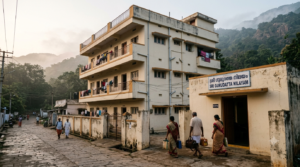
- Papavinasanam: About 5 km from the main temple and easy to reach by road. Its name means “destroyer of sins,” and the dam here is the starting point for treks to the deeper forest theerthams.
- Akasaganga: A revered waterfall a short distance from Tirumala, traditionally said to flow as if from the Lord’s feet. Its water is associated with temple rituals and flows best during the monsoon.
- Kapila Theertham: At the foot of the hills near Tirupati, beside a Shiva temple and a roughly 100-foot seasonal waterfall — accessible without a forest trek.
- Kumaradhara & Ramakrishna: Among the holiest forest theerthams, reached only by long guided treks on their single annual Mukkoti days.
- Tumburu & Gogarbham (Pandava Theertham): Tumburu draws very large crowds on its festival day; Gogarbham lies near the route to Akasaganga.
- Sila Thoranam area: The famous natural rock arch near Akasaganga is a popular nearby landmark, though it is a geological formation rather than a theertham itself.
Visiting Dates and Theertha Mukkoti
“Mukkoti” refers to the single auspicious day in the year when TTD officially opens the path to a particular theertham for pilgrims. On that day, priests perform special rituals and devotees are allowed to take a holy dip, often after a long trek. Outside this window the routes generally stay closed, both for safety and to protect the forest.
Most Mukkoti days fall between January and April, set by the traditional lunar calendar. As an illustration, in recent years Swami Pushkarini observances have fallen around Mukkoti Dwadasi in January, Ramakrishna Theertham in February, and Kumaradhara around the February–March full moon. These dates shift every year, so treat any specific date you read online as indicative only and verify the current year’s schedule directly with TTD before you travel.
Tips and How to Reach
- Most forest treks begin from Papavinasanam Dam; arrive early as entry is daylight-only and crowds are large on Mukkoti days.
- Trails are long and steep — wear sturdy footwear, carry water, and follow TTD and Forest Department instructions at all times.
- Do not trek alone, avoid plastic, and never light fires in the forest. Treks are not suitable for very young children or anyone with mobility concerns.
- TTD and the Forest Department often set up drinking water, buttermilk, basic medical aid, and food counters along the main routes on festival days.
- Roadside theerthams like Papavinasanam, Akasaganga, and Kapila Theertham can be visited far more easily and are open through much of the year.
- Always reconfirm timings, dates, and access rules on TTD’s official channels, as arrangements change with weather and crowd conditions.
Frequently Asked Questions
Are all 108 theerthams of Tirumala open to visitors?
No. Most of the 108 theerthams lie deep in protected forest and are not open year-round. TTD opens each one’s path for only a few hours on its single annual Theertha Mukkoti day. A few, such as Papavinasanam, Akasaganga, and Kapila Theertham, are reachable by road and accessible more often.
What is Theertha Mukkoti?
Theertha Mukkoti is the one auspicious day in the year when TTD officially opens a particular theertham for pilgrims. Special rituals are performed and devotees may take a holy dip, usually after a guided forest trek. Outside this day the route generally remains closed.
When are the Mukkoti dates each year?
Most Mukkoti days fall between January and April and are fixed by the traditional lunar calendar, so they change every year. Because dates also depend on weather and forest clearance, you should confirm the current schedule directly with TTD before planning a visit.
Where do the treks to the theerthams start?
Most forest treks to the inner theerthams begin from Papavinasanam Dam in Tirumala. The trails are long and steep, entry is allowed only in daylight, and group trekking with sturdy footwear and water is strongly advised. Always follow TTD and Forest Department guidance.