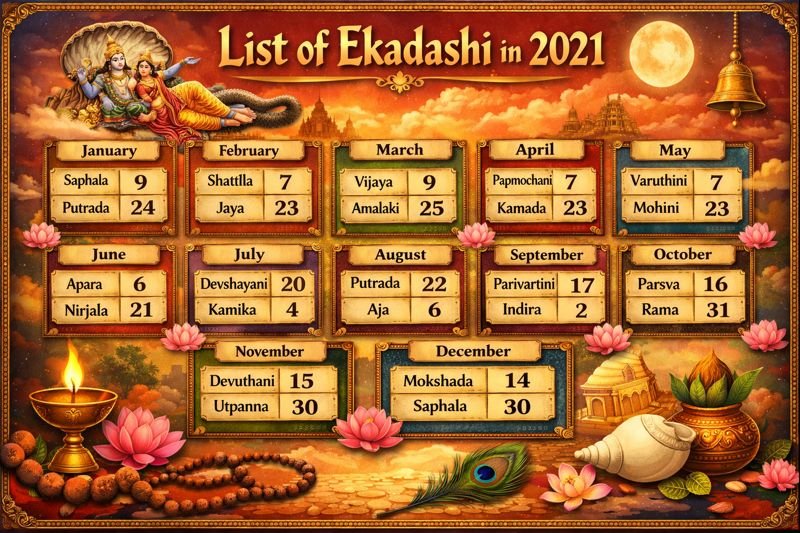
List Of Ekadashi In 2021: Essential Ekadashi Dates And Significance
The List Of Ekadashi In 2021 below provides all major Ekadashi dates observed in the Hindu calendar for the year 2021. Ekadashi refers to the eleventh lunar day (tithi) of each fortnight and is considered an auspicious fasting day for devotees of Lord Vishnu. This list includes specific dates, names, and considerations to help you track every Ekadashi fast in 2021 according to traditional panchang data. Ekadashi tithis can vary slightly by region and local astronomical calculations, so always check a local panchang for your area. Drik Panchang 2021 Ekadashi Dates provides detailed tithi start/end times for specific locations.
Also, this selection is based on authoritative calendar sources and Hindu Panchang calculations. It includes both Krishna Paksha (waning moon) and Shukla Paksha (waxing moon) Ekadashis for all months in the Gregorian year 2021.
1. Saphala Ekadashi (January 9, 2021)
Saphala Ekadashi is the first Ekadashi of 2021, falling in the month of Pausha during Krishna Paksha. It is traditionally observed with fasting, prayers to Lord Vishnu, and special bhajans. Saphala literally means “fruitful,” indicating that devotees may gain positive spiritual outcomes from sincere observance. Understanding List Ekadashi 2021 is essential.
Furthermore, according to the panchang, Saphala Ekadashi’s tithi begins on the evening of January 8 and ends in the evening of January 9. Devotees often chant Vishnu mantras and refrain from grains during the fast.
- Pros: A spiritually auspicious start to Ekadashi observances in the year; enhances devotion early in January.
- Cons: Winter weather may make fasting more challenging physically.
2. Pausha Putrada Ekadashi (January 24, 2021)
Pausha Putrada Ekadashi occurs in the Shukla Paksha of the Pausha month. “Putrada” means “giver of sons,” and traditionally some devotees pray for progeny and family well-being on this day.
The tithi spans from the night of January 23 to January 24. Observers typically fast from sunrise until the end of the tithi, breaking the fast on Dwadashi with proper parana timings. This relates to List Ekadashi 2021.
- Pros: Especially significant for family prayer and cultural rituals related to lineage.
- Cons: Specific significance may not resonate with all devotees.
3. Shattila Ekadashi (February 7, 2021)
Shattila Ekadashi in February is noted for its association with sesame (til) offerings and charitable acts involving sesame-based food. This Ekadashi is believed to absolve sin and improve karmic outcomes.
The tithi for Shattila begins early on February 7 and ends before sunrise of February 8. Many devotees include charitable donations of til sweets as part of observance traditions.
- Pros: Emphasis on charity reinforces community values.
- Cons: Traditional observances involving specific offerings may require planning.
4. Jaya Ekadashi (February 23, 2021)
Jaya Ekadashi is observed in the Shukla Paksha of Magha, known for aiding victory over obstacles. The tithi generally falls during late February and is a popular fast for overcoming challenges and invoking divine aid. Learn more about List Ekadashi 2021.
On the other hand, devotees maintain a strict fast and engage in recitations focusing on Lord Vishnu’s glories.
- Pros: Symbolic significance for spiritual resilience and victory.
- Cons: Fasting can be demanding without adequate preparation.
5. Vijaya Ekadashi (March 9, 2021)
Vijaya Ekadashi falls in early March, signifying ‘victory.’ It is often recommended for devotees seeking success in personal and spiritual endeavors. Observances include deep prayer, fasting, and mantra chanting.
The tithi usually begins mid-afternoon of March 8 and ends mid-afternoon on March 9 according to the panchang. This relates to list ekadashi 2021.
- Pros: Linked to themes of victory, making it meaningful for those facing life challenges.
- Cons: For beginners, the rigor of full Ekadashi fasting can be intense.
6. Amalaki Ekadashi (March 25, 2021)
Amalaki Ekadashi, named after the holy amla tree (Indian gooseberry), emphasizes purification and health. Some devotees also engage in rituals involving amla fruits or branches as symbols of wellness.
In contrast, the tithi falls during March 24–25; devotees often combine the fast with meditation and prayers focused on healing.
- Pros: Correlated with health symbolism and purification themes.
- Cons: Not all regions emphasize amla rituals, leading to variation in practice.
7. Papmochani Ekadashi (April 7, 2021)
Papmochani Ekadashi derives its name from “Pap” (sin) and “Mochani” (liberation), indicating release from past sins through devout observance. This Ekadashi invites devotees to reflect on life choices and seek forgiveness. This relates to list ekadashi 2021.
Therefore, the Ekadashi tithi typically spans April 7–8, and fasting and prayers are common.
- Pros: Encourages introspection and moral renewal.
- Cons: Emotional intensity of the theme may not suit all observants.
8. Kamada Ekadashi (April 23, 2021)
Kamada Ekadashi is considered spiritually potent and is the traditional first Ekadashi after Chaitra Navratri and Rama Navami. “Kamada” suggests the granting of desires for devotees with pure intent.
It usually falls in the night of April 22 and extends into April 23. Devotees often perform elaborate prayers and offer yellow attire and basil leaves to Lord Vishnu. This relates to list ekadashi 2021.
- Pros: Seen as auspicious for attaining personal spiritual and material blessings.
- Cons: Complex rituals can be demanding without guidance.
9. Varuthini Ekadashi (May 7, 2021)
Varuthini Ekadashi is believed to remove obstacles and protect against harm. Many devotees fast and perform prayers seeking divine shelter and relief from stressors.
Located in early May’s Krishna Paksha, the tithi provides another opportunity for spiritual engagement.
- Pros: Protective connotations make it appealing for spiritual defense.
- Cons: Less widely explained in texts compared with other Ekadashis.
10. Mohini Ekadashi (May 23, 2021)
Mohini Ekadashi, associated with the enchanting form of Lord Vishnu, signifies the restoration of balance and spiritual insight. Devotees often integrate mantra chanting and meditation into this day. This relates to list ekadashi 2021.
The Ekadashi tithi falls around May 23; local timings vary.
- Pros: Symbolic alignment with inner balance and insight.
- Cons: Not as prominent in popular ritual texts.
For full traditional descriptions and tithi timings, consult local panchang references such as Drik Panchang Official Calendar.
This relates to list ekadashi 2021.






+ There are no comments
Add yours