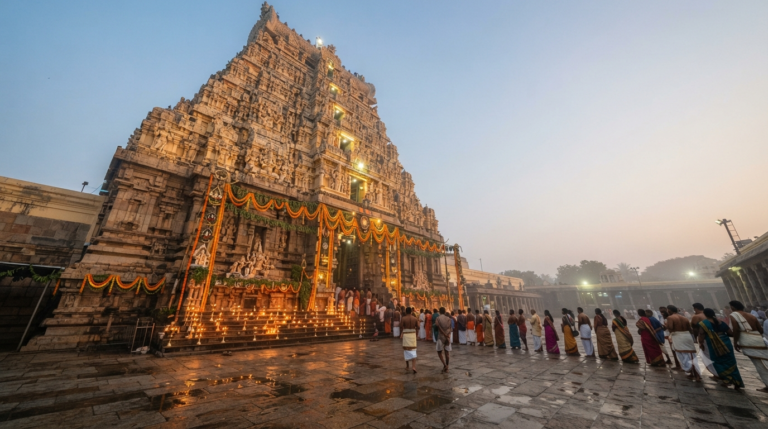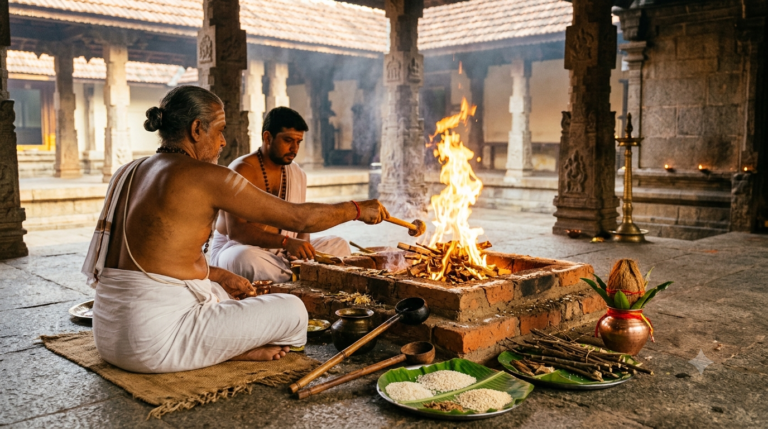
Nagula Chavithi Pooja Vidhi is simpler than most families fear, yet small slips can unsettle the whole observance. In 2026, Telugu households mark this festival on Friday, 13 November. The day honours the Naga Devata, or serpent gods, mainly for the wellbeing of children. So this guide walks you through every ritual step, the exact items list, and the naivedyam recipes. It also clears up one truth most blogs quietly skip: what really happens when you offer milk to a live snake.
Nagula Chavithi at a Glance
- Festival: Nagula Chavithi (Naga Chaturthi), worship of the serpent gods.
- 2026 date: Friday, 13 November 2026, in Karthika Masam.
- Tithi: Chaturthi, the fourth day of Shukla Paksha, five days after Diwali.
- Puja muhurat: commonly listed as 11:15 AM to 1:30 PM, though this shifts by town.
- Observed by: mainly married women fasting for their children; unmarried women also keep the vrat.
- Main offerings: chalimidi, chimmili, vada pappu, panakam, milk, turmeric and kumkum.
- Regions: Andhra Pradesh, Telangana, and parts of Karnataka.
When Is Nagula Chavithi in 2026?
Nagula Chavithi 2026 falls on Friday, 13 November, in Karthika Masam of the Telugu calendar. It lands on Chaturthi, the fourth day after Diwali Amavasya. The widely published puja muhurat runs from about 11:15 AM to 1:30 PM. Because this window depends on your exact location, confirm it on a trusted panchang before you start.
This festival also opens a three-day cycle of serpent worship. Naga Panchami follows on 14 November, while Naga Sashti comes on 15 November. A few communities instead observe a Shravana-month Nagula Chavithi, which in 2026 falls on 17 August. Most Telugu families, however, treat the Karthika date as the main one. You can cross-check your city timing on the Drik Panchang Nagula Chavithi page.
The Legend Behind the Festival
The story traces back to the Samudra Manthan, the churning of the ocean of milk. Gods and demons used Mount Mandara as the churning rod. They wrapped Vasuki, the king of serpents, around it as the rope. As they churned, a deadly poison called Halahala rose first from the waters.
To protect all creation, Lord Shiva drank that poison and held it in his throat. This act turned his throat blue, so devotees call him Neelakantha. Vasuki, who endured the burning poison without complaint, earned Shiva’s grace. Shiva then wore him around his neck. Because serpents share this bond with Shiva, worshipping the Naga Devata is also seen as honouring the lord who protects them.
Nagula Chavithi Pooja Vidhi Step by Step
The Nagula Chavithi Pooja Vidhi follows a clear morning routine. First, wake before sunrise and take a head bath, since purity matters most on this day. Then wear clean clothes, traditionally white or yellow. After that, clean the puja space and take the sankalpa, your formal vow for the day.
- Take the sankalpa. Sit facing east and state your intention while fasting for your family’s wellbeing.
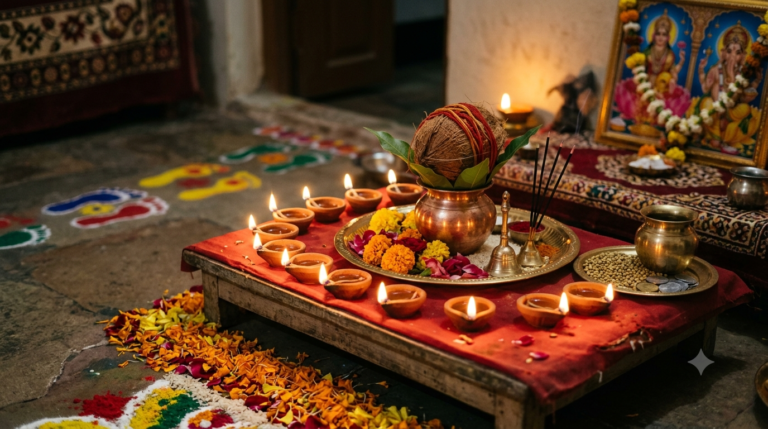
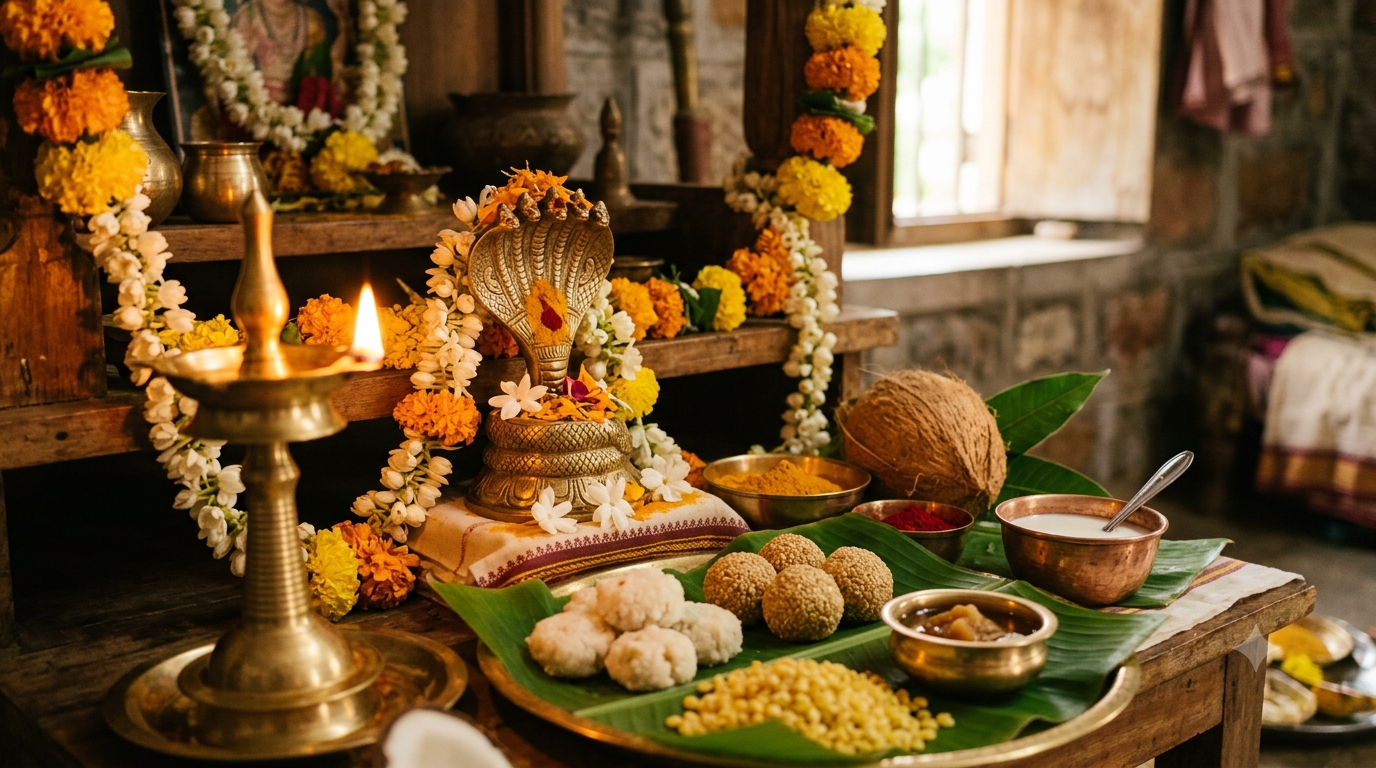
- Set up the deity. Place a Naga idol or a snake image on the altar. Many families instead draw a snake motif with turmeric and kumkum.
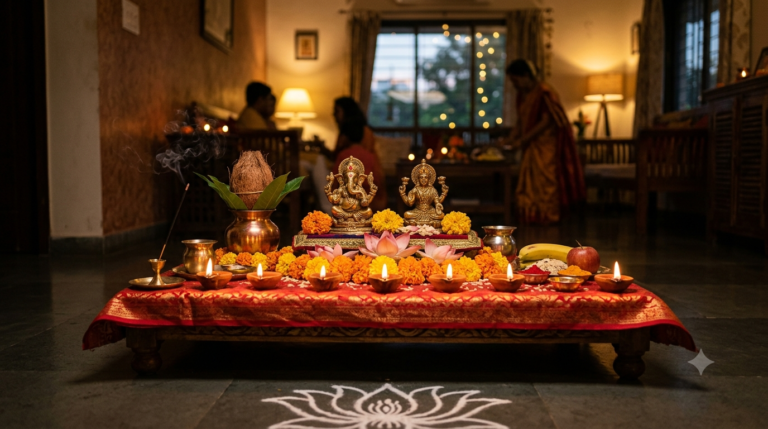
- Begin the worship. Light the lamp and incense first. Then offer turmeric, kumkum, and fresh flowers like jasmine and marigold.
- Offer milk symbolically. Pour cow milk over the idol or the drawn motif as a mark of respect.
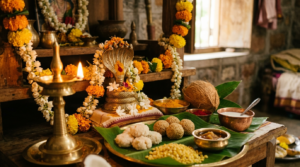
- Present the naivedyam. Place chalimidi, chimmili, vada pappu, and panakam before the deity.
- Chant the Naga stotram. Recite the Nagula Chavithi slokas or a simple prayer to Subrahmanya Swamy.
- Complete pradakshina. Walk five rounds around the idol or putta, then conclude with aarti.
Many Telugu families add one more custom. After the puja, they apply a little soil from the snake pit to the ears, believing it guards against ear and eye trouble. This belief, while cherished, is a tradition rather than medical fact.
Nagula Chavithi Pooja Vidhi: Items to Keep Ready
Gather everything the night before, so the morning stays calm. The core items rarely change across households. You will mainly need worship materials, fresh offerings, and ingredients for the naivedyam.
| Category | Items to Keep Ready |
|---|---|
| Worship materials | Turmeric, kumkum, akshintalu (rice grains), oil lamp, incense, camphor |
| Offerings | Cow milk, fresh coconut, bananas, jasmine and marigold flowers |
| Deity | Naga idol or printed image (an eight-hooded cobra is traditional) |
| Naivedyam base | Rice flour, jaggery, sesame seeds, yellow moong dal, black pepper, cardamom, ghee |
If you keep the worship at the snake pit, also carry rice rava to sprinkle over the mound. A small thread (thoranam) for decoration is optional but common.
Nagula Chavithi Pooja Vidhi: Naivedyam Recipes
The naivedyam is the heart of the day, and four dishes appear in almost every Telugu home. None of them needs heavy cooking, so even first-timers manage well. Below are the simple, time-tested recipes you can prepare in under an hour.
| Prasadam | Main Ingredients |
|---|---|
| Pachi Chalimidi | Rice flour, jaggery, grated coconut, cardamom |
| Chimmili (Nuvvula Undalu) | Sesame seeds, jaggery |
| Vada Pappu | Soaked yellow moong dal |
| Panakam | Jaggery, water, black pepper, cardamom |
Pachi Chalimidi
This raw rice-flour sweet is the signature Nagula Chavithi prasadam. Take one cup of fine rice flour, then add three tablespoons of grated coconut. Mix in one cup of finely crushed jaggery and half a teaspoon of cardamom powder. Add a little melted ghee and knead gently, since the moisture binds it into a soft ball. Shape it into rounds and offer.
Chimmili (Sesame Laddu)
Chimmili is quick, healthy, and rich in iron. Dry-roast one cup of sesame seeds until fragrant, then cool them. Grind them with an equal measure of jaggery until the mix turns slightly oily. Press the mixture into small laddus while it is still warm. These store well for two or three days.
Vada Pappu and Panakam
Vada Pappu needs no cooking at all. Soak half a cup of yellow moong dal for about an hour, then drain it at puja time. For Panakam, dissolve about 40 grams of jaggery in one cup of water. Add a pinch of crushed black pepper and one cardamom. Stir well, and your cooling jaggery drink is ready to offer.
Nagula Chavithi Pooja Vidhi at the Putta or at Home
The Nagula Chavithi Pooja Vidhi works both at a snake pit (putta) and at home, so choose what suits you. The rituals stay almost identical, while the setting changes. Your decision usually depends on safety, distance, and family custom.
Going to the putta carries deep tradition, especially in villages. Families decorate the mound, sprinkle rice rava, and pour milk over it. That said, snake pits can sit in fields with real snake activity, so caution matters. For elderly devotees, small children, or city dwellers, the home puja is safer and just as valid. Many priests confirm that worship offered to a Naga idol at home reaches the serpent gods all the same.
Why You Should Never Feed Milk to Live Snakes
Here is the part most festival blogs leave out. Snakes cannot digest milk, so feeding it to a live cobra harms the animal rather than blessing it. According to Wildlife SOS, snakes are reptiles with no biological link to milk, and a dehydrated snake only drinks it out of desperation.
The cruelty runs deeper than most devotees realise. Snake charmers often trap cobras weeks before the festival, then remove their fangs and venom glands. Starved and dehydrated, these snakes gulp whatever liquid appears, which later causes infection and a slow death. The Indian cobra is protected under the Wildlife Protection Act, 1972, so such snake shows are illegal. You honour the Naga Devata best by pouring milk over an idol or putta, never down a captive snake’s throat. Read more on this at Wildlife SOS.
Nagula Chavithi or Nag Panchami — Don’t Confuse Them
Search results often blur these two festivals, yet they are not the same. Nagula Chavithi is a Telugu and Kannada festival in Karthika Masam, just after Diwali. Nag Panchami, by contrast, is the pan-Indian serpent festival in the month of Shravan, around July or August.
The names add to the muddle. “Chavithi” means the fourth day, while “Panchami” means the fifth. So during the Karthika cycle, Naga Panchami actually arrives the day after Nagula Chavithi. If you observe the Karthika festival, your main day is the Chaturthi, not the Shravan Panchami. Keeping this clear helps you fix the right date and the right naivedyam each year.
What Most Guides Get Wrong About Nagula Chavithi Pooja Vidhi
After years of watching families observe this vrat, a few practical lessons stand out. The Nagula Chavithi Pooja Vidhi rewards preparation more than expensive items, so plan ahead instead of rushing. These small tips save real stress on the morning itself.
- Grate jaggery a night early. Crushed jaggery binds chalimidi far better than chunks, so this single step decides your prasadam’s texture.
- Use fresh homemade rice flour where you can. Store-bought flour turns dry, while damp fresh flour gives that soft, traditional bite.
- Keep the fast gentle. Many women observe a partial fast on water and fruit, since a full nirjala fast is not mandatory.
- Avoid snake charmers entirely. Giving them money funds animal cruelty, so worship at home or at a temple Naga idol instead.
- Note the muhurat shifts yearly. Because the tithi moves, never reuse last year’s timing without checking the panchang.
Nagula Chavithi Pooja Vidhi: Before You Begin
Nagula Chavithi is a warm, family-centred festival, and the rituals stay refreshingly simple. Mark 13 November 2026 in your calendar, prepare your naivedyam the evening before, and keep the puja either at home or at a safe putta. Above all, offer your milk and devotion to an idol, never to a captive snake. Done this way, the vrat stays both meaningful and kind. For a related Telugu women’s vrat, see how families observe the Atla Taddi pooja vidhanam.
Frequently Asked Questions
What is the date of Nagula Chavithi in 2026?
Nagula Chavithi 2026 falls on Friday, 13 November, in Karthika Masam. It is observed on Chaturthi, the fourth day of Shukla Paksha, five days after Diwali. The commonly listed puja muhurat is 11:15 AM to 1:30 PM, though it varies slightly by location.
Who should perform the Nagula Chavithi vrat?
Married women mainly observe the Nagula Chavithi vrat, fasting for the protection and wellbeing of their children. Unmarried women also keep the fast, often praying for a suitable match. Men participate in the puja, while the fasting tradition stays centred on the women of the home.
What prasadam is offered on Nagula Chavithi?
Four naivedyam dishes are traditional: pachi chalimidi (rice flour and jaggery), chimmili (sesame laddu), vada pappu (soaked moong dal), and panakam (jaggery drink). Families also offer milk, fresh coconut, and bananas. After the puja, everyone shares these items as prasadam.
Can I do the Nagula Chavithi Pooja Vidhi at home?
Yes, you can perform the full Nagula Chavithi Pooja Vidhi at home. Place a Naga idol or draw a snake motif with turmeric and kumkum, then follow the same rituals used at a putta. Priests confirm that home worship reaches the serpent gods equally, and it is far safer for children and elders.
Is it correct to feed milk to snakes on Nagula Chavithi?
No, feeding milk to live snakes is harmful and should be avoided. Snakes cannot digest milk and only drink it when severely dehydrated, which often leads to their death. Offer milk over an idol or snake pit instead, and never support snake charmers, since their shows are illegal under the Wildlife Protection Act, 1972.
What is the difference between Nagula Chavithi and Nag Panchami?
Nagula Chavithi is a Telugu festival in Karthika Masam, just after Diwali, on the Chaturthi tithi. Nag Panchami is the wider Indian serpent festival in Shravan month, around July or August, on the Panchami tithi. They honour the same serpent gods but fall on different days and months.
Why is the snake pit soil applied to the ears?
Many Telugu families apply a little putta soil to the ears after the puja, believing it protects against ear and eye ailments. This is a long-held devotional tradition tied to Subrahmanya Swamy worship. It reflects faith and custom rather than any medical claim.
What is the dress code in the Nagula Chavithi Pooja Vidhi?
The Nagula Chavithi Pooja Vidhi has no strict dress code, but devotees traditionally wear clean clothes in white or yellow. These colours are linked with purity and auspiciousness. A fresh head bath before the puja is considered essential, so comfortable traditional wear works best.