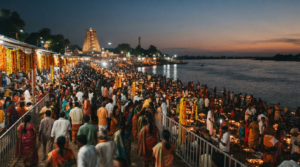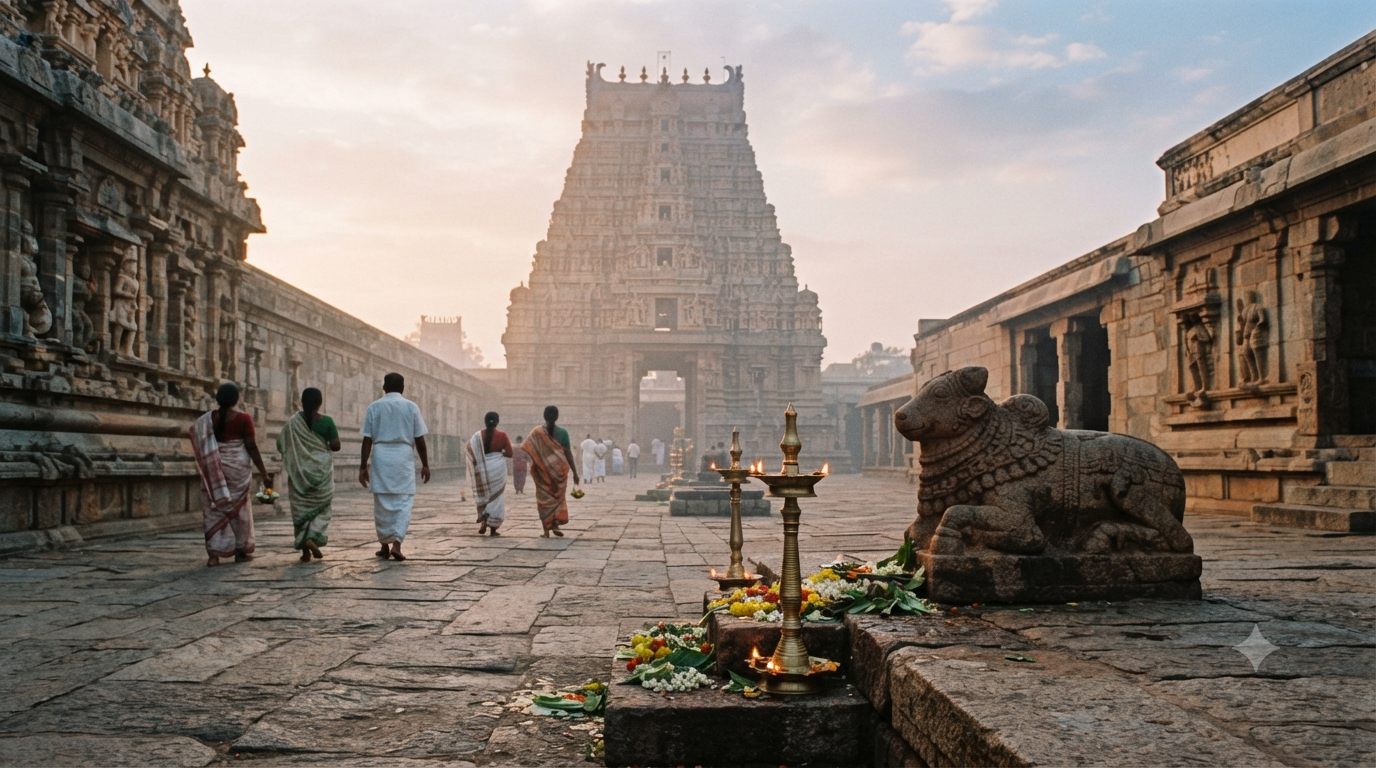
Shiva temples in Tamil Nadu range from elemental Pancha Bhoota shrines to a Jyotirlinga and three UNESCO-listed Chola masterpieces. The best choice depends on your goal. You might want Girivalam, a Jyotirlinga visit, Chola heritage, or a compact regional circuit.
Sri Vyasa Pooja is an independent temple guide, so it is not affiliated with the Tamil Nadu Hindu Religious and Charitable Endowments Department. We are also independent of temple administrations and priestly bodies.
We do not accept bookings, donations, or payments. Therefore, use the official temple or government portal for current darshan rules and paid services.
Shiva Temples in Tamil Nadu at a Glance
Tamil Nadu does not have one single “top” Shiva circuit because several traditions overlap here. They include the Pancha Bhoota Sthalams, Great Living Chola Temples, Jyotirlinga tradition, Paadal Petra Sthalams, and major city temples.
- Best elemental circuit: Kanchipuram, Tiruvannamalai, Chidambaram, and Thiruvanaikaval.
- Best Chola heritage circuit: Thanjavur, Gangaikondacholapuram, and Darasuram.
- Best Jyotirlinga pilgrimage: Ramanathaswamy Temple at Rameswaram.
- Best city temple: Kapaleeswarar Temple in Mylapore, Chennai.
- Best Pallava architecture stop: Kailasanatha Temple at Kanchipuram.
| Temple | Location | Main reason to visit |
|---|---|---|
| Arunachaleswarar | Tiruvannamalai | Agni Pancha Bhoota Sthalam and Girivalam. |
| Thillai Nataraja | Chidambaram | Akasha Pancha Bhoota Sthalam and Nataraja worship. |
| Jambukeswarar | Thiruvanaikaval | Water Pancha Bhoota Sthalam. |
| Ekambareswarar | Kanchipuram | Earth Pancha Bhoota Sthalam. |
| Ramanathaswamy | Rameswaram | Jyotirlinga and sacred theertham tradition. |
| Brihadisvara | Thanjavur | UNESCO Chola architecture. |
| Brihadisvara | Gangaikondacholapuram | UNESCO Chola temple of Rajendra I. |
| Airavatesvara | Darasuram | UNESCO late-Chola sculpture. |
| Kapaleeswarar | Chennai | Major living Shaiva temple in Mylapore. |
| Kailasanatha | Kanchipuram | Early Pallava stone architecture. |
| Nellaiappar-Kanthimathi | Tirunelveli | Historic southern Tamil Shaiva centre. |
| Meenakshi-Sundareswarar | Madurai | Major temple where Shiva is worshipped as Sundareswarar. |
Why Shiva Temples in Tamil Nadu Matter
The strongest way to understand Shiva temples in Tamil Nadu is by tradition rather than by popularity alone. Four of the five Pancha Bhoota Sthalams are in Tamil Nadu, so the state holds most of the elemental circuit. They represent earth at Kanchipuram, water at Thiruvanaikaval, fire at Tiruvannamalai, and space at Chidambaram.
The fifth elemental shrine is Sri Kalahasteeswara Temple at Srikalahasti in Andhra Pradesh, which represents air. This matters because many lists wrongly imply that all five are inside Tamil Nadu. If you want the complete five-element circuit, add Srikalahasti as a separate Andhra Pradesh leg and check our Srikalahasti darshan guide before travelling.
A second major grouping is the Great Living Chola Temples. UNESCO lists Brihadisvara at Thanjavur, Brihadisvara at Gangaikondacholapuram, and Airavatesvara at Darasuram as one World Heritage property. Together they show how Chola architecture, sculpture, painting, and bronze traditions developed over time. See the UNESCO Great Living Chola Temples listing for the official heritage record.
12 Famous Shiva Temples in Tamil Nadu to Visit
1. Arunachaleswarar Temple, Tiruvannamalai
Among Shiva temples in Tamil Nadu, Arunachaleswarar Temple is inseparable from its sacred hill. It stands at the foot of Arunachala Hill and represents fire, or Agni, among the Pancha Bhoota Sthalams. For many devotees, temple darshan and Girivalam form one connected pilgrimage because the sacred hill is central to both experiences.
The official Tamil Nadu HR&CE listing currently identifies the shrine as Arulmigu Arunachaleswarar Temple, Tiruvannamalai. Since festival and full-moon crowds can change access patterns, check the official Arunachaleswarar HR&CE page before a long journey.
2. Thillai Nataraja Temple, Chidambaram
Chidambaram is the Akasha, or space, shrine in the Pancha Bhoota tradition. Shiva appears here prominently as Nataraja, the cosmic dancer. Therefore, Chidambaram also holds a special place in Tamil Shaiva worship and dance history.
One planning detail deserves special care because Chidambaram is not administered in the same way as most HR&CE temples. The Podhu Dikshitars have a legally recognised role in the temple’s administration following Supreme Court litigation that ended in 2014. Our Chidambaram Nataraja Temple guide explains the practical darshan differences.
3. Jambukeswarar Temple, Thiruvanaikaval
Jambukeswarar Temple near Tiruchirappalli represents water, or Appu. It is paired with the shrine of Goddess Akilandeswari. It also fits naturally into a day that combines Trichy, Srirangam, and Thiruvanaikaval.
The Tamil Nadu HR&CE portal currently lists the temple under Arulmigu Jambukeswarar Akilandeswari Temple. It also publishes opening windows and temple services, so use the official Jambukeswarar HR&CE portal for current operating details.
4. Ekambareswarar Temple, Kanchipuram
For pilgrims comparing Shiva temples in Tamil Nadu, Kanchipuram offers both living worship and major architectural history. Ekambareswarar Temple is associated with earth, or Prithvi, in the Pancha Bhoota circuit. Therefore, Kanchipuram works especially well as the northern starting point for a Shiva pilgrimage through Tiruvannamalai, Chidambaram, and Thiruvanaikaval.
Do not confuse this temple with smaller shrines carrying the same deity name in Chennai or other districts. When checking online information, confirm that the page specifically refers to the Kanchipuram Ekambaranathar or Ekambareswarar temple.
5. Ramanathaswamy Temple, Rameswaram
Ramanathaswamy Temple is one of the twelve Jyotirlinga shrines. Therefore, Rameswaram holds a major place on India’s Shiva pilgrimage map. The visit is also closely associated with the sacred theerthams inside the temple complex.
The official HR&CE page currently publishes morning and evening access windows, Spatika Lingam worship information, and theertham bathing hours. Since those details can change on special days, use the official Ramanathaswamy HR&CE page as the final source before travel.
6. Brihadisvara Temple, Thanjavur
Brihadisvara Temple, often called the Big Temple, is the landmark Chola monument in Thanjavur. Rajaraja I built the great Shiva temple in the early eleventh century, and UNESCO calls it the first great example in the Great Living Chola Temples group.
This is an ideal choice for travellers who want worship and architectural history in the same visit. It remains a living temple rather than a museum-only monument. Meanwhile, the Archaeological Survey of India and Tamil Nadu authorities hold different management responsibilities.
7. Brihadisvara Temple, Gangaikondacholapuram
Gangaikondacholapuram was the imperial capital associated with Rajendra I. Its Brihadisvara Temple belongs to the same UNESCO World Heritage group as Thanjavur, yet its tower has a more curved profile and a different sculptural style.
UNESCO records that the temple was completed in 1035. It works best as part of a Chola circuit because Darasuram and Thanjavur let you compare three stages of imperial temple design.
8. Airavatesvara Temple, Darasuram
Airavatesvara Temple at Darasuram is smaller than the two Brihadisvara temples, but its detail is the reason to stop. UNESCO links the temple to Rajaraja II and highlights its rich sculpture and chariot-like mandapa.
Darasuram also sits close to Kumbakonam, so it is easy to combine with other Kaveri-delta temples. For a first-time heritage route, make this the third stop after Thanjavur and Gangaikondacholapuram instead of squeezing it into a rushed single-temple visit.
9. Kapaleeswarar Temple, Mylapore
Kapaleeswarar Temple is one of Chennai’s most prominent living Shiva temples. Its Mylapore location makes it a practical first or final stop for travellers using Chennai as the gateway to Kanchipuram and Tiruvannamalai.
The official HR&CE portal identifies the presiding deities as Kapaleeswarar and Karpagambal. It also publishes current opening hours, so check the official Kapaleeswarar HR&CE page if you are planning around a flight or train.
10. Kailasanatha Temple, Kanchipuram
Kailasanatha Temple offers a different Kanchipuram Shiva experience. The Pallava-era monument is valued for early Dravidian stone architecture, carved panels, and its role in the growth of South Indian temple design.
India’s Ministry of Tourism describes the temple as a work of Narasimhavarman II, also called Rajasimha, with later additions by Mahendravarman III. Therefore, the Incredible India Kailasanatha page is a useful official visitor reference.
11. Nellaiappar-Kanthimathi Temple, Tirunelveli
Nellaiappar-Kanthimathi Temple anchors a southern Tamil Nadu Shiva route in Tirunelveli. It is especially useful for pilgrims who want to extend a Madurai or Rameswaram itinerary without returning north toward the Kaveri delta.
The Tamil Nadu HR&CE system lists Arulmigu Nellaivappar Arultharum Kanthimathiamman Temple in Tirunelveli. Since similarly named Nellaiappar shrines exist elsewhere, verify the Tirunelveli Town temple when checking directions or official information.
12. Meenakshi-Sundareswarar Temple, Madurai
Although Madurai’s famous temple is usually introduced through Goddess Meenakshi, Shiva is worshipped there as Sundareswarar. Therefore, the complex remains important to a broad Tamil Shaiva itinerary even though it is not normally described as a Shiva-only temple.
India’s Ministry of Tourism identifies Meenakshi and Sundareswarar as the presiding deities. Madurai is also a strong base for continuing south to Rameswaram or Tirunelveli, so the temple fits naturally into a longer pilgrimage plan.
Best Routes for Shiva Temples in Tamil Nadu
When planning Shiva temples in Tamil Nadu, geography matters almost as much as religious significance. A route works better when you group temples by region and tradition. Trying to cover every famous shrine in one continuous trip creates long road days and rushed darshan, so choose one cluster first.
| Route | Best base | Core temples |
|---|---|---|
| Northern elemental route | Chennai | Kapaleeswarar, Kanchipuram, Tiruvannamalai, Chidambaram. |
| Kaveri-Chola route | Thanjavur or Kumbakonam | Thanjavur, Gangaikondacholapuram, Darasuram, Thiruvanaikaval. |
| Southern pilgrimage route | Madurai | Meenakshi-Sundareswarar, Rameswaram, Tirunelveli. |
The northern route suits first-time visitors flying into Chennai. Meanwhile, the Kaveri route gives the strongest mix of history and living worship. The southern route is best if Ramanathaswamy is your main goal, while Madurai also gives you easier onward connections than the northern temple belt.
What Guides Get Wrong About Shiva Temples in Tamil Nadu
When comparing Shiva temples in Tamil Nadu, verify the tradition before copying a popular list. The biggest error is calling all five Pancha Bhoota shrines Tamil Nadu temples. Only four are in Tamil Nadu, while the Vayu shrine is at Srikalahasti in Andhra Pradesh. That correction changes how you plan transport, especially if you want the full five-element pilgrimage.
A second mistake is treating every famous temple as if the same government portal handles its sevas. Chidambaram is the important exception because the Podhu Dikshitars retain a recognised administrative role. Never assume that a private booking page is official simply because it uses a temple name.
A third error is copying old timings across roundup articles. Temple opening hours, special queues, festival access, and phone rules can change, so use the Tamil Nadu HR&CE portal or the temple’s own official page before travel. Treat third-party schedules as planning clues rather than final authority.
How to Choose Shiva Temples in Tamil Nadu for Your Trip
If devotion is the main goal, start with the tradition you already follow. Choose Rameswaram for the Jyotirlinga connection, Tiruvannamalai for Arunachala and Girivalam, or the four Tamil Nadu Pancha Bhoota shrines for an elemental circuit.
If architecture is the priority, the three UNESCO Chola temples are the strongest single route. You can also add Kailasanatha at Kanchipuram if you want to compare Pallava and Chola approaches to Dravidian temple design.
If time is short, avoid a statewide checklist because two or three well-grouped temples usually create a better pilgrimage than six distant stops in two days. Early starts also help, since many temples have midday closures or restricted ritual windows.
Shiva Temples in Tamil Nadu Visit Checklist
- Check the exact temple name and district before using a map link.
- Confirm current opening hours on an official source before departure.
- Dress modestly and follow the rules posted at each temple entrance.
- Carry only what you need, since phone and bag rules vary by temple.
- Do not pay private agents for “guaranteed” darshan or unofficial queue access.
- Keep extra time on full-moon days, Maha Shivaratri, Karthigai Deepam, and major local festivals.
- For elderly pilgrims or anyone with mobility concerns, check walking distance and queue conditions before committing to a long circuit.
Temple visits can involve heat, long standing periods, barefoot walking, and heavy crowds. Therefore, carry water where permitted and take prescribed medicines. Choose a shorter plan if the physical demand is not suitable for you.
Before Visiting Shiva Temples in Tamil Nadu
The most rewarding Shiva temples in Tamil Nadu trip is not the one with the highest temple count. Instead, choose the route that matches your tradition, travel base, and available time. Start with one circuit and verify live access on official sources, then leave enough space for worship instead of turning the journey into a road race.
For most first-time visitors, the best introduction is either the four Tamil Nadu Pancha Bhoota shrines or the three Great Living Chola Temples. Rameswaram deserves its own southern leg if the Jyotirlinga pilgrimage is central to your trip.
FAQs About Shiva Temples in Tamil Nadu
Which are the most famous Shiva temples in Tamil Nadu?
Arunachaleswarar, Chidambaram Nataraja, Jambukeswarar, Ekambareswarar, Ramanathaswamy, Brihadisvara at Thanjavur, Kapaleeswarar, and the other Great Living Chola Temples are among the best-known choices. However, the right list changes depending on whether you prioritise pilgrimage, architecture, or a specific Shaiva tradition.
Which Shiva temples in Tamil Nadu are Pancha Bhoota Sthalams?
Four Pancha Bhoota Sthalams are in Tamil Nadu: Ekambareswarar at Kanchipuram for earth, Jambukeswarar at Thiruvanaikaval for water, Arunachaleswarar at Tiruvannamalai for fire, and Chidambaram Nataraja for space. The fifth, Srikalahasti for air, is in Andhra Pradesh.
Which Shiva temple in Tamil Nadu is a Jyotirlinga?
Ramanathaswamy Temple at Rameswaram is one of the twelve Jyotirlinga shrines. It is also a major pilgrimage destination in its own right, so many devotees plan Rameswaram as a separate southern trip rather than adding it to a rushed statewide circuit.
What are the three Great Living Chola Temples?
The UNESCO group includes Brihadisvara Temple at Thanjavur, Brihadisvara Temple at Gangaikondacholapuram, and Airavatesvara Temple at Darasuram. UNESCO treats them as one World Heritage property because together they show the development of Chola architecture and art.
Can I visit all the Pancha Bhoota temples only within Tamil Nadu?
No. You can visit four of the five within Tamil Nadu, but the Vayu or air shrine is Sri Kalahasteeswara Temple at Srikalahasti in Andhra Pradesh. Therefore, a complete five-element circuit crosses a state border.
What is the best base for Shiva temples in Tamil Nadu?
Chennai works best for Kanchipuram and Tiruvannamalai, while Thanjavur or Kumbakonam suits the Chola and Kaveri-delta temples. Madurai is the stronger base for Rameswaram and Tirunelveli, so one statewide base is usually less efficient.
Are temple timings the same every day?
No. Regular hours may stay stable for long periods, but festival days, ritual schedules, crowd controls, and special arrangements can change access. Therefore, always check the official HR&CE or temple source close to your travel date.
Can I book darshan for Shiva temples in Tamil Nadu online?
No. Online booking is not universal, and some temples handle services differently. Therefore, never assume that a private website selling a ticket is authorised. Use the official temple administration or government portal, and avoid anyone promising guaranteed queue-free access.