The significance of Hanuman Jayanthi is not a single story, and that is exactly why devotees keep getting confused about it. Hanuman’s birth is marked on four different days in four parts of India, so any answer built on one date is incomplete. This guide explains what the festival actually commemorates, why the panchangams disagree, and how to observe the day wherever you live. It also corrects a birthplace claim that gets copied from site to site every year.
Sri Vyasa Pooja is an independent devotional information guide. We are not affiliated with, endorsed by, or the official website of any temple, mutt, or trust. We do not accept bookings, donations, or payments for any seva mentioned on this page. Use the official temple portals linked below for sevas, timings, and confirmed festival dates.
Hanuman Jayanthi at a glance
- What it marks: the birth of Hanuman, the vanara devotee of Sri Rama.
- How many dates: four main regional observances, plus Odisha’s Pana Sankranti.
- North and Maharashtra: Chaitra Purnima, which fell on 2 April 2026.
- Telugu states: Vaishakha Krishna Dashami, the 41st day of deeksha, on 12 May 2026.
- Karnataka, Tamil Nadu and Kerala: December or January, by their own tithis.
- Why it matters: the significance of Hanuman Jayanthi rests on devotion joined to strength, not on one date.
- Core practices: Hanuman Chalisa, Sundara Kanda parayana, sindoor, vada mala, upavasam.
What the significance of Hanuman Jayanthi really means
The significance of Hanuman Jayanthi lies in what Hanuman represents rather than in the calendar date itself. Tradition honours him as the perfect servant of Rama, uniting immense strength with total humility. Devotees therefore treat the day as a renewal of discipline, courage, and selfless service.
That framing matters because the festival is often reduced to a wish-list. Many pages promise wealth or instant relief from planetary trouble. Classical practice is quieter, since the emphasis falls on chanting, service, and steadiness of mind.
Tradition also counts Hanuman among the chiranjivis, the immortals who remain present in the world. Wherever the Ramayana is recited, tradition holds that he is listening. So most South Indian homes keep the day with parayana rather than spectacle.
Why the significance of Hanuman Jayanthi survives four different dates
Different regions follow different scriptural accounts of Hanuman’s birth, so each community fixed its own tithi. None of them is a mistake. Because the accounts differ, the observance travels across the year, while the significance of Hanuman Jayanthi stays identical in every region. Our older note on when Hanuman Jayanti is celebrated covers the same ground in brief.
| Region | Tithi followed | When it falls |
|---|---|---|
| North India, Maharashtra | Chaitra Purnima | March or April |
| Andhra Pradesh, Telangana | Vaishakha Krishna Dashami, day 41 of deeksha | May |
| Karnataka (Hanuman Vratam) | Margashirsha Shukla Trayodashi | December or January |
| Tamil Nadu, Kerala (Hanumath Jayanthi) | Margazhi Amavasya with Moolam nakshatra | December or January |
| Odisha (Pana Sankranti) | First day of Vaishakha | Mid-April |
In plain terms: Chaitra Purnima fell on 2 April 2026, while the Telugu observance closed the deeksha on 12 May 2026. The Karnataka, Tamil, and Kerala dates land in December or January and shift every year. Confirm those on Drik Panchang closer to the day, because the tithi start and end times decide them.
Why the “2026 dates” you see online are often last year’s dates
Aggregator pages copy a date table forward and change only the year. Lunar dates do not work that way, since each tithi shifts by roughly eleven days against the English calendar. In a leap-month year the shift is far larger.
You can see the damage easily. Several widely-shared pages listed 1 April 2026 for Hanuman Jayanthi, yet national coverage recorded temples celebrating on 2 April 2026. A one-day error moves your entire fast and puja to the wrong tithi.
Our rule here is simple. We publish a date only when two independent panchangams agree, and we say “confirm locally” when they do not. That is also why we list the December observances by tithi instead of by a hard number. Getting the tithi right is the first step in honouring the significance of Hanuman Jayanthi properly.
The 41-day Hanuman Deeksha of the Telugu states
Andhra Pradesh and Telangana stretch the significance of Hanuman Jayanthi across six full weeks. Devotees begin deeksha on Chaitra Purnima and conclude it 41 days later, on Vaishakha Krishna Dashami. The concluding day is the Telugu Hanuman Jayanthi.
During deeksha, participants wear a mala, keep a strict vegetarian diet, and recite the Hanuman Chalisa daily. Many also read the Sundara Kanda in full. Because the vow runs six weeks, it demands planning rather than enthusiasm alone.
Devotees usually break the vow at an Anjaneya temple with a vada mala offering. If you cannot reach a temple, tradition permits completing it at your home altar. Sincerity outranks scale in every account of Hanuman’s own service.
The significance of Hanuman Jayanthi in Madhva tradition
Most popular articles repeat one line: Hanuman is the eleventh Rudra, an incarnation of Shiva. That is the Shaiva reading, and it is genuinely held. Yet it is not the only one, and Madhva households follow a different account.
In the Dvaita tradition established by Sri Madhvacharya, Hanuman is the first avatara of Mukhya Prana, the chief of the gods, also known as Vayu. The same tradition counts Bhima as the second and Madhvacharya himself as the third. This is why Hanuman occupies such a central place in the mutts of Tirumala and Udupi.
The practical difference shows up in worship. Where the Shaiva reading emphasises Rudra’s power, the Madhva reading emphasises Hanuman as the ideal jiva, whose devotion to Rama is the model for every soul. Both are matters of tradition and faith, not competing facts to be settled.
Where was Hanuman born? The Anjanadri question
Older articles on this topic, including an earlier version of this page, stated flatly that Hanuman was born at Tirumala. The honest position is more careful, because the claim is contested between institutions.
In April 2021, Tirumala Tirupati Devasthanams (TTD) announced the findings of an expert committee identifying Anjanadri hill at Tirumala as the birthplace. The Hanumad Janmabhoomi Teertha Kshetra Trust at Kishkindha in Koppal district, Karnataka, rejected that conclusion and asserted its own Anjanadri. Karnataka ministers publicly backed the Koppal claim.
Anjaneri near Nashik in Maharashtra and a mutt in Shivamogga have also advanced claims. So the responsible summary is this: TTD has formally declared Anjanadri at Tirumala, while several traditions dispute it, and no neutral authority has settled the question. Treat any page that states one location as plain fact with caution.
How devotees observe the day at home
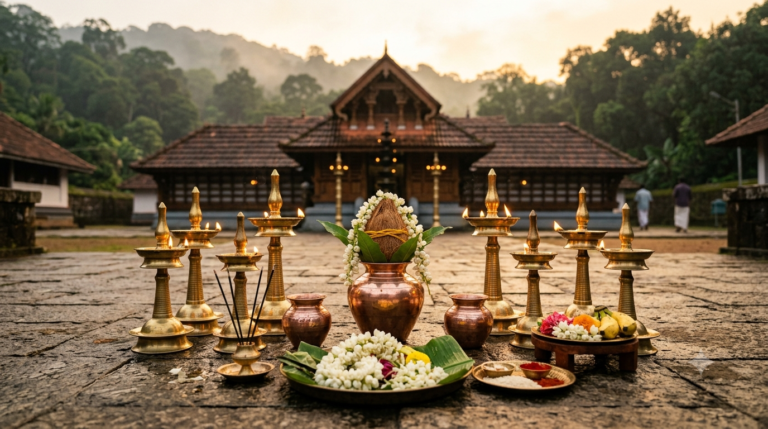
You do not need a large arrangement to honour the significance of Hanuman Jayanthi at home. The sequence below reflects what most South Indian families actually do, so it works in a small flat.
- Bathe before sunrise, because Hanuman is traditionally said to have been born at dawn.
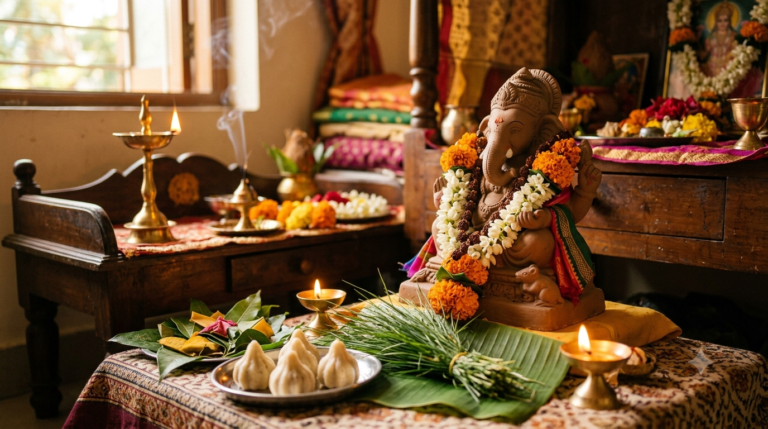
- Clean the altar, then place a picture or murti of Anjaneya on a red cloth.
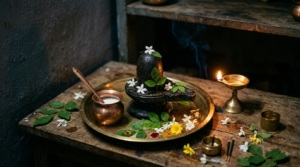
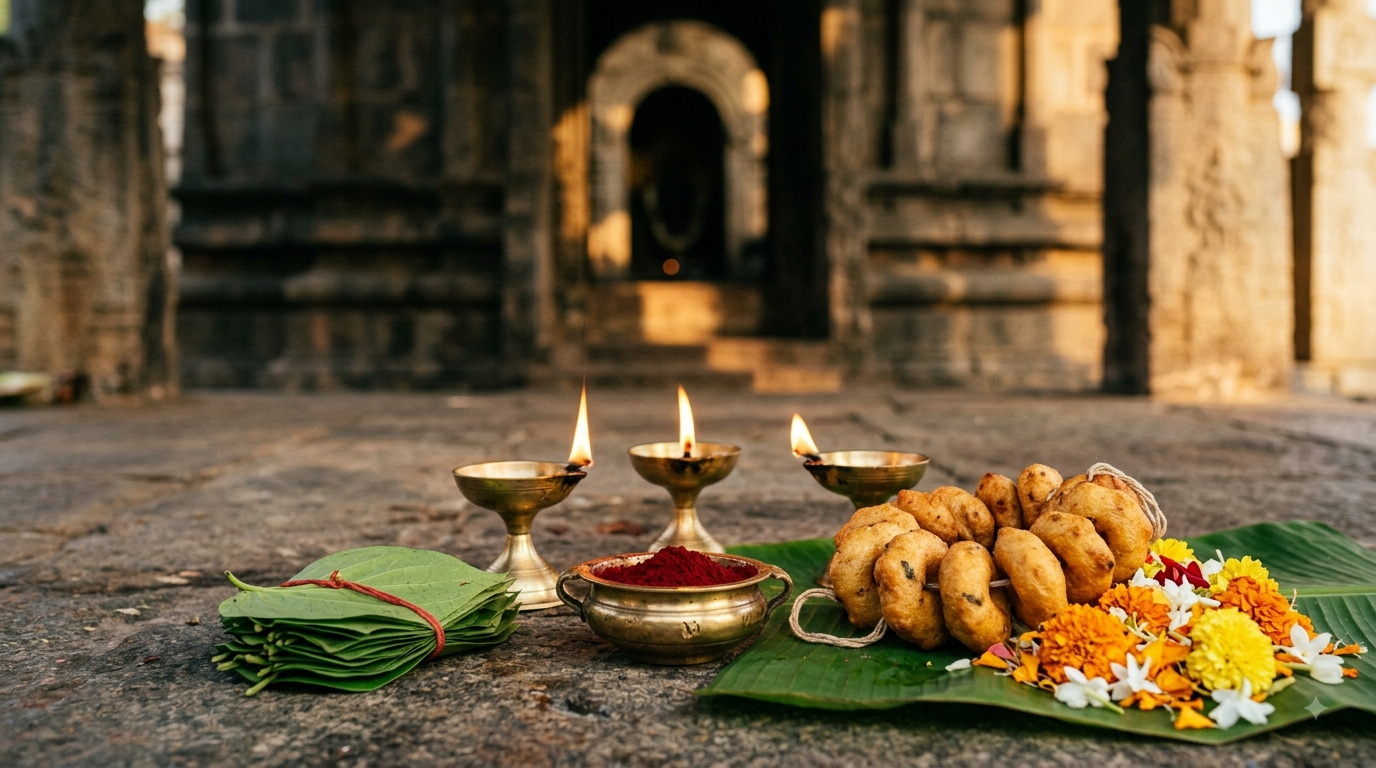
- Light a lamp with sesame oil and offer flowers, tulsi, and betel leaves.
- Apply sindoor to the murti, recalling the story of Sita’s sindoor and Rama’s long life.
- Recite the Hanuman Chalisa 11, 21, or 108 times, as your day allows.
- Read the Sundara Kanda, or at least one sarga, if time is short.
- Offer bhog such as vada, banana, jaggery, or panchamrutham, then share the prasadam.
Vada mala, a garland of medu vada, is the offering most associated with Anjaneya temples in the South. Many families prepare it at home. Where a temple accepts it, follow that temple’s own instructions on timing and quantity.
Fasting, deeksha, and a note on your health
Upavasam on Hanuman Jayanthi ranges from a light single meal to a full day without food. The 41-day deeksha adds sustained dietary restriction on top of daily recitation. Both are traditions of discipline, so they should be entered with judgement.
If you live with diabetes, low blood pressure, or a heart condition, please speak to your doctor before fasting. The same applies to pregnant women, elderly devotees, and anyone on regular medication. Tradition itself allows phala aharam or a milk-only vrata where a full fast is unsafe.
One more caution deserves stating plainly. Hanuman worship is not a substitute for medical treatment, and no ritual should replace prescribed care. Devotion and medical care sit together without conflict, and most acharyas say so openly.
What most Hanuman Jayanthi guides get wrong
A few points come up every year, yet almost no page addresses them directly.
- “Twice a year” is imprecise. The festival is observed on several regional dates, not on two universal ones. Our note on why Hanuman Jayanthi appears twice a year explains the older framing.
- Sindoor is symbolic, not transactional. Applying it recalls Sita’s prayer for Rama’s long life, so it works as remembrance.
- Tuesday and Saturday are weekly, not special to the Jayanthi. Devotees keep those days year-round for Anjaneya.
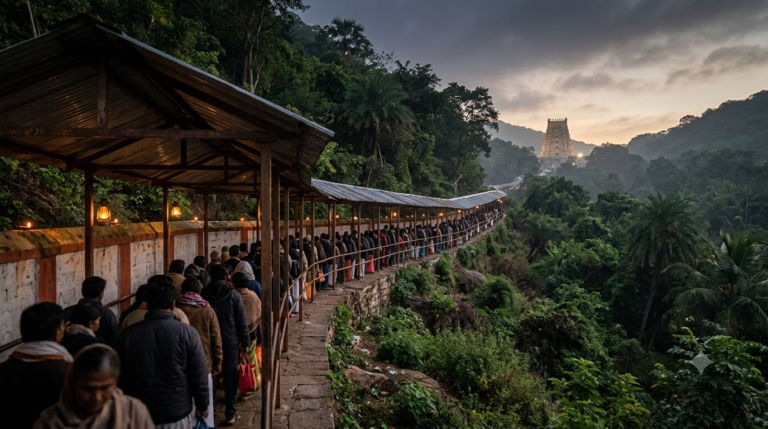
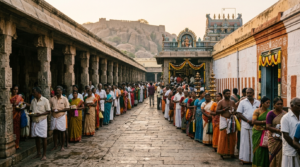
- Crowds peak early. Famous temples fill before sunrise, so plan a mid-morning visit if you are travelling with elders.
- Shani relief is a belief, not a guarantee. Frame it as tradition, because no ritual outcome can be promised.
If you are planning a temple visit around the date, our guide to famous Hanuman temples in South India lists the major kshetras by state.
Before you go
The significance of Hanuman Jayanthi rewards preparation far more than expense. Fix your date by your own regional panchangam first, then decide between a simple home puja and a temple visit. Keep the fast within what your health allows, and let the Chalisa or Sundara Kanda carry the day.
For confirmed seva timings and festival announcements, always check the official temple source, such as Tirumala Tirupati Devasthanams. If a website asks you to pay it directly for a temple seva, treat that as a warning sign and book only through official channels.
Frequently asked questions
What is the spiritual significance of Hanuman Jayanthi?
The spiritual significance of Hanuman Jayanthi is the celebration of devotion joined to strength. Devotees honour Hanuman as the ideal servant of Rama, so they keep the day for chanting, service, and self-discipline rather than display. Most families mark it with the Hanuman Chalisa and Sundara Kanda parayana.
Why is Hanuman Jayanthi celebrated on different dates?
Regions follow different scriptural accounts of Hanuman’s birth, so each fixed its own tithi. North India and Maharashtra keep Chaitra Purnima, the Telugu states keep Vaishakha Krishna Dashami, and Karnataka, Tamil Nadu, and Kerala keep tithis that fall in December or January. Each tradition treats its own tithi as valid, so the significance of Hanuman Jayanthi never depends on a single calendar.
When was Hanuman Jayanthi observed in 2026?
Chaitra Purnima fell on 2 April 2026, and temples across North India celebrated on that day. The Telugu observance concluded the 41-day deeksha on 12 May 2026. The Karnataka, Tamil, and Kerala observances fall in December, so confirm those dates on a regional panchangam.
Is Hanuman an incarnation of Shiva or of Vayu?
Both readings exist within Hindu tradition. Shaiva sources describe Hanuman as the eleventh Rudra, an incarnation of Shiva, while the Madhva or Dvaita tradition holds him to be the first avatara of Mukhya Prana, that is Vayu. Neither is a factual error, since each belongs to a distinct school.
Where was Lord Hanuman born?
There is no settled answer. TTD declared Anjanadri at Tirumala as the birthplace in April 2021 after an expert committee study, although the Kishkindha trust in Koppal, Karnataka disputes it and claims its own Anjanadri. Anjaneri near Nashik also holds a long-standing claim.
What should I offer to Hanuman on this day?
Sindoor, sesame oil, betel leaves, tulsi, and flowers make up the traditional offerings. For bhog, families prepare vada, banana, jaggery, or panchamrutham, and a vada mala where the temple accepts one. Simple offerings made with attention count more than elaborate ones.
Do I have to fast on Hanuman Jayanthi?
Fasting remains customary but never compulsory. Many devotees take a single meal or fruit and milk instead of a complete fast. If you have a medical condition, are pregnant, or take regular medication, consult your doctor and choose the lighter option.
How many times should the Hanuman Chalisa be recited?
Common practice runs to 11, 21, or 108 recitations on the Jayanthi, although any sincere number counts. Groups often organise an akhanda parayana at temples. Consistency through the year matters more than a single large count, according to most acharyas.
Can I observe the 41-day Hanuman Deeksha at home?
Yes, and many devotees do. The vow begins on Chaitra Purnima and ends on the Telugu Hanuman Jayanthi, with daily recitation and a strict vegetarian diet throughout. If you cannot reach an Anjaneya temple to conclude it, tradition accepts a final puja at your home altar.