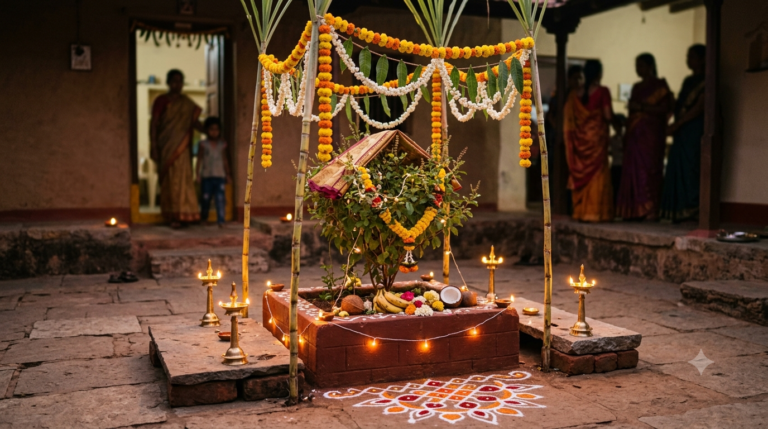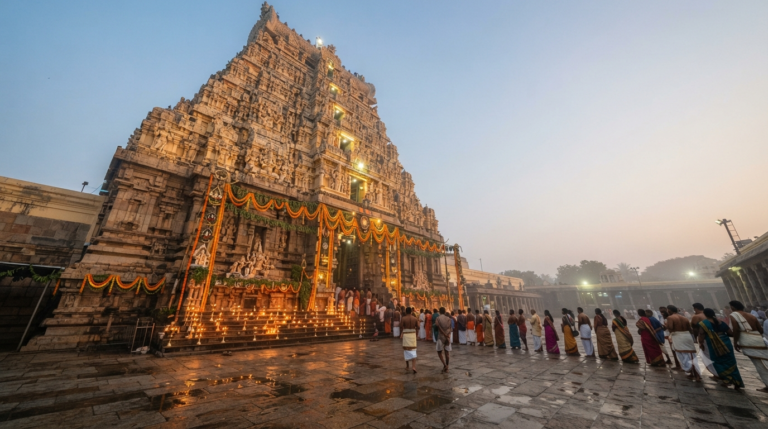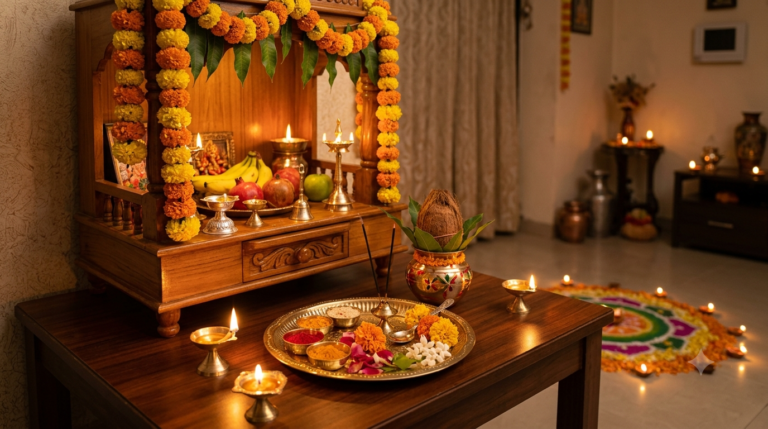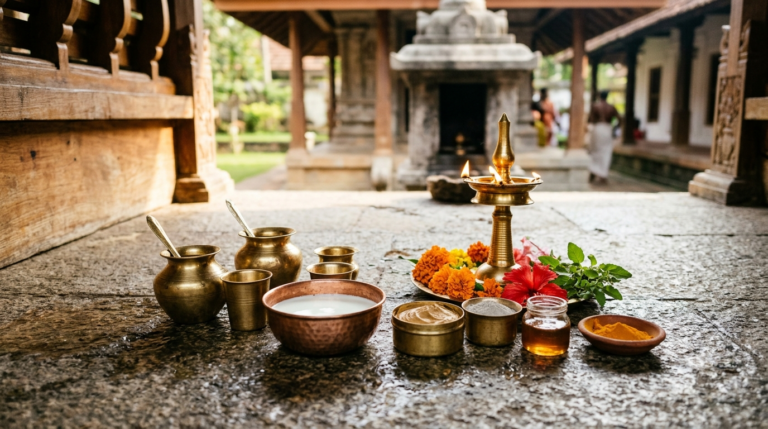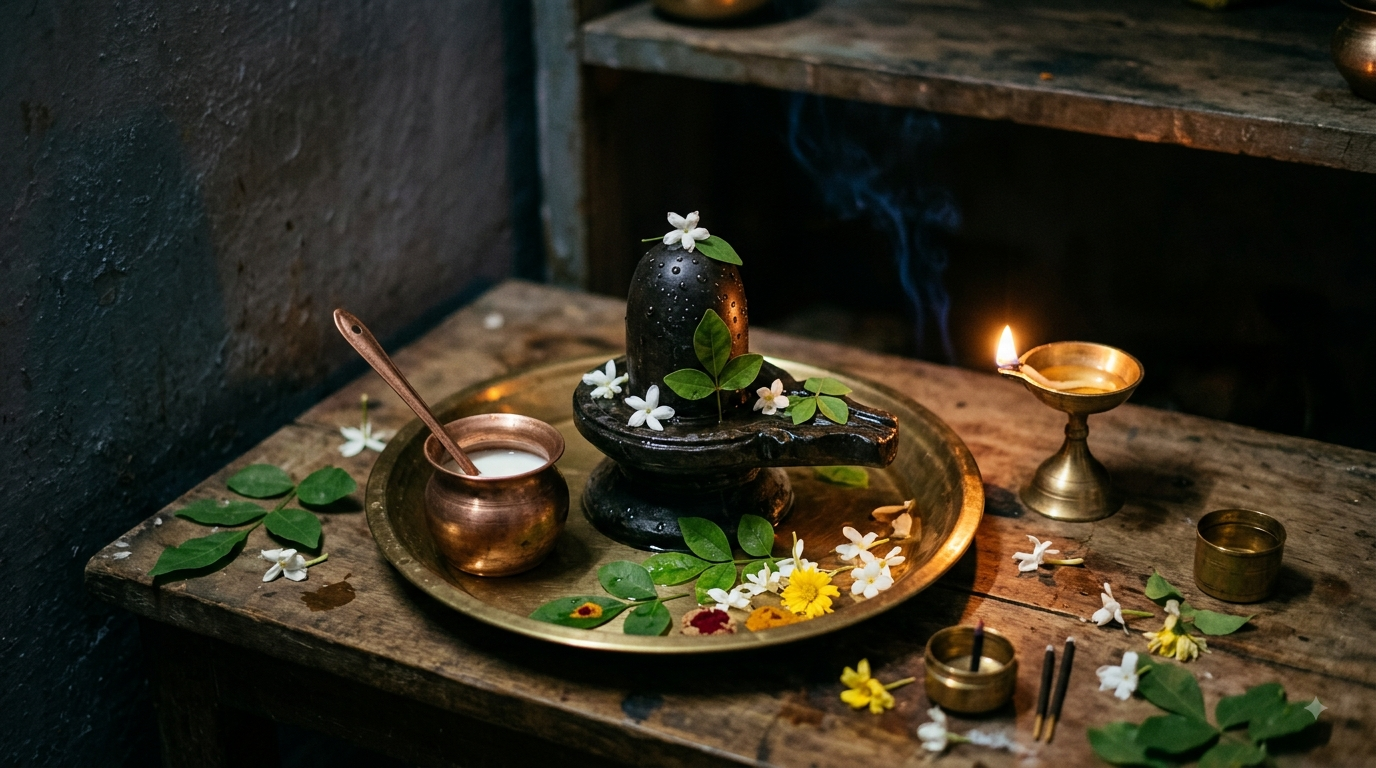
The Maha Sivaratri pooja vidhi is simpler than most guides make it sound, yet one detail decides everything: the hour. Shiva worship on this night belongs to the prahars after sunset, and not to a convenient morning slot. So a beautifully prepared puja done at 10 AM still misses the point of the vratam.
Maha Sivaratri 2027 falls on Saturday, 6 March. Below you will find the verified date, the Nishita Kaal and four-prahar windows, a full samagri list, and the complete Maha Sivaratri pooja vidhi you can follow at home. You will also see which offerings must never touch a Shiva Linga, because that is where home pujas go wrong most often.
Sri Vyasa Pooja is an independent devotional guide. We are not the official website of any temple, trust, or government body, and we take no bookings or donations. For sevas and offerings, please use only the official temple portal.
Maha Sivaratri Pooja Vidhi at a Glance
Use this Maha Sivaratri pooja vidhi quick reference before you read the detail below.
- Date in 2027: Saturday, 6 March, with the night worship running into 7 March.
- Tithi: Chaturdashi of Krishna Paksha, Magha in the South Indian calendar and Phalguna in the North.
- Deity: Lord Shiva, worshipped as the Linga, with Parvati honoured alongside.
- Best hour: Nishita Kaal, the midnight window, for anyone doing a single puja.
- Core rituals: abhishekam, bilva patra, a lamp kept burning, and the night vigil or jagaran.
- Fast breaks: during the parana window after sunrise on 7 March.
When Is Maha Sivaratri 2027 and Why the Date Jumps
Maha Sivaratri 2027 falls on Saturday, 6 March 2027, because Krishna Paksha Chaturdashi prevails through that night. In 2026 the festival landed on 15 February, so this year arrives roughly nineteen days later in the Gregorian calendar. That drift is normal for a lunar festival, yet it catches out a surprising number of readers.
This matters more than it sounds. Every year we see old blog posts and forwarded WhatsApp images still carrying the previous year’s date. Never carry a Sivaratri date forward from last year, since the tithi shifts and an intercalary month can push it further still.
Nishita Kaal and the Four Prahar Timings
The table gives the reference windows for New Delhi in Indian Standard Time. Because these windows follow local sunset and the exact end of the tithi, they move by several minutes across the country. So confirm your own city on a location-aware panchang before the night begins.
| Window | Time (New Delhi, IST) |
|---|---|
| Chaturdashi tithi begins | 12:03 PM, 6 March 2027 |
| First prahar puja | 06:24 PM to 09:28 PM, 6 March |
| Second prahar puja | 09:28 PM to 12:32 AM |
| Nishita Kaal puja | 12:07 AM to 12:57 AM, 7 March |
| Third prahar puja | 12:32 AM to 03:36 AM |
| Fourth prahar puja | 03:36 AM to 06:40 AM |
| Chaturdashi tithi ends | 01:46 PM, 7 March 2027 |
| Parana, breaking the fast | 06:40 AM to 01:46 PM, 7 March |
In plain terms, the Nishita Kaal window for 2027 runs from 12:07 AM to 12:57 AM on 7 March, giving you about forty-nine minutes. If you can manage only one puja, do it there. Devotees who keep the full vigil worship once in each of the four prahars instead.
Maha Sivaratri Pooja Vidhi Samagri List
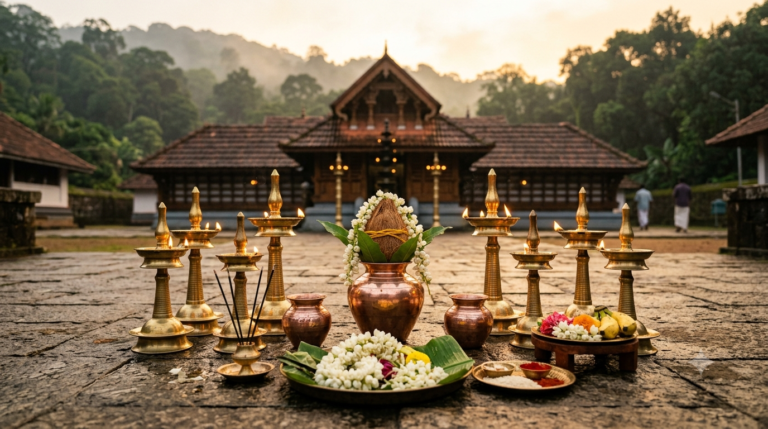
Gather the Maha Sivaratri pooja vidhi samagri a day ahead, because hunting for bilva leaves at 9 PM ruins the calm the night is meant to bring. Nothing here needs to be expensive.
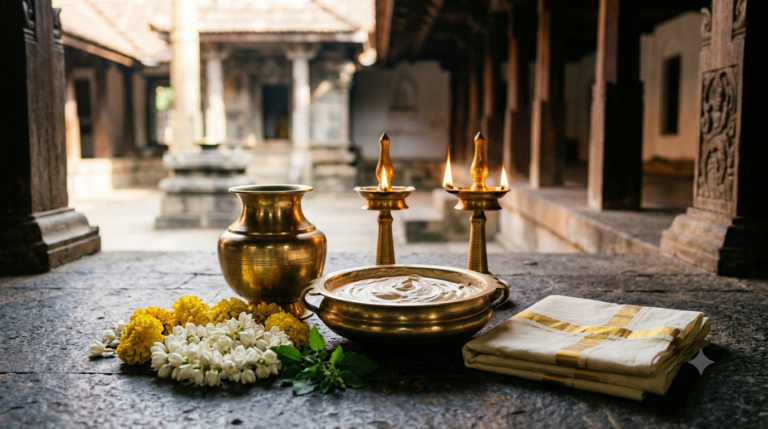
- A Shiva Linga, or a photo of Lord Shiva, set in a deep plate for abhishekam.
- Fresh bilva patra, ideally unbroken three-leaf sets, plus white flowers.
- Milk, curd, ghee, honey, sugar and clean water for the abhishekam.
- Sandalwood paste and vibhuti, the sacred ash, for adorning the Linga.
- An oil or ghee lamp, incense, camphor, and a bell.
- Fruit, jaggery or a simple naivedyam, along with betel leaves and nuts.
- Dhatura and arka flowers if you can source them locally.
Quantities vary by family tradition, so treat the list as a working baseline. Older relatives usually know the small regional additions that matter in your household.
Maha Sivaratri Pooja Vidhi: Step by Step at Home
This is the Maha Sivaratri pooja vidhi that most South Indian households follow. Read it once fully before you start, since the night runs long and you will not want to consult a screen mid-ritual.
- Wake before sunrise, bathe, and wear clean clothes. Many add black sesame to the bathing water.
- Take the sankalpa, a quiet vow stating that you will keep the vratam and break it the next day.
- Clean the puja space, then place the Linga facing you with the drain spout pointing north.
- Worship Ganesha first with durva and flowers, so the ritual proceeds without obstruction.
- Light the lamp and invoke Shiva with the panchakshari mantra, Om Namah Shivaya.
- Perform the abhishekam, pouring each substance slowly while chanting.
- Wipe the Linga dry, apply sandalwood paste and vibhuti, then offer bilva patra one leaf at a time.
- Offer dhupa, deepa and naivedyam, then complete the aarti and three pradakshinas.
- Keep the vigil with japa, the Sri Rudram, or Shiva bhajans until the next prahar.
- Break the fast in the parana window after sunrise, once the night observance is complete.
The Four-Prahar Abhishekam Sequence
Devotees who worship through all four prahars change the abhishekam substance each time. The table below sets out the traditional order along with the quality each substance represents.
| Prahar | Abhishekam substance | Traditional meaning |
|---|---|---|
| First | Water | Purity and cleansing |
| Second | Curd | Prosperity and progeny |
| Third | Ghee | Victory and strength |
| Fourth | Honey | Sweetness of speech |
Within the Maha Sivaratri pooja vidhi, milk and sugar join the sequence freely alongside these four. Milk stands for nourishment, while sugar stands for happiness, so most families pour both at some point in the night.
What You Must Never Offer on a Shiva Linga
Here is where the Maha Sivaratri pooja vidhi most commonly slips at home. Several items that are auspicious elsewhere in Hindu worship are traditionally kept away from the Shiva Linga, and a general puja thali will quietly contain most of them.
- Tulsi leaves: reserved for Vishnu worship, and never placed on the Linga.
- Kumkum and sindoor: offered to Parvati and Ganesha instead, while Shiva receives chandan or vibhuti.
- Turmeric: associated with marriage and feminine energy, so it goes to the Goddess rather than the Linga.
- Ketaki and champaka flowers: both carry curses in the Shiva Purana narratives.
- Coconut water: a whole coconut may be offered, yet its water is kept out of the abhishekam.
- Broken bilva leaves or broken rice: offerings should be whole and fresh.
These rules come from puranic tradition and long-standing custom rather than from any single rulebook, so practice does vary a little by region. When your family priest advises otherwise, follow him.
Maha Sivaratri Pooja Vidhi Fasting Rules and the Parana Window
Fasting sits alongside the Maha Sivaratri pooja vidhi in several strengths, and all of them are valid. Choose the one your body can actually sustain across a night without sleep.
The strictest form is nirjala, taking neither food nor water until the parana. A gentler phalahara version allows fruit, milk and water through the day. Many working devotees simply avoid grains and heavy meals, then eat lightly after the midnight puja.
The parana matters more than most guides admit. Tradition asks you to break the fast after sunrise on the following day, and ideally before Chaturdashi ends. For 2027 that window runs from 06:40 AM to 01:46 PM on 7 March, so there is no need to rush at dawn.
A Practical Health Note
A vratam is a spiritual discipline and never a medical treatment. If you are pregnant, elderly, diabetic, taking regular medication, or unwell, keep a partial fast and drink water through the day. Speak with your doctor first when any condition is involved.
One more caution that guides skip: a full night vigil leaves you genuinely sleep-deprived. So do not drive home from a temple at 4 AM, and plan the next day as a rest day where you can.
Temple or Home, and What to Do When Sevas Sell Out
A home puja carries the full merit of the vratam, which is worth saying plainly because many readers assume otherwise. A single lamp lit with devotion during the night is enough. Temple worship is wonderful when it is practical, yet it is never a requirement.
If you are planning a temple night, be realistic about the crowds. Maha Sivaratri is the single busiest night of the year at Jyotirlinga shrines such as Srisailam, where paid darshan queues stretch for hours. Arjitha seva quotas for the festival period often fill well before the day, and there is no guaranteed on-the-spot alternative once a quota closes.
So plan for that outcome rather than hoping around it. Book online early through the temple’s own portal, keep a free-darshan queue as your fallback, and treat any nearby Shiva temple as a perfectly valid substitute. Failing all of that, the home vidhi above stands complete on its own.
Book Only Through Official Portals
Every Sivaratri season brings a wave of lookalike booking sites charging inflated fees for sevas they cannot deliver. For Srisailam, bookings run only through the Srisaila Devasthanam website or the Andhra Pradesh endowments portal at aptemples.ap.gov.in. Genuine portals sit on the temple’s or the government’s own domain, so check the address bar before you enter card details.
What Most Guides Get Wrong About the Maha Sivaratri Pooja Vidhi
After years of reading festival pages, the same four errors keep resurfacing. Avoiding them will do more for your night than any elaborate addition.
- Publishing one national timing: the prahar and Nishita Kaal windows shift with local sunset, so a Delhi table is a reference and not your answer.
- Treating the morning temple visit as the main puja: it is a fine start, though the vratam’s heart is the night worship.
- Recycling last year’s date: lunar dates move, and a stale date is the most copied error on the internet.
- Overloading the offerings: a standard puja thali smuggles in kumkum and turmeric, which do not belong on the Linga.
One habit worth borrowing from experienced devotees: keep the lamp burning unbroken through the night. If you cannot manage all four prahars, the lamp and the midnight puja together carry the observance. For a related Shiva fast kept every fortnight, our Pradosha Vratam guide explains the twilight window in detail.
Before Your Next Sivaratri Night
Three things decide whether the observance lands well. Fix the correct date and your own city’s Nishita Kaal, keep the offerings simple and traditionally clean, and scale the fast to your health rather than to somebody else’s rulebook.
Everything else in the Maha Sivaratri pooja vidhi is detail you can adjust to your household. Shiva is famously pleased by sincerity rather than by expense, and a single bilva leaf offered with attention counts fully. For city-wise timings closer to the day, the Drik Panchang Maha Shivaratri page is the source to check. Devotees who keep Monday Shiva vratams may also like our Karthika Somavaram Vratham guide, while couples often pair it with the Kedara Gowri Vratam.
Frequently Asked Questions
What is the correct Maha Sivaratri pooja vidhi timing?
The main puja belongs to the night, and specifically to Nishita Kaal around midnight. For 2027 that window is 12:07 AM to 12:57 AM on 7 March by New Delhi time. Devotees keeping the full vigil worship once in each of the four prahars instead.
Can I follow the Maha Sivaratri pooja vidhi at home without a Shiva Linga?
Yes. A photo or idol of Lord Shiva works, and some families shape a small Linga from clean mud or sand for the night. The abhishekam then uses a smaller quantity, though the sequence stays exactly the same.
Is fasting compulsory on Maha Sivaratri?
No, fasting is a devotional choice rather than an obligation. Many devotees keep a phalahara fast with fruit and milk, while others avoid grains alone. Choose the level you can sustain safely through a night without sleep.
Why can tulsi not be offered to Lord Shiva?
Puranic tradition ties tulsi to Vrinda, whose devotion belongs to Vishnu worship, so her leaves are kept away from the Shiva Linga. Bilva patra takes its place instead. Devotees offer white flowers, chandan and vibhuti alongside.
When exactly should I break the Sivaratri fast?
Break it during the parana window after sunrise on the day following the vigil, ideally before Chaturdashi ends. In 2027 that runs from 06:40 AM to 01:46 PM on 7 March. Confirm the window for your own city, since it moves with local sunrise.
Do I need a priest for the Maha Sivaratri pooja vidhi?
No priest is required for the home vidhi described above. Families have kept this vratam themselves for generations, using the panchakshari mantra alone. Engage a purohit only if you want an elaborate Rudrabhishekam with full Vedic recitation.
Does the date differ between North and South India?
The observance day is the same across the country, because both calendars mark the same Krishna Paksha Chaturdashi. Only the lunar month’s name differs, since the South calls it Magha while the North calls it Phalguna. Local puja timings, however, do vary with sunset.