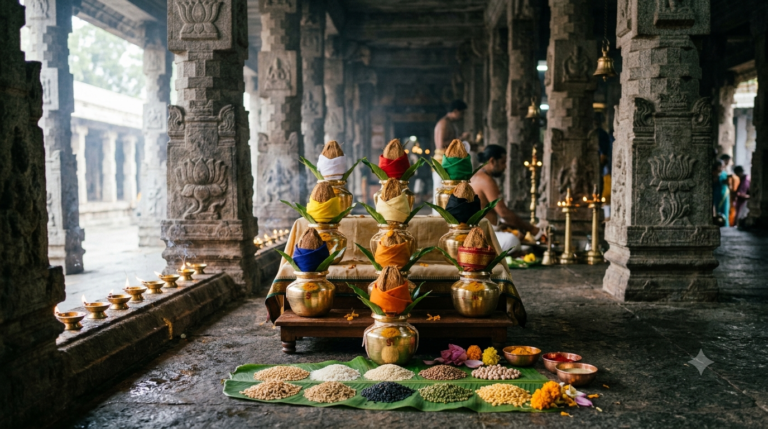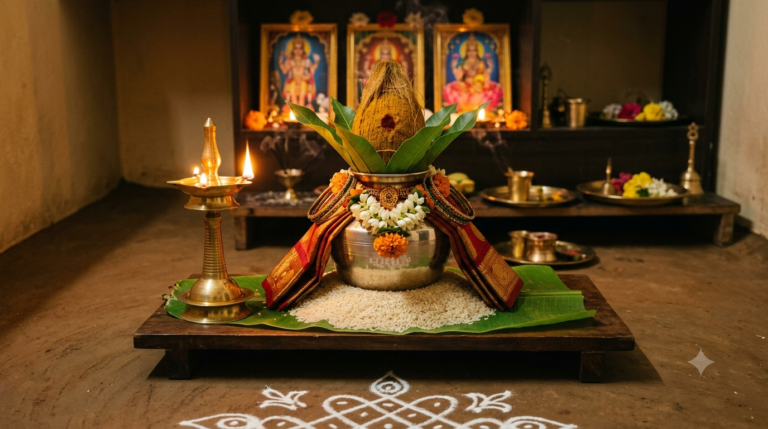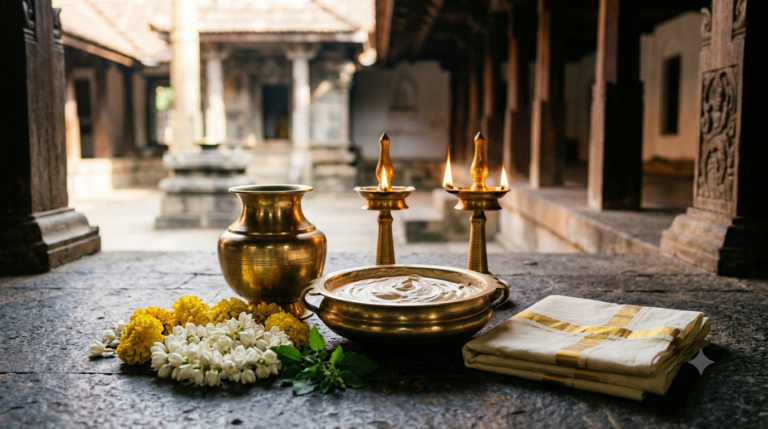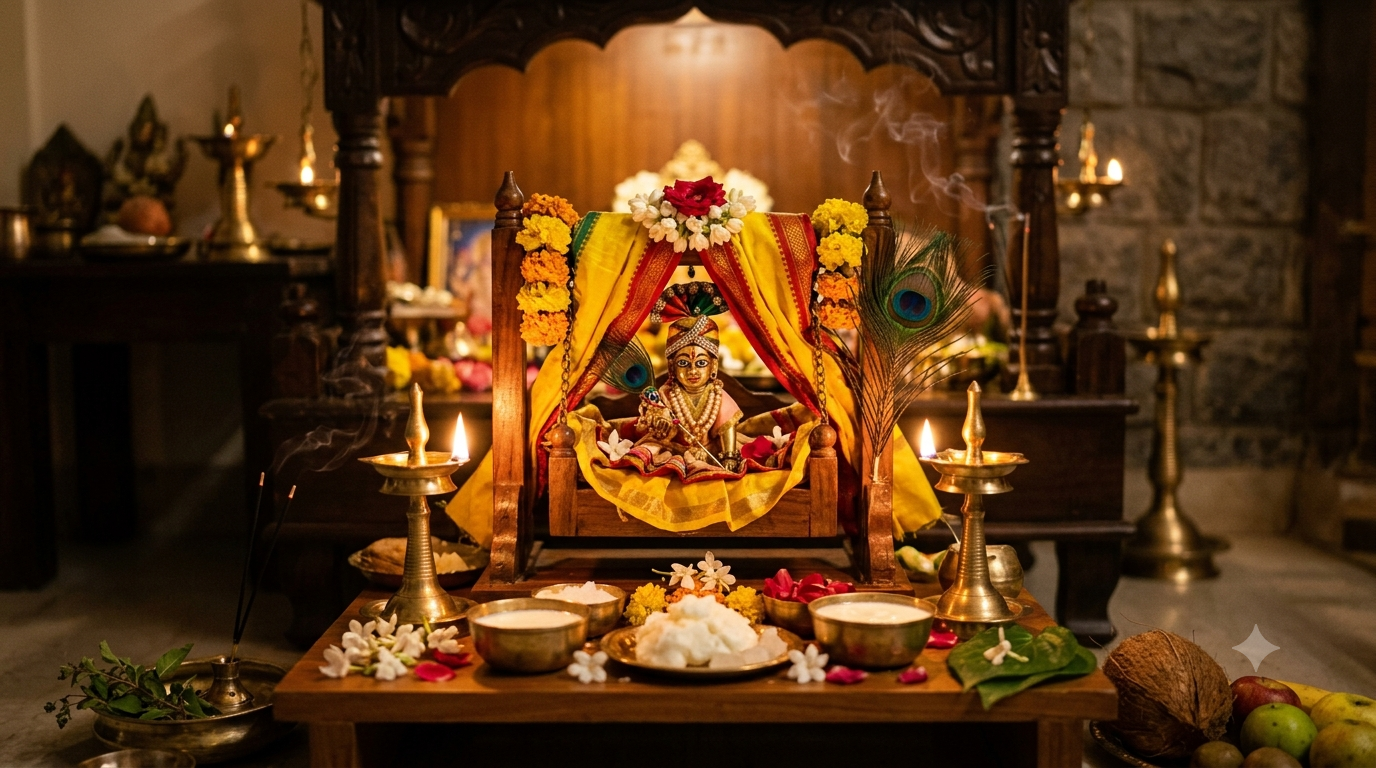
This complete Sri Krishnastami procedure guide covers the 2026 dates, the midnight puja steps, the fasting rules, and the one detail most calendars get wrong. Sri Krishnastami is also called Krishna Janmashtami, Gokulashtami, or Ashtami Rohini. It marks the birth of Lord Krishna, the eighth avatar of Lord Vishnu. Because the birth happened at midnight under a rare star, the observance follows a precise order.
So this page gives you the verified dates, a home puja you can actually follow, and the regional differences that decide which night you should worship.
Sri Vyasa Pooja is an independent devotional guide. We are not affiliated with any temple, mutt, or trust, and we do not accept bookings, donations, or payments. Please use the official temple portals linked below for any reservation or seva.
Sri Krishnastami 2026 at a Glance
- Main date (most households, Smarta tradition): Friday, 4 September 2026.
- ISKCON and Vaishnava temples: Saturday, 5 September 2026.
- Lunar month: Ashtami of Krishna Paksha in Bhadrapada.
- Main worship: midnight, during Nishita Kaal.
- Fast: day-long, usually broken after the midnight puja or the next morning.
- South Indian solar tradition: Udupi and Guruvayur observe it as Ashtami Rohini.
Sri Krishnastami 2026 Date: Why You See Two Dates
Before the Sri Krishnastami procedure even begins, you must fix the right date. In 2026, most Hindu households observe the festival on Friday, 4 September. ISKCON and many Vaishnava temples observe it on Saturday, 5 September. Both dates are correct within their own tradition, so neither is a mistake.
The split confuses devotees every year, yet the reason is simple. Krishna was born when two things aligned: the Ashtami tithi and the Rohini Nakshatra. These two do not always fall on the same midnight. Therefore, different traditions pick different days.
The Smarta rule, followed by most families, chooses the day when Ashtami is present at midnight, which points to 4 September in 2026.
The Vaishnava and ISKCON rule gives more weight to the Rohini Nakshatra near sunrise. That shifts their observance to 5 September. So if your family follows a Madhva, Gaudiya, or ISKCON lineage, 5 September is your day. When both traditions live in one household, the 2026 calendar becomes a two-night festival.
Where Udupi and Guruvayur Fit In
Here is the detail most national guides skip entirely. In Kerala, Tamil Nadu, and parts of Karnataka, the festival is known as Ashtami Rohini. It is calculated on the solar calendar, not the lunar one. Two famous shrines follow this system: the Udupi Sri Krishna Temple in Karnataka and the Guruvayur temple in Kerala.
Because their method differs, their date can land a day or two apart from the North Indian observance. In rare years the gap stretches even longer. So if you plan to visit either temple, confirm the exact Ashtami Rohini date first. You can read the Madhva tradition behind the shrine in our Udupi Krishna Temple story and history.
What Sri Krishnastami Celebrates
Sri Krishnastami honours the divine birth of Lord Krishna in a prison cell in Mathura. His parents, Devaki and Vasudeva, were jailed by the tyrant Kansa, Devaki’s own brother. A prophecy had warned Kansa that Devaki’s eighth child would end his reign. So he killed her first seven children one by one.
When Krishna was born at midnight, the guards fell asleep and the locks opened on their own. Vasudeva carried the infant across the flooded Yamuna to Gokul.
There he left Krishna with Yashoda and Nanda. He then carried their newborn girl, a form of Goddess Durga, back to the prison. So the child grew up safe, far from his uncle’s reach.
For devotees, this birth signals the victory of good over evil. It is also a promise that dharma returns whenever cruelty rises. Krishna’s teachings in the Bhagavad Gita still guide millions today. If you want that side of his life, our guide to Gita Jayanti and the Bhagavad Gita explores it in depth.
Sri Krishnastami Procedure: Step-by-Step Puja at Home
The Sri Krishnastami procedure at home follows a clear order. It runs from preparation the day before to breaking the fast after midnight. You do not need a priest to perform it. Since the puja peaks at Nishita Kaal, plan your day so the family is ready well before midnight.
Preparation the Day Before
Clean the house and the puja area thoroughly, because a fresh space is central to the ritual. Wash the idol or picture of Bala Krishna. Arrange a small cradle or a wooden chowki for it. Keep new clothes, ornaments, flowers, and a peacock feather ready.
Many families also draw small footprints of Krishna in rice flour from the doorway to the altar. This tradition welcomes the Lord into the home.
Sankalpa and Fasting
Fasting sits at the centre of the Sri Krishnastami procedure. On the festival morning, take a bath and then make the sankalpa. This is a spoken vow to observe the fast and the puja.
Devotees usually eat a single simple meal the day before. They then fast through the day until the midnight worship. While some keep a strict waterless fast, others take fruit, milk, or a sattvic diet. Choose the version your body can safely handle.
The Midnight Puja (Nishita Kaal)
The heart of the Sri Krishnastami procedure is the Nishita Kaal puja. It is performed at the exact midnight hour when Krishna is believed to have been born.
Light the lamp and incense first. Place the Bala Krishna idol on the cradle. Then perform the Shodashopachara, the traditional sixteen steps of worship.
Begin with dhyana, and offer the seat, water for the feet, and arghya. Next, bathe the idol with panchamrit, a blend of milk, curd, ghee, honey, and sugar. After the abhishekam, dry the idol and dress it in fresh clothes.
Then apply sandal paste and offer flowers and tulsi. Gently rock the cradle while singing bhajans until midnight.
Naivedya and Breaking the Fast
Offer naivedya such as fruit, butter, mishri, and sweets. Do not eat any of it until the puja ends. Krishna’s favourite offering is makhan-mishri, butter with sugar, so most homes keep it central.
After the midnight aarti, distribute the prasad. If your tradition allows, break the fast then. Devotees who follow the two-day rule wait until the next morning. They perform parana after sunrise, once Ashtami tithi and Rohini Nakshatra have ended.
Sri Krishnastami Procedure Timings for 2026
The most important timing is the Nishita Kaal. This is the roughly 45-minute midnight window when the birth puja is done.
For 4 September 2026, it falls at about 11:45 PM to 12:30 AM (night of 4–5 September). These figures suit the New Delhi and Mathura region. Because muhurat times shift with location, always confirm your city’s window on a trusted panchang.
| Element | 2026 timing (approx., New Delhi region) |
|---|---|
| Main date (Smarta / households) | Friday, 4 September 2026 |
| ISKCON / Vaishnava date | Saturday, 5 September 2026 |
| Ashtami tithi begins | Around 2:25 AM, 4 September |
| Nishita Kaal (midnight puja) | Approx. 11:45 PM–12:30 AM, night of 4–5 September |
| Parana (break fast) | Morning of 5 September, after Ashtami and Rohini end |
These figures are indicative and vary by city, so treat them as a planning guide. For precise, location-based timings, check the Drik Panchang Krishna Janmashtami page. For the South Indian solar date, see the Ashtami Rohini page.
Puja Samagri: What to Keep Ready
Gathering everything before the Sri Krishnastami procedure begins keeps the midnight puja calm and unhurried. Here is a practical list for a home celebration.
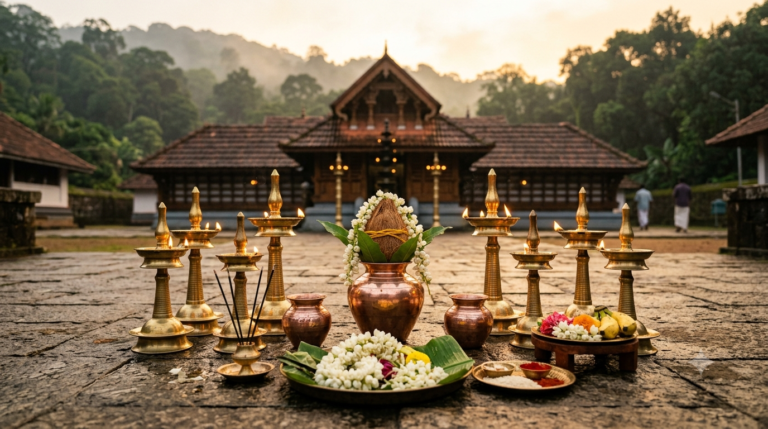
- Bala Krishna idol or picture, plus a small cradle or chowki.
- Panchamrit ingredients: milk, curd, ghee, honey, and sugar.
- New cloth, ornaments, and a peacock feather for the idol.
- Lamp, ghee or oil, wicks, incense, and camphor for aarti.
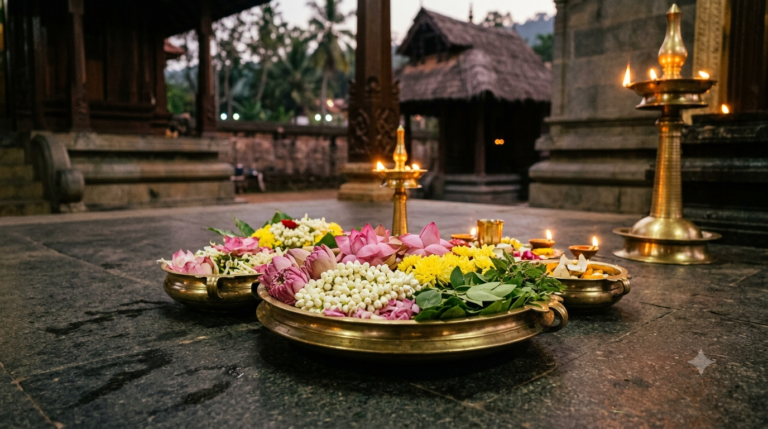
- Flowers, tulsi leaves, sandal paste, kumkum, and akshata.
- Naivedya: butter, mishri, fruit, and homemade sweets.
Fasting Rules and a Safety Note
Fasting on Sri Krishnastami is a personal choice, and tradition allows several levels of strictness. A full waterless fast until midnight suits some devotees. Others take fruit, milk, or one sattvic meal. The puja itself does not require a strict fast, so devotion matters more than severity here.
That said, a long fast carries real physical demand. Elderly devotees, pregnant women, children, and anyone with diabetes or low blood pressure should adapt the fast and stay hydrated. If you are unsure, consult a doctor before a waterless fast or a long night vigil. A ritual should lift you, not harm your health, so choose a form you can sustain.
How Sri Krishnastami Is Celebrated Across India
The festival wears a different face in each region, though the midnight worship stays constant. In Maharashtra and Goa, the day after Janmashtami brings Dahi Handi. Young teams build human pyramids to break a high pot of curd. This game re-enacts Krishna’s childhood butter-stealing pranks.
In Mathura and Vrindavan, temples hold a grand midnight Janmotsav with abhishekam, jhankis, and Raslila. Meanwhile, the Udupi and Guruvayur temples mark Ashtami Rohini with their own solar-calendar rituals. ISKCON temples worldwide draw huge crowds for their midnight abhishekam and continuous kirtan. So wherever you are, a temple nearby is likely observing the night in its own style.
What Most Guides Get Wrong About Sri Krishnastami
The biggest error online is publishing one fixed date as if it applies to everyone. As you now know, 2026 has a Smarta date and a Vaishnava date. It also has a separate solar-calendar observance in the south. So always match the date to your own family tradition.
A second common slip is stating one exact midnight time for the whole country. Nishita Kaal shifts city by city, because sunset and sunrise differ everywhere.
A third mistake is skipping the sankalpa in the steps of the Sri Krishnastami procedure. Without that vow, the fast and puja lose their traditional structure. Finally, many rush the abhishekam. Yet the slow, loving bath of the infant Krishna is the emotional core of the whole night.
Before You Begin the Puja
The Sri Krishnastami procedure rewards preparation more than perfection. Fix your date by your family’s tradition, and keep your samagri ready. Centre the night on the midnight abhishekam rather than rushing through steps.
Fast at a level that respects your health, and confirm your city’s Nishita Kaal on a reliable panchang. Do that, and your home puja will carry the same devotion that fills the temples of Mathura, Udupi, and Vrindavan. For a related home worship of Lord Vishnu, see our Satya Narayana Vratam procedure.
Frequently Asked Questions
What is the Sri Krishnastami date in 2026?
Sri Krishnastami 2026 falls on Friday, 4 September for most households following the Smarta tradition. ISKCON and many Vaishnava temples observe it on Saturday, 5 September. Both dates are valid within their own tradition.
Why do ISKCON and households celebrate on different days?
Krishna’s birth needs both the Ashtami tithi and the Rohini Nakshatra. These do not always fall on the same midnight. Households follow the day Ashtami is active at midnight, while ISKCON gives weight to the Rohini alignment near sunrise. In 2026 that produces 4 and 5 September.
What time is the Sri Krishnastami puja performed?
The main puja happens at Nishita Kaal, the midnight window when Krishna was born. For 2026 it falls around 11:45 PM to 12:30 AM (night of 4–5 September) in the New Delhi region. Since timings vary by city, confirm yours on a local panchang.
How do I perform the Sri Krishnastami procedure at home?
Clean the puja space, place a Bala Krishna idol in a cradle, and take the sankalpa vow in the morning. At midnight, bathe the idol with panchamrit, dress it, offer naivedya, and sing bhajans. Break the fast after the aarti or the next morning.
Can I celebrate Sri Krishnastami without fasting?
Yes. While many keep the vrat, the puja can be performed without a strict fast. The essential element is the midnight worship of Krishna with devotion. Those who cannot fast may observe a simple sattvic diet for the day.
What is offered to Lord Krishna on this day?
Common offerings include makhan-mishri, which is Krishna’s favourite, along with fruit, kheer, panjiri, and homemade sweets. The panchamrit used for the abhishekam is later shared as prasad. Offerings are kept vegetarian and pure.
Is Sri Krishnastami the same as Gokulashtami and Ashtami Rohini?
They refer to the same festival with regional names. North India often uses Janmashtami or Gokulashtami. Kerala, Tamil Nadu, and parts of Karnataka call it Ashtami Rohini and calculate it on the solar calendar. So the dates can differ slightly by region.
Which temples are famous for Sri Krishnastami celebrations?
The Shri Krishna Janmabhoomi temple in Mathura and the temples of Vrindavan are renowned. In the south, the Udupi Sri Krishna Temple and the Guruvayur temple lead the celebrations. ISKCON temples across India and abroad also hold grand midnight abhishekam and kirtan.