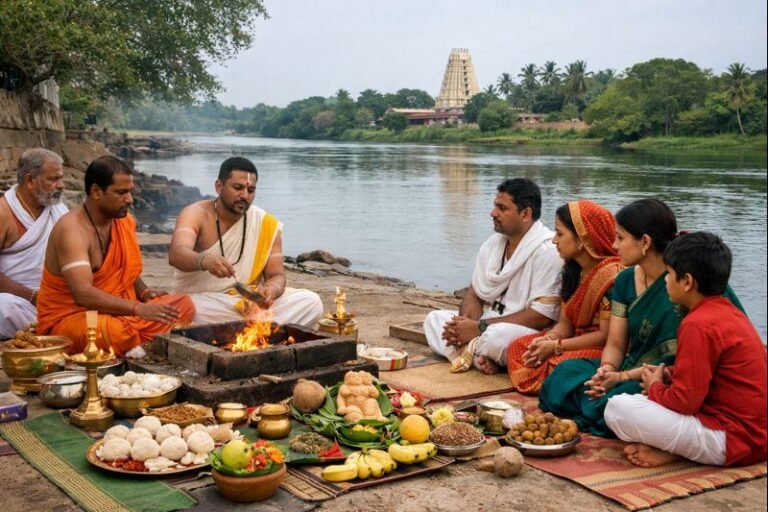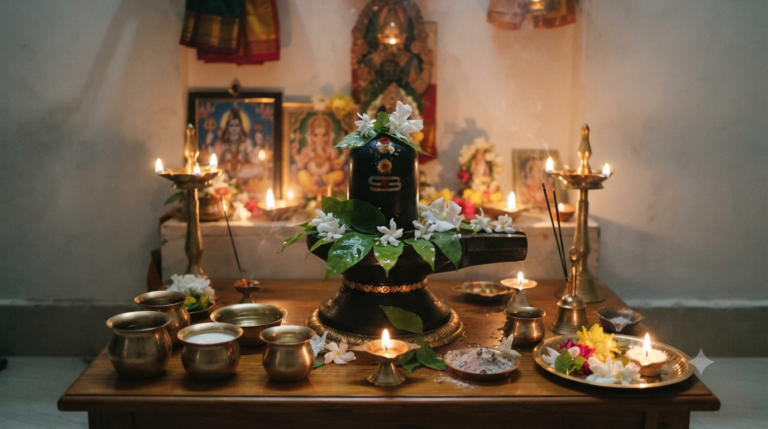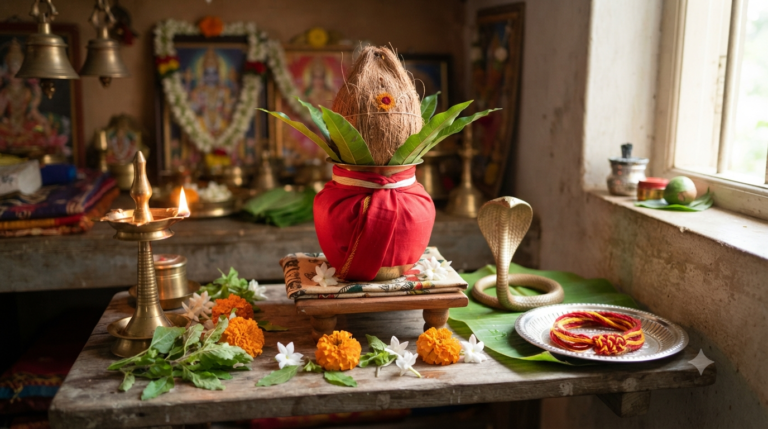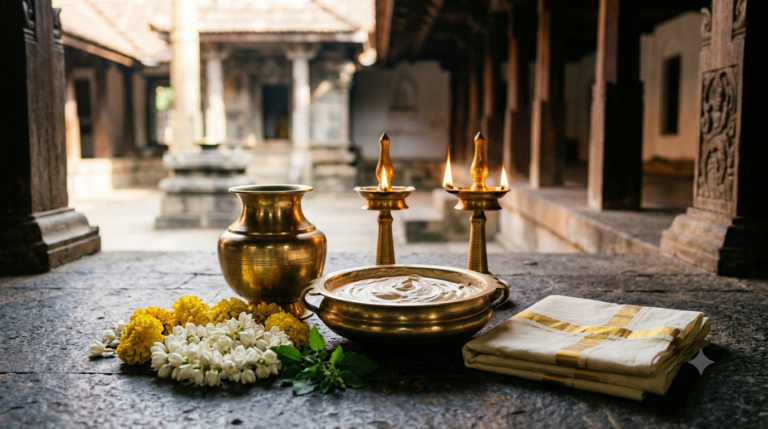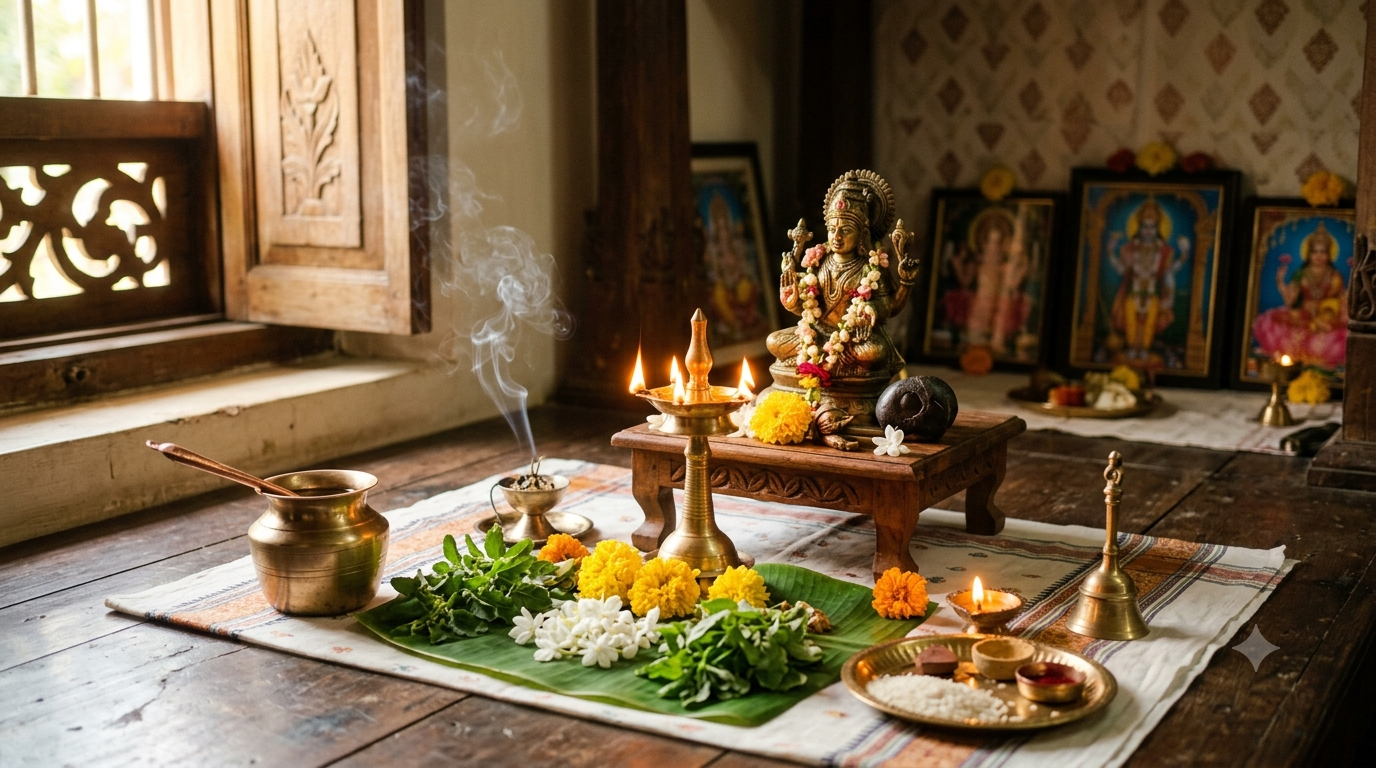
Vishnu Shodashopachara Pooja Vidhanam is the sixteen-step method of worshipping Lord Vishnu, and it forms the backbone of almost every formal Vishnu puja performed at home. Many devotees know the word, yet they stumble on the actual order, because online guides often mix up the steps or blur them with shorter rituals. This guide fixes that. Here you get the sixteen upacharas in their correct sequence, the simple mantra for each offering, the items to keep ready, and the small mistakes that even regular worshippers make.
srivyasapooja.in is an independent devotional guide. We are not affiliated with any temple, mutt, or official trust, and we do not accept bookings, donations, or payments. Please treat these ritual details as traditional guidance, and follow your family priest or sampradaya wherever practices differ.
Vishnu Shodashopachara Pooja Vidhanam at a Glance
- Shodashopachara means “sixteen services” — shodasha (sixteen) plus upachara (a respectful offering).
- The ritual honours Lord Vishnu through sixteen ordered offerings, from inviting the deity to the final circumambulation.
- Five core offerings within it — gandha, pushpa, dhupa, deepa and naivedya — map to the five senses.
- Each step carries a short mantra ending in samarpayami (“I offer”) or darshayami (“I show”).
- Anyone can perform it at home with devotion, while priest-led versions simply add more elaborate mantras.
What Is Vishnu Shodashopachara Pooja Vidhanam?
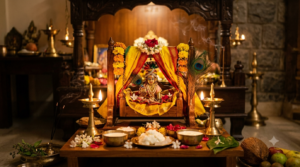
Vishnu Shodashopachara Pooja Vidhanam is the traditional procedure for worshipping Lord Vishnu with sixteen sequential acts of hospitality, treating the deity as an honoured guest. Because each offering mirrors how you would welcome a revered visitor, the ritual feels natural once you learn the order.
The idea is old and pan-Hindu. Worship with sixteen offerings is Shodashopachara, while a shorter five-offering form is Panchopachara. Grander temple rituals may run to thirty-two steps (Dvatrimshopachara) or even sixty-four. So the sixteen-step version sits comfortably in the middle — complete enough for serious home worship, yet short enough to finish within an hour.
Because it is so complete, the Vishnu Shodashopachara Pooja Vidhanam appears across many occasions — daily home worship, the Satyanarayana Vrata, and major Vishnu festivals alike. Learn it once, and you hold the template for almost every Vaishnava ritual.
Why the Sixteen Offerings Matter
Each upachara is more than a mechanical act. Together they recreate the way an honoured guest was received in an old Indian household — invited in, seated, bathed, dressed, fed, and finally sent off with respect. So the ritual trains the mind in humility and attention as much as it honours the Lord.
Five of the sixteen form a special inner group called the pancha-upachara: gandha, pushpa, dhupa, deepa and naivedya. These five engage the senses of smell, sight, and taste, so they remain the minimum offering whenever time is short. If you ever worship Vishnu at the centre of five deities instead, our guide to Vishnu Panchayatana Pooja Vidhanam explains that separate tradition.
Items You Need for Vishnu Shodashopachara Pooja Vidhanam
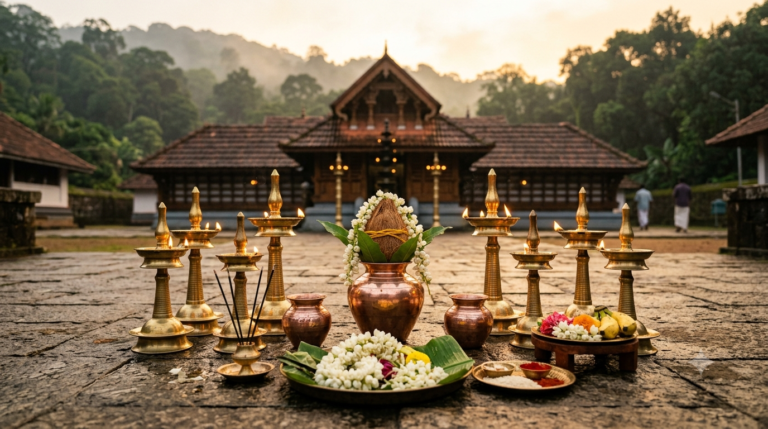
Gather everything before you start the Vishnu Shodashopachara Pooja Vidhanam, since stopping midway to fetch a forgotten article breaks the flow of the puja. Keep the items on a clean plate to the right of your seat.
- A Vishnu idol, Salagrama, or a framed picture
- A water vessel (kalasha), panchapatra, and a small spoon (uddharani)
- Akshata (turmeric-mixed rice), sandalwood paste, and kumkum
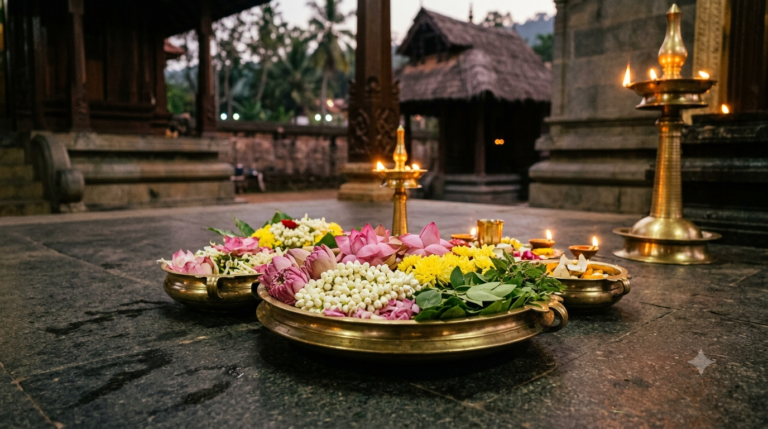
- Fresh flowers and tulsi leaves, because Vishnu is especially fond of tulsi
- Incense sticks, a ghee or oil lamp, and camphor
- Naivedyam such as fruit, jaggery, or a cooked sweet, plus betel leaves and nuts
- A bell, and a clean cloth or a thread of new fabric for the deity
Preliminary Steps Before the Vishnu Shodashopachara Pooja Vidhanam
A few short rites always come before the main sixteen. They purify the worshipper and clear obstacles, so never skip them.
First, sip water thrice for achamana while reciting “Om Keshavaya Namah, Om Narayanaya Namah, Om Madhavaya Namah.” Next comes pranayama, a moment of steady breathing. Then state the sankalpa — your name, the day, and your intention to perform the puja.
After that, offer a brief prayer to Lord Ganesha, since Hindus invoke him first to remove hindrances. Many devotees also do a small kalasha puja, inviting sacred waters into the vessel. Finally, meditate on Vishnu with the classic dhyana shloka: “Shuklambaradharam Vishnum shashivarnam chaturbhujam, prasanna-vadanam dhyayet sarva-vighnopashantaye.”
The Sixteen Steps of Vishnu Shodashopachara Pooja Vidhanam
Now the heart of the ritual. Perform each upachara in order, offer or touch the article to the deity, and chant its mantra. When an item is missing, offer akshata instead and say “manasa samarpayami,” because a sincere mental offering still counts.
Steps 1 to 8: Welcoming and Bathing the Lord
- Avahanam (invocation) — invite Vishnu into the idol. Mantra: “Om Vishnave Namah, avahayami.”
- Asanam (seat) — offer a seat with flowers or akshata. “Asanam samarpayami.”
- Padyam (water for the feet) — sprinkle water at the feet. “Padyam samarpayami.”
- Arghyam (water for the hands) — offer water for the hands. “Arghyam samarpayami.”
- Achamaniyam (water to sip) — offer a little water to sip. “Achamaniyam samarpayami.”
- Snanam (bath) — bathe the idol, ideally with panchamrita and then clean water. “Snanam samarpayami.”
- Vastram (garment) — offer cloth, or a thread of new fabric. “Vastram samarpayami.”
- Yajnopavitam (sacred thread) — offer the sacred thread. “Yajnopavitam samarpayami.”
Steps 9 to 16: Adorning and Honouring the Lord
- Gandham (sandal paste) — apply sandalwood. “Gandham samarpayami.”
- Pushpam (flowers) — offer flowers and tulsi, often with the deity’s names. “Pushpani samarpayami.”
- Dhupam (incense) — show the lit incense. “Dhupam aghrapayami.”
- Deepam (lamp) — show the lamp. “Deepam darshayami.”
- Naivedyam (food) — offer the prepared food. “Naivedyam samarpayami.”
- Tambulam (betel) — offer betel leaves and nut. “Tambulam samarpayami.”
- Neerajanam (camphor aarti) — show the camphor flame. “Karpura-neerajanam darshayami.”
- Pradakshina-Namaskaram — circumambulate and prostrate. “Pradakshina-namaskaran samarpayami.”
What Each Offering Symbolises
Devotees who understand the meaning behind the steps tend to worship with more feeling. Here is the quiet symbolism the sixteen offerings carry.
The three water offerings — padyam, arghyam, and achamaniyam — stand for cleanliness and welcome, just as you would offer a traveller water on arrival. Snanam and vastram care for the body, while gandham and pushpam adorn it. Dhupam and deepam then fill the space with fragrance and light, and naivedyam shares nourishment. Finally, tambulam, neerajanam, and pradakshina round off the visit with contentment and a respectful farewell.
Seen this way, the ritual becomes a complete act of love rather than a checklist. That shift in attitude is what turns a routine puja into genuine devotion.
A Simple Daily Vishnu Shodashopachara Pooja Vidhanam
You do not need all sixteen steps every single day. On busy mornings, a shortened Vishnu Shodashopachara Pooja Vidhanam still keeps the practice alive and the mind steady.
Reduce the ritual to the five pancha-upachara — sandal, flower, incense, lamp, and food — and add a short prayer. Then, on Ekadashi, Saturdays, and festivals, return to the complete Vishnu Shodashopachara Pooja Vidhanam with all sixteen offerings. This rhythm suits most working households, because it balances daily discipline with fuller worship on special days.
Common Mistakes and Misconceptions
Even devout families repeat a few errors. Correcting them is where careful worship differs from a rushed one.
Shodashopachara is not the five-step or thirty-two-step puja
People often call any home worship “shodashopachara,” yet the word specifically means sixteen offerings. A quick five-offering worship is Panchopachara, while the temple-scale version with thirty-two steps is Dvatrimshopachara. Knowing the difference helps you match the ritual to the occasion.
“Samarpayami” and “darshayami” are not interchangeable
Most steps end in samarpayami, meaning “I offer.” However, incense and lamp are shown rather than handed over, so tradition uses aghrapayami for dhupam and darshayami for deepam and the camphor aarti. It is a small wording change, though priests notice it.
Avahana may be skipped for a Salagrama
When you worship a Salagrama or a permanently consecrated idol, some sampradayas omit avahana and the closing udvasana, because the Lord is considered eternally present there. So follow your family tradition rather than a one-size-fits-all script.
How to Conclude the Vishnu Shodashopachara Pooja Vidhanam
Even a careful Vishnu Shodashopachara Pooja Vidhanam is not complete at the sixteenth step. A short closing seals the worship and asks pardon for any lapse.
Offer mantra-pushpam, a final flower with a Vedic verse. Then recite the kshama-prarthana, seeking forgiveness for mistakes in procedure or pronunciation. Afterwards, distribute the naivedyam as prasadam, since sharing the blessed food is central to the tradition. If you invoked the deity with avahana, gently perform udvasana to conclude.
Best Time and Days for Vishnu Shodashopachara Pooja Vidhanam
You can perform this puja on any day, yet certain times carry special merit for Vishnu worship. Early morning, right after a bath, is ideal because the mind is fresh and the house is quiet.
Ekadashi, Saturdays, and the month of Kartika are traditionally favoured for Lord Vishnu. Festivals such as Vaikunta Ekadashi, Sri Rama Navami, and Krishna Janmashtami are natural occasions for the full sixteen-step ritual. During a Satyanarayana Vrata, this same vidhanam forms the core of the worship, and many vratas such as the Anantha Padmanabha Swamy Vratham use it too.
Beginner Mistakes in Vishnu Shodashopachara Pooja Vidhanam
A few practical habits make your Vishnu Shodashopachara Pooja Vidhanam smoother and more sincere.
- Keep a separate small spoon for water offerings, so you never dip fingers into the drinking vessel.
- Use fresh tulsi, but never pluck it on Sundays or Ekadashi — pick leaves a day earlier and store them.
- Offer flowers with the stems facing the deity, and set aside any wilted or fallen blooms.
- If you fast during a vrata and have a condition such as diabetes, keep it sensible and check with your doctor first.
- Silence your phone before you start, because a broken concentration is the commonest reason a puja feels hollow.
The same sixteen offerings also open many homas, such as the Lakshmi Narasimha Homam, so learning them well pays off across many rituals.
Before You Begin: The Essentials
Vishnu Shodashopachara Pooja Vidhanam rewards sincerity over showmanship. Learn the sixteen steps in order, keep the articles ready, and chant each mantra slowly. When an item or a mantra is missing, a heartfelt mental offering still carries the worship.
Start simple, then repeat it regularly, and the sequence will soon feel like second nature. For detailed mantras, keep an authoritative reference such as Drik Panchang’s Vishnu puja vidhi or Stotra Nidhi beside you, and follow your family priest wherever customs differ.
Frequently Asked Questions
What does Shodashopachara mean?
Shodashopachara means “sixteen offerings” — shodasha (sixteen) and upachara (a respectful service). The Vishnu Shodashopachara Pooja Vidhanam therefore honours Lord Vishnu through sixteen ordered acts, from invocation to circumambulation.
Can I perform this pooja at home without a priest?
Yes, any devotee can perform it at home with devotion and a basic set of articles. A priest-led version only adds more elaborate mantras, while the sixteen core steps stay the same.
What is the main mantra for Vishnu puja?
The simplest mula mantra is “Om Namo Narayanaya” or “Om Vishnave Namah.” You attach each offering to it, for example “Om Vishnave Namah, gandham samarpayami” while applying sandalwood.
Which flowers and leaves please Lord Vishnu?
Tulsi leaves are the most cherished offering to Vishnu, along with lotus, jasmine, and other fragrant flowers. Avoid wilted blooms, and never offer tulsi that has dried out.
Is Shodashopachara different from Ashtottara or Panchopachara?
Yes. Panchopachara uses five offerings, Shodashopachara uses sixteen, while Ashtottara refers to chanting 108 names, usually during the flower-offering step. They complement each other rather than being the same thing.
On which days is Vishnu puja most auspicious?
Ekadashi, Saturdays, and the Kartika month are especially favoured for Vishnu worship. Vaikunta Ekadashi and Janmashtami are ideal for the complete sixteen-step ritual.
What if I cannot arrange all sixteen items?
Offer whatever you have, and make the rest as a mental offering by saying “manasa samarpayami.” Tradition holds that devotion matters more than the completeness of materials.
Are the benefits of this pooja guaranteed?
The blessings described in tradition, such as peace and spiritual growth, are matters of faith rather than assured outcomes. Perform the puja for devotion first, and treat any specific benefit as a belief within the Vedic tradition.