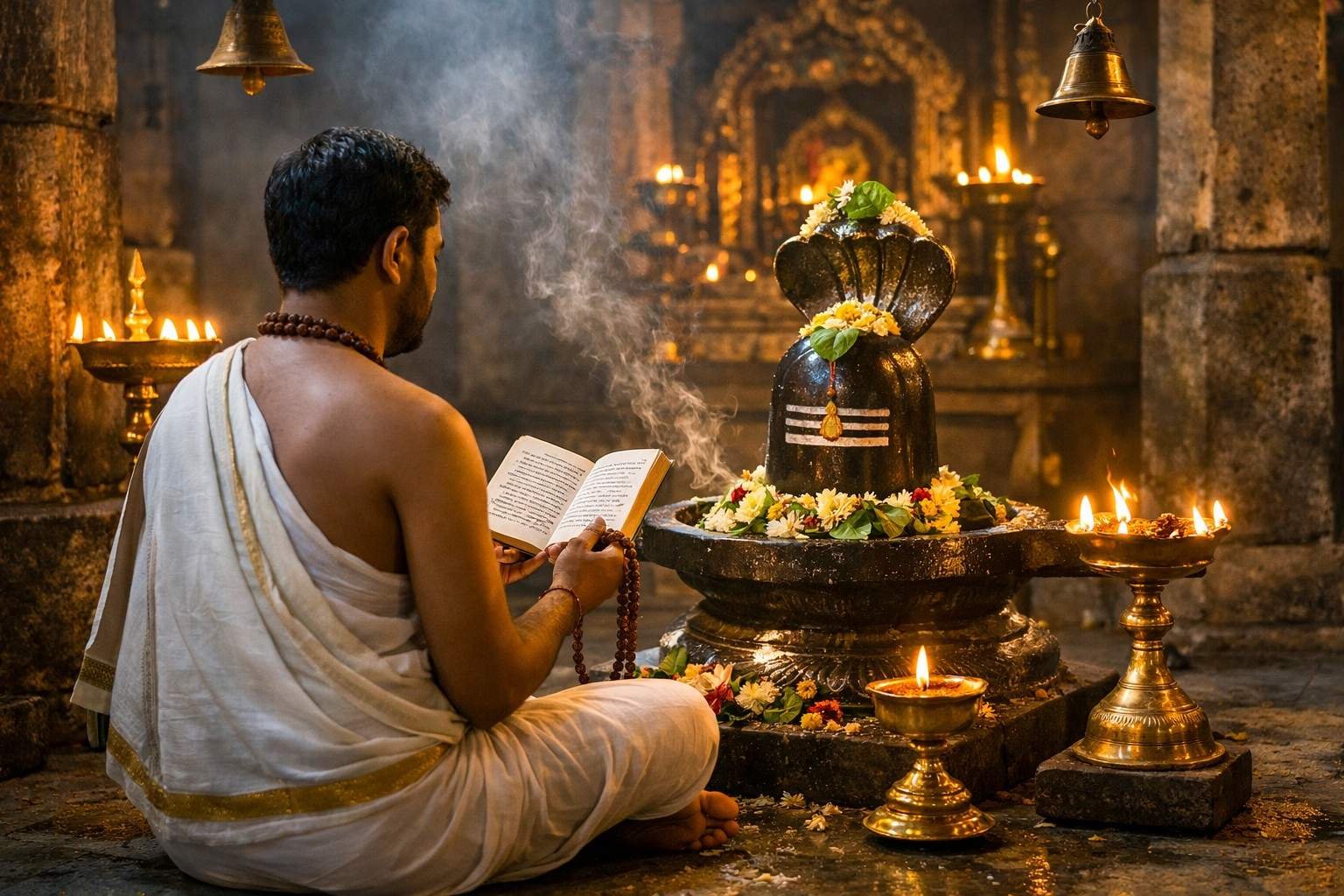
Sri Mrityunjaya Aksharamala Stotram In Telugu – Powerful Shiva Hymn
Sri Mrityunjaya Aksharamala Stotram is a sacred hymn dedicated to Lord Shiva in His Mrityunjaya (Conqueror of Death) form. Rooted in the spiritual tradition of the Mahamrityunjaya Mantra found in the Rigveda, this stotram is revered for protection, health, and spiritual upliftment. The Mahamrityunjaya Mantra itself appears in the Rigveda (Mandala 7, Sukta 59, Mantra 12) and is widely worshipped across India as a life-affirming Vedic chant.
Also, this article presents the Sri Mrityunjaya Aksharamala Stotram in Telugu, its meaning, significance, step-by-step chanting method, benefits, common mistakes, and frequently asked questions. I have personally recited this stotram during temple visits and home prayers, and I will share practical insights that helped me experience its spiritual depth.
What Is Sri Mrityunjaya Aksharamala Stotram?
Sri Mrityunjaya Aksharamala Stotram is a devotional composition in praise of Lord Shiva as “Mrityunjaya,” the one who conquers death. The term “Aksharamala” means a garland of syllables. Each verse symbolically represents sacred sounds woven together like a mala (garland).
The foundation of this stotram is the Mahamrityunjaya Mantra:
Furthermore, ॐ त्र्यम्बकं यजामहे सुगन्धिं पुष्टिवर्धनम्।
उर्वारुकमिव बन्धनान्मृत्योर्मुक्षीय माऽमृतात्॥
According to Vedic sources and traditional commentaries, this mantra seeks liberation from untimely death and spiritual bondage. You can read more about the mantra’s historical origin on Wikipedia – Mahamrityunjaya Mantra.
The Aksharamala Stotram expands this devotional mood into structured verses, especially popular in South Indian temples and homes.
Sri Mrityunjaya Aksharamala Stotram In Telugu
Below is the commonly recited Telugu version (traditional format):
Furthermore, శ్రీ మృత్యుంజయాయ నమః ।
ఓం త్ర్యంబకం యజామహే సుగంధిం పుష్టివర్ధనం ।
ఉర్వారుకమివ బంధనాన్ మృత్యోర్ముక్షీయ మామృతాత్ ॥
ఓం నమో భగవతే రుద్రాయ ।
నీలకంఠాయ శంభవే ।
మృత్యుంజయాయ త్రిలోకేశాయ నమః ॥
అక్షరమాలికా రూపేణ
శివనామ సుమాలికా ।
భక్తానాం రక్షణార్థాయ
మృత్యుంజయ నమోస్తుతే ॥
(Note: Different traditional lineages may include extended verses. Always follow your guru parampara or temple tradition.)
Meaning And Spiritual Significance
Literal Meaning
The Mahamrityunjaya Mantra addresses Lord Shiva as the three-eyed one (Tryambaka), fragrant, and nourishing. The phrase “Urvarukamiva Bandhanan” compares liberation from death to a ripe cucumber detaching naturally from the vine.
Symbolic Meaning
Death here does not only mean physical death. It refers to fear, ignorance, disease, and karmic bondage. Chanting Sri Mrityunjaya Aksharamala Stotram invokes inner courage and clarity.
In contrast, what surprised me during my visit to a Shiva temple in Andhra Pradesh was the collective chanting during Pradosham. The vibration was powerful. Not loud. Not dramatic. Steady. Focused. You could feel the rhythm of breath and mantra merging.
Benefits Of Chanting Sri Mrityunjaya Aksharamala Stotram
Devotees traditionally believe the stotram offers:
- Relief from fear and anxiety
- Spiritual strength during illness
- Protection from negative influences
- Peace of mind and clarity
- Improved focus during meditation
The Mahamrityunjaya Mantra is widely used in Vedic rituals for healing and longevity. In many temples, special Mrityunjaya Homam is performed during critical health situations.
I personally recommend chanting it 11 times daily during early morning hours. Even 5 minutes of focused chanting creates noticeable calmness.
Step-By-Step Guide To Chanting
1. Choose The Right Time
Best time: Brahma Muhurta (approximately 4:00 AM to 6:00 AM). Evening twilight is also suitable.
2. Prepare The Space
Keep a clean area. Light a lamp. Offer water or bilva leaves if available.
3. Sankalpa (Intention)
Mentally state your purpose. Be specific. Health. Protection. Spiritual growth.
4. Chant With Correct Pronunciation
Pronunciation matters. “Tryambakam” must not become “Triyambakam.” Small errors change vibration.
5. Use A Rudraksha Mala
108 repetitions form one complete cycle. Beginners can start with 11 or 21 chants.
6. Conclude With Prayer
Offer gratitude. Sit silently for 2 minutes after chanting.
Here’s what most people get wrong: They rush. Fast chanting reduces focus. Slow. Steady. Clear syllables. That’s the key.
Common Mistakes To Avoid
Incorrect Pronunciation
Mispronouncing Sanskrit words reduces mantra accuracy. Listen to authentic Vedic recitations before practice.
Mechanical Chanting
Mind wandering? Stop. Restart. Chanting without awareness becomes routine noise.
Inconsistent Practice
Chant daily for at least 21 consecutive days to experience rhythm and discipline.
Ignoring Meaning
Understanding meaning deepens impact. Don’t chant blindly.
Comparison: Mahamrityunjaya Mantra Vs Aksharamala Stotram
| Aspect | Mahamrityunjaya Mantra | Aksharamala Stotram |
|---|---|---|
| Source | Rigveda 7.59.12 | Later devotional composition |
| Length | Single Vedic Mantra | Multiple Verses |
| Purpose | Healing & Liberation | Extended Praise & Protection |
| Usage | Homam, Japa | Daily Stotra Recitation |
Best Practices For Maximum Benefit
Consistency beats intensity. Chant 11 times daily instead of 108 once a month.
Therefore, maintain a dedicated notebook. Write the stotram in Telugu 9 times for enhanced focus. I tried this during a 40-day vrata period. The discipline improved concentration.
Observe Pradosham fasting twice a month if possible. Chanting during this time feels powerful.
Furthermore, visit a Shiva temple on Mondays. When I visited during Shravan month, the temple priests performed Mrityunjaya Archana with bilva leaves. The atmosphere felt grounded and devotional.
Frequently Asked Questions
1. Can Women Chant Sri Mrityunjaya Aksharamala Stotram?
Yes. There is no restriction in devotional practice unless a specific family tradition advises otherwise.
2. How Many Times Should I Chant?
Minimum 11 times daily. For special intentions, 108 times for 40 days is common.
3. Is Initiation Required?
Formal mantra diksha is ideal for Vedic chanting. However, stotra recitation can be done with devotion.
4. Can I Chant During Illness?
Yes. Many families chant specifically during health challenges.
5. Is There A Specific Day For Starting?
Monday, Pradosham, or Maha Shivaratri are considered auspicious.
6. What Is The Core Difference Between Mantra And Stotram?
A mantra is a sacred Vedic sound formula. A stotram is a devotional hymn composed later in praise of a deity.
Advanced Practice: 40-Day Mrityunjaya Sadhana
For those seeking deeper discipline:
- Wake before sunrise
- Chant 108 repetitions daily
- Avoid negative speech
- Maintain a simple sattvic diet
- Conclude with Shiva Ashtottara
This practice builds mental resilience. Not overnight. Gradually.
Spiritual Insight From Personal Experience
During a period of stress in my life, I began chanting Sri Mrityunjaya Aksharamala Stotram daily at 5:30 AM. The first week felt mechanical. By day 15, breathing synchronized naturally with the mantra. By day 30, the fear that had been troubling me reduced significantly.
What surprised me most was not a dramatic miracle. It was stability. Calm decision-making. Improved sleep.
I personally recommend combining chanting with 5 minutes of silent meditation. That silence after the final “Namah” carries depth.
Conclusion
Sri Mrityunjaya Aksharamala Stotram is not just a hymn. It is a disciplined spiritual practice rooted in Vedic tradition. Backed by the sacred Mahamrityunjaya Mantra from the Rigveda , it continues to inspire millions of devotees seeking courage, health, and liberation from fear.
Chant slowly. Understand the meaning. Stay consistent. The transformation is subtle but real.
+ There are no comments
Add yours