Sri Rudra Kavacham Telugu: Essential Info, How To Chant & Benefits
Sri Rudra Kavacham Telugu is a revered protective hymn (stotra) in the Hindu tradition dedicated to Lord Shiva. In Telugu culture and ritual practice, this powerful kavacham is recited for protection from negative forces, mental peace, spiritual upliftment, and blessings for health, prosperity, and success. The mantra has deep roots in ancient Hindu scriptures like the Shri Rudram (Wikipedia) and is often associated with the traditions found in the Yajurveda’s Rudram Namakam and Chamakam which praise Shiva’s various forms.
What Is Sri Rudra Kavacham?
Sri Rudra Kavacham (literal meaning: “Armour of Rudra/Shiva”) is a sacred Sanskrit stotra said to have been composed by Sage Durvasa and preserved in the Skanda Purana. Chanting this kavacham forms a spiritual armor (kavach) around the devotee that protects them from fears, calamities, illnesses, enemies, and psychological stress.
The hymn is written in poetic Sanskrit with a rich structure of mantras and verses that address the various parts of the body and life, invoking Lord Shiva’s protection at each stage. Its recitation is believed to attract grace (prasada), inner strength, and blessings for longevity and harmony. Understanding Sri Rudra Kavacham Telugu is essential.
Origin And Scriptural Background
Sri Rudra Kavacham is traditionally attributed to Sage Durvasa and is found in puranic literature like the Skanda Purana. According to traditional sources, it was composed to help devotees overcome internal and external challenges with Shiva’s grace.
Therefore, the kavacham is closely linked in theme to Sri Rudram (Rudra Namakam & Chamakam), a Vedic hymn from the Krishna Yajurveda’s Taittiriya Samhita devoted to Lord Rudra (Shiva). This connection places it within the broader devotional and ritual worship practices of Shaivism.
Structure Of Sri Rudra Kavacham
The kavacham has a clear structure that helps the devotee systematically invoke Shiva’s protection: This relates to Sri Rudra Kavacham Telugu.
- Invocation (Dhyanam) – Meditative verses that visualize Shiva’s form and cosmic presence.
- Sage Invocation – Opening lines setting the context and purpose of chanting.
- Protection Verses – Detailed verses addressing different parts of the body and life, asking Shiva to guard the devotee.
- Benefits Verses – Verses explaining the blessings and positive transformations gained from regular recitation.
Exact Sanskrit Opening Lines (With Telugu Script)
The opening mantra of Sri Rudra Kavacham is traditionally recited before each section to purify the chanter’s mind and connect with Shiva’s divine energy:
ఓం అస్య శ్రీ రుద్ర కవచస్తోత్ర మహామంత్రస్య దూర్వాసృషిః… (This is the sacred mantra verse invoking Shiva’s presence and the protective nature of the kavacham.)
How To Chant Sri Rudra Kavacham In Telugu
Chanting mantras like Sri Rudra Kavacham requires focus, respect, and consistency. Here’s a step-by-step process that many practitioners follow: Learn more about Sri Rudra Kavacham Telugu.
1. Choose A Proper Time
The best time for chanting is early morning (Brahma Muhurta) or during Shiva-related auspicious periods like Pradosha evening. Devotees also prefer chanting on Mondays which are associated with Shiva worship.
2. Sit In A Quiet Place
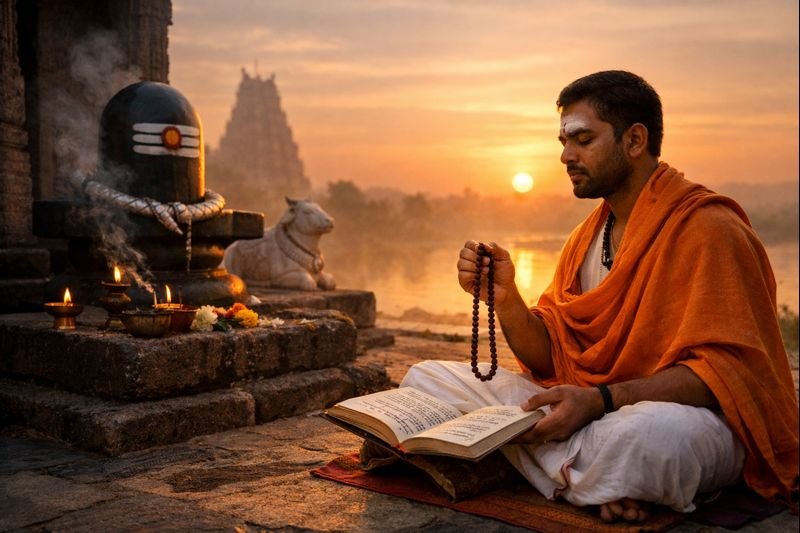
Sit comfortably with a clean body and mind. Traditionally, a clean altar with an image or idol of Lord Shiva and lit diya and incense helps build devotion.
3. Begin With Invocation
Start with a few deep breaths, then recite the opening dhyana and pranama verses to centre your focus. Then start chanting the kavacham verse by verse in clear, rhythmic Sanskrit or Telugu script.
4. Use A Mala (Rosary) If Desired
Using a 108-bead mala can help keep track of the number of chants and add rhythmic focus. Some devotees aim for set counts like 108, 216, or 1008 recitations for deeper spiritual discipline.
5. Conclude With Gratitude
After finishing the chanting, end with a silent prayer of thanks to Lord Shiva for his guidance and protection. Many also offer water or flowers to Shiva’s image after the chanting.
Benefits Of Reciting Sri Rudra Kavacham
Sri Rudra Kavacham is not just a series of verses but a devotional discipline with holistic benefits that believers attest to:
Spiritual Protection And Peace
Devotees believe that consistent recitation builds a spiritual shield against negative influences, emotional turmoil, and existential fears. The kavacham’s protective imagery addresses body, mind, and environment to harmonize energies.
Mental Strength And Focus
Reciting the kavacham daily is said to calm the mind, sharpen concentration, and reduce anxiety. Many practitioners note a sense of inner balance over time.
Success And Well-Being
Some verses of the kavacham describe blessings related to health, prosperity, education, family well-being, and fulfillment of righteous desires. Regular chanting is considered beneficial for personal growth and resilience.
Tips And Best Practices
- Start with a calm mind: Take a few minutes of mindfulness or controlled breathing before chanting.
- Use proper accent and rhythm: Even if you don’t fully understand Sanskrit, try to follow the rhythmic cadence carefully for mental absorption.
- Consistency is key: Daily or frequent chanting yields deeper effects than sporadic recitation.
- Respect cultural context: This is a sacred tradition; focus on devotion rather than speed.
Common Mistakes To Avoid
- Chanting mechanically without attention to meaning or reverence.
- Skipping invocation or gratitude steps. Ritual sequences help orient the mind.
- Being impatient with pronunciation—aim for clarity over speed.
- Navigating conflicting versions: Stick to a trusted text (like traditional Telugu manuscripts or priest-verified versions).
Personal Reflections And Observations
When I first started chanting Sri Rudra Kavacham Telugu regularly, I noticed greater emotional balance on stressful days. What surprised me most was how the rhythmic repetition itself calm my thoughts—a gentle reminder of the constancy of divine presence.
On the other hand, i personally recommend that beginners begin with smaller targets (like 108 verses) and gradually increase as comfort grows, using a clear Telugu script version so that the meanings resonate more deeply.
Frequently Asked Questions (FAQ)
Is Sri Rudra Kavacham Same As Sri Rudram?
No. Sri Rudra Kavacham is a specific protective hymn addressed to Shiva. Sri Rudram (Namakam and Chamakam) is a larger Vedic hymn praising Rudra extracted from the Yajurveda. Both are revered but serve slightly different ritual purposes.
How Long Does It Take To Complete One Recitation?
Time varies with pace and familiarity, but most experienced practitioners take 20–35 minutes for one complete chanting session, depending on the length of the version used.
Can Anyone Chant Sri Rudra Kavacham?
Yes. Devotees of all ages and backgrounds can chant it respectfully. Some prefer guidance from a priest or teacher especially for pronunciation and traditional practices.
Do I Need To Know Sanskrit To Recite?
Knowing Sanskrit helps understand meaning but is not a prerequisite. Many devotees chant using Telugu script or transliteration; intention and reverence are considered most important by practitioners.
What Are The Best Days To Chant?
Mondays and auspicious Shiva-related festivals like Maha Shivaratri, Pradosha days, or new moon days are traditionally preferred for increased spiritual focus.


+ There are no comments
Add yours