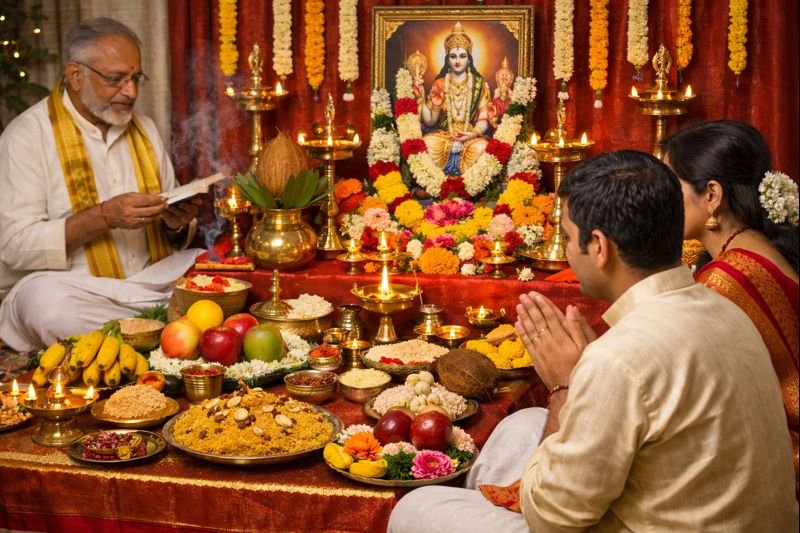
Sri Satya Narayana Vratam Pooja List Procedure Guide
Sri Satya Narayana Vratam Pooja List Procedure is a sacred ritual practiced by Hindus to seek blessings for prosperity, health, peace, and fulfillment of wishes. This pooja involves a specific set of items, steps, and rituals that must be followed with devotion and purity to honor Lord Satya Narayana properly. In this article, you will find an authentic breakdown of everything from the pooja list items to the ritual sequence, special tips, common errors, and answers to your most asked questions.
Introduction To Sri Satya Narayana Vratam
Sri Satya Narayana Vratam is a devotional observance dedicated to Lord Satya Narayana, an aspect of Lord Vishnu, emphasizing truth and righteousness. This vrat is often performed on auspicious days like Purnima (full moon), Ekadashi, Sankranti, and before major life events such as weddings, housewarming ceremonies, or after wish fulfillment.
Therefore, the vrat can be performed at home or in a temple and is believed to remove obstacles, bring good fortune, and ensure spiritual and material well-being.
In contrast, when I visited my aunt’s home during a Purnima pooja, what surprised me was the detailed preparation — from cleaning the entire pooja area to arranging materials in order — highlighting the significance of readiness before beginning the ritual.
Pooja List: Items Required For Sri Satya Narayana Vratam
Below is a thorough list of items used during the Sri Satya Narayana Vratam pooja. Exact counts and quantities may vary by family tradition or region, but the following reflects common and widely accepted items used in the ritual.
| Item | Suggested Quantity |
|---|---|
| Turmeric Powder (Haldi) | 50–100 grams |
| Kumkum (Red Vermilion) | 50–100 grams |
| Flowers (Fresh) | 2–4 bunches |
| Betel Leaves | 12–25 leaves |
| Betel Nuts (Supari) | 25–50 pcs |
| Dry Dates (Kharjuram) / Dry Fruits | 1 packet |
| Coconuts | 6–8 pcs |
| Fruits (Assorted) | Minimum 5 types (20 pcs) |
| Panchamrit (Milk, Yogurt, Honey, Ghee, Sugar) | Small quantities each |
| Kalasam (Water Pot) | 1 |
| Rice (Raw & Akshata) | 2 lbs approx |
| Coins (Any denomination) | 20–40 |
| Incense Sticks | 1 pkt |
| Camphor | 1 small packet |
| Sandalwood Powder | Small tin |
| Oil Lamps & Cotton Wicks | 2–4 |
| Clean Cloth for Altar | 1 |
This list combines traditional requirements and practical essentials that ensure the ritual flows smoothly. You may also consult an experienced priest for local variations or specific family customs.
Step-By-Step Pooja Procedure
The ritual sequence of Sri Satya Narayana Vratam consists of preparation, invocation, chanting, main offerings, narration of the vrat katha, and concluding prayers.
1. Preparation And Purification
Start by taking a bath and wearing clean, traditional clothes. Clean the pooja room thoroughly and spread a fresh white cloth where the pooja setup will be arranged. If possible, sprinkle clean water to purify the space. I personally recommend doing this a few hours before the main ritual to create a calm environment.
2. Setting Up The Altar
Place the idol or picture of Lord Satya Narayana at the center of the altar facing east or north. Surround it with flowers, lamps, incense, and the prepared Kalasam pot filled with water, mango leaves, and a coconut on top.
3. Sankalpam (Taking the Vow)
With folded hands, articulate your intention (sankalpam) aloud. This includes your name, gotra (family lineage), place, date, time, and specific wish or reason for performing the pooja. This traditional invocation signifies full commitment to the vrat.
4. Ganapati Pooja
Begin the ritual by worshipping Lord Ganesha to remove obstacles. Chant the Ganesha mantra “Om Gan Ganapataye Namah” and offer flowers and incense to the deity.
5. Main Satya Narayana Pooja
Perform the main pooja by offering turmeric, kumkum, flowers, fruits, betel leaves, and nuts while chanting the Satya Narayana mantra. Offer Panchamrit and light the ghee lamp. Devotees then offer coconuts and other prasad ingredients to the Lord.
6. Vrat Katha (Story Recitation)
The Satya Narayana Vrat includes specific sacred stories (kathas) that are narrated after the offering sequence. There are five main stories that explain why devotees perform this vrat and its benefits. These stories emphasize truth, devotion, and blessings.
7. Aarti And Prasad Distribution
Conclude the ritual with aarti, ringing bells and circling the lamp in front of the deity. Distribute prasadam (especially sweet sheera) among family members and guests. It symbolizes sharing the divine grace and blessings of Lord Satya Narayana.
Best Practices For Sri Satya Narayana Vratam
✔ Choose an auspicious day like Purnima or Ekadashi if possible.
✔ Use clean and fresh items for offerings — flowers, fruits, and prasad.
✔ Maintain silence and focus during mantra chanting and story narration.
Therefore, ✔ Offer Tulsi (holy basil) leaves if available — considered very auspicious.
Common Mistakes To Avoid
- Performing the pooja without cleaning the space thoroughly first.
- Skipping sankalpam; it’s an essential vow statement in traditional practice.
- Offering non-vegetarian items or forgetting to prepare prasad as vegetarian.
- Not placing the deity properly facing east or north.
- Rushing through the katha; it’s the heart of the vrat ritual.
FAQ About Sri Satya Narayana Vratam
Can I Perform This Vrat At Home?
Yes. Sri Satya Narayana Vratam can be performed at home with the correct items and proper sequence. Consulting a priest can help if this is your first time.
Is There A Specific Time To Do This Pooja?
There is no strict time; it can be done in the morning or evening. Traditionally, performing in the evening is considered especially auspicious.
Why Do Devotees Perform This Vrat?
Devotees perform Sri Satya Narayana Vratam for fulfillment of desires, removal of obstacles, blessings for family welfare, and spiritual upliftment.
What Prasad Is Prepared?
Typical prasad includes sweet sheera (semolina cooked with ghee, sugar, and dry fruits), fruits, and coconut offerings.
When my cousin performed this pooja last year, she shared that spending uninterrupted time on the vrat katha and focused chanting resulted in a deeply calming and uplifting spiritual experience.
Furthermore, by understanding each stage of the pooja list and procedure and approaching it with sincere devotion, you honor the tradition of Sri Satya Narayana Vratam and invite its blessings into your home and life.


+ There are no comments
Add yours