Venkateswara Suprabhatam in Telugu is a devotional way to begin the morning with the verses traditionally associated with waking Lord Venkateswara at Tirumala. Tirumala Tirupati Devasthanams (TTD) describes Suprabhatam as the first pre-dawn seva of the temple day and identifies the full work as a 70-sloka composition in four parts. This guide explains that structure, gives the opening Telugu verses, and points you to TTD’s official Telugu publication for the complete authenticated text.
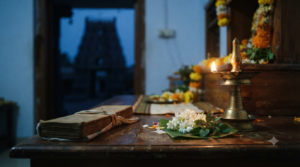
Independent guide: Sri Vyasa Pooja is not affiliated with, endorsed by, or the official website of Tirumala Tirupati Devasthanams. We do not accept TTD bookings, donations, or payments, so use TTD’s official websites for temple services and official publications.
Venkateswara Suprabhatam in Telugu at a Glance
| Detail | What TTD states |
|---|---|
| Purpose at Tirumala | The first pre-dawn seva, traditionally offered to awaken Lord Venkateswara |
| Meaning of “Suprabhatam” | “Good morning” |
| Composer | Prativadi Bhayankara Annan, a disciple of Manavala Mamuni |
| Total structure | 70 slokas in four sections |
| Four sections | Suprabhatam, Stotram, Prapatti and Mangalasasanam |
| Temple setting | Recited before Bangaru Vakili in the early morning |
| Dhanurmasa exception | Tiruppavai replaces Suprabhatam during Dhanurmasa |
| Official Telugu source | TTD e-Publications, including the Telugu explanatory edition |
The most useful correction is simple: the familiar opening lines are only the beginning. TTD treats the complete Sri Venkateswara Suprabhatam as a four-part work with 70 slokas, not as a two-line morning chant.
What Is Venkateswara Suprabhatam in Telugu?
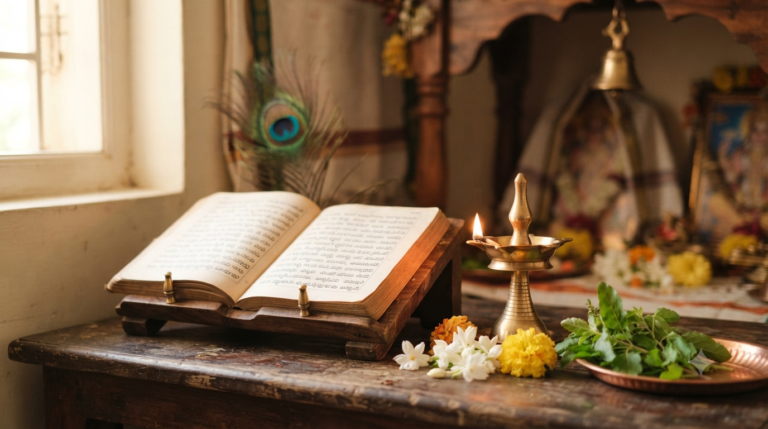
Venkateswara Suprabhatam in Telugu is the Telugu-script presentation of a Sanskrit devotional composition used in the Tirumala tradition. TTD explains that the temple recites it before dawn as the day’s first seva for Lord Venkateswara. The word “Suprabhatam” itself means “good morning,” which is why devotees commonly understand the hymn as a sacred awakening prayer.
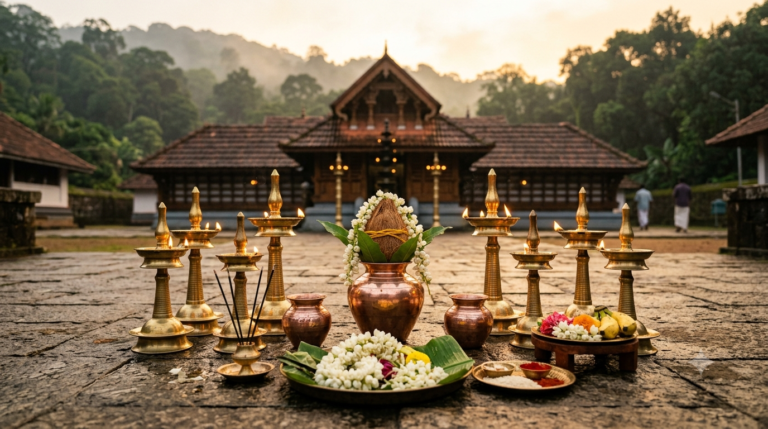
At Tirumala, acharyapurushas recite the verses in front of the main deity near the Bangaru Vakili. TTD also notes that, at the same time, a descendant of Tallapaka Annamacharya sings compositions in praise of Lord Venkateswara in the first corridor of the sanctum area. That setting makes the prayer part of a living temple routine rather than only a text read from a book.
The official TTD page also says the ritual lasts for more than 30 minutes. However, that duration belongs to the temple seva. It should not be treated as a compulsory home chanting time.
The Four Parts of Sri Venkateswara Suprabhatam
TTD divides the complete work into four sections. Understanding them helps because many online pages label only the opening section as the entire Suprabhatam. The complete sequence moves from awakening to praise, surrender and final benediction.
| Section | Slokas | Main role |
|---|---|---|
| Suprabhatam | 29 | Awakening the Lord and greeting the sacred morning |
| Stotram | 11 | Praise of Lord Venkateswara |
| Prapatti | 16 | Expression of total surrender to the Lord |
| Mangalasasanam | 14 | Prayer for divine glory and auspiciousness |
These counts add up to 70 slokas, which is the total given by TTD. Therefore, a page that presents only the first few awakening verses is giving an excerpt, not the complete four-part work.
Who Composed the Venkateswara Suprabhatam?
Tirumala Tirupati Devasthanams credits the composition to Prativadi Bhayankara Annan. TTD identifies him as a disciple of the celebrated Sri Vaishnava preceptor Manavala Mamuni. This attribution matters because incorrect authorship appears on some devotional pages and social posts.
The composition belongs to the Sri Vaishnava devotional setting associated with Lord Venkateswara. Its four-part design also explains why the work feels broader than an ordinary wake-up verse. It begins with awakening imagery, then expands into praise, surrender and auspicious blessing.
When you compare versions online, use the composer and the four-part count as quick authenticity checks. If a page gives a different author or a completely different section structure, compare it with TTD’s official Suprabhatam page before relying on it.
Venkateswara Suprabhatam in Telugu: Opening Verses
The Venkateswara Suprabhatam in Telugu begins with the famous dawn invocation addressed to Rama and then turns to Govinda. These opening verses identify the text immediately, while the complete work continues far beyond them.
కౌసల్యా సుప్రజా రామ పూర్వా సంధ్యా ప్రవర్తతే ।
ఉత్తిష్ఠ నరశార్దూల కర్తవ్యం దైవమాహ్నికమ్ ॥ఉత్తిష్ఠోత్తిష్ఠ గోవింద ఉత్తిష్ఠ గరుడధ్వజ ।
ఉత్తిష్ఠ కమలాకాంత త్రైలోక్యం మంగళం కురు ॥
In simple terms, the first verse announces the coming dawn and calls for the divine morning duties to begin. The second calls on Govinda, Garudadhvaja and Kamalakanta to arise and bless the three worlds with auspiciousness. TTD’s official page gives the Sanskrit text in transliteration with English meaning, while its e-Publications portal provides an official Telugu explanatory edition.
Spellings can vary slightly when Sanskrit is represented in Telugu script. So if you are learning pronunciation, it is better to follow one trusted edition consistently rather than mixing lines from several websites.
Where to Read the Official Telugu Text
TTD’s e-Publications library is the safest starting point for devotees who want a verified Venkateswara Suprabhatam Telugu text. The library currently lists Sri Venkateswara Suprabhatam among its religious publications and provides a Telugu explanatory edition published by TTD.
You can use the TTD e-Publications portal to find the title. TTD also hosts a direct publication titled Sri Venkateswara Suprabhatam, described as covering Suprabhatam, Stotram, Prapatti and Mangalasasanam with Telugu explanation.
The official TTD Suprabhatam page is useful for checking the temple tradition, composer, section counts and English meanings. Using these official sources avoids the common problem of copied lyrics carrying typing errors across many unofficial pages.
The TTD e-book also separates the four sections clearly, so new readers can see where each part begins. This matters when an audio track or printed booklet uses only part of the full sequence. Therefore, compare the section heading before assuming a version is complete.
The official library is also useful when Telugu spellings differ across websites. If two spellings look different, follow one TTD edition consistently while learning. That approach keeps pronunciation practice steady and reduces confusion.
Why Tirumala Recites Suprabhatam Before Dawn
TTD calls Suprabhatam the first and foremost pre-dawn seva at the Sri Venkateswara temple. The recitation takes place before the Bangaru Vakili as the temple moves from the Lord’s night rest into the day’s worship. TTD describes the prayer as part of awakening the Lord from divine sleep.
After the Suprabhatam, the temple proceeds into the next stages of the morning routine. Therefore, the hymn is not an isolated performance. It is the opening movement in a larger sequence of temple worship.
For home use, this guide treats the text as personal devotional reading rather than as a temple ritual. TTD’s public Suprabhatam page describes the Tirumala seva and does not prescribe one mandatory household method.
What Happens During Dhanurmasa?
There is an important seasonal exception at Tirumala. TTD states that Suprabhata Seva is not performed during Dhanurmasa. Instead, Tiruppavai is recited during that sacred month.
TTD News has also documented the annual practice of Andal’s Tiruppavai replacing Suprabhatam in the Tirumala temple during Dhanurmasa. This is a temple-calendar tradition, so devotees should not assume the standard Suprabhatam routine runs unchanged every day of the year.
The distinction also helps when watching live temple coverage. If you hear Tiruppavai in the pre-dawn period during Dhanurmasa, that is not a missed Suprabhatam. It is the scheduled seasonal tradition.
Venkateswara Suprabhatam in Telugu vs Suprabhata Seva
Venkateswara Suprabhatam in Telugu is the devotional text, while Suprabhata Seva is the actual early-morning temple ritual at Tirumala. The two are closely connected, but they are not interchangeable terms.
You do not need a temple ticket simply to read or listen to the prayer at home. A ticket becomes relevant only when a devotee wants to attend the regulated temple seva in person, subject to TTD’s current rules and availability.
For the booking side, use our separate TTD Suprabhata Seva guide. Keeping booking information separate from this prayer guide avoids mixing devotional text with changing ticket procedures.
How to Use the Prayer at Home
TTD does not publish a compulsory household procedure on its Suprabhatam page. So the simplest approach is to treat home recitation as personal devotional reading rather than as a formal recreation of the Tirumala seva.
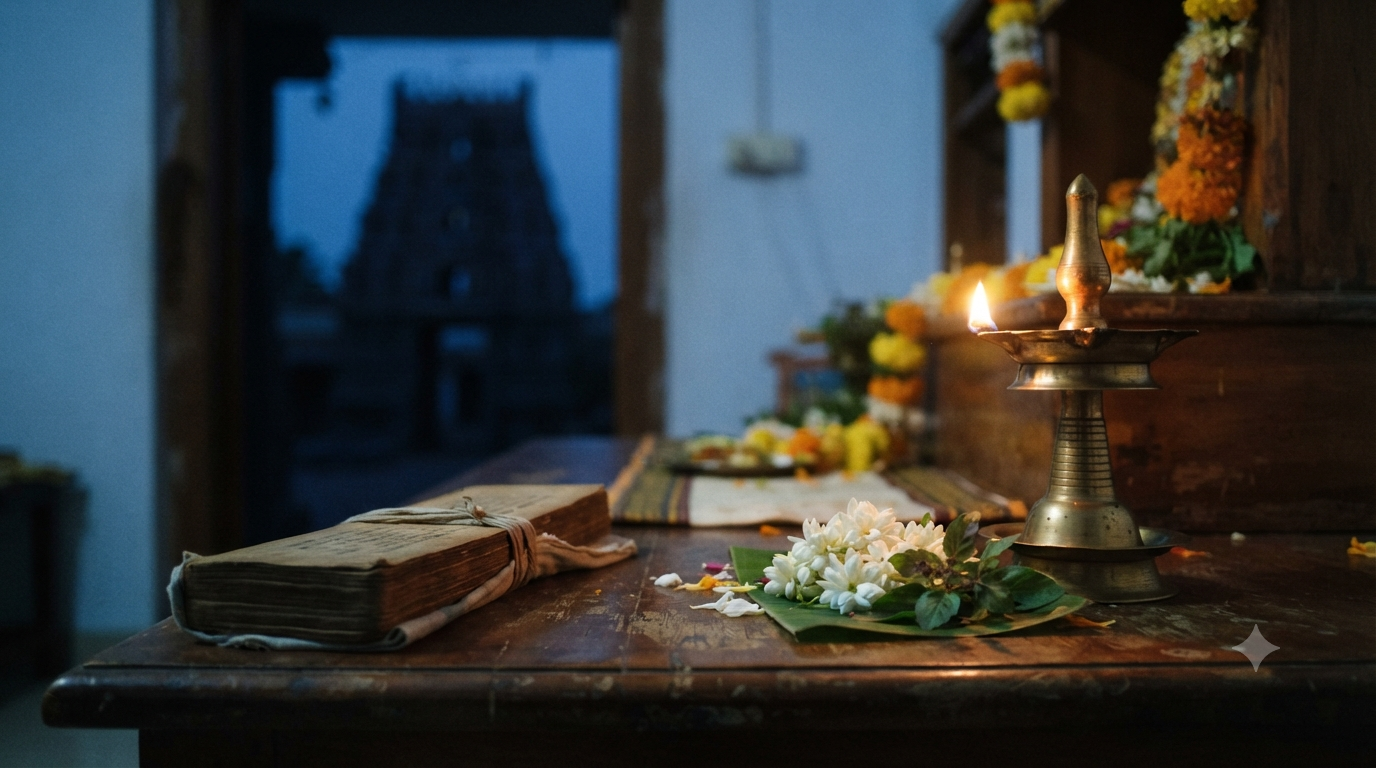
Use the official text, choose a quiet morning time, and read at a pace that lets you pronounce the words carefully. If the full 70-sloka sequence is too long at first, begin by learning the opening verses and the section order before attempting the complete text.
Listening to the official audio can also help you learn the flow. However, avoid treating speed as a goal. Clear attention to the words is more useful than racing through a long text simply to finish it.
Meaning of the Prayer Without Exaggerated Claims
The broad movement of the hymn is devotional rather than transactional. It begins by awakening and greeting the Lord, then praises His qualities, expresses surrender and closes with auspicious blessing.
TTD describes worship during Suprabhatam as highly meritorious. Devotees may therefore recite it with faith for devotion, peace and remembrance of Lord Venkateswara. These are religious beliefs and devotional aims, not guaranteed worldly outcomes.
Be cautious with pages that promise fixed financial, health or career results from chanting. The official TTD material presents Suprabhatam as worship and devotion, not as a guaranteed remedy for personal problems.
Common Mistakes to Avoid
Several small errors can make an otherwise useful guide confusing. First, do not call the first two lines the complete Suprabhatam. TTD counts 70 slokas across four sections.
- Wrong composer: TTD credits Prativadi Bhayankara Annan, so check any conflicting attribution.
- Missing sections: the complete sequence includes Suprabhatam, Stotram, Prapatti and Mangalasasanam.
- Mixing text and seva: the prayer can be read at home, while temple attendance follows separate TTD procedures.
- Ignoring Dhanurmasa: Tiruppavai replaces Suprabhatam in the Tirumala temple during that period.
- Copying random PDFs: use TTD e-Publications when you want an official Telugu edition.
If you enjoy learning devotional texts with source notes, the site’s Stotram section follows the same source-first approach. That keeps the focus on authentic texts rather than copied versions with unknown origins.
Before You Begin Your Morning Recitation
Venkateswara Suprabhatam in Telugu is best approached as a complete devotional work, not just a familiar opening tune. Remember the four-part structure, use TTD’s official text, and keep the temple seva separate from personal home recitation.
If you are learning the prayer for the first time, begin with the opening verses and then move section by section. For the complete Telugu explanation, use the TTD e-Publications edition instead of an unverified download.
Frequently Asked Questions
Who wrote Sri Venkateswara Suprabhatam?
Tirumala Tirupati Devasthanams credits Prativadi Bhayankara Annan with the composition. TTD also identifies him as a disciple of the Sri Vaishnava preceptor Manavala Mamuni.
How many slokas are in Venkateswara Suprabhatam?
TTD gives a total of 70 slokas. They are divided into 29 Suprabhatam slokas, 11 Stotram slokas, 16 Prapatti stanzas and 14 Mangalasasanam stanzas.
Is Venkateswara Suprabhatam in Telugu originally a Telugu prayer?
No. Venkateswara Suprabhatam in Telugu presents the Sanskrit devotional composition in Telugu script or with Telugu explanation. TTD’s e-Publications library provides an official Telugu explanatory edition for devotees who prefer the language.
What does Suprabhatam mean?
TTD explains “Suprabhatam” as “good morning.” In the Tirumala tradition, the hymn forms the first pre-dawn seva that awakens Lord Venkateswara for the temple day.
Can I chant Venkateswara Suprabhatam at home?
For personal home devotion, you may read or listen to the text. TTD’s public page explains the temple seva and does not set out a mandatory household ritual, so use the official text and follow your family’s devotional practice.
Is Suprabhatam recited at Tirumala every day?
Not throughout the entire year. TTD states that during Dhanurmasa, Tiruppavai replaces Suprabhatam in the Tirumala temple.
Where can I get the official Venkateswara Suprabhatam Telugu text?
Use the TTD e-Publications website, which lists Sri Venkateswara Suprabhatam among its official religious books. TTD also provides an official PDF edition with Telugu explanation.
Is Suprabhatam the same as Suprabhata Seva?
No. Suprabhatam is the devotional composition, while Suprabhata Seva is the regulated early-morning temple ritual in which it is recited at Tirumala. Temple attendance follows current TTD rules and availability.