Key Information at a Glance
| Temple | Maa Purnagiri Devi Temple (a Shakti Peetha) |
| Location | Hilltop near Tanakpur, Champawat district, Uttarakhand |
| Ropeway timings | Daytime service, roughly morning to evening (confirm locally) |
| Indicative fare | Around ₹100–₹250 depending on ticket type |
| Trek option | About 3 km walk from the motorable point, plus a stepped final stretch |
| How to reach | Nearest railhead Tanakpur (~20 km); nearest airport Pantnagar (~130 km) |
About Maa Purnagiri Temple
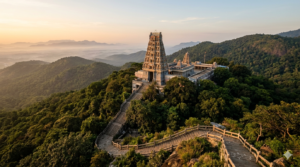
Maa Purnagiri Devi Temple stands on a hill at roughly 3,000 metres, overlooking the Sharda (Kali) river and the plains stretching toward the Nepal border. It is counted among the Shakti Peethas, the sacred sites associated with the goddess in Hindu tradition, which is why it draws a steady flow of devotees through the year. The crowds swell sharply during Chaitra Navratri in spring, when a large fair is held and the temple stays open far longer than usual.
The shrine is reached after a journey from Tanakpur to the base area, followed by a climb. For many years the only way up was on foot, but a ropeway now gives older pilgrims, families with children, and anyone short on time an easier option for part of the ascent.
Ropeway Timings and Fare
The Purnagiri ropeway is a passenger cable-car service that carries pilgrims between the lower station and a point near the temple, cutting out a tiring section of the climb. It typically runs during daylight hours and pauses in bad weather, since high winds and rain can halt operations without notice.
| Service | Indicative timing / fare |
| Daily operation | Morning to evening, daylight hours |
| One-way ticket | Around ₹100–₹150 |
| Round-trip ticket | Around ₹200–₹250 |
| Children / senior concession | Often lower than the standard fare |
These figures are indicative only. Ropeway timings, fares, and concession rules change with the season and operator decisions. Please confirm the current schedule and price at the ropeway counter on the day you visit.
Sri Vyasa Pooja is an information guide — we do not sell tickets. Ropeway tickets are bought directly at the station counter, and the temple has no separate entry fee.
Ropeway vs Trek: Which to Choose
From the motorable point near the base, the walking route to the temple is about 3 kilometres and finishes with a flight of steps that many pilgrims remember well. On foot, the full round trip can take several hours depending on your pace and the crowds, and it can feel demanding in the heat or after rain.
The ropeway is the practical choice if you have limited time, are travelling with elderly relatives or young children, or simply want to conserve energy for the darshan. Many pilgrims combine the two — riding up by ropeway and walking down, or the reverse. During peak festival days expect queues at the ropeway, so plan to start early. If the ropeway is closed due to weather, the trek remains the only way up, so wear sturdy footwear and carry water.
Darshan Timings
The temple generally opens in the early morning and closes by evening. In the summer months darshan is usually available from around 6 AM to 7 PM, while winter hours tend to be a little shorter. During Chaitra Navratri the temple often remains open around the clock to manage the large gathering of devotees. Aarti and special rituals follow the temple’s own schedule, so check at the shrine for the day’s timings. As hours can shift with the season and festival calendar, treat these as a guide and verify locally before planning your darshan.
Location and How to Reach
The temple lies in Champawat district, with Tanakpur serving as the main gateway town. From Tanakpur you travel by road to the base area, roughly 17–20 km away, before the ropeway or trek begins.
- By rail: Tanakpur railway station is the nearest railhead, about 20 km from the temple base, with connections toward Delhi and Lucknow.
- By air: Pantnagar is the nearest airport, around 130 km away; taxis and buses run onward to Tanakpur.
- By road: Tanakpur is linked by bus and taxi services to several cities including Delhi, Lucknow and Dehradun. Shared and private vehicles cover the final stretch to the base.
The spring months around Chaitra Navratri are the busiest and most popular time to visit. Avoid the peak monsoon weeks, when heavy rain can make both the road and the trek difficult.
Frequently Asked Questions
Is there a ropeway at Purnagiri Temple?
Yes. A passenger ropeway carries pilgrims between the base area and a point near the temple, making the climb easier. It runs during daylight hours and may stop in bad weather, so confirm the schedule locally before you travel.
How much does the Purnagiri ropeway ticket cost?
As an indicative guide, one-way tickets cost around Rs. 100 to Rs. 150 and round-trip tickets around Rs. 200 to Rs. 250, with concessions for children and seniors. Fares change over time, so check the current rate at the ropeway counter. Sri Vyasa Pooja is an information guide and does not sell tickets.
How long is the trek to Purnagiri Temple?
The walking route is about 3 kilometres from the motorable point near the base and ends with a stretch of steps. The full round trip on foot can take several hours depending on your pace, the weather and the crowds.
What are the darshan timings at Purnagiri Temple?
The temple is generally open from early morning to evening, with summer hours of roughly 6 AM to 7 PM and slightly shorter winter hours. During Chaitra Navratri it often stays open around the clock. Confirm the day’s timings at the shrine, as they vary by season and festival.