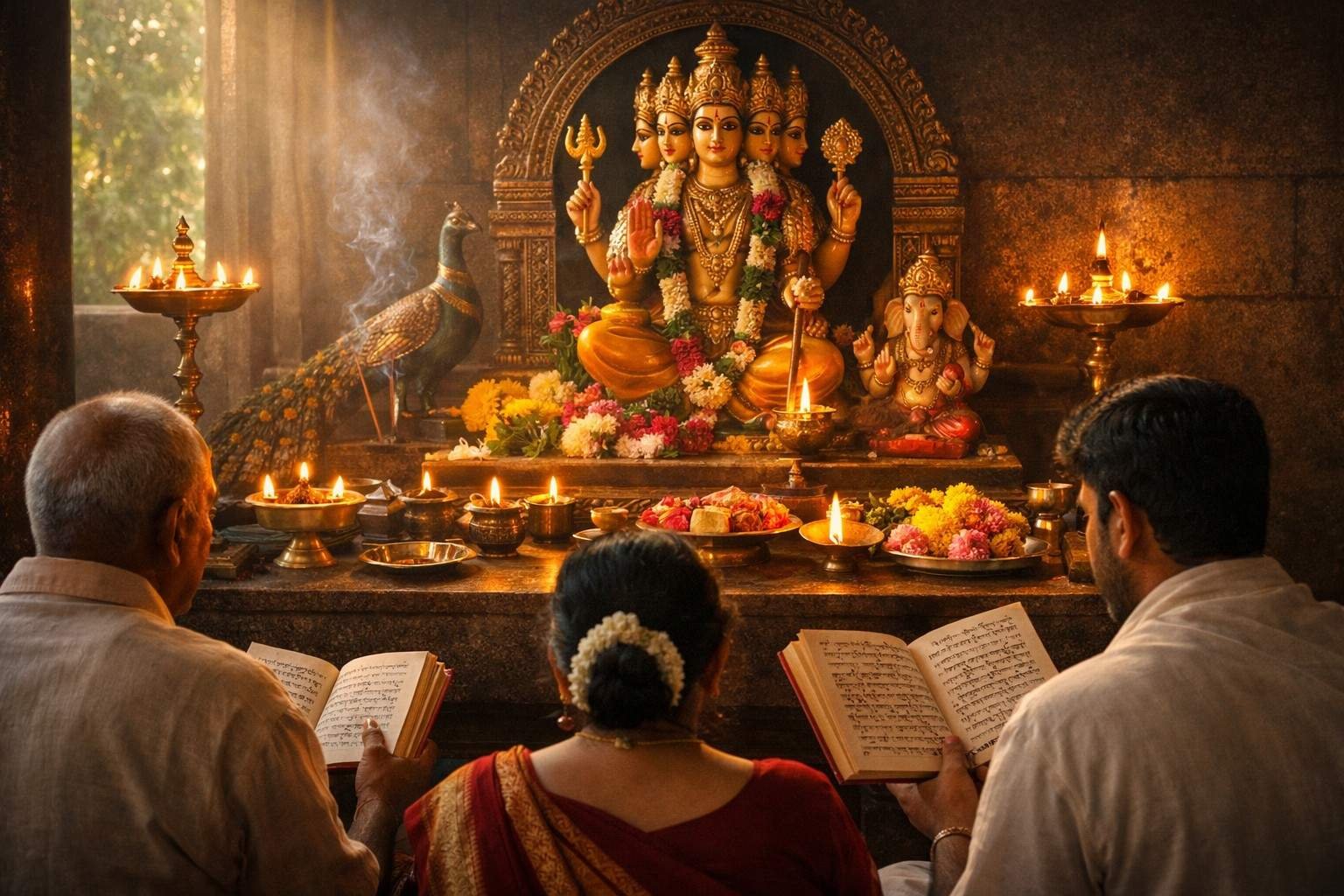
Jaya Skanda Stotram Telugu: Essential Devotional Hymn With Meaning And Practice
Jaya Skanda Stotram Telugu is a revered devotional hymn dedicated to Lord Skanda (also Sri Subrahmanya or Kartikeya), the Hindu god of courage, victory, and wisdom. This ancient prayer in Telugu language praises the divine attributes and victories of Skanda, helping devotees invoke strength, spiritual focus, and inner peace. In this article, we explore its history, pronunciation, benefits, meaningful recitation steps, best practices, common mistakes, and frequently asked questions about chanting the Jaya Skanda Stotram Telugu with insights drawn from authoritative resources and traditional practice.
What Is Jaya Skanda Stotram?
The Jaya Skanda Stotram Telugu is a sacred hymn (stotram) that glorifies Lord Skanda — the revered son of Lord Shiva and Goddess Parvati. This hymn consists of a number of verses each starting with “Jaya” (Victory), celebrating the heroic deeds, divine qualities, and cosmic roles of Skanda.
Furthermore, the stotram is rooted in Hindu devotional tradition, particularly within Shaivism and the worship of Subrahmanya as the remover of obstacles and bestower of courage. It is often recited during festivals such as Skanda Shasti or Subrahmanya Shashti, on Tuesdays and Saturdays, and during times of personal challenges.
Additionally, lord Skanda is known by many names, including Murugan in the South Indian tradition and Kartikeya in the North. The hymn praises him not only as a divine warrior but also as a compassionate protector of devotees.
Historical And Cultural Background
The exact origins of the Jaya Skanda Stotram Telugu are not definitively documented in ancient scripture, but it is circulated widely through traditional oral and textual devotional collections. Its verses glorify the many attributes of Lord Skanda, emphasizing triumph over ego, fear, and ignorance.
Furthermore, throughout centuries, the hymn has been transmitted by temple priests, scholars, and devotional communities. Many temples dedicated to Lord Subrahmanya across India, such as the famed temples in Palani (Tamil Nadu) and Kukke Subrahmanya (Karnataka), include recitation of this stotram in regular services. TTD Official Website highlights temple traditions and rituals for Lord Venkateswara but reflects the broader South Indian temple worship ethos where hymns like this are integral.
Text And Meaning — Verse Breakdown
The structure of the Jaya Skanda Stotram Telugu typically comprises nine verses, each extolling specific qualities of Skanda. Devotees often recite and meditate on the meaning of the verses to deepen their devotional experience.
| Verse | Excerpt (Telugu) | Meaning (Summary) |
|---|---|---|
| 1 | జయ దేవేంద్రజాకాంత జయ మృత్యుంజయాత్మజ | Victory to the one beloved by Indra and conqueror of death |
| 2 | జయ తారకదర్పఘ్న జయ విఘ్నేశ్వరానుజ | Victory to the destroyer of pride and elder brother of Ganesha |
| 3 | జయ శంకరసంభూత జయ పద్మాసనార్చిత | Victory to the one born of Shiva and worshipped on the lotus seat |
| 4 | జయ భాగీరథీసూనో జయ పావకసంభవ | Victory to the son of Goddess Parvati and born of fire |
| 5 | జయ భక్తేష్టవరద జయ భక్తార్తిభంజన | Victory to the giver of boons to devotees and reliever of their pains |
| 6 | జయ ధర్మవతాం శ్రేష్ఠ జయ నారదసన్నుత | Victory to the best among the righteous praised by sage Narada |
| 7 | జయ భోగీశ్వరాధీశ జయ తుంబురుసేవిత | Victory to the lord of enjoyment served by celestial beings |
| 8 | జయ యోగసమారాధ్య జయ సుందరవిగ్రహ | Victory to the one worshipped through yoga and having a beautiful form |
| 9 | జయ షడ్భావరహిత జయ శణ్ముఖదేవేశ | Victory to the one free of the six inner afflictions and Lord of six faces |
Benefits Of Chanting Jaya Skanda Stotram
Devotees believe that regular chanting of the Jaya Skanda Stotram Telugu fosters multiple spiritual and practical benefits:
- Invokes courage and inner strength.
- Reduces anxiety and fear when facing difficult situations.
- Enhances focus and mental clarity.
- Promotes spiritual discipline and devotion.
While these benefits are part of devotional tradition, practitioners emphasize sincerity, consistent effort, and respectful attitude during recitation to experience deeper rewards. I personally recommend starting with a few verses daily and gradually increasing repetition over time.
How To Recite The Stotram — Step By Step
Here is a structured way to chant the Jaya Skanda Stotram Telugu effectively:
1. Create A Sacred Space
Choose a quiet, clean corner in your home or temple. Place an image or idol of Lord Skanda/Subrahmanya on a raised platform. Light a ghee or oil lamp and incense before beginning.
2. Set Your Intention
Take a few deep breaths and set your intention clearly — whether for peace, courage, relief from obstacles, or spiritual growth. Silence your mind for a moment before starting.
3. Pronunciation And Rhythm
Chant slowly and clearly. Each verse begins with “Jaya” (victory), which should be pronounced distinctively to invoke the spirit of praise. You may chant aloud or softly in your mind.
4. Repetition And Consistency
Traditionally, devotees recite the stotram 3, 7, 9, or 11 times during a session. Consistency — daily or weekly — is far more impactful than occasional long recitations.
5. Closing With Gratitude
After completing your chanting, sit for a few moments in silence, expressing gratitude. Offering flowers or fruits to the deity at this stage enhances devotional focus.
Tips And Best Practices
- Chant at the same time each day to establish a spiritual habit.
- Use a simple prayer bead (japa mala) to maintain rhythm and count repetitions.
- Listen to well-pronounced versions or recordings to improve pronunciation and devotion.
- Combine chanting with meditation for added focus.
When I visited a Subrahmanya temple in South India, I noticed many devotees reciting this stotram early in the morning, finding that the peaceful hours before sunrise help deepen concentration and devotion.
Common Mistakes To Avoid
- Rushing through the verses — take time with pronunciation and meaning.
- Skipping the quiet reflection part after chanting.
- Reciting mechanically without devotion.
- Chanting in a noisy or distracting environment.
FAQ About Jaya Skanda Stotram Telugu
Is There A Specific Time To Chant The Stotram?
While you can chant anytime, the early morning (Brahma Muhurta) or evening is considered especially conducive for spiritual practices, as it helps foster calmness and focus.
Can Beginners Chant It?
Absolutely. Beginners should start slowly, perhaps with 3 repetitions and gradually increase as they become comfortable with the verses.
Does It Require A Guru Or Initiation?
There is no strict requirement for a guru or initiation to chant the Jaya Skanda Stotram Telugu. However, learning from someone experienced can help ensure correct pronunciation and deeper understanding.
Are There Audio Or PDF Resources?
Yes — there are freely available PDF lyrics and audio versions online. You can find downloadable versions like this one: Jaya Skanda Stotram Telugu PDF.
How Long Should I Practice Before Expecting Results?
Results vary by individual. Regular practice over weeks or months builds heartfelt devotion and inner stability. Focus on sincere effort rather than specific outcomes.
Conclusion
The Jaya Skanda Stotram Telugu is more than a hymn — it is a devotional practice that connects the practitioner with courage, wisdom, and spiritual grounding. Whether you are new to recitation or have chanted for years, the verses offer rich meaning that deepens with reflection and devotion. Begin with intention, chant with respect, and let the spirit of “Jaya” (victory) echo in your life.


+ There are no comments
Add yours