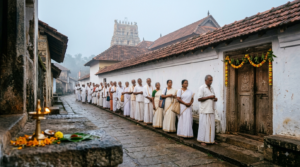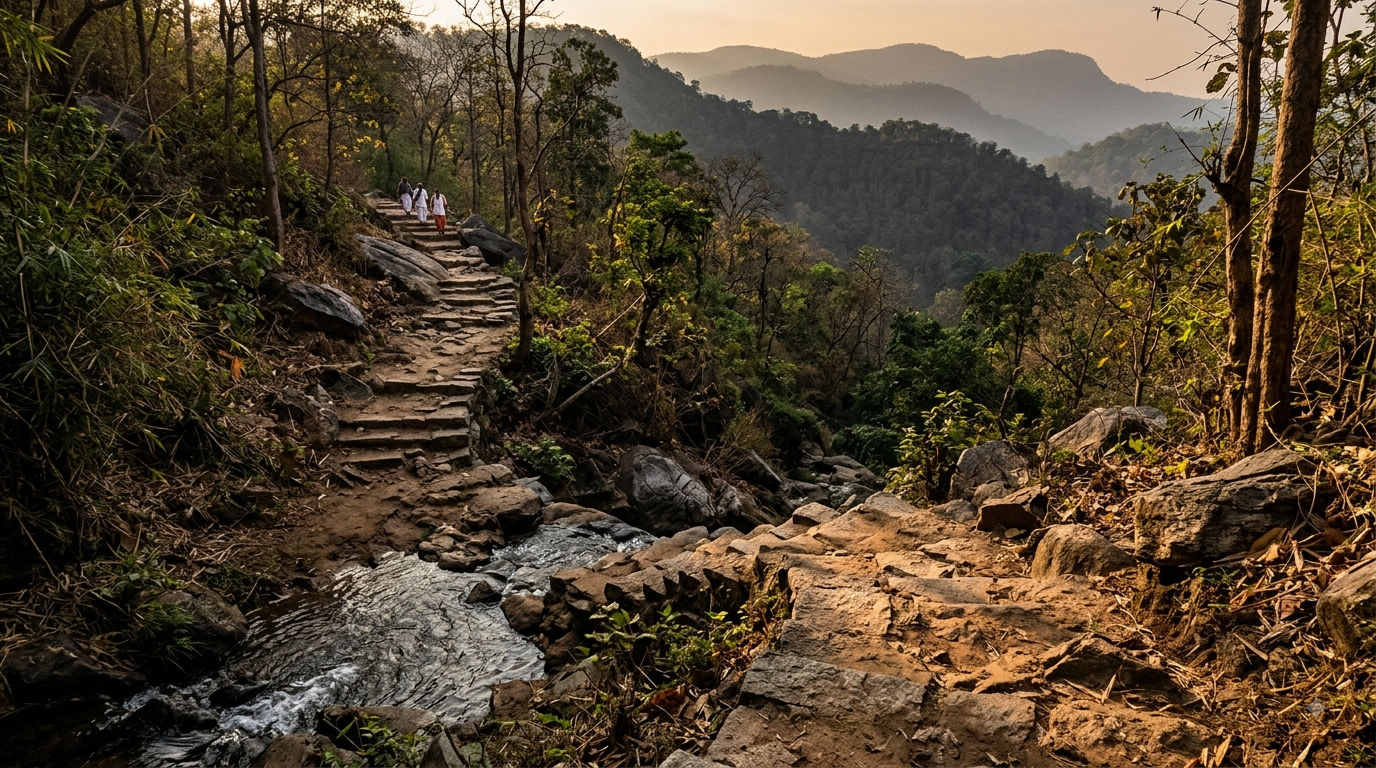
Nava Narasimha darshan timings at Ahobilam run on two separate clocks, because the kshetra is split across two settlements eight kilometres apart. Lower Ahobilam opens early and stays open well into the evening. Upper Ahobilam sits inside India’s largest tiger reserve, so it shuts far earlier for forest-safety reasons.
Most first-time pilgrims learn that the hard way, after driving up the ghat road at four in the afternoon. This guide sets out both schedules, the shrine-by-shrine walking times, and the cut-offs that decide how many of the nine shrines you finish.
Sri Vyasa Pooja is an independent pilgrim guide. We are not affiliated with, endorsed by, or the official website of Sri Lakshmi Narasimha Swamy Devasthanams, Ahobilam. We take no bookings, donations or payments of any kind. Please use the temple’s own portal at ahobilamtemple.com for sevas, and confirm every timing before you travel.
Nava Narasimha Darshan Timings at a Glance
Here are the Nava Narasimha darshan timings in short, so you can plan before reading further.
- Lower Ahobilam (Diguva) opens roughly 6:30 AM to 1:00 PM, then 3:00 PM to 8:00 PM.
- Upper Ahobilam (Eguva) opens roughly 7:00 AM to 1:00 PM. It reopens at 2:00 PM and closes early.
- General darshan is free on all days; a paid quick-darshan ticket is available at a nominal rate.
- The outlying forest shrines keep shorter hours, broadly 9:00 AM to 4:00 PM.
- Ahobilam lies in Nandyal district, not Kurnool district, since the 2022 redrawing of Andhra Pradesh districts.
- Two unhurried days cover all nine Nava Narasimha shrines comfortably.
Nava Narasimha Darshan Timings for Upper and Lower Shrines
Lower Ahobilam admits devotees from about 6:30 AM until 1:00 PM. It then reopens around 3:00 PM and closes near 8:00 PM. Upper Ahobilam runs a tighter schedule, so the Nava Narasimha darshan timings there are roughly 7:00 AM to 1:00 PM.
A one-hour midday closure follows. The afternoon session then ends earlier than at the lower complex, and that gap between the two is the single most useful thing to know.
| Location | Morning | Evening |
|---|---|---|
| Lower Ahobilam (Diguva) | 6:30 AM to 1:00 PM | 3:00 PM to 8:00 PM |
| Upper Ahobilam (Eguva) | 7:00 AM to 1:00 PM | 2:00 PM to 5:30 PM |
| Outlying forest shrines | About 9:00 AM | Closing about 4:00 PM |
Treat the evening column at Upper Ahobilam as the soft figure. Some published schedules still show a 7:00 PM close there. More recent pilgrim reports describe gates and forest routes closing by about 5:30 PM. Plan around the earlier time, since arriving late costs you the whole trip.
Why Nava Narasimha Darshan Timings Differ by Complex
The reason is not administrative but ecological. Ahobilam sits inside the Nagarjunsagar-Srisailam Tiger Reserve. At roughly 3,728 square kilometres, it is India’s largest tiger reserve, and the Andhra Pradesh forest department manages it. Movement on forest tracks after dusk is restricted, so Nava Narasimha darshan timings at the upper shrines wind down while daylight holds.
This also explains something pilgrims often misread as rudeness. Guides refuse late treks to Jwala Narasimha for a simple reason. Those paths run through active wildlife habitat. You can read the reserve’s own profile at nstr.co.in before planning any late walk.
Where Sources Disagree on Nava Narasimha Darshan Timings
Almost every page you will find quotes slightly different hours, and pretending otherwise would not help you. The disagreement is real, so here is what it actually looks like on the ground.
The morning openings are consistent across sources: 6:30 AM below, 7:00 AM above. The midday break is also consistent, running roughly 1:00 PM to 2:00 PM at Upper Ahobilam. Evening closing is where the spread appears. Published Nava Narasimha darshan timings range between 5:30 PM and 8:00 PM, depending on the complex and the age of the source.
There is a practical reason behind the spread. Seasonal daylight, festival schedules and forest advisories all move the evening cut-off. Websites rarely update afterwards. So ring the Devasthanam office in the week before you travel, because no third-party page can promise a live schedule.
Darshan Tickets, Sevas and What You Actually Pay
General darshan at both complexes is free on every day of the year. A paid quick-darshan ticket is commonly reported at a nominal ₹50 per head. It earns its cost only on weekends and festival days. Arjitha sevas such as abhishekam, archana and kalyanotsavam carry separate charges set by the Devasthanam.
Seva rates change from time to time, so treat any figure you read online as indicative. Unlike Nava Narasimha darshan timings, which move only seasonally, tariffs are revised outright. The Devasthanam publishes current rates and accepts online seva requests through its own portal. Our guide to Ahobilam kalyanam timings and ticket booking covers that ritual in detail.
Guide, Jeep and Doli Charges
These are the costs nobody publishes, because operators negotiate them locally. The temple does not fix them. A guide for the full nine-shrine circuit, a shared jeep to the forest shrines, and a doli for elderly pilgrims each run into the low thousands of rupees.
Settle the amount before you set off, since renegotiating halfway up a forest track never goes well. Sharing an eight-seater jeep with other families cuts the per-head cost sharply. No official tariff card exists for these services. Ask two or three operators near the Lower Ahobilam mutt before you agree.
The Nine Nava Narasimha Shrines and How Long Each Takes
Ahobilam is unique because Lord Narasimha is worshipped here in nine distinct forms, spread across hills, caves and forest clearings. The nine are Jwala, Ahobila, Malola, Kroda, Karanja, Bhargava, Yogananda, Chatravata and Pavana Narasimha. Older listings that name only eight have simply dropped one, usually Chatravata.
| Shrine | Where it sits | How you reach it |
|---|---|---|
| Ahobila (Ugra) Narasimha | Upper Ahobilam | Road right up to the cave temple |
| Kroda / Varaha Narasimha | Upper Ahobilam | Short walk along the Bhavanashini |
| Malola Narasimha | Upper Ahobilam | Steps up from Kroda Narasimha |
| Jwala Narasimha | Upper hills | Steep trek, roughly 2 km of steps |
| Karanja Narasimha | On the ghat road | Roadside, easy stop while returning |
| Yogananda Narasimha | Near Lower Ahobilam | Short drive, then a level walk |
| Chatravata Narasimha | Near Lower Ahobilam | Short drive from Yogananda |
| Bhargava Narasimha | Near Bhargava Tirtham | Drive plus a modest climb |
| Pavana Narasimha | Deep forest | Jeep track, or a long forest trek |
Which Shrines Need a Real Trek
Jwala Narasimha is the demanding one. The climb involves roughly a thousand steps and rocky stretches. Most people need two to three hours for the round trip. Pavana Narasimha is remote rather than steep, so a jeep handles it if you set out early.
Ugra Stambham is the cleft in the hill believed to mark the pillar itself. It adds another two to three hours beyond Jwala. This is a genuine scramble, not a walk. Skip it unless you are fit and starting before sunrise.
Planning a Day Around Nava Narasimha Darshan Timings
A single day works only if you accept that you will miss shrines. Two days is the honest answer for the full circuit, and here is how each shape plays out.
For one day, reach Lower Ahobilam by 6:30 AM and take Prahlada Varada darshan first. Drive up by 7:30 AM, cover Ahobila, Kroda and Malola, then attempt Jwala before the midday break. Use the afternoon for the roadside and lower shrines, since the forest routes close first.
For two days, put the treks on day one while your legs are fresh. Keep the jeep run to Pavana and the lower cluster for day two morning. Forest tracks tend to close to jeeps by mid-afternoon, so that sequencing alone saves most families a wasted drive.
When Nava Narasimha Darshan Timings Change
Two things reliably alter the schedule, and both are worth timing a trip around rather than avoiding.
Swati Nakshatra Every Month
Swati is the avatara nakshatra, the birth star of Lord Narasimha. On the Swati day each month, archakas perform special tirumanjanam at all nine shrines. Narasimha Homam takes place at the Ahobila Narasimha and Prahlada Varada sannidhis. Nava Narasimha darshan timings shift earlier that day and crowds swell, so arrive before the published start.
Brahmotsavam and Festival Nava Narasimha Darshan Timings
Brahmotsavam runs from Phalguna Shukla Panchami to Purnima, which falls in the February-March window each year. In 2027 that Purnima lands on 22 March, so the festival occupies roughly the middle of that month. Dwajarohanam happens at Upper Ahobilam first and at Lower Ahobilam the next day. Garuda Seva closes the festival here, which is unusual among Vaishnava temples.
The Ministry of Culture’s festival record at utsav.gov.in describes the sequence. Exact dates still shift annually with the lunar calendar. Confirm the day-wise schedule, and the festival Nava Narasimha darshan timings, with the Devasthanam before booking travel.
Three Things Other Pages Get Wrong About Ahobilam
Some errors have been copied between websites for years, and two of them can genuinely derail a trip.
First, Ahobilam is no longer in Kurnool district. Andhra Pradesh created Nandyal district on 4 April 2022, and Allagadda mandal, which contains Ahobilam, moved into it. Pages still printing the old address send people to the wrong district office.
Second, Penna Ahobilam is a completely different temple. It stands in Anantapur district, several hours away, and keeps its own darshan hours. Several guides blend the two schedules into one paragraph. That is how pilgrims end up planning around hours belonging to another shrine.
Third, there is no verified official live-darshan webcast for Ahobilam. Commercial sites carrying names like darshanbooking or darshansbooking are private blogs, not temple channels, so never enter payment details there. Book only through the Devasthanam’s own portal.
How to Reach Ahobilam and Where to Stay
Nandyal is the nearest railway station, roughly 65 km away, while Allagadda is the closest town at about 25 km. APSRTC runs buses to Ahobilam from Nandyal and Allagadda, and direct services also come from Kurnool and Kadapa. Hyderabad and Tirupati are the practical airports, both a long road journey away.
Accommodation is basic and limited. Devasthanam cottages, mutt guest houses and a few small lodges cluster around Lower Ahobilam. Tariffs generally sit in the modest few-hundred to low-thousand rupee range. Book directly with the Devasthanam or arrive early, because nothing is free at short notice during Brahmotsavam.
Nandyal and Allagadda offer more hotel choice if the village fills up. Many pilgrims combine the trip with Yaganti or Srisailam, since all three sit within the same Nallamala belt.
Safety, Dress Code and What to Carry
The dress code is traditional and enforced at the main shrines. Men wear dhotis or full-length trousers, while women wear sarees or salwar suits. Shorts and sleeveless tops are turned away.
The treks deserve genuine respect. Paths are rocky and unshaded, summer temperatures climb sharply, and monsoon rock turns slippery. So carry at least two litres of water, wear proper shoes and start before sunrise.
Elderly pilgrims, pregnant women and anyone with heart or knee trouble should consult a doctor first. That applies especially before attempting Jwala Narasimha or Ugra Stambham. A doli is the sensible alternative.
Medical facilities are thin on the ground. Basic first aid exists at the temple office, while the nearest hospitals sit in Allagadda and Nandyal. Carry your regular medicines rather than assuming you can buy them locally.
Missing the Nava Narasimha Darshan Timings Window
Missing a window is common, and it is not always fixable, so plan for it honestly.
If you reach Upper Ahobilam after the afternoon close, the cave shrine is genuinely shut until the next morning. Lower Ahobilam stays open later, so redirect there and take Prahlada Varada darshan the same evening. That salvages the day without a second night’s stay.
If the forest track to Pavana Narasimha has closed for jeeps, no alternative route exists that day. Return the following morning instead of walking it late, because the path crosses tiger reserve territory. When a seva slot is full, the Devasthanam counter can usually suggest the next available date. Nobody can guarantee a slot during Brahmotsavam.
Before You Go
Nava Narasimha darshan timings reward planning more than most temple towns do. Its two complexes run different clocks, and its outer shrines answer to the forest department rather than the temple office. Reach Lower Ahobilam by 6:30 AM, finish the upper treks before the 1:00 PM break, and keep the roadside shrines for the afternoon. Give the circuit two days if your family includes elders or young children.
Above all, confirm the schedule with the Devasthanam in the week you travel. Evening closings shift with season and forest advisories. For the kshetra’s legends and the nine forms, see our companion guide to Ahobilam Narasimha Swamy Temple history. Pilgrims building a wider Narasimha circuit may also find our Simhachalam darshan ticket guide useful.
Nava Narasimha Darshan Timings: Common Questions
What are the current Nava Narasimha darshan timings?
Nava Narasimha darshan timings differ by complex. Lower Ahobilam is open roughly 6:30 AM to 1:00 PM and 3:00 PM to 8:00 PM. Upper Ahobilam runs about 7:00 AM to 1:00 PM, reopens at 2:00 PM, and closes earlier in the evening. Confirm with the Devasthanam before you travel.
Can I see all nine Narasimha temples in one day?
Physically fit pilgrims who start before sunrise can manage all nine in a single long day. Most families need two days, especially if they include Ugra Stambham. The limiting factor is the Jwala Narasimha trek, which alone takes two to three hours.
Is there an entry fee for Ahobilam darshan?
General darshan is free at both complexes on all days. A quick-darshan ticket is commonly reported at around ₹50 per person, and separate charges apply to arjitha sevas. Confirm current rates on the official temple portal, since seva tariffs are revised periodically.
Which district is Ahobilam in?
Ahobilam lies in Allagadda mandal of Nandyal district, Andhra Pradesh. It was part of Kurnool district until Andhra Pradesh reorganised its districts on 4 April 2022. Many websites still carry the outdated Kurnool address.
How difficult is the trek to Jwala Narasimha?
The Jwala Narasimha climb involves roughly a thousand steps plus rocky forest path. It takes two to three hours round trip. The route is moderately hard rather than technical. Doli carriers serve those who cannot walk it.
What is the best time of year to visit Ahobilam?
October to February offers the most comfortable weather for trekking. Summer heat between April and June is punishing on the open rock, while monsoon months make paths slippery. Brahmotsavam in February or March brings the grandest rituals along with the heaviest crowds.
Is online booking available for Ahobilam sevas?
The Devasthanam accepts seva requests through its own website. General darshan needs no booking at all, since you simply join the queue. Avoid third-party sites that ask for payment, because only the temple’s own portal is authorised.
Do Upper and Lower Ahobilam share Nava Narasimha darshan timings?
They are two parts of one kshetra, separated by about eight kilometres of ghat road. Upper Ahobilam holds the cave sanctum of Ahobila Narasimha. Lower Ahobilam holds the large Prahlada Varada complex. Both keep separate Nava Narasimha darshan timings, which is why pilgrims are so often caught out.
Is Penna Ahobilam the same as Ahobilam?
No, they are different temples in different districts. Penna Ahobilam is a Narasimha shrine in Anantapur district with its own schedule. Timings quoted for one do not apply to the other.
Do I need a forest permit to visit the shrines?
Ordinary pilgrims need no separate permit for the main shrines. The forest department still regulates movement on forest tracks, since the area falls inside a tiger reserve. Follow guide instructions and avoid the trails after dusk.