Raghavendra Swamy Aradhana is the annual observance of Sri Raghavendra Tirtha’s Brindavana Pravesha at Mantralayam. The exact Gregorian date changes each year because the festival follows the Hindu lunar calendar. So devotees should confirm the current schedule on the official Sri Raghavendra Swamy Matha website before planning travel.
SriVyasaPooja.in is an independent devotional guide and is not affiliated with Sri Raghavendra Swamy Matha, Mantralayam. We do not accept seva bookings, room reservations, donations, or payments; use the official Matha portal for all such services.
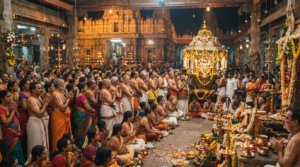
The central observance falls on Shravana Krishna Paksha Dwitiya, the tithi associated with Rayaru’s Brindavana Pravesha in 1671. The annual celebrations usually include Poorvaradhana, Madhyaradhana and Uttararadhana, while the wider Saptaratrotsava can extend across several days. This distinction matters because many old pages copy a fixed August date from one year into another.
Raghavendra Swamy Aradhana at a Glance
- What it commemorates: Sri Raghavendra Tirtha’s Brindavana Pravesha at Mantralayam.
- Lunar date: Shravana Krishna Paksha Dwitiya for the central Aradhana observance.
- Core sequence: Poorvaradhana, Madhyaradhana and Uttararadhana.
- Main place: Sri Raghavendra Swamy Matha at Mantralayam, Kurnool district, Andhra Pradesh.
- Exact annual dates: They change each year, so check the Matha’s official festival news or Panchanga.
- Festival timings: Regular darshan hours should not be treated as Aradhana-day timings because the Matha changes the schedule for major festival days.
The most useful rule is simple: never reuse last year’s Gregorian date. Instead, check the current announcement on the official Sri Raghavendra Swamy Matha website. The official news archive publishes the day-by-day programme when the festival approaches.
What Is Sri Raghavendra Swamy Aradhana?
Aradhana is the annual commemoration of a revered saint’s entry into Brindavana and the continuation of the guru’s spiritual legacy. In the Sri Raghavendra tradition, devotees remember the day Rayaru entered the Brindavana at Manchale, now called Mantralayam. The observance centres on worship, remembrance, Vedic recitation, seva and devotion to Hari and Guru.
The Matha’s own life history records the chosen day as Shravana Krishna Paksha Dwitiya in 1671. It describes thousands gathering at Manchale as Sri Raghavendra Tirtha completed worship and entered the Brindavana. Therefore, devotees usually speak of Brindavana Pravesha rather than treating Aradhana simply as a death anniversary.
This distinction also explains the festival’s devotional mood. It is solemn, but it is not merely mournful. Devotees regard Rayaru as spiritually present and continue to offer prayers at the Moola Brindavana. Such beliefs belong to the Madhwa devotional tradition and should be understood as matters of faith.
When Is Raghavendra Swamy Aradhana Held?
Raghavendra Swamy Aradhana follows the lunar calendar, so its civil-calendar date changes every year. The traditional reference is Shravana Krishna Paksha Dwitiya, also called Shravana Bahula Dwitiya in many South Indian calendars. Because lunar months do not align exactly with the Gregorian calendar, a previous year’s August date cannot safely be reused.
Adhika Masa, an additional lunar month inserted in some years, can shift festival dates even more. For that reason, an old article may look convincing while still giving the wrong current date. The safe method is to confirm the current year on the official Matha website and its Panchanga rather than calculating from last year.
| What stays consistent | What changes yearly | What to check |
|---|---|---|
| Brindavana Pravesha observance | Gregorian calendar date | Official annual announcement |
| Poorva, Madhya, Uttara sequence | Detailed programme times | Matha festival schedule |
| Mantralayam as the main centre | Processions and event timing | Official news and Panchanga |
Why Mantralayam Is the Centre of the Observance
Mantralayam sits on the banks of the Tungabhadra River in Kurnool district, Andhra Pradesh. The Kurnool district administration identifies the town with the Jeeva Samadhi of Sri Raghavendra Swamy and notes its importance as a South Indian pilgrimage centre. The Moola Brindavana inside the Matha is the focus of the annual Aradhana.
For readers planning their first visit, our Mantralayam travel guide covers transport, regular darshan hours and stay planning. Those who want the background of the institution can also read the history of Mantralaya Matha.
The town becomes much busier during Aradhana than on ordinary days. Therefore, festival travel needs more buffer time for queues, local transport and meals. A short walking distance on a quiet weekday can take much longer when processions and crowd controls are active.
Raghavendra Swamy Aradhana: Poorva, Madhya and Uttara Days
Raghavendra Swamy Aradhana is best understood as a sequence rather than a single isolated ceremony. Poorvaradhana comes first, Madhyaradhana marks the central observance, and Uttararadhana follows. The wider Saptaratrotsava may begin before these three days and continue after them with additional worship and cultural programmes.
Poorvaradhana
Poorvaradhana prepares the devotional setting for the central day. Recent official Matha coverage records special worship, sacred cloth offerings from other temples, Moolarama worship and Maha Mangalarati to Sri Raghavendra Swamy’s Brindavana. The exact programme can differ from year to year, so visitors should not expect every listed ritual at the same clock time.
For a pilgrim, Poorvaradhana can be a practical day to understand the queue system before the heaviest gathering. However, it is still a major festival day. Arrive with time in hand and follow volunteer instructions rather than trying to hold a fixed personal timetable.
Madhyaradhana
Madhyaradhana is the central Aradhana day. In recent official coverage, the Sri Raghavendra Swamy Matha recorded Maha Panchamritabhisheka to the Moola Brindavana, Pratahakala Rathotsava, Moolarama worship and Maha Mangalarati. These details show why the day draws especially strong devotional attention.
Because this is the central observance, crowd conditions can be intense. So do not assume regular-day darshan timing or queue length will apply. The Matha itself warns that pooja timings vary during Aradhana days, which makes the current festival programme more useful than any static timetable.
Uttararadhana
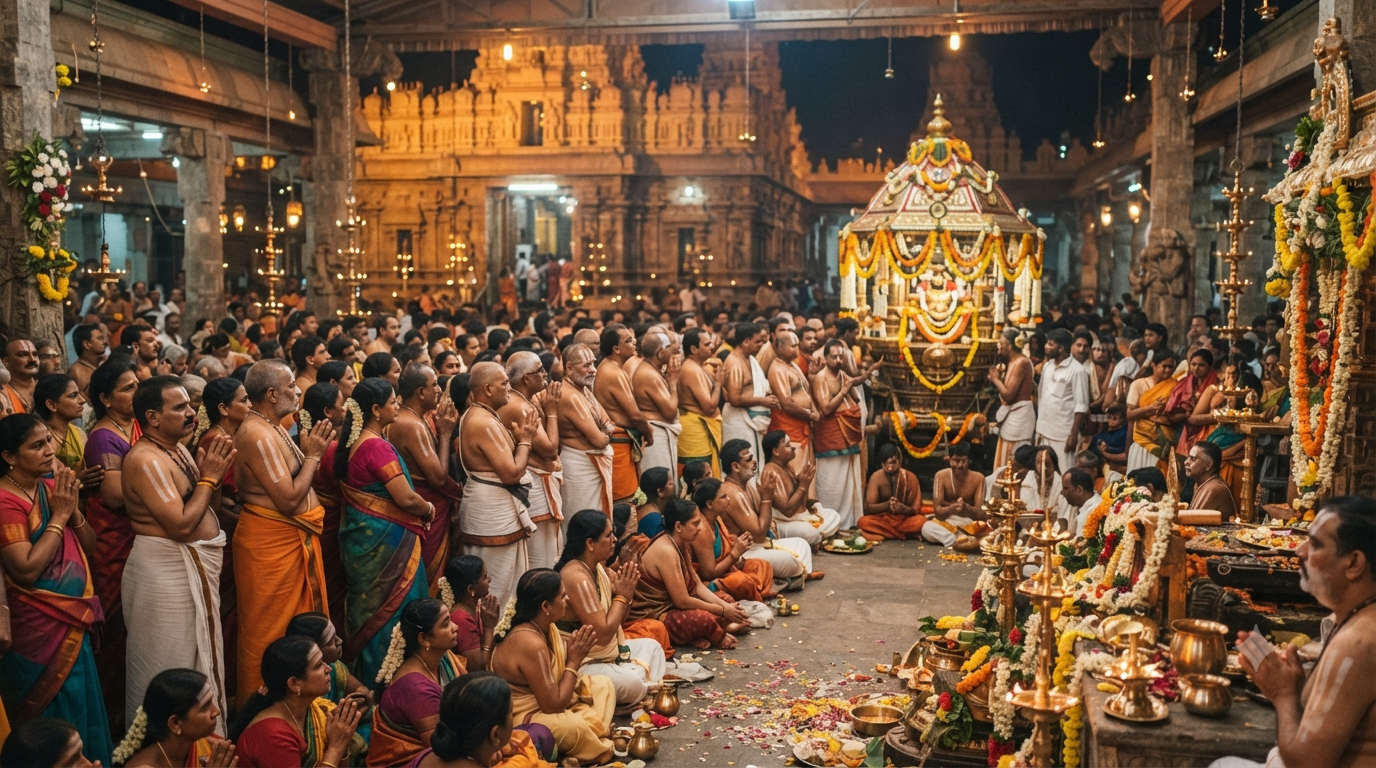
Uttararadhana follows the main day and carries its own major observances. Official festival reports have included Vasantotsava, special poojas, Rathanga Pooja and Maha Rathotsava. These processions can alter movement around the Matha complex, so pilgrims should expect temporary route controls and dense crowds.
Uttararadhana is not simply an “extra day” after the festival. It forms part of the traditional three-day sequence. Therefore, devotees planning a complete visit often allow enough time to witness more than Madhyaradhana alone.
What Happens During the Wider Aradhana Mahotsava?
Raghavendra Swamy Aradhana extends beyond the three core days through a broader festival programme at Mantralayam. In recent years, the Sri Raghavendra Swamy Matha has begun the Saptaratrotsava with Dwajarohana, the ceremonial flag hoisting. Official reports also mention Gou Pooja, Ashwa Pooja, Dhanya Pooja, Vedic chanting and cultural programmes.
The exact mix changes with the annual schedule, so a permanent article should explain the pattern without pretending every year is identical. This is also why old lists copied from one festival year become unreliable. A procession name or special offering may remain traditional, while its day and time can move.
Devotees may also encounter discourses, music, dance and community worship around the main rituals. For annadana information, see our separate guide to Mantralayam annadanam. Always confirm festival-specific meal arrangements on the official portal because crowd management can affect service windows.
How to Plan an Aradhana Visit Without Relying on Old Dates
The safest planning method starts with the official schedule, not with a travel booking page. First, open the Matha’s latest news page and confirm the current Poorva, Madhya and Uttara dates. Next, check official room and seva availability only through srsmatha.org.
- Confirm the festival dates. Do this before booking transport because the Gregorian dates change yearly.
- Choose which Aradhana days matter to you. Madhyaradhana is central, while Poorva and Uttara offer different observances.
- Book only through official channels. Avoid private sites that imitate the Matha or ask for payment through personal numbers.
- Leave extra arrival time. Festival crowds can slow roads, queues and movement near the complex.
- Recheck the programme shortly before travel. Ritual times and procession routes may change.
This process does not guarantee a particular darshan duration or viewing position. Crowd controls, ritual needs and local conditions can change plans. If a desired seva is unavailable, do not pay an unofficial intermediary; choose another official option or attend general darshan according to the Matha’s instructions.
Darshan Timings During Aradhana: What to Expect
On ordinary days, the official Matha page lists Brindavana darshan from 6:00 AM to 2:00 PM and again from 4:00 PM to 9:00 PM. However, the same page states that pooja timings will vary during Aradhana days. Therefore, treat these hours as a regular-day reference rather than a festival guarantee.
During a major procession, access routes may also change temporarily. So arriving early does not always mean you will follow the same path used on a normal weekday. Listen to Matha volunteers and security staff because they manage the live crowd situation.
Carry only what you need. A small water bottle, essential medicines and weather protection can make long waits easier, subject to entry rules. Older adults, children and anyone with mobility or health concerns should avoid pushing through dense crowds and should plan rest time.
Sevas, Rooms and Donations: Use Only the Official Matha Portal
The official Sri Raghavendra Swamy Matha website provides online services for advance room booking, sevas and hundi offerings. SriVyasaPooja.in does not process any of these transactions. This matters especially during Aradhana because high demand creates opportunities for lookalike sites, agents and misleading “priority” claims.
Do not send money to a personal bank account, UPI ID, WhatsApp number or social-media contact claiming guaranteed festival access. Instead, start from srsmatha.org and follow the service links from there. The official site itself warns visitors to use only its authorised domain and to beware of fraudulent sites.
Availability is never guaranteed merely because you reached the booking page. Rooms and sevas can fill, while festival procedures can change. If the required option is unavailable, use another official date or service rather than an unofficial shortcut.
Common Raghavendra Swamy Aradhana Planning Mistakes
- Copying last year’s date: the lunar tithi stays meaningful, but the Gregorian date changes.
- Treating all festival days as identical: Poorva, Madhya and Uttara have different roles.
- Using normal darshan hours as a festival promise: the Matha says timings vary during Aradhana.
- Booking through an imitation portal: use the official Matha website for rooms, sevas and donations.
- Planning a tight same-day return: crowds and processions can delay darshan and local transport.
- Assuming paid access guarantees a better view: follow only the access arrangements announced by the Matha.
Another common mistake is overloading the visit with too many nearby stops. Aradhana is not the best time for an hour-by-hour sightseeing plan. If the festival is your main purpose, keep the day flexible and add other places only when crowd conditions permit.
Why the Date Should Be Checked Every Year
Raghavendra Swamy Aradhana is tied to a tithi, not to one permanent Gregorian date. That single fact is the key to keeping this guide evergreen. It also explains why a year-stamped article can become wrong even when the ritual description remains accurate.
The best long-term reference is the Matha’s current Panchanga and festival-news archive. A government source, the Kurnool district website, also confirms Mantralayam’s location on the Tungabhadra and its importance as the site of Sri Raghavendra Swamy’s Jeeva Samadhi. Use such primary sources for facts, while treating devotional interpretations as tradition.
Before You Go to Mantralayam
A well-planned Raghavendra Swamy Aradhana visit starts with the lunar-calendar schedule, not an old blog date. Use the official Matha site for the latest festival programme, rooms and sevas, and keep your travel day flexible because Aradhana crowds are substantial. Most importantly, approach the observance as a devotional festival rather than a fixed tourist timetable.
If you are visiting for the first time, learn the three-day sequence before you arrive. Poorvaradhana, Madhyaradhana and Uttararadhana each carry a different place in the observance. That small amount of preparation makes the festival easier to understand and reduces avoidable confusion.
Frequently Asked Questions
What is the Raghavendra Swamy Aradhana date?
The exact Gregorian date changes every year because the observance follows Shravana Krishna Paksha Dwitiya. Check the current Sri Raghavendra Swamy Matha Panchanga or festival announcement before booking travel. Do not copy a date from a previous year.
Which day is the main Raghavendra Swamy Aradhana?
Madhyaradhana is the central day in the three-day sequence of Poorvaradhana, Madhyaradhana and Uttararadhana. It commemorates Rayaru’s Brindavana Pravesha and usually carries major worship at the Moola Brindavana. Exact ritual timing should be checked in the current programme.
Why does the Raghavendra Swamy Aradhana date change each year?
The observance follows a Hindu lunar tithi rather than a fixed Gregorian calendar date. Therefore, the civil date moves from year to year. Adhika Masa can cause an even larger shift in some years.
Where is the main Aradhana celebrated?
The principal observance takes place at Sri Raghavendra Swamy Matha in Mantralayam, Kurnool district, Andhra Pradesh. Mantralayam lies on the Tungabhadra River and contains Sri Raghavendra Tirtha’s Moola Brindavana.
What is the difference between Poorva, Madhya and Uttara Aradhana?
Poorvaradhana comes before the central day, Madhyaradhana is the main Brindavana Pravesha observance, and Uttararadhana follows it. Each day carries its own worship and festival programme. The exact annual rituals and procession times come from the Matha’s current schedule.
Are normal Mantralayam darshan timings valid during Raghavendra Swamy Aradhana?
Do not rely on normal-day timings during the festival. The official Matha page lists regular Brindavana darshan hours but specifically notes that pooja timings vary during Aradhana days. Check the current festival programme before arrival.
Can I book Raghavendra Swamy Aradhana sevas or rooms through SriVyasaPooja.in?
No. SriVyasaPooja.in is an independent information guide and does not take bookings, donations or payments. Use only the official Sri Raghavendra Swamy Matha website for room, seva and official service availability.
What should I do if rooms or a preferred seva are unavailable?
Do not pay an agent who promises guaranteed access. Check another official date, another officially listed service, or make independent lodging plans outside the Matha system. For any seva, use only options shown through the official Matha channel.