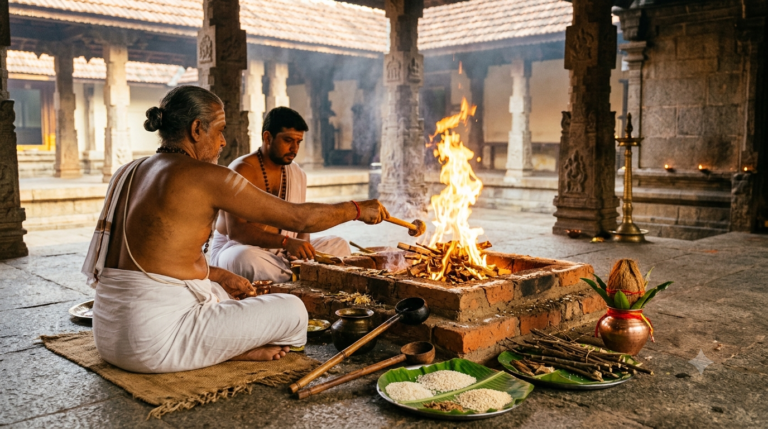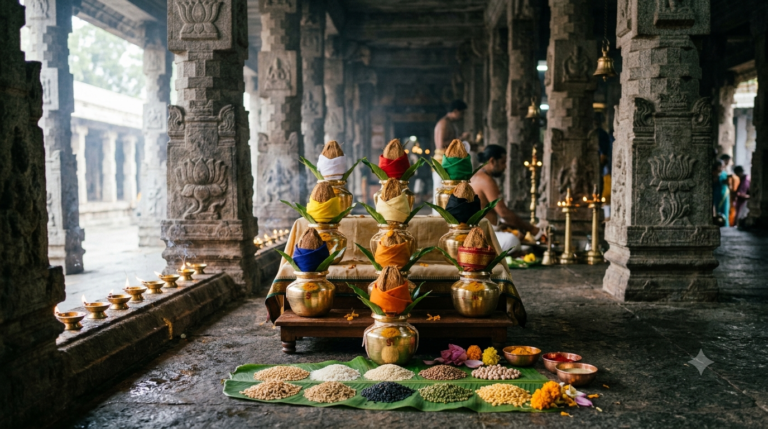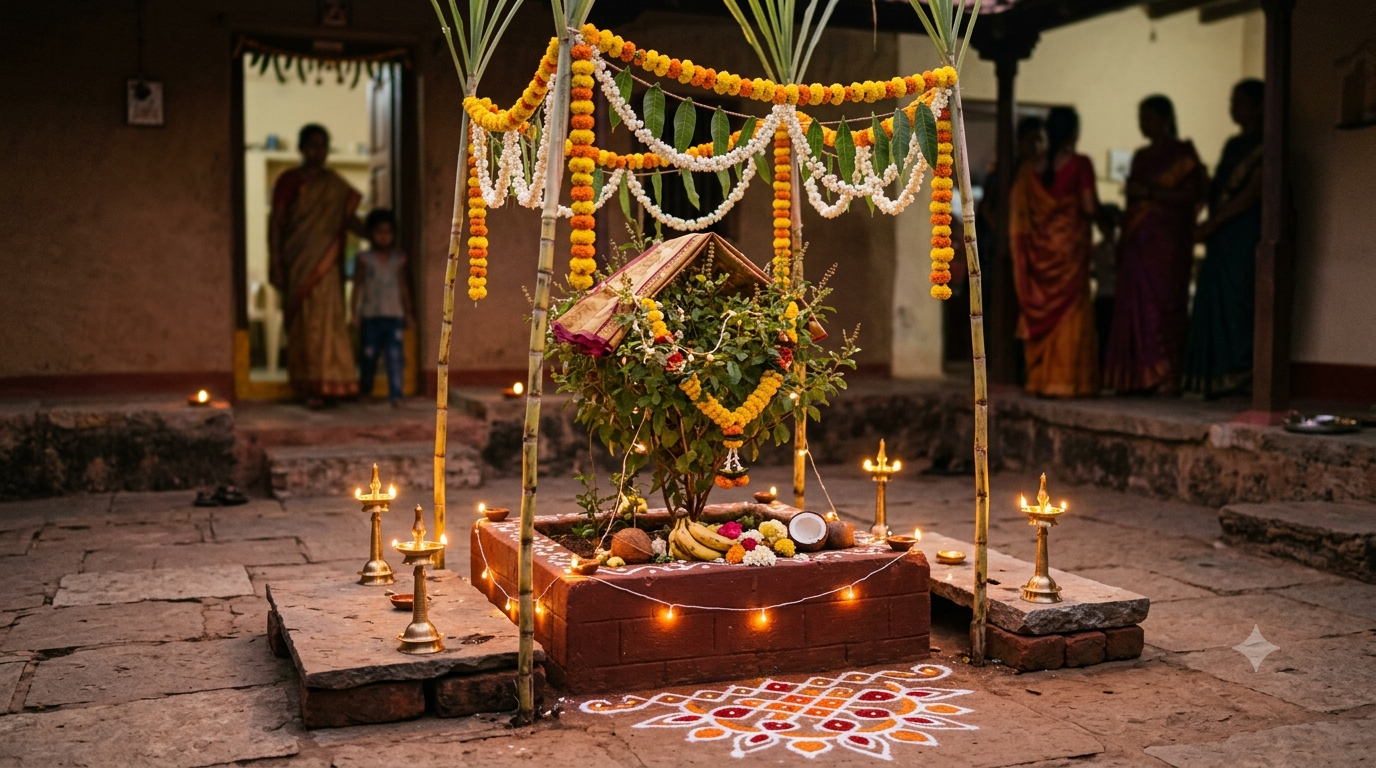
Tulsi Vivah 2026 is listed for Saturday, 21 November by the checked calendars used for this guide. However, the exact pooja time should not be treated as one universal all-India muhurat. The observance changes by family, region and sampradaya, so this guide focuses on practical home worship.
SriVyasaPooja.in is an independent devotional guide. We are not affiliated with any temple, mutt, trust or panchang publisher. We also do not accept pooja bookings, donations or payments.
Tulsi Vivah 2026 at a Glance
The clearest planning date is Saturday, 21 November 2026. Drik Panchang’s November calendar lists Tulasi Vivah on that date. Sri Kanchi Kamakoti Peetham also lists “Brindavana Dwadasi, Tulasi Vivaham” on the same Saturday.
- Reference date: Saturday, 21 November 2026.
- Lunar setting: Kartika Shukla Dwadashi in the checked calendars.
- Telugu usage: Tulasi Kalyanam or Brindavana Dwadasi in many households.
- North Indian link: closely connected with Devutthana or Prabodhini Ekadashi.
- Marriage form: Tulasi is treated as the bride, while Vishnu is represented by Shaligram, Krishna or another accepted household form.
- Muhurat: check your city and family panchang instead of copying one national clock time.
This distinction matters because older ritual texts and living customs do not force every household into one identical date rule. Therefore, use 21 November as the checked-calendar reference, then follow the tradition your family actually observes.
Tulsi Vivah 2026 Date: Why 21 November Is the Reference
Tulsi Vivah 2026 falls on 21 November in both calendars checked for this article. The Drik Panchang Tulasi Vivah calendar treats the festival as a location-aware panchang event. The Sri Kanchi Kamakoti Peetham annual calendar also lists Tulasi Vivaham on 21 November.
That agreement is useful, but it does not create one compulsory household rule. The Peetham’s Dharma Sindhu summary says Tulasi Vivaha has no single fixed tithi decision. It also describes observance within the Kartika Ekadashi-to-Purnima period.
Why some families may use a different day
Some homes perform the wedding on Devutthana Ekadashi itself, while others prefer Dwadashi. Parts of western India may celebrate later within the traditional Kartika window. Therefore, a different family date is not automatically an error.
This is also why a single “Tulsi Vivah muhurat for India” can mislead. Sunset, local panchang settings and lineage practice can change the usable window. So confirm the timing for your city before beginning.
What Tulsi Vivah Means
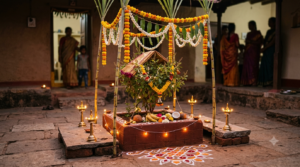
Tulsi Vivah is the ceremonial marriage of the sacred Tulasi plant with Lord Vishnu, commonly represented by Shaligram or Krishna. The rite turns an everyday Tulasi space into a small wedding mandap. So the mood is devotional but also distinctly domestic.
The story is linked with Vrinda, whose sacred narrative connects Tulasi with Vishnu in later devotional tradition. Treat the story as sacred tradition rather than documented history, because families and texts may narrate details differently.
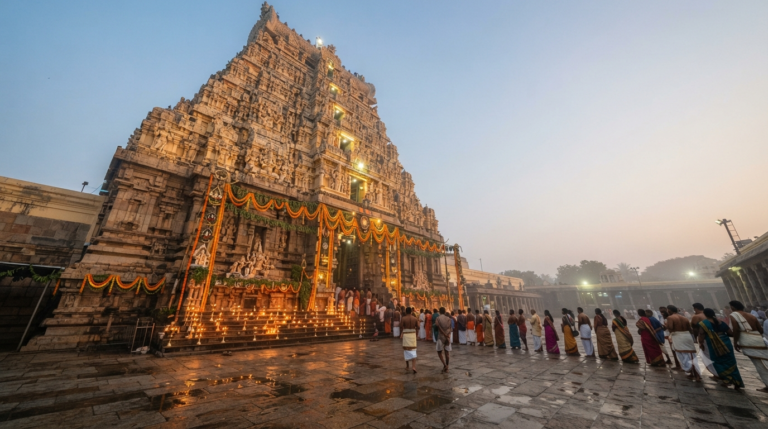
The Government of India Ministry of Tourism’s Utsav record for the 2022 Shamlaji celebration describes Tulsi Vivah at the Gujarat temple. The temple recreates wedding stages from baraat to vidaai. That example shows why household versions also borrow the language and symbols of a wedding.
How to Prepare for Tulsi Vivah 2026 at Home
Preparation is easier when you separate essentials from family extras. Keep a clean Tulasi plant and the Vishnu form your household already worships. Then add a lamp, water, flowers and a simple naivedyam. Keep family notes nearby as well.
Essential preparation
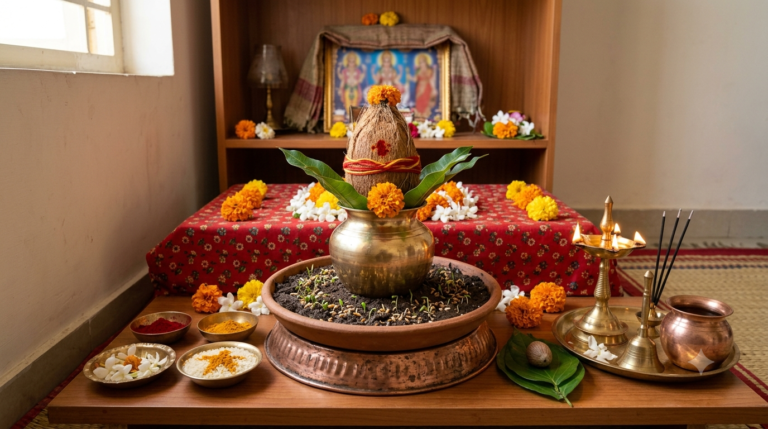
- Clean the Tulasi pot, Tulasi kota, brindavan or balcony area.
- Keep the plant healthy and avoid damaging branches while decorating.
- Prepare the Shaligram, Krishna image or Vishnu form used in your family.
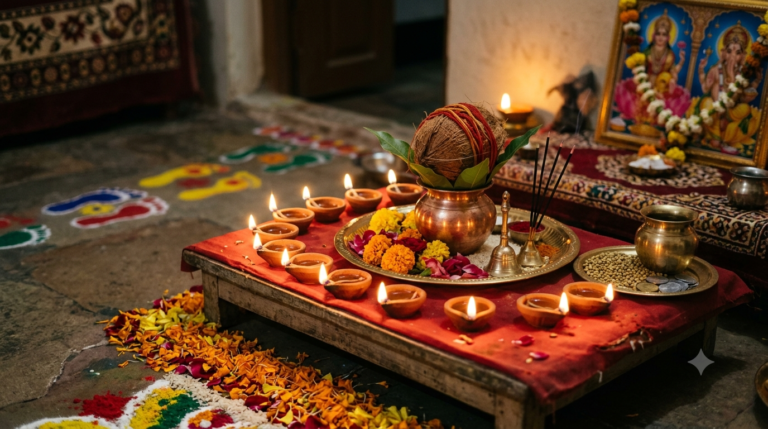
- Keep water, kumkum, turmeric, sandal paste, akshata, flowers and a lamp ready.
- Arrange fruit or a simple sattvic naivedyam that suits your household tradition.
- Keep a clean cloth or small decorative fabric if your custom dresses Tulasi as a bride.
If your family does not already worship a Shaligram, do not feel pressured to obtain one only for this festival. Instead, follow your household’s accepted Vishnu or Krishna form. Ask your family purohit if your sampradaya has a stricter rule.
What Is Optional Rather Than Universal?
The internet often turns one region’s wedding style into a compulsory national checklist. In reality, many decorative details depend on family custom. These can include sugarcane poles, bangles, a bridal cloth, wedding songs and symbolic gifts.
| Item or practice | How to treat it | Why |
|---|---|---|
| Sugarcane mandap. | Optional by custom. | Common in several regional wedding-style observances. |
| Shaligram. | Traditional in many Vaishnava homes. | Other households use Krishna or Vishnu forms. |
| Antarpat or curtain. | Regional. | Strongly associated with Maharashtrian wedding procedure. |
| Amla branch. | Regional. | Seen in Andhra-Telangana Tulasi Kalyanam traditions. |
| Full fast. | Not universal. | Follow your vrata tradition and health needs. |
| Exact clock muhurat. | Local check needed. | Do not copy one city time for all India. |
Therefore, a simple ceremony is not an inferior ceremony. Preserve the core worship first. Keep regional wedding details only when your household actually follows them.
A Simple Home Pooja Order
You can keep the home sequence short and clear, especially if you are performing it without a priest. If your family has a written paddhati or inherited order, that should take priority over a generic online sequence.
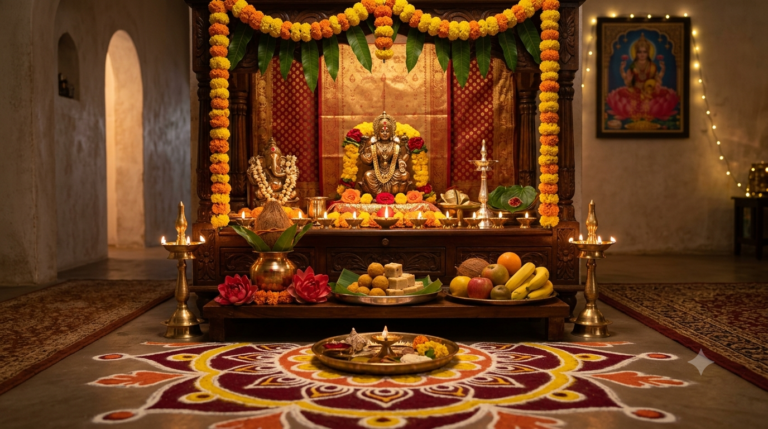
- Clean and decorate the space. Place lamps safely, add rangoli if customary and prepare Tulasi before the evening worship.
- Begin with a sankalpa. State the day and your intention to perform Tulasi-Vishnu worship according to family practice.
- Offer a brief Ganesha prayer. Many households begin auspicious ceremonies this way before moving to the main worship.
- Worship Tulasi and Vishnu. Offer water, sandal paste, kumkum where appropriate, flowers, akshata, incense, lamp and naivedyam.
- Perform the marriage symbolism. Bring the bride and groom forms together using your regional custom. This may be an antarpat, garland exchange or simple kanyadaan prayer.
- Offer aarti and prayers. Sing familiar Vishnu, Krishna or Tulasi hymns, then complete pradakshina if your family does so.
- Share prasadam. End with family prayer and distribute the food you offered.
The Kanchi Peetham Dharma Sindhu summary describes sankalpa, worship, wedding-style separation of bride and groom, and formal offerings. A home version can keep that structure without reproducing every priest-led step.
Tulsi Vivah 2026 Regional Customs to Know
Tulsi Vivah 2026 looks different across India because the sacred idea travels through local wedding culture. The date can vary as well. Therefore, read regional form and household timing together rather than forcing one national template.
Andhra Pradesh and Telangana
Many Telugu families call the observance Tulasi Kalyanam and connect it with Brindavana or Ksheerabdi Dwadashi. Drik Panchang notes a practice in which an amla branch can represent Vishnu near the decorated Tulasi plant.
For broader Telugu Karthika context, see our Karthika Masam 2026 guide. That page also explains why Telugu Amanta dates should not be replaced with a North Indian month list.
Maharashtra
Maharashtrian homes often make the rite resemble a real wedding. An antarpat, or cloth screen, may separate Tulasi and Vishnu during mangalashtaka verses. Families then remove the screen at the symbolic union.
Gujarat and western India
Wedding imagery can become especially public in Gujarat. The Ministry of Tourism’s 2022 Utsav record for Shamlaji describes stages from baraat to vidaai. That public ceremony mirrors the wedding character seen in many homes.
North Indian households
Many North Indian families tie Tulsi Vivah closely to Devutthana Ekadashi, when Vishnu is believed to awaken after Chaturmas. Some perform the wedding that evening, while others move it to Dwadashi. Therefore, the date can differ from the Telugu pattern.
How to Handle Devutthana Ekadashi and Fasting
Devutthana Ekadashi falls immediately before the 21 November reference date in the checked calendar sequence. Some devotees fast on Ekadashi and then perform or complete Tulsi Vivah according to their family rule.
Do not assume the Tulsi wedding itself requires the same fast for everyone. If you are keeping Ekadashi, our Ekadashi fasting rules guide explains food choices, parana and the importance of local timing.
Health should override imitation. Pregnant women, children, older adults and people with diabetes may need a lighter observance. Anyone taking regular medication should also avoid strict fasting unless a qualified doctor says it is safe.
Common Mistakes That Cause Confusion
The biggest mistake is copying a date or muhurat from an old page without checking the target year. Some 2026 pages still show early-November dates. However, those dates conflict with the two checked calendars used here for the 21 November Dwadashi observance.
- Do not publish one universal muhurat. A city-based clock time is not a national rule.
- Do not treat every family custom as mandatory. Sugarcane, specific sweets and wedding objects vary.
- Do not equate Tulsi Vivah with Devutthana Ekadashi everywhere. Their relationship changes by tradition.
- Do not force a Shaligram purchase. Follow the Vishnu form already accepted in your household.
- Do not make spiritual claims into guarantees. Blessings belong to faith and tradition, not measurable outcomes.
This approach keeps the ceremony faithful without pretending that one blog can replace a family’s panchang or sampradaya. It also prevents the most common mistake: confusing a useful reference date with a universal command.
Practical Tips for a Calm Home Ceremony
Start preparation before sunset so the devotional part does not become a decorating race. Wash reusable pooja items early, keep naivedyam simple and place everything within reach before you light the lamp.
If children join, give them safe tasks such as arranging flowers or placing unlit decorations. Keep oil lamps away from fabric, sugarcane leaves, curtains and balcony wind because wedding-style decoration can create extra fire risk.
Finally, let the household version stay recognisable to your family. A grandmother’s song or a familiar kalyanam prayer can carry more continuity. The same is true of a Maharashtrian mangalashtaka already known in the family.
Before You Begin Tulsi Vivah 2026
Tulsi Vivah 2026 has a strong 21 November reference from both checked calendars. Drik Panchang and Sri Kanchi Kamakoti Peetham place the observance there. Still, the wider tradition allows genuine regional variation in date, wedding form and timing.
Prepare the Tulasi space and use the Vishnu form your household follows. Keep the ceremony as simple or elaborate as your tradition requires. Then check your city panchang or family purohit instead of relying on a universal internet muhurat.
Tulsi Vivah 2026 FAQ
When is Tulsi Vivah 2026?
Tulsi Vivah 2026 is listed on Saturday, 21 November in the two calendars checked for this guide. However, some traditions perform the wedding on Devutthana Ekadashi or another day within the Kartika Ekadashi-to-Purnima period.
Is 21 November the only valid date for every family?
No. It is the checked-calendar reference date used here, not a universal command. Family tradition, regional panchang and sampradaya can place the ceremony differently.
What is the Tulsi Vivah muhurat in 2026?
There is no single clock time that should be copied for all of India. Use a panchang set to your city and follow your household tradition. Many families prefer an evening or dusk ceremony.
Can Tulsi Vivah be done at home without a priest?
Yes, many families keep a simple household ceremony. If your lineage requires specific mantras or priest-led rites, follow that inherited practice. The same applies to stricter Shaligram rules.
What if we do not have a Shaligram at home?
Many traditions use Shaligram, but Drik Panchang also describes Tulasi’s ceremonial marriage with Vishnu or Krishna forms. Follow the form your household already worships and confirm any stricter sampradaya rule locally.
Is fasting compulsory on Tulsi Vivah?
No single fasting rule applies to every household. Some devotees fast because of the Devutthana Ekadashi connection. Others perform only the pooja and wedding ritual.
What is Tulasi Kalyanam?
Tulasi Kalyanam is a common South Indian name for the ceremonial wedding of Tulasi and Vishnu. Telugu homes often link it with Brindavana or Ksheerabdi Dwadashi. Some also include an amla branch by local custom.
Why do regional customs look so different?
Tulsi Vivah borrows the wedding language of each region, so the sacred core stays similar while the social details change. Maharashtra may emphasise antarpat and mangalashtaka, while Telugu homes may use a Tulasi kota and different Vishnu symbolism.