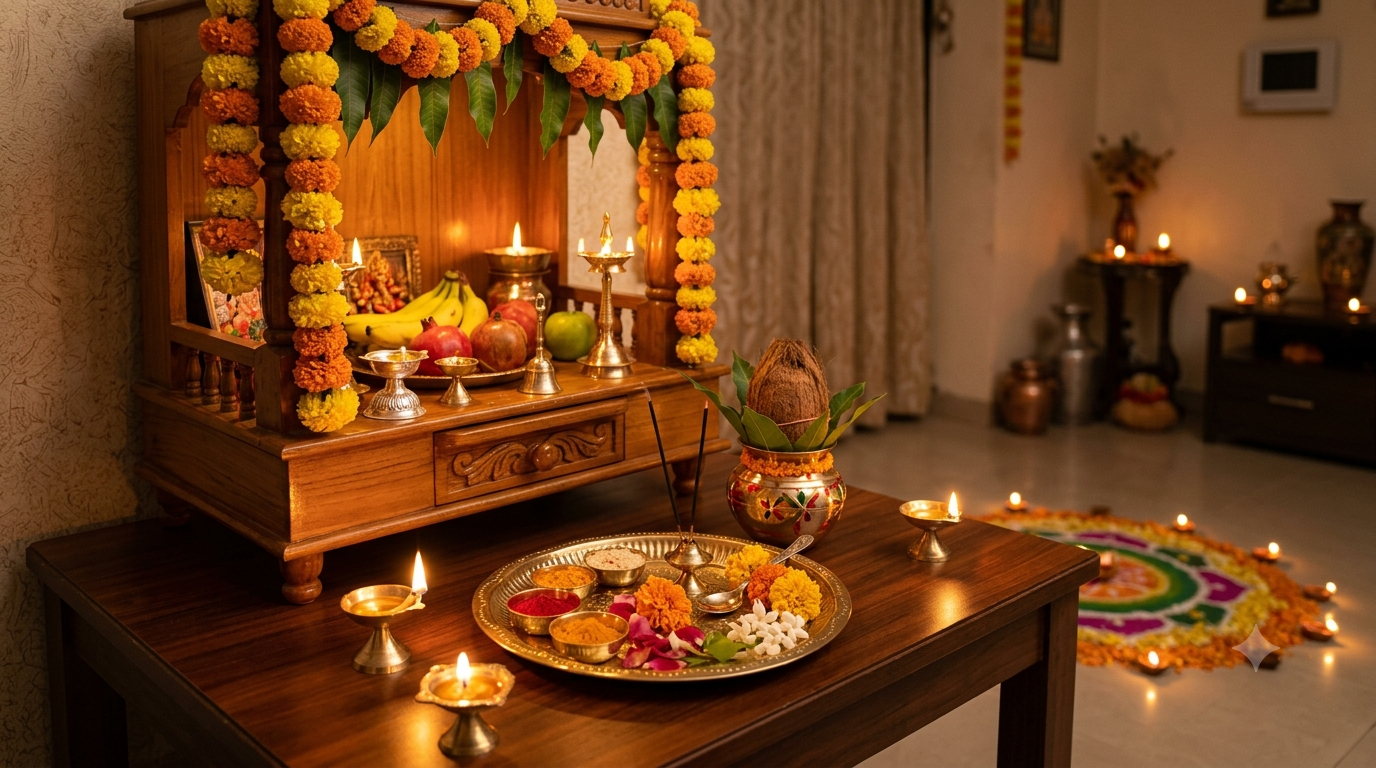
The Dhanteras pooja procedure at home begins with a clean altar, simple offerings and prayers for well-being and prosperity. For the evening Lakshmi-Kubera puja, choose your city’s specific puja muhurta rather than assuming the entire Pradosh Kaal is the same window. This guide explains the steps, the 2026 timings and the customs that vary between families.
Independent guide: Sri Vyasa Pooja is not affiliated with a temple, trust or panchang publisher. We do not accept ritual bookings, donations or payments through this article. Check a location-based panchang for your own city’s time.
Dhanteras Pooja Procedure at a Glance
Dhanteras, or Dhantrayodashi, marks the start of Diwali celebrations in many Hindu calendars. Households often honour Goddess Lakshmi and Lord Kubera. Others place special emphasis on Lord Dhanvantari and the gift of health.
- 2026 date in India: Friday, 6 November 2026.
- Preferred evening time: Your city’s Dhanteras Puja Muhurat, usually where Pradosh Kaal and Vrishabha Lagna overlap.
- Basic order: Prepare the altar, invoke Ganesha if customary, offer prayers, perform aarti and share prasad.
- Optional customs: Yama Deepam, thirteen lamps, new utensils, coriander seeds and broom worship vary by household or region.
- Key distinction: The full Pradosh period often begins before the more selective Lakshmi-Kubera puja window.
What Is Dhanteras and Why the Pooja Matters?
The word Dhanteras joins two ideas: dhan, meaning wealth, and teras, the thirteenth lunar day. The festival falls on Krishna Paksha Trayodashi around Diwali. As a result, families use the occasion to express gratitude and hope for a good year.
One familiar account comes from Samudra Manthan, the churning of the cosmic ocean. In this devotional narrative, Lord Dhanvantari appears with a vessel of amrita. Many worshippers therefore connect Dhantrayodashi with health as well as prosperity.
Some homes focus on Lakshmi and Kubera, while others include Dhanvantari or their family deity. There is no single household sequence that every community must follow. That is why the Dhanteras pooja procedure should follow family tradition, not a rigid online checklist.
Dhanteras Pooja Procedure: 2026 Date and Muhurat
In India, Dhanteras falls on Friday, 6 November 2026. Drik Panchang lists Trayodashi Tithi from 10:30 AM on 6 November to 10:47 AM on 7 November for its New Delhi calendar. The observance falls on Friday evening because Trayodashi prevails during the evening worship period.
These tithi figures come from a specific panchang calculation, not a promise that every almanac will display identical minutes. The date also agrees with the 16 October 2026 Dhanteras report published by Loksatta. For time-sensitive planning, use the same reliable panchang consistently.
Pradosh Kaal versus Dhanteras Puja Muhurat
Pradosh Kaal is the broader period after sunset; Dhanteras Puja Muhurat is the narrower interval selected for Lakshmi-Kubera worship. Drik Panchang identifies its recommended interval through the overlap of Pradosh Kaal, prevailing Trayodashi and a fixed ascendant, commonly Vrishabha Lagna.
For New Delhi on 6 November 2026, Pradosh Kaal is 5:33–8:09 PM. However, Dhanteras Puja Muhurat is 6:02–7:57 PM. Therefore, the latter is not the start and end of the whole Pradosh period.
| Time period | New Delhi, 6 Nov 2026 | What it means |
|---|---|---|
| Trayodashi Tithi | 10:30 AM, 6 Nov to 10:47 AM, 7 Nov | The lunar date behind Dhantrayodashi |
| Full Pradosh Kaal | 5:33–8:09 PM | Broader after-sunset period |
| Vrishabha Kaal | 6:02–7:57 PM | Fixed-ascendant interval |
| Recommended puja muhurta | 6:02–7:57 PM | Preferred overlap for Lakshmi-Kubera worship |
These are New Delhi local times, not national timings. See the Drik Panchang Dhanteras timing page and select your own city before arranging the puja.
City-wise 2026 Dhanteras Puja Muhurat
The following figures refer to the recommended Dhanteras Puja Muhurat, not the full Pradosh Kaal. Drik Panchang provides location-specific local times, so even nearby towns can differ by minutes.
| City | Puja muhurta, 6 Nov 2026 |
|---|---|
| New Delhi | 6:02–7:57 PM |
| Mumbai | 6:35–8:35 PM |
| Hyderabad | 6:15–8:13 PM |
| Chennai | 6:14–8:10 PM |
| Bengaluru | 6:25–8:20 PM |
| Kolkata | 5:28–7:26 PM |
| Pune | 6:32–8:31 PM |
Do not reuse the New Delhi full Pradosh hours for Hyderabad or Chennai. Also, avoid treating a shopping muhurta as the evening worship muhurta. Buying an item and conducting Lakshmi-Kubera puja serve different purposes, so their suggested timings may differ.
What if the preferred muhurta is missed?
Missing a published minute does not mean a family’s prayers have failed. If the recommended overlap is unavailable, consult a local priest or family elder about a suitable time. Otherwise, perform a simple, safe prayer when your family can gather without claiming it matches the listed muhurta.
The schedule is religious guidance rather than a guaranteed outcome. In addition, different panchang traditions may calculate small timing differences. Choose the city first, check the date, and avoid copying a single nationwide clock time.
Samagri for the Dhanteras Pooja Procedure
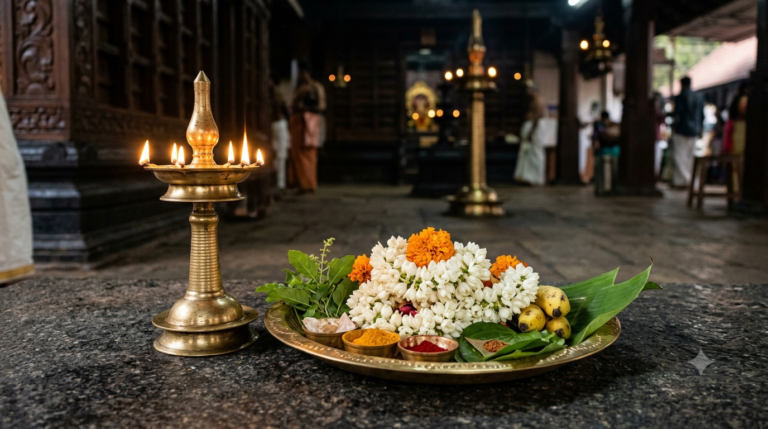
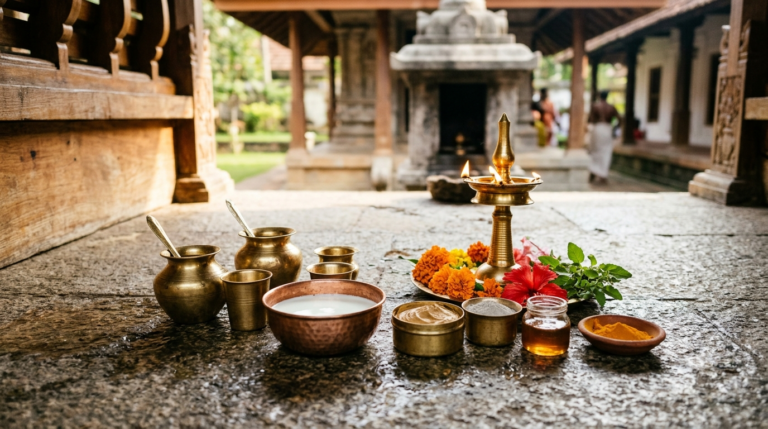
Gather your samagri a day early so nothing sends you rushing at sunset. A calm setup makes the ritual easier, especially when several people share a small puja space. The Dhanteras pooja procedure needs no expensive materials, so start with what you already own.
- A clean chowki or low table, a fresh cloth and images or idols used in your household.
- One or more diyas, cotton wicks, a safe lamp holder and oil or ghee.
- Flowers, clean water, turmeric, kumkum and akshata if your tradition uses them.
- Fruit or homemade sweets for naivedya, plus a plate for the offerings.
- Incense, a bell, a kalash or coconut only where these belong to your family practice.
- Any new vessel or item you wish to place before the altar; a purchase is not essential.
Some families also prepare coriander seeds, jaggery, a new broom or thirteen lamps. These are meaningful regional customs, not a universal minimum list. If an ingredient is missing, a flower, water and a sincere prayer still make a modest home observance possible.
Step-by-Step Dhanteras Pooja Procedure at Home
The complete Dhanteras pooja procedure follows a familiar sequence: clean, offer prayers, honour the deities your family worships, then close with aarti. The steps below are a simple home outline rather than a compulsory script. Follow a family priest’s instructions when your household has a formal vidhi.
Step 1: Clean and Prepare the Space
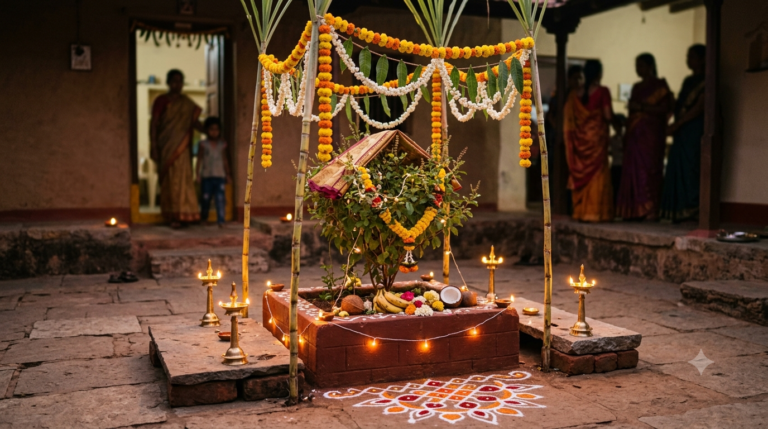
Clean the puja area and main entrance before the evening worship. Bathe or wash up and wear comfortable clean clothes. Some families draw rangoli or place symbolic footprints at the doorway to welcome Lakshmi.
Those decorations reflect a traditional invitation to auspiciousness; they do not control whether a deity blesses a home. Keep the floor dry and free from clutter, especially if elders or children will take part.
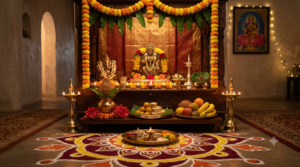
Step 2: Set Up the Altar
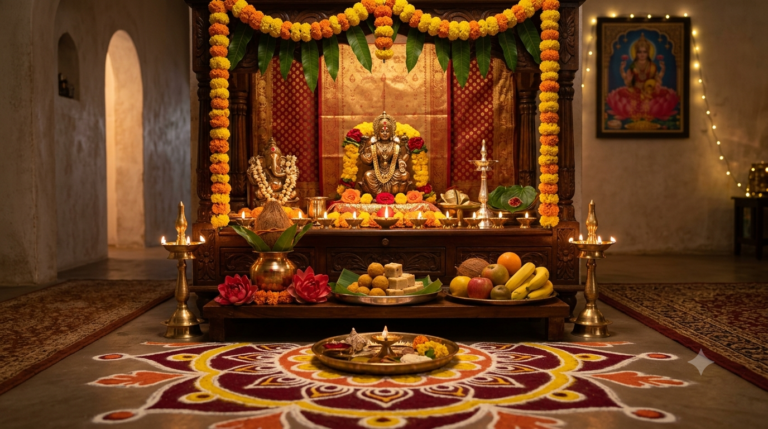
Place a clean cloth over the chowki and arrange the images respectfully. Set the water, flowers and naivedya nearby so the puja flows smoothly. Leave enough space for the lamp, since a crowded altar raises fire risk.
The position of Ganesha, Lakshmi, Kubera and Dhanvantari varies between traditions. So avoid treating one internet diagram as the only acceptable arrangement. Use the placement your household follows instead.
Step 3: Invoke Lord Ganesha
Many Hindu home pujas begin with a brief prayer to Ganesha. Offer a flower or akshata if available, then pray for clarity and an obstacle-free observance. A common short chant is Om Gam Ganapataye Namaha.
Repeat the prayer as your custom allows; no fixed number is essential to this simple outline. If your family begins with another invocation, follow that practice without concern.
Step 4: Worship Goddess Lakshmi and Lord Kubera
Offer flowers, water and sweets while praying for a responsible and generous use of wealth. Families may chant Om Shreem Mahalakshmyai Namaha for Lakshmi. For Kubera, a simple Om Kuberaya Namaha is easier than an elaborate chant.
Some homes light thirteen diyas to symbolise Trayodashi. Others use one or five lamps, so thirteen is not a compulsory count. If you have bought a new item, you may place it before the altar as a family custom.
Step 5: Honour Lord Dhanvantari for Health
Dhanvantari worship recalls the value of health alongside material comfort. You can offer a flower and pray for the well-being of relatives, caregivers and neighbours. Some families chant Om Namo Bhagavate Dhanvantaraye Namaha or a longer family-taught mantra.
Devotional prayer is not a medical treatment. Continue prescribed medicines and professional care, even when the family performs a special Dhanvantari puja. This distinction protects both faith and health.
Step 6: Offer Naivedya and Perform Aarti
Present fruit or sweets as naivedya, then perform a brief aarti according to your household custom. Some use a bell and camphor, while others prefer a single enclosed diya. After the prayer, share prasad with family members.
Aarti can remain short when older relatives, small children or illness make a long gathering difficult. Before leaving the altar, extinguish open flames safely. Never place a hot lamp where it can fall or burn fabric.
Yama Deepam in the Dhanteras Pooja Procedure
Yama Deepam is a distinct lamp offering associated with Trayodashi evening. In families that practise it, a diya is placed outside the home, traditionally facing south. Devotees connect the ritual with prayers for protection from untimely death; this is a religious belief, not a proven guarantee.
Some households light the lamp at the doorway or in a courtyard after sunset. However, the vessel, wick count and exact placement vary. For the tradition and its date, consult Drik Panchang’s Yama Deepam explanation, selecting your city for any timing.
This observance is separate from the Lakshmi-Kubera puja. Therefore, do not automatically copy the main puja muhurta as the Yama Deepam timing. When open flames are unsafe outdoors, ask a family elder about an appropriate alternative instead of leaving fire unattended.
Regional and Family Customs: What Is Optional?
Many online guides turn local practices into instructions for everyone. Yet Dhanteras customs differ between North Indian, Maharashtrian and South Indian homes. Even families in the same city may worship different deities or prepare different offerings.
| Custom | Where or how it may appear | Must every family follow it? |
|---|---|---|
| Buying metal or utensils | Popular in many North Indian households | No |
| Coriander seeds or a new broom | Seen in some regional and family traditions | No |
| Thirteen lamps | Some families link the count to Trayodashi | No |
| Dhanvantari prayers | Homes that emphasise health and Dhanvantari Jayanti | No single prescribed format |
| Yama Deepam | Families that observe the Trayodashi lamp rite | Not universal |
For example, a Telugu household may give more attention to Dhanvantari prayers, while another may focus on Lakshmi-Kubera puja. Neither example defines all families in that region. Ask relatives what has historically formed part of your own celebration.
What to Buy on Dhanteras and What to Avoid
Buying something new is an established Dhanteras custom because it symbolises prosperity. Gold, silver and metal utensils are popular choices, yet no purchase is required for worship. A modest lamp or an item already in the home can be enough for a meaningful ritual.
Some families avoid iron, sharp objects, glass articles or empty vessels. Others follow none of these restrictions. Treat such advice as household beliefs, not religious rules that bind every Hindu community.
If you buy gold, compare prices and check the seller’s documentation and purity information. Do not spend beyond your budget or borrow money just to satisfy a festival custom. For another celebration associated with lasting prosperity, read our Akshaya Tritiya story and worship traditions.
Common Mistakes in the Dhanteras Pooja Procedure
The biggest timing error is calling the narrower puja muhurta the whole Pradosh Kaal. In New Delhi, the 2026 windows differ at both ends. Check the label as carefully as the clock time before sharing a festival timetable.
- Copying last year’s date: Lunar dates move, so never reuse a previous Diwali calendar.
- Choosing the wrong city: The local sunset changes the puja window, even within India.
- Confusing shopping and worship: A purchase window does not replace the Lakshmi-Kubera puja muhurta.
- Calling a regional custom compulsory: Thirteen diyas, a new broom and strict shopping restrictions are not universal.
- Mixing distinct observances: Yama Deepam and the main puja can have different timing guidance.
- Confusing Dhanteras with Diwali Amavasya: Both may involve Lakshmi worship, but they are separate observances.
Drik Panchang explains why it favours Pradosh Kaal with a fixed ascendant for Dhanteras worship. It does not recommend choosing a Choghadiya period in place of that method. Still, families following a different established panchang should consult their own tradition rather than combining incompatible timing systems.
Health, Safety and Practical Planning
Some devotees fast until the evening prayer, while others eat normally. Fasting is not necessary for every household’s Dhanteras worship. If you are pregnant, diabetic, elderly or taking medication, seek medical advice before changing meals or medicines.
Lamp safety matters because an altar can hold several flames. Keep diyas away from curtains and synthetic clothing, and never leave children alone near lamps. Choose a stable surface and keep a safe way to extinguish each flame nearby.
Give yourself time to prepare offerings before the preferred muhurta begins. It helps to keep a printed city-specific timing note next to the samagri. If the household is busy, a brief prayer performed safely is better than a rushed, hazardous setup.
Dhanteras Pooja Procedure: Final Reminders
A meaningful Dhanteras pooja procedure rests on preparation, prayer and respect for family custom. Use the correct city-specific muhurta instead of confusing it with the entire Pradosh Kaal. Keep the ritual simple if your home has limited time or supplies.
For the 2026 evening, check the Dhanteras calendar again after selecting your town. The Diwali Lakshmi Pooja guide explains the separate Amavasya observance. Families observing Kedara Gowri Vratham can consult our Kedara Gowri Vratam procedure.
Dhanteras Pooja Procedure: Frequently Asked Questions
What is the correct Dhanteras pooja procedure at home?
Clean the puja area, prepare simple offerings and invoke the deities your family normally worships. Many households begin with Ganesha, then honour Lakshmi, Kubera and Dhanvantari. Close with aarti and prasad; add Yama Deepam only if it belongs to your family’s tradition.
What time should Dhanteras puja be done in 2026?
In New Delhi, the preferred Dhanteras Puja Muhurat on 6 November 2026 is 6:02–7:57 PM. It falls within the broader 5:33–8:09 PM Pradosh Kaal. Other cities have different local times, so select your own location on a panchang.
Is Pradosh Kaal the same as Dhanteras Puja Muhurat?
No. Pradosh Kaal is the wider period after sunset, while the puja muhurta is a selected part of that period. Drik Panchang uses the overlap with a fixed ascendant and the prevailing tithi to calculate the recommended worship window.
Is it compulsory to light thirteen diyas?
No. Thirteen diyas reflect a custom that some families associate with Trayodashi. Other homes use fewer lamps, so follow your household’s practice. Lamp safety matters more than a symbolic count.
Is buying gold necessary for Dhanteras?
No. Gold and silver purchases are popular customs, not conditions for conducting the puja. Many families use utensils, flowers or existing household objects. There is no need to take on debt for a ritual purchase.
Which gods are worshipped on Dhanteras?
Many families worship Lakshmi and Kubera, while some include Lord Dhanvantari and begin with Ganesha. The emphasis differs across lineages and regions. Follow your family’s established prayers rather than treating a single arrangement as universal.
Is fasting necessary for Dhanteras?
No universal fasting rule applies to all Dhanteras households. Some families fast, while others do not. If fasting could affect your health or medication, consult a clinician and choose a safe observance.
Why do some families light a south-facing Yama Deepam?
Yama Deepam is an evening lamp offering associated with prayers for protection. Some families place it outside facing south as part of their inherited custom. This practice is not required in every region, and a lamp must never be left unattended.
Is Dhanteras the same as Diwali Lakshmi Puja?
No. Dhanteras takes place on Trayodashi, while the main Diwali Lakshmi Puja is associated with Amavasya. Both may include prayers for prosperity, but their tithis and preferred puja windows differ. Check each observance separately.