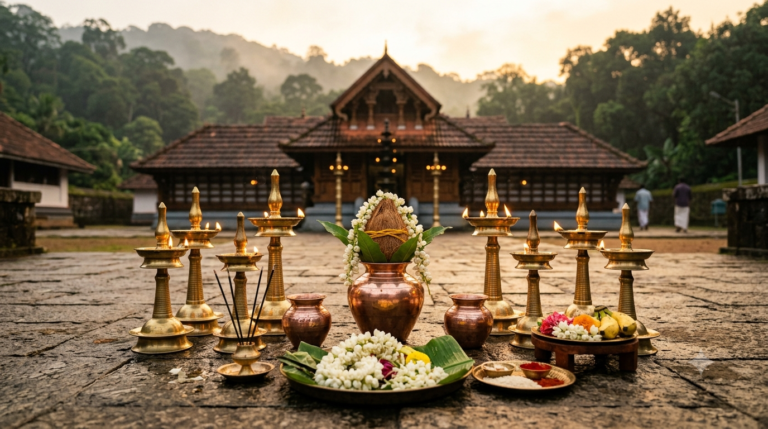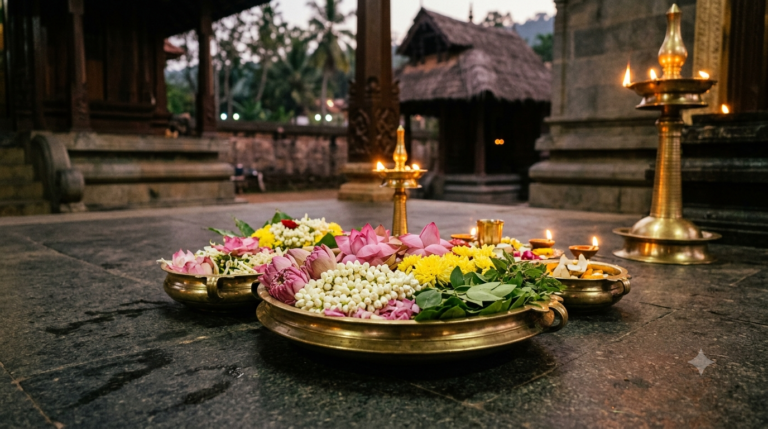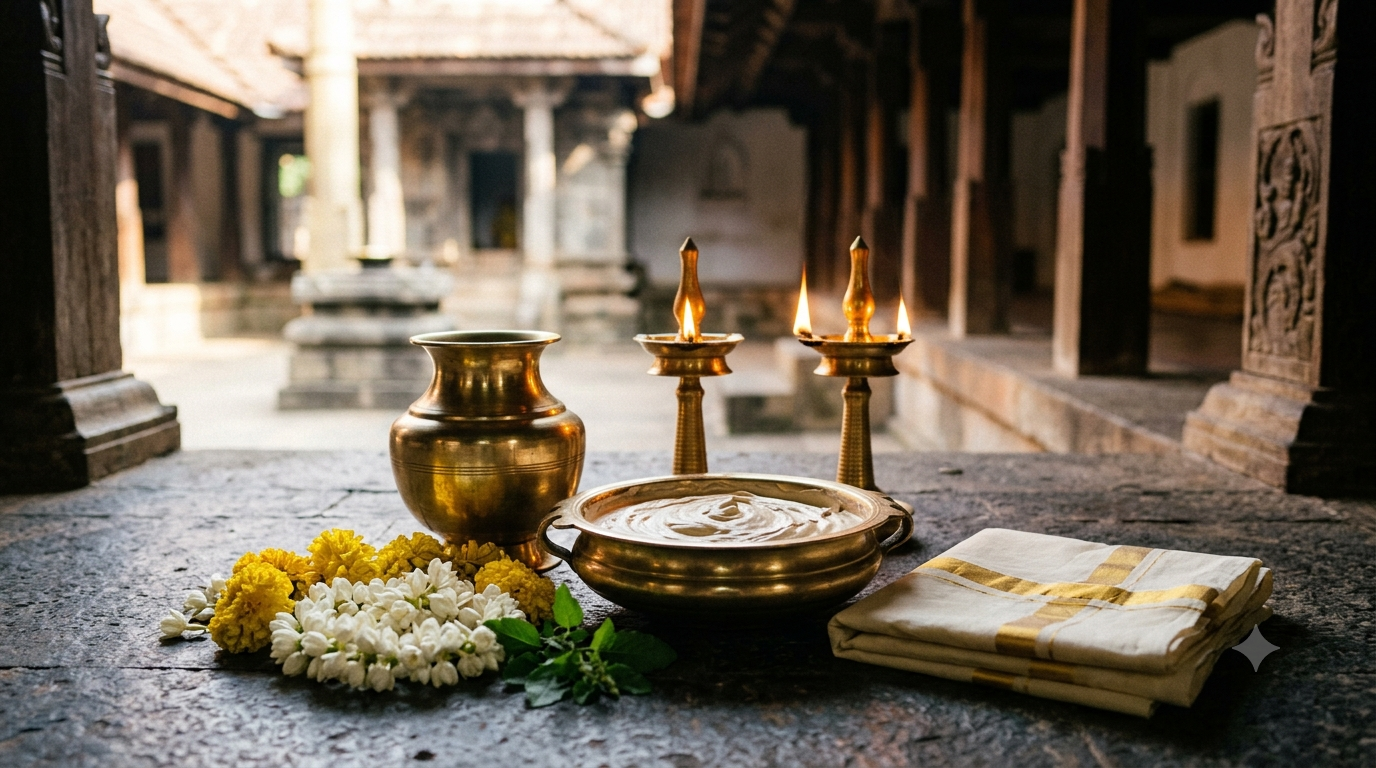
Sabarimala Kalabhabhishekam is a special sandalwood-paste offering to Lord Ayyappa, but it is not a darshan ticket. The ritual follows a temple-led sequence that concludes during Ucha Pooja. If you hope to arrange an offering, start with an official enquiry rather than a payment request from an unfamiliar website.
Independent guide: This page is not the official Sabarimala temple or Travancore Devaswom Board website. We are not affiliated with the Board and accept no bookings, donations, payments or personal details. Confirm all arrangements through the official sources linked below.
Sabarimala Kalabhabhishekam at a Glance
- Offering: A traditional abhishekam using sandalwood paste, known as kalabham.
- Deity: Lord Ayyappa at Sabarimala Sannidhanam, Kerala.
- Priests: The Tantri conducts the special worship with the Melshanti present.
- Ritual sequence: Kalabhakalasa worship, a procession around the Sreekovil and the final anointing.
- Timing: The concluding offering takes place during Ucha Pooja; confirm the day’s arrangements.
- Booking: Virtual-Q darshan registration does not itself reserve this pooja.
- Fees and access: Confirm current terms, availability and any attendance provisions with the Board.
These ritual details appear in the Kerala Tourism special-poojas guide and the Sabarimala government information page. Neither description alone guarantees an available Sabarimala Kalabhabhishekam date for your visit.
What Happens During Sabarimala Kalabhabhishekam?
Sabarimala Kalabhabhishekam is a temple ritual in which priests offer sandalwood paste to Lord Ayyappa. Kerala Tourism describes the Kalabhakalasa worship, a procession carrying the ceremonial vessel and the final anointing during Ucha Pooja. These actions belong to the temple’s liturgy, not to the Virtual-Q pilgrim entry process.
The Tantri is the temple’s ritual authority, while the Melshanti serves as the chief priest. Sabarimala Kalabhabhishekam takes place within the temple setting under their direction. So a devotee should not assume that buying sandalwood independently provides permission to conduct the ceremony.
Traditional accounts describe the offering as a way to honour the deity’s chaithanya, or divine presence. That is a devotional meaning, not a medical or scientific benefit claim. The central act of Sabarimala Kalabhabhishekam remains the respectful offering of kalabham to Lord Ayyappa.
Sabarimala Kalabhabhishekam: Sandalwood Offering Steps
The published description of Sabarimala Kalabhabhishekam gives a clear outline, although it is not a minute-by-minute public schedule. These stages then involve preparation, worship of the ceremonial vessel, movement around the shrine and a concluding offering. Temple priests control the Sabarimala Kalabhabhishekam sequence.
- Kalabhakalasa Pooja: The Tantri conducts worship of the consecrated vessel at the Nalambalam, with the Melshanti present.
- Ceremonial procession: The vessel containing sandalwood paste moves around the Sreekovil, the inner shrine.
- Final abhishekam: After the procession, the Tantri pours the sandalwood paste over Lord Ayyappa’s idol during Ucha Pooja.
Official descriptions refer to a golden urn in this sequence. However, visitors should not treat that description as permission to handle a vessel or enter a restricted space. Temple officials still decide where pilgrims may stand and what they may witness.
Also, this is not a do-it-yourself sandal paste application. A pilgrim’s personal prayers are separate from the formal ritual. The distinction matters when you ask staff about sponsorship, a receipt or possible observation.
When Does Sabarimala Kalabhabhishekam Take Place?
The closing stage of Sabarimala Kalabhabhishekam takes place during Ucha Pooja, the temple’s midday worship. That describes its place in the ritual sequence, not a guaranteed start time or daily performance. You therefore need confirmation for the particular temple-opening period and date you have in mind.
The Travancore Devaswom Board pooja schedule lists Kalabhabhishekam among its special daytime offerings. Yet published schedules can change with festival duties, temple arrangements and operational needs. Therefore, build travel plans around an officially confirmed visit date, not an assumed pooja hour.
Some internet guides turn the usual midday association into a promise that every visitor can see the ceremony. That leap is not justified. Still, the timing of a ritual and a pilgrim’s right to observe it are different questions.
Sabarimala Kalabhabhishekam vs Virtual-Q Darshan
Virtual-Q is the pilgrim-management process for visiting Sabarimala, while Kalabhabhishekam is a special temple offering. The Travancore Devaswom Board states that online Virtual-Q booking is mandatory for pilgrims. A Virtual-Q confirmation must not be described as a pooja reservation.
| Question | Virtual-Q darshan | Kalabhabhishekam enquiry |
|---|---|---|
| Main purpose | Manage pilgrim entry and darshan flow | Check a special sandalwood offering |
| Relevant channel | Board-linked Virtual-Q system | Board’s pooja or official enquiry channel |
| What confirmation means | Queue registration under current rules | Only the terms stated by the Board |
| Participation | No promise of ritual access | Must be checked separately |
| Fees or dates | Follow current darshan rules | Do not infer from a darshan pass |
This Sabarimala Kalabhabhishekam distinction protects both time and money. After registration, a pilgrim may have a valid darshan arrangement without any special pooja attached. Likewise, a question about a pooja does not replace the entry steps that the Board currently requires. Our Sabarimala Neyyabhishekam guide explains another abhishekam and its separate arrangements.
How to Make a Sabarimala Kalabhabhishekam Enquiry
For Sabarimala Kalabhabhishekam, start with the Travancore Devaswom Board’s own website and follow its current pooja information or contact channels. Ask whether the offering can be requested for your intended period, what the official procedure involves and whether any access conditions apply. Do not pay until the Board provides instructions.
- Open the official Board site: Visit the Board’s Sabarimala section rather than a sponsored lookalike page.
- Check the published ritual description: Compare the offering name and spelling before asking about a specific service.
- Use the Board’s listed pooja channel: Follow only links that originate on its official website; do not assume every listed offering appears as an online purchase.
- Make a specific enquiry: Ask about permissible dates, the current official amount, any materials and the terms of attendance.
- Keep the two confirmations separate: Complete the current Virtual-Q process independently if you plan to visit for darshan.
The Board’s Sabarimala section links to both pooja services and Virtual-Q, but these are distinct paths. You can also consult the Sabarimala government contact directory or Kerala Tourism’s Board contact directory to find officially published enquiry offices. Also avoid personal messaging numbers from search results.
Questions worth asking before you travel
Start by asking whether the pooja will take place during the opening period you plan to attend. Then ask whether devotees can request it, whether a date can be confirmed and how any approved payment works. Finally, ask what a receipt covers and whether presence at the ceremony is permitted.
A clear Sabarimala Kalabhabhishekam answer is more useful than an old rate chart when planning travel. If the office cannot confirm an arrangement, do not turn a tentative enquiry into a fixed travel promise.
Sabarimala Kalabhabhishekam Fees: Why Old Rates Mislead
Publicly accessible Sabarimala offering tables do not always match. The Board’s revised vazhipadu list identifies an update effective in April 2022, while an older state information page displays a different figure. Those pages help explain the history of published rates, yet neither verifies what you will pay today.
For that reason, this Sabarimala Kalabhabhishekam guide gives no promised fee. Materials, official charges and conditions may also affect the answer. Only a current response from the Board can establish the amount and method for a real enquiry.
The revised list also contains a historical note about special darshan for a limited number of people. It would be misleading to present that note as a current participation entitlement. Check eligibility and access directly instead of assuming an old table overrides today’s rules. The same distinction between special offerings and darshan matters in our Sabarimala Padi Pooja guide.
Can Devotees Attend Sabarimala Kalabhabhishekam?
Do not assume that every devotee can sponsor, view or stand beside Sabarimala Kalabhabhishekam. Public ritual descriptions explain what priests do, but they do not establish a bookable public seat or unrestricted access. Any approved participation depends on the Board’s current terms, available arrangements and temple instructions.
There are at least three separate questions: can the offering be requested, can a devotee receive confirmation, and can that devotee witness any part of it? Even so, an affirmative answer to one does not automatically settle the others. Ask about each point individually.
Likewise, paying for a different seva does not upgrade a Virtual-Q registration. If an official receipt mentions an associated privilege, confirm its present meaning with the issuing authority. Staff instructions at Sannidhanam still govern movement around the shrine.
What if Your Preferred Plan Does Not Work?
A successful Sabarimala Kalabhabhishekam arrangement is not guaranteed merely because the ritual appears on an official list. The date may be unsuitable, a request may not be available or the Board may require a process you cannot complete before travel. Therefore, prepare a fallback before making non-refundable bookings.
- No confirmed offering: Keep your pilgrimage plan focused on darshan, subject to valid Virtual-Q registration and temple rules.
- Unclear official information: Ask the Board’s published information office for clarification; wait for a definitive answer before payment.
- Preferred date not offered: Enquire about another temple-opening period if the Board allows requests on other dates.
- Participation not permitted: Respect the boundary. Personal prayer and ordinary darshan remain meaningful devotional acts.
There may be no alternative Sabarimala Kalabhabhishekam allotment for your chosen day. In that case, do not trust anyone advertising a guaranteed last-minute ritual slot. Instead, the legitimate fallback is an official enquiry about another date, not an agent’s promise.
Common Mistakes with the Sandalwood Offering
The most costly Sabarimala Kalabhabhishekam mistake is confusing a pooja enquiry with an online darshan ticket. Another is treating a published rate as a live quote. Both errors can produce false expectations before a family leaves home.
- Assuming a fixed daily schedule: Ucha Pooja is the ritual context, but confirm the actual offering date.
- Assuming all sandalwood rites are identical: Ashtabhishekam also includes sandalwood among its items, but it is a different offering.
- Buying materials without instructions: Ask what the temple requires instead of preparing an unofficial kit.
- Paying a third party: A social media receipt or chat confirmation is not an official temple receipt.
- Expecting a reserved viewing place: Ritual sponsorship and physical access require separate confirmation.
Sabarimala Kalabhabhishekam involves priest-led worship, so the visitor’s role should never be assumed. The Board’s published process also carries more authority than informal accounts from previous seasons. Save its official links before departure.
Planning the Visit to Sannidhanam
A Sabarimala Kalabhabhishekam enquiry also needs a realistic travel plan. Kerala Tourism identifies Pamba as the point from which pilgrims continue uphill towards Sannidhanam. Its travel guide describes a route of roughly five kilometres from Pamba to the shrine.
That distance is not a promise about walking time. When rain or crowd controls intervene, the journey may take longer. Allow a generous buffer, especially when travelling with older relatives or anyone who needs regular rest.
Rail passengers commonly use Chengannur and continue by road towards the pilgrimage area. However, train arrivals and connecting buses should be checked separately, since they do not confirm temple access or any pooja availability.
After reaching the pilgrim area, follow official signs and staff instructions. During the visit, keep required darshan documents ready, but carry only what the guidance permits. Never plan to reach the inner shrine at an exact minute based on an old online timetable. For another worship tradition at Sannidhanam, see our Malikappuram Devi worship guide.
Health and comfort on the uphill route
The ascent from Pamba requires physical effort, especially in wet weather. Carry drinking water and prescribed medicines, use suitable footwear where permitted and take breaks when needed. If you have a heart, breathing or mobility condition, seek medical advice before undertaking a strenuous climb.
Before You Leave Home
Sabarimala Kalabhabhishekam is best approached with two independent plans: confirmed pilgrim access and a separate, accurately answered ritual enquiry. Use this short checklist before leaving so they do not become mixed up.
- Check official temple-opening information for your travel period.
- Follow the Board’s current Virtual-Q procedure for darshan.
- Ask the official pooja channel about the intended offering date.
- Confirm any current payment terms without relying on old rate lists.
- Ask whether attendance, sponsorship or materials have specific conditions.
- Keep travel and return arrangements flexible until essential details are clear.
Most importantly, treat silence or an unanswered enquiry as lack of confirmation. It is better to make a darshan-focused pilgrimage than to promise relatives a ceremony that no official has approved.
The Sensible Way to Approach This Ritual
Sabarimala Kalabhabhishekam is a sacred sandalwood offering conducted by temple priests, with its final act linked to Ucha Pooja. Its published description does not equal a standing offer of dates, seats or access. Use the Board’s official channels for ritual terms and the separate Virtual-Q route for darshan. When information remains uncertain, plan a respectful pilgrimage without making the special pooja a condition of success.
Frequently Asked Questions
What is Sabarimala Kalabhabhishekam?
Sabarimala Kalabhabhishekam is a special sandalwood-paste abhishekam dedicated to Lord Ayyappa. The Tantri conducts the worship with the Melshanti present. After the ceremonial procession, the final offering takes place during Ucha Pooja.
Is Kalabhabhishekam the same as a darshan booking?
No. Kalabhabhishekam is a special ritual, while Virtual-Q manages pilgrim entry. A darshan registration does not itself reserve the offering, and a ritual enquiry does not replace current entry rules.
Can I book the sandalwood offering online?
Do not assume an online booking option exists for your preferred date. The Board links to an official pooja-service channel, but availability for this specific ritual requires confirmation. Start from the Board’s website rather than an unverified third-party page.
What is the current Kalabhabhishekam fee?
Confirm the current amount directly with the Travancore Devaswom Board. Published rate lists differ across public pages and may not reflect present charges or materials. Do not send money on the strength of an old screenshot.
At what time is the sandalwood ritual performed?
The official ritual description places its concluding abhishekam during Ucha Pooja. However, that does not confirm a specific clock time or a performance on your chosen day. Ask the temple office about the relevant opening period.
Can pilgrims watch or participate in the ceremony?
Do not presume access to the ritual area. The official description also does not grant general viewing or participation rights. Ask the Board whether a confirmed arrangement includes any permitted attendance.
Is sandalwood used in any other Sabarimala pooja?
Yes. The official description of Ashtabhishekam includes sandalwood among its ritual items. However, Ashtabhishekam and Kalabhabhishekam are different offerings, so use the exact name when enquiring.
Who should I contact if my enquiry is unanswered?
Use the Board’s published office and information contacts, linked from the Sabarimala and Kerala Tourism websites. Do not rely on private agents who claim to secure slots. If you receive no confirmation, proceed only with independently valid darshan arrangements.