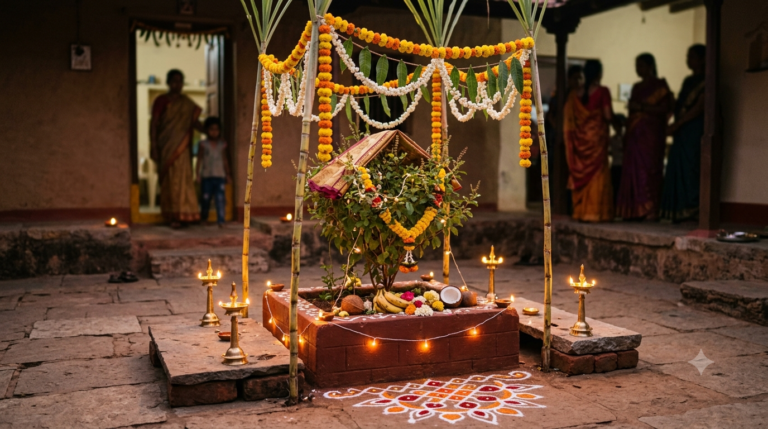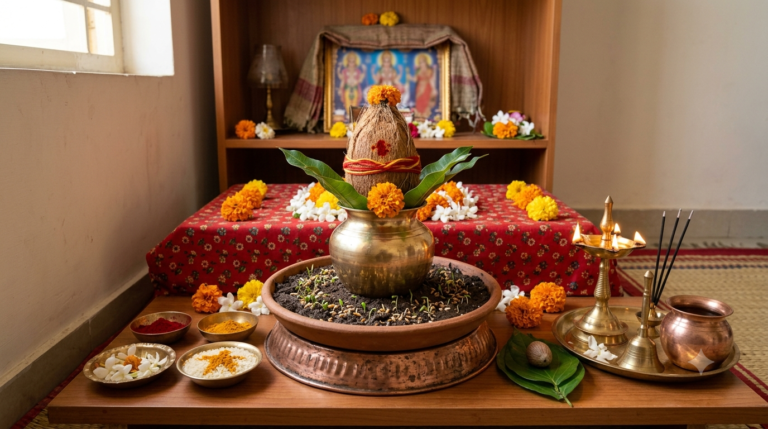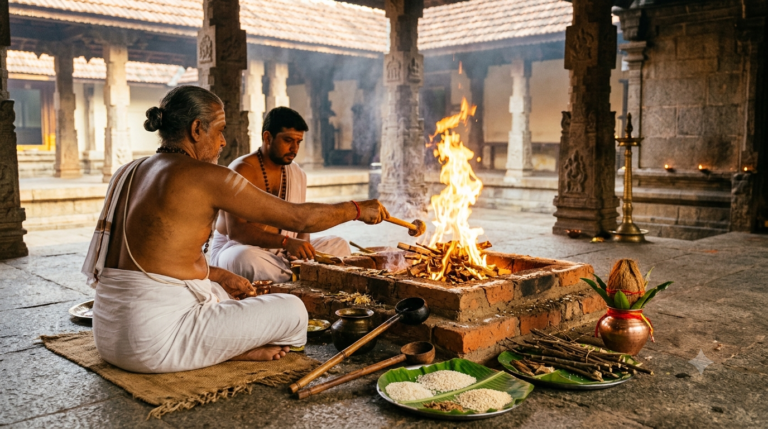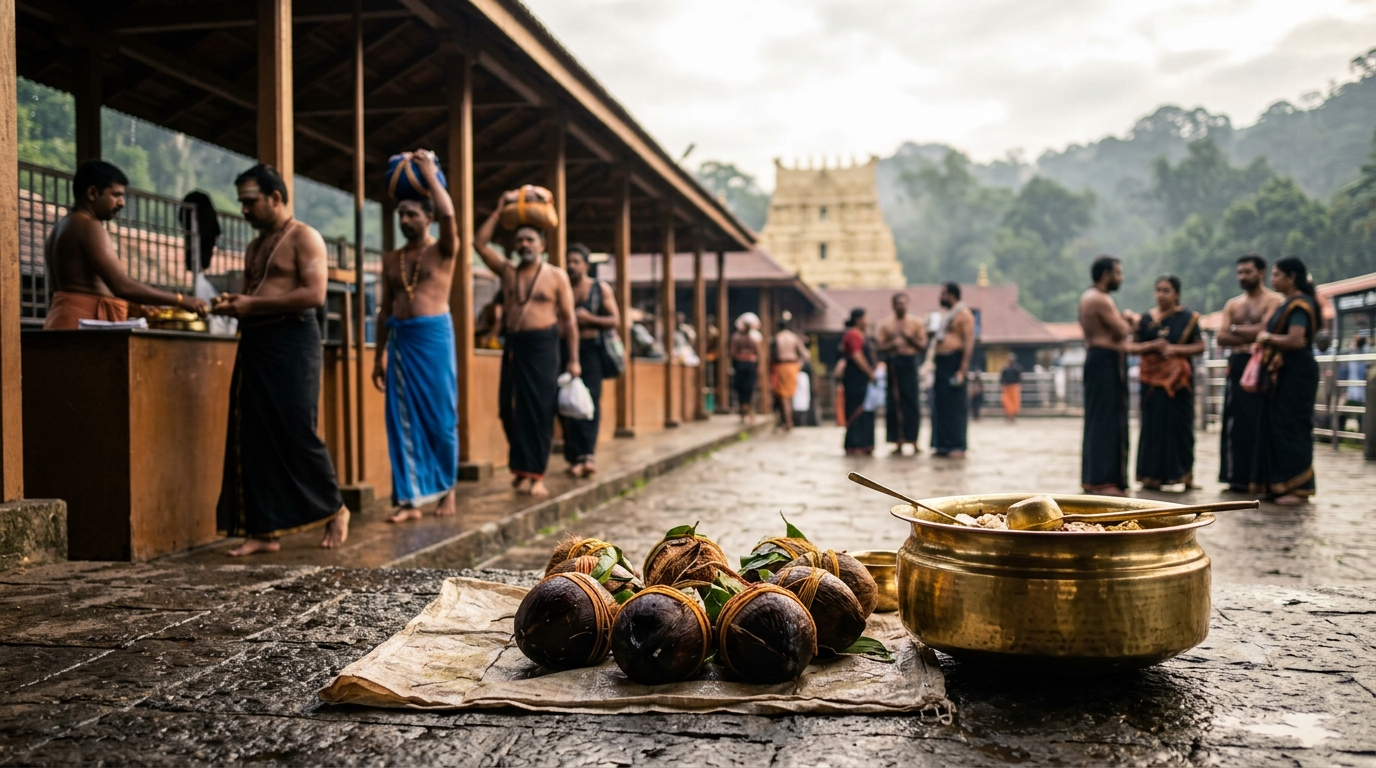
Sabarimala Neyyabhishekam is the traditional ghee abhishekam for Lord Ayyappa, and pilgrims usually want to know two things before they travel: how the ritual works and whether it needs a separate booking. The key point is simple. The Sabarimala Virtual-Q is for pilgrim entry and darshan management, while a pooja or vazhipadu booking is a separate service handled through Travancore Devaswom Board channels.
This is an independent pilgrim guide, not an official temple or Travancore Devaswom Board booking page. We do not take bookings, payments, donations, or personal details; use only the official portals linked below.
Sabarimala Neyyabhishekam at a Glance
- What it is: Sabarimala Neyyabhishekam is the traditional offering in which priests use ghee from a filled coconut for abhishekam to Lord Ayyappa.
- Darshan booking: The official Travancore Devaswom Board states that Virtual-Q booking is mandatory for Sabarimala pilgrims. Virtual-Q is not the pooja booking itself.
- Pooja booking: Travancore Devaswom Board separately provides online pooja and vazhipadu booking through its Online TDB system when the service appears as available.
- Current fee: Do not treat an old published rate as the current-season fee. Confirm the live amount on the official booking portal or at an official TDB counter.
- Current timing: Official web pages currently show different Neyyabhishekam schedules. Therefore, confirm the day’s operating time before relying on a fixed hour.
What is Sabarimala Neyyabhishekam?
Sabarimala Neyyabhishekam is one of the central offerings connected with the Ayyappa pilgrimage. The official Kerala Sabarimala information page describes the use of a ghee-filled coconut, collection of the ghee, offering it at the Sreekovil, and the return of a portion of the blessed ghee as prasadam.
The symbolism is also part of the tradition. The official Sabarimala page explains that devotees regard the ghee as representing the individual soul and Lord Ayyappa as the Supreme Being. After devotees remove the ghee, tradition directs the empty coconut to the aazhi, the large sacred fire area in front of the temple.
Sabarimala Neyyabhishekam Procedure Step by Step
The practical sequence is easier to understand when separated from the booking process. Sabarimala Neyyabhishekam involves the prepared ghee coconut, darshan, collection of the ghee, the offering, and receipt of prasadam. Pilgrim groups often follow the guidance of an experienced guru swamy for the traditional parts of the journey.
- Carry the prepared ghee-filled coconut. Traditionally, the neythenga forms part of the pilgrim’s irumudi. Pilgrims who follow the full vratham and irumudi tradition should prepare it under appropriate religious guidance.
- Complete darshan and the customary sequence. The official Sabarimala ritual description places the preparation for Neyyabhishekam after darshan of Lord Ayyappa and the upa-prathishtas.
- Arrange the ghee coconuts. Groups may spread a viri, or cloth sheet, and place the coconuts together under the guidance of the senior pilgrim.
- Break the coconut and collect the ghee. Pilgrims collect the ghee in a clean vessel and take it to the temple’s official offering point.
- Offer the ghee for abhishekam. Temple priests perform the ritual according to the temple’s operating procedure and the day’s schedule.
- Receive the returned ghee as prasadam. The official Sabarimala information page says the priest returns a portion of ghee to the devotee after the offering.
- Follow the temple’s direction for the empty coconut. The traditional practice links the emptied coconut with the aazhi. Follow current crowd-control and staff instructions rather than trying to force a customary step during a restricted period.
Do You Need to Book Sabarimala Neyyabhishekam?
A pilgrim should treat darshan registration and pooja booking as two separate tasks. The Travancore Devaswom Board homepage says online Virtual-Q booking is mandatory for pilgrims visiting Sabarimala. That reservation manages entry into the darshan queue and does not automatically reserve Sabarimala Neyyabhishekam.
For poojas and vazhipadus, the Travancore Devaswom Board maintains a separate Online TDB portal. Its own Sabarimala rate page points pilgrims to Online TDB for online pooja booking. Availability can vary, so the safest approach is to check whether Neyyabhishekam appears as a selectable service for your visit.
Sabarimala Neyyabhishekam Booking vs Virtual-Q
| Service | What it does | Official channel |
|---|---|---|
| Virtual-Q | Reserves a pilgrim’s darshan queue slot, subject to availability | Sabarimala Online |
| Pooja or vazhipadu booking | Books an offering when that service is listed | Online TDB |
| On-site vazhipadu service | Handles temple offerings at official counters, subject to current operations | Official TDB counter at Sabarimala |
This distinction prevents a common mistake. A confirmed Virtual-Q slot does not prove that Sabarimala Neyyabhishekam has been separately booked. Likewise, a pooja transaction does not replace the pilgrim’s darshan entry requirement when Virtual-Q applies.
How to Check Sabarimala Neyyabhishekam Booking
The safest booking method is to stay inside the official Travancore Devaswom Board ecosystem. Avoid websites, agents, or social-media contacts that claim to sell guaranteed pooja access. Sabarimala Neyyabhishekam is a temple offering, so payment should go only through the official booking system or an official temple counter.
- Open the Travancore Devaswom Board website and use its Sabarimala links.
- Complete the required Virtual-Q process separately through the official Sabarimala Online portal.
- Open Online TDB for pooja and vazhipadu services.
- Select Sabarimala and check the currently available offerings for your date or visit period.
- If the offering appears on the official portal, follow the official payment and confirmation flow.
- If it is not displayed, do not assume a third-party site can create a valid booking. Ask at the official computerized vazhipadu counter when you reach Sabarimala.
Keep your official confirmation accessible on your phone and, when practical, retain an offline copy. Network congestion can occur during busy pilgrimage days, so a screenshot or downloaded receipt can save time at a counter.
Sabarimala Neyyabhishekam Fee: What Is Confirmed?
Pilgrims should verify the current-season Sabarimala Neyyabhishekam fee live rather than copy it from an old rate table. The Travancore Devaswom Board’s published Sabarimala vazhipadu page lists a rate schedule effective from 10 April 2022 and shows Neyyabhishekam at ₹10 per mudra. That page does not, by itself, prove the same amount remains the current season’s live charge.
For that reason, use the old figure only as a historical reference. Before paying, check the amount displayed on Online TDB or the amount shown at the official temple counter. If a third party quotes a different “special” rate, do not pay unless the charge appears on an official TDB channel.
Sabarimala Neyyabhishekam Timings: Why You Should Recheck
Do not build your travel plan around one copied Neyyabhishekam time. The official Kerala Sabarimala pooja page currently shows pilgrim-season slots from 3:30 AM to 7:00 AM and from 8:30 AM to 11:00 AM. However, the Travancore Devaswom Board timing page shows 5:30 AM to 7:00 AM and 9:00 AM to 11:00 AM.
Those official pages do not fully align, which is exactly why this guide does not present one fixed current-season time as certain. Temple schedules can also change on special pooja days, heavy-rush days, or operationally restricted dates. Check the latest TDB notice and confirm locally before joining the offering process.
What If Sabarimala Neyyabhishekam Booking Is Not Available?
A Sabarimala Neyyabhishekam booking is not guaranteed merely because you have a darshan slot. Online service availability, counter operations, timing windows, and crowd restrictions can all affect the process. Therefore, plan a fallback before travelling rather than depending on one screen or one quoted time.
- Recheck the official Online TDB portal. Services may appear only for supported dates or operating periods.
- Use the official vazhipadu counter. If online booking is unavailable, ask TDB staff whether the computerized counter can handle the offering that day.
- Follow the day’s temple schedule. If the Neyyabhishekam window has closed, do not pay anyone who promises unofficial access.
- Accept that some dates may have no workable fallback. If TDB staff cannot accept the offering, plan for another eligible opening day rather than using an agent.
The official Sabarimala ritual page also notes that devotees who do not bring a ghee-filled coconut can obtain adiyashistam neyyu through Devaswom arrangements. Do not confuse that facility with a guaranteed personal Neyyabhishekam booking.
Common Mistakes Pilgrims Make
The biggest error is treating Virtual-Q as an all-in-one booking. It is not. Virtual-Q manages darshan access, while Sabarimala Neyyabhishekam belongs to the separate pooja or vazhipadu process.
A second mistake is copying an old fee or timing from a search result and treating it as current. The official web pages themselves show why that is risky. The published rate table carries an older effective date, and the official timing pages do not currently match one another.
A third mistake is paying a private intermediary because the official portal does not show a service. If the official channel does not display Sabarimala Neyyabhishekam, that is not proof that an agent has hidden quota. Use only TDB channels and official counters.
Practical Tips Before You Carry the Ghee Coconut
Protect the ghee-filled coconut from cracks and leaks during the journey. Keep the irumudi secure, since rough handling on buses, in queues, or during the climb can damage the offering. If you are travelling with a guru swamy or organised group, agree on the offering sequence before reaching the crowded Sannidhanam area.
Also keep your darshan and pooja confirmations separate so they are easy to show when asked. Arrive with enough time for the trek and queue because the offering window may close well before the evening darshan period. When staff give a current instruction that differs from an older web page, follow the on-site official instruction.
If you plan to stay near the shrine before an early offering, review our Sabarimala rooms online booking guide for accommodation planning. Room reservations, darshan slots, and Neyyabhishekam offerings are separate arrangements, so check each one individually.
The climb from Pamba can be physically demanding, especially in crowds and humid conditions. Carry essential medicines and water where permitted, pace yourself, and seek medical advice before a strenuous pilgrimage if you have a condition that could make the trek unsafe.
Before You Go
Sabarimala Neyyabhishekam is best planned as two parallel tasks: secure the required darshan access, then verify the pooja or vazhipadu route separately. Do not rely on old fee tables, copied timing pages, or third-party booking claims. The official Travancore Devaswom Board channels should be the final authority for availability, payment, and same-day operating instructions.
If you remember only one point, make it this: Virtual-Q is not the Neyyabhishekam booking. Check Sabarimala Online for darshan registration and Online TDB for pooja availability, then confirm the current fee and timing before paying.
Frequently Asked Questions
Is Sabarimala Neyyabhishekam the same as Virtual-Q booking?
No. Sabarimala Neyyabhishekam is a pooja or vazhipadu offering, while Virtual-Q manages a pilgrim’s darshan queue slot. A Virtual-Q confirmation does not automatically mean you have booked the Neyyabhishekam.
Can I book Sabarimala Neyyabhishekam online?
Travancore Devaswom Board provides a separate Online TDB system for pooja and vazhipadu booking. Check whether Sabarimala Neyyabhishekam appears as an available service for your visit. If it does not appear, use only the official temple counter for further guidance.
What is the current Sabarimala Neyyabhishekam fee?
The current-season fee is not safely confirmed by the dated public rate page alone. TDB’s published rate schedule effective from 10 April 2022 lists ₹10 per mudra, but pilgrims should verify the live amount on Online TDB or at the official counter before paying.
What time is Sabarimala Neyyabhishekam performed?
Official pages currently show different schedules, so pilgrims should not treat one fixed time as current-season certainty. The Kerala Sabarimala page lists earlier pilgrim-season windows than the TDB timing page. Recheck the official notice and confirm locally on your visit day.
Do I need a ghee-filled coconut for Neyyabhishekam?
The traditional Sabarimala Neyyabhishekam procedure uses ghee carried in a coconut. The official Sabarimala information page also says Devaswom arrangements provide adiyashistam neyyu for devotees who do not bring a ghee-filled coconut.
What happens to the coconut after the ghee is removed?
Tradition links the emptied coconut with the aazhi, the sacred fire area in front of the temple. Follow current temple and crowd-control instructions because access and movement can change during busy periods.
Is Sabarimala Neyyabhishekam guaranteed if I have a darshan slot?
No. A darshan slot does not guarantee pooja availability. Sabarimala Neyyabhishekam can depend on the official offering window, current operations, service availability, and counter instructions on that day.
What should I do if the online pooja option is missing?
Do not pay an agent or assume a private site has special access. Recheck Online TDB, then ask at the official computerized vazhipadu counter. If TDB says the offering is unavailable, use a later eligible opening day rather than an unofficial route.